Health
What's an early sign of diabetes in dogs?
Increased thirst and urination, often with weight loss despite normal appetite.

Quick answer
What's an early sign of diabetes in dogs?
Increased thirst and urination, often with weight loss despite normal appetite.
A dog suddenly drinking from the water bowl like it's never had water before, and needing far more bathroom breaks than usual, is describing one of the clearest early patterns of diabetes.
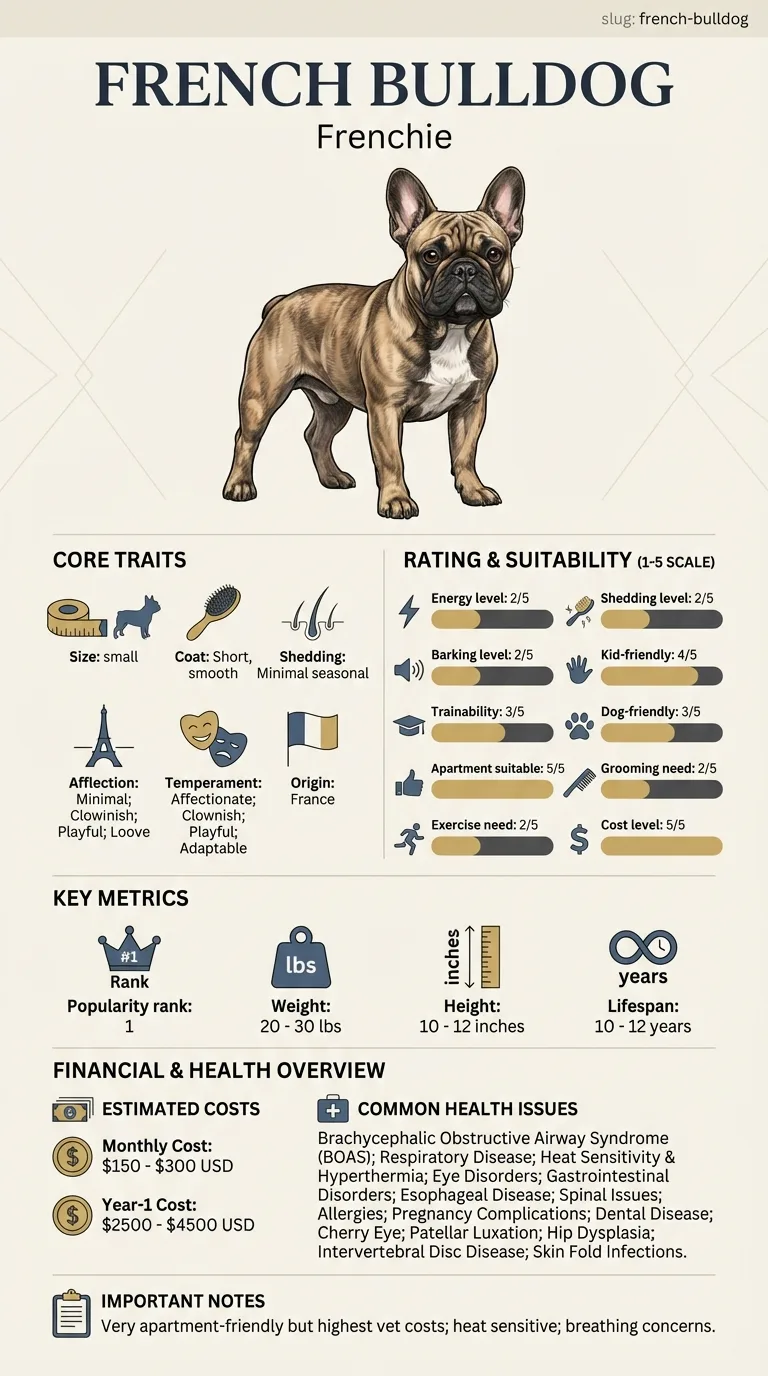
Owners of senior Frenchies face this most often, usually noticing the thirst and urination changes first, sometimes alongside weight loss that seems to contradict a normal or even increased appetite.
This guide is not medical advice. If your dog shows pain, sudden behavior change, or worsening symptoms, consult a licensed veterinarian.
Some links may be affiliate links. We may earn a commission at no extra cost to you. We only suggest products we believe are helpful for dog owners.
We research and check what we publish, but we do not warrant that any figure, date, price, or statement is accurate, complete, or current, and we accept no liability for any loss, cost, injury, or other harm arising from the use of this site. Use it as one reference among several. You remain responsible for your own decisions and for your dog's care - confirm anything that matters with a licensed veterinarian or another qualified professional before you act on it. Full disclaimer.
Diabetes mellitus in French Bulldogs involves the body's inability to properly regulate blood sugar, most commonly diagnosed in the senior years and sometimes connected to a prior history of pancreatitis. Classic signs include increased thirst and urination alongside weight loss despite normal appetite, and while it's not curable, it's generally well managed long-term with daily insulin therapy, consistent feeding routines, and regular monitoring.
Diabetes is a commonly diagnosed endocrine condition in senior dogs across breeds generally, and French Bulldogs, given the breed's documented obesity and pancreatitis risk, are represented at a meaningful rate within that broader senior health pattern.
French Bulldogs' documented tendency toward obesity and pancreatitis both contribute to elevated diabetes risk, either through insulin resistance from excess weight or through cumulative damage to insulin-producing pancreatic cells from repeated inflammation, making this breed's other known risk factors directly relevant to its diabetes risk.
Diet and weight management are the most significant environmental factors: consistent, appropriate feeding and maintaining a lean body weight throughout life meaningfully reduce the risk of insulin resistance and the kind of pancreatic stress that can contribute to diabetes developing.
Schedule bloodwork for persistent increased thirst, urination, or unexplained weight loss, and seek prompt care for a diagnosed diabetic dog showing lethargy, vomiting, or reduced appetite, which can signal a dangerous complication.
Because diabetes requires precise daily routine, a few common assumptions can make control more difficult than it needs to be.
See all French Bulldog health problems, which breeds are prone to diabetes, or the full French Bulldog breed guide for temperament, exercise needs and ownership costs.
Establishing a stable insulin dose typically takes a few weeks of monitoring and adjustment after diagnosis. Once stable, diabetes management becomes an ongoing daily routine for the rest of the dog's life.
Success means stable blood sugar control through consistent daily insulin and feeding routine, allowing for a good quality of life — most well-managed diabetic dogs live comfortably for years after diagnosis.
Most diabetic dogs are managed with twice-daily insulin injections given shortly after a consistent meal, using a very fine needle that most dogs tolerate well once the routine is established. Meal timing and content need to stay consistent day to day, since insulin dosing is calibrated around a predictable feeding pattern.
Regular monitoring — periodic blood glucose curves done at the vet, sometimes supplemented with at-home monitoring using a glucometer or continuous glucose monitor — helps track whether the current insulin dose is keeping blood sugar in a safe, stable range, with dose adjustments made gradually based on that data.
While the daily routine represents a genuine commitment, most owners report it becomes second nature within a few weeks, and with consistent management many diabetic dogs live comfortable, active lives for years after diagnosis.

Casey, a ten-year-old Frenchie, started drinking noticeably more water and having accidents in the house despite being reliably housetrained for years. Bloodwork confirmed diabetes, and Casey's family felt overwhelmed at first by the idea of daily injections. A few sessions with their vet's technician built their confidence, and within about three weeks the twice-daily insulin routine, paired with consistent mealtimes, felt entirely normal. A year later, Casey's blood sugar remains well controlled, and her family says the routine takes less than five minutes twice a day.
Key takeaway: The initial overwhelm of a diabetes diagnosis gave way quickly to a manageable daily routine — the learning curve was real but short.
Increased thirst and urination, along with weight loss despite a normal or increased appetite, are the classic early signs, often first noticed in senior dogs.
Bloodwork showing elevated blood glucose, often combined with a urine test showing glucose in the urine, confirms the diagnosis, sometimes alongside additional testing to rule out other contributing conditions.
Yes, most cases are managed with daily insulin injections combined with consistent meal timing and regular monitoring, allowing many dogs to live well for years, though it's a lifelong management commitment rather than a cure.
Ongoing costs including insulin, syringes, monitoring supplies, and periodic vet visits commonly run somewhere in the range of $50 to $150 per month, varying by insulin type and monitoring approach.
The breed's documented risk for obesity and pancreatitis both contribute to elevated diabetes risk, particularly in the senior years, making proactive weight management and periodic bloodwork relevant preventive steps.
In most cases, no — once diagnosed, insulin therapy is typically needed for life, though diet plays an important supporting role in overall blood sugar stability alongside insulin treatment.
Untreated diabetes can progress to diabetic ketoacidosis, a serious and potentially life-threatening complication, making prompt diagnosis and treatment initiation important once symptoms are noticed.
Increased thirst and urination, often with weight loss despite normal appetite.
No, but it's manageable long-term with daily insulin and consistent routine.
Roughly $50–$150 per month for insulin, supplies, and monitoring.
Yes, given the breed's documented obesity and pancreatitis risk, particularly in senior years.
Untreated diabetes can progress to a serious, life-threatening complication called diabetic ketoacidosis.
A one-page prep sheet for this condition: the signs, the questions to ask, what to get priced. Unlocks here.
You get: Vet visit prep sheet
No spam. One-click unsubscribe. See our privacy policy.
Preview page 1 before you decide.
Early access list
The free prep sheet covers the same-day warning signs, a symptom log and the questions to ask. We are considering a fuller kit that adds a cost worksheet for the usual tests and treatments (US price ranges with their sources) and a plain-English guide to ways of covering the bill. It is not built yet; this list tells us whether it is worth building.
One email, no spam, unsubscribe anytime. Information only, not veterinary advice.