Health
What's the first visible sign of a cataract in a French Bulldog?
A whitish, opaque patch in the center of the pupil, often noticed first when light hits the eye at an angle.

Quick answer
What's the first visible sign of a cataract in a French Bulldog?
A whitish, opaque patch in the center of the pupil, often noticed first when light hits the eye at an angle.
A pearly haze creeping across your dog's pupil isn't just a cosmetic quirk of getting older. In French Bulldogs, cataracts can show up young, and left alone they end in blindness.
Owners of middle-aged and senior Frenchies notice it first — a dog that used to catch a thrown toy mid-air now misjudges it, or hesitates at the top of the stairs at dusk. Owners of young dogs are caught more off guard, since a puppy or young adult going cloudy usually points to an inherited form rather than simple wear.
This guide is not medical advice. If your dog shows pain, sudden behavior change, or worsening symptoms, consult a licensed veterinarian.
Some links may be affiliate links. We may earn a commission at no extra cost to you. We only suggest products we believe are helpful for dog owners.
We research and check what we publish, but we do not warrant that any figure, date, price, or statement is accurate, complete, or current, and we accept no liability for any loss, cost, injury, or other harm arising from the use of this site. Use it as one reference among several. You remain responsible for your own decisions and for your dog's care - confirm anything that matters with a licensed veterinarian or another qualified professional before you act on it. Full disclaimer.
A cataract is any opacity in the lens of the eye — the clear structure that focuses light onto the retina. In French Bulldogs, cataracts show up both as an inherited condition that can start in young adulthood and as an age-related or disease-driven change later in life. Whatever the origin, the effect is the same: light gets scattered instead of focused, and vision blurs or disappears in the affected eye.
Cataracts are one of the more frequently diagnosed eye conditions in French Bulldogs seen by veterinary ophthalmologists, and breed screening programs specifically track inherited cataracts in the line. Not every affected dog goes fully blind — many have small, non-progressive cataracts that never significantly impair vision — but a meaningful share of dogs will develop a visually significant cataract in at least one eye during their lifetime.
French Bulldogs carry documented inherited cataract lines, meaning the tendency to form lens opacities can be passed down independent of age or injury. Their shallow eye sockets and prominent globes also leave the eye more exposed to everyday bumps and scratches, and eye trauma is itself a known cataract trigger. Add in the breed's above-average rate of diabetes, and you have several separate pathways converging on the same lens.
Rough play, low coffee tables, and off-leash time around brush or thorny plants all raise the odds of a corneal scratch or blunt impact that can seed a traumatic cataract. Unmanaged weight gain raises diabetes risk, which in turn raises cataract risk. UV exposure over a long outdoor lifestyle plays a smaller but real role in age-related lens changes.
Call promptly if you notice a whitish or bluish haze in the pupil, sudden clumsiness or hesitancy especially in dim light, one pupil looking different from the other, or a red, painful, squinting eye — the last of those can mean the cataract has triggered secondary glaucoma and needs same-day attention.
Cataracts move at their own pace, and a few common owner habits end up costing time that mattered.
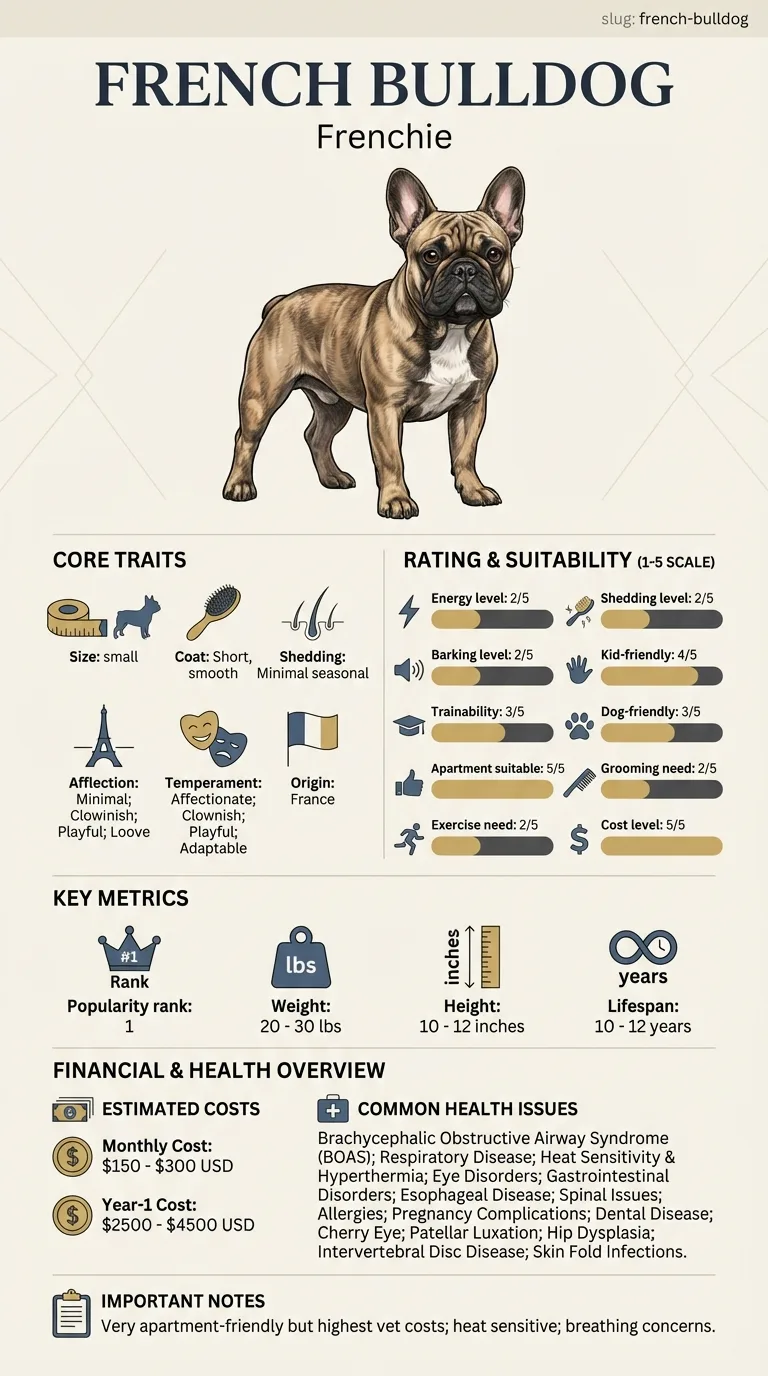
See all French Bulldog health problems, which breeds are prone to cataracts, or the full French Bulldog breed guide for temperament, exercise needs and ownership costs.
A slow-forming cataract can take a year or more to fully cloud the lens, while a diabetes-driven one can do it in under a month. Surgery recovery, when pursued, typically runs four to six weeks of drops and restricted activity before full clearance.
Success isn't always 'restored sight.' For many owners it means catching the change early, ruling out a treatable driver like diabetes, and either getting a good surgical outcome or helping the dog adapt safely and confidently to life without full vision.
Not every Frenchie with a cataract needs surgery, and the decision usually comes down to how fast it's progressing and how much the dog relies on vision day to day.

Otis, a seven-year-old Frenchie, had always been dead-on catching his ball in the yard. Over about six weeks his owner noticed he was missing it more, then walking wide around the coffee table he'd navigated for years without issue. A closer look at his eyes in daylight showed a faint grey haze in the left pupil that hadn't been there at his last checkup. His vet distinguished it from ordinary aging haze with a penlight exam and referred him to a veterinary ophthalmologist, who confirmed an early cataract and, as a precaution, ran bloodwork that came back with an elevated blood glucose reading — an early sign of diabetes that had gone unnoticed. Treating the diabetes slowed things considerably, and eighteen months later the cataract in that eye has barely progressed.
Key takeaway: A cataract is sometimes the visible tip of a different problem. Chasing down why it's forming can matter as much as watching the eye itself.
A bluish-grey haze that appears in both eyes around age eight or older and doesn't seem to affect vision much is usually nuclear sclerosis, a normal aging change. A cataract looks whiter and more opaque, can appear at any age, and is more likely to visibly affect vision. A vet can tell them apart in an exam using a bright light and magnification.
Yes. Left untreated, a cataract will eventually block light from reaching the retina, and a dog can lose sight in that eye entirely. Many dogs adapt remarkably well to gradual vision loss, especially in a familiar home, but it is a real and permanent outcome without surgery.
It can be, particularly for a younger dog with an inherited cataract and an otherwise healthy eye. The decision weighs cost and anesthesia risk (a real consideration in a brachycephalic breed) against years of restored vision. Your vet and a veterinary ophthalmologist can help you weigh those specific to your dog.
Inherited cataracts are documented in the breed and can appear well before old age. Diabetes, prior eye trauma or inflammation, and nutritional issues in puppyhood can also trigger them. Because Frenchies already have prominent, exposed eyes, trauma-related cataracts are somewhat more common here than in deep-set-eyed breeds.
It varies widely. Diabetic cataracts can go from clear to fully opaque in days to weeks. Inherited and age-related cataracts more often take months to years. That unpredictability is exactly why a vet should track a cataract on a schedule rather than a wait-and-see basis.
No product on the market dissolves or reverses an existing cataract in dogs. Some antioxidant drops are marketed to slow progression, and your vet can advise whether they're worth trying, but they are not a substitute for monitoring or, if needed, surgery.
Keep furniture layout consistent, add texture cues like rugs at turns and stairs, use verbal warnings before touching or picking the dog up, and block open stairwells or pool edges. Most dogs relearn a stable home's layout within a couple of weeks of going blind.
A whitish, opaque patch in the center of the pupil, often noticed first when light hits the eye at an angle.
No — slow-forming, partial cataracts in an older dog are often just monitored rather than operated on.
Budget roughly $2,700–$4,500 per eye through a veterinary ophthalmologist, including the pre-surgical workup and follow-up visits.
Yes. Dogs rely heavily on smell and hearing, and most adjust to blindness in a stable home within a few weeks.
Yes, especially past age six — an annual eye exam catches early cataracts and other changes before they affect vision.
A one-page prep sheet for this condition: the signs, the questions to ask, what to get priced. Unlocks here.
You get: Vet visit prep sheet
No spam. One-click unsubscribe. See our privacy policy.
Preview page 1 before you decide.
