Behavior
What are quick tips for English Cocker Spaniel elbow dysplasia?
Ensure your pup maintains a healthy weight and avoid excessive jumping or running. Regular vet visits are crucial for monitoring their condition.

Quick answer
What are quick tips for English Cocker Spaniel elbow dysplasia?
Ensure your pup maintains a healthy weight and avoid excessive jumping or running. Regular vet visits are crucial for monitoring their condition.
Elbow dysplasia in English Cocker Spaniels can lead to pain and mobility issues. It's crucial for dog owners to recognize the signs early.
Many English Cocker Spaniel owners face this issue, especially those with active dogs or those who may not have the means to provide specialized care. First-time owners might struggle with recognizing the signs of discomfort and knowing how to address them.
This guide is not medical advice. If your dog shows pain, sudden behavior change, or worsening symptoms, consult a licensed veterinarian.
Some links may be affiliate links. We may earn a commission at no extra cost to you. We only suggest products we believe are helpful for dog owners.
We research and check what we publish, but we do not warrant that any figure, date, price, or statement is accurate, complete, or current, and we accept no liability for any loss, cost, injury, or other harm arising from the use of this site. Use it as one reference among several. You remain responsible for your own decisions and for your dog's care - confirm anything that matters with a licensed veterinarian or another qualified professional before you act on it. Full disclaimer.
Check this first
It's vital to know when English Cocker Spaniel elbow dysplasia requires immediate vet attention. Red-flag signs include severe pain, inability to bear weight on the affected leg, or visible swelling around the elbow joint. If your dog is excessively whining, panting, or showing signs of distress, don't wait—call your vet right away.
Mild cases, however, can often be monitored at home. Look for signs like occasional limping or slight stiffness after exercise. If your dog is still able to play, walk, and engage in activities but shows some discomfort, it’s usually safe to create a management plan with your vet.
Track their activity levels and any changes in behavior to assess their condition over time.
Remember, observing your dog closely can help you determine the need for medical intervention. If any symptoms worsen or if you have doubts, err on the side of caution and consult your veterinarian. It's better to be safe when it comes to your dog's health.
If any of these apply, call your vet or an emergency clinic now. The rest of this page is for the cases that are not an emergency.
English Cocker Spaniel elbow dysplasia is a common joint issue that affects many dogs of this breed. It manifests as pain or stiffness in the elbows, making activities like walking or playing uncomfortable. Owners may notice their dog limping, avoiding exercise, or having difficulty getting up from a resting position.
Elbow dysplasia is fairly common in English Cocker Spaniels, especially in those with a family history of joint issues. It's important for owners to be aware of this condition, as early detection and management can significantly improve their dog's quality of life.
English Cocker Spaniels can inherit elbow dysplasia due to genetic factors. This breed is prone to joint issues, which can affect their elbow development.
Environmental factors, like obesity and excessive exercise during growth, can worsen elbow dysplasia. Improper nutrition or a lack of controlled physical activity can also lead to joint problems.
Consult your vet if you notice persistent limping, swelling, or changes in behavior. Early intervention can help manage the condition and prevent further complications.
Avoiding common pitfalls can help improve your English Cocker Spaniel's condition. Here are some mistakes to watch out for and safer alternatives.
Start here: English Cocker Spaniel Most Common Genetic Disorders
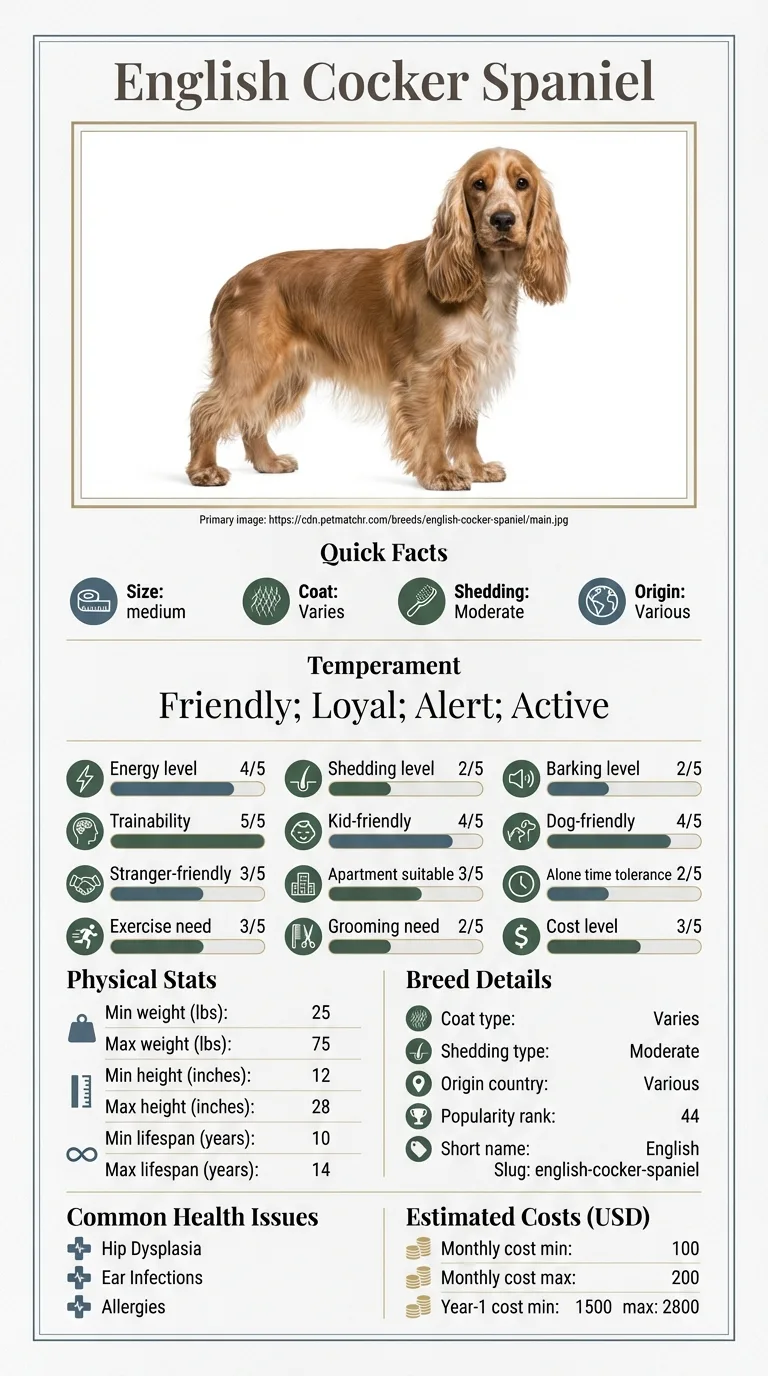
See all English Cocker Spaniel health problems, which breeds are prone to elbow dysplasia, or the full English Cocker Spaniel breed guide for temperament, exercise needs and ownership costs.
Most owners can see improvements in their English Cocker Spaniel's elbow dysplasia symptoms within 4 to 6 months with consistent management and care.
Success looks like reduced pain and improved mobility for your dog. Regular vet check-ups and proper training will help your dog feel more comfortable and active.
When Sarah, a busy nurse in Los Angeles, noticed her English Cocker Spaniel, Max, limping after playtime, she was concerned. After a vet visit, she learned Max had elbow dysplasia. Determined to help him, Sarah researched how to stop English Cocker Spaniel elbow dysplasia. She adjusted Max's diet, created a gentle exercise routine, and enrolled him in a training program focused on low-impact activities. With time and patience, Max's condition improved significantly, allowing him to enjoy walks and play without discomfort.
Key takeaway: With the right care and training, managing English Cocker Spaniel elbow dysplasia is possible. Consistency in treatment and understanding your dog’s needs are key.
English Cocker Spaniel elbow dysplasia often results from genetic factors, improper growth, or injury. It leads to joint malformation that can cause pain and mobility issues. Regular vet check-ups can help identify these risks early.
While you can't completely stop elbow dysplasia, you can manage it through proper weight management and consistent exercise. Avoid high-impact activities and consult your vet for a tailored exercise plan. Supplements like glucosamine may also help.
Watch for signs like limping, difficulty rising, or reluctance to play. If your dog seems uncomfortable or is favoring one leg, it’s time to see your vet. Early detection can lead to more effective treatment.
Treatment options include medication for pain relief, weight management, and physical therapy. In severe cases, surgery might be necessary to correct the joint malformation. Always consult your vet for the best course of action.
Yes, training can help your English Cocker Spaniel cope with elbow dysplasia by teaching them to move safely and avoid activities that may strain their joints. Gentle training that focuses on obedience and controlled movements can improve their quality of life. Always consult a professional trainer familiar with the condition.
Symptoms of English Cocker Spaniel elbow dysplasia may include limping, difficulty in movement, or reluctance to exercise. You might also notice swelling around the elbow joint or stiffness after rest. If you see any of these signs, it's important to consult your vet.
Yes, elbow dysplasia can worsen as your English Cocker Spaniel ages. Over time, the joint malformation can lead to arthritis, causing increased pain and mobility issues. Regular vet check-ups can help manage the condition and adjust treatment as needed.
Managing elbow dysplasia at home involves providing a comfortable resting area, maintaining a healthy weight, and ensuring low-impact exercise. You can also consider joint supplements or anti-inflammatory medications prescribed by your vet. Always consult your veterinarian before starting any new treatment.
Surgery for English Cocker Spaniel elbow dysplasia may be considered if your dog's pain is severe and not manageable through medication or lifestyle changes. Consult with your vet to explore options such as arthroscopy or joint replacement. They can help assess whether surgery is the right choice for your pet.
Ensure your pup maintains a healthy weight and avoid excessive jumping or running. Regular vet visits are crucial for monitoring their condition.
Treatment costs can vary widely but expect to spend anywhere from $100 to $2,000 depending on the severity and necessary interventions.
Supplements like glucosamine and omega-3 fatty acids can support joint health. Always discuss with your vet before starting any new supplement.
Yes, training can help by teaching your dog to avoid movements that stress the elbow. Positive reinforcement is key to successful training.
A one-page prep sheet for this condition: the signs, the questions to ask, what to get priced. Unlocks here.
You get: Vet visit prep sheet
No spam. One-click unsubscribe. See our privacy policy.
Preview page 1 before you decide.
Early access list
The free prep sheet covers the same-day warning signs, a symptom log and the questions to ask. We are considering a fuller kit that adds a cost worksheet for the usual tests and treatments (US price ranges with their sources) and a plain-English guide to ways of covering the bill. It is not built yet; this list tells us whether it is worth building.
One email, no spam, unsubscribe anytime. Information only, not veterinary advice.