Behavior
What are quick tips for Cavalier King Charles Spaniel back/spine issues?
Monitor your dog's weight, provide a soft bed, and limit jumping to reduce strain on the back. Regular vet visits can help catch issues early.

Quick answer
What are quick tips for Cavalier King Charles Spaniel back/spine issues?
Monitor your dog's weight, provide a soft bed, and limit jumping to reduce strain on the back. Regular vet visits can help catch issues early.
Cavalier King Charles Spaniel back/spine issues can affect your dog's quality of life. These problems often stem from conditions like intervertebral disc disease.
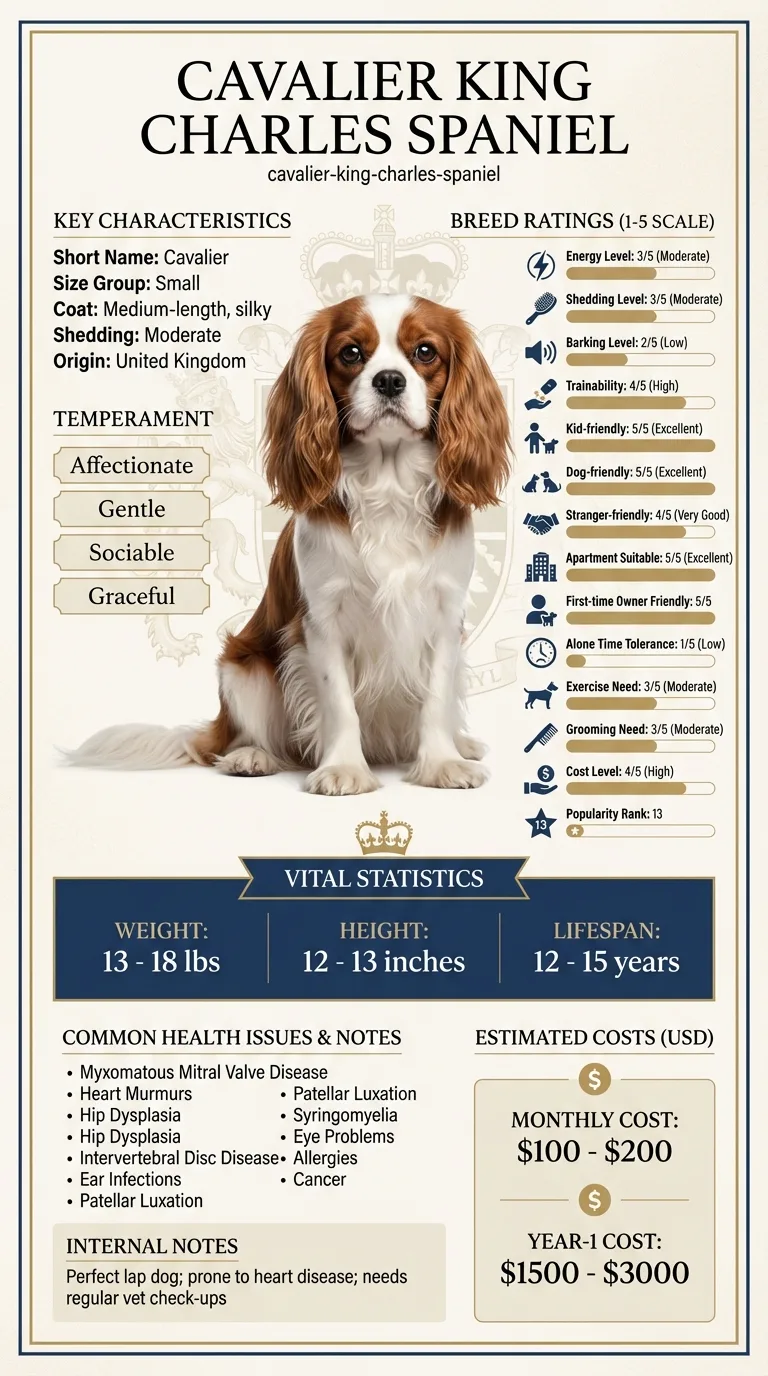
Typical owners facing this challenge include families with young children or older adults who may notice signs of discomfort in their beloved companions. Owners who aren't aware of the breed's predispositions might find themselves confused and concerned about their dog's health.
This guide is not medical advice. If your dog shows pain, sudden behavior change, or worsening symptoms, consult a licensed veterinarian.
Some links may be affiliate links. We may earn a commission at no extra cost to you. We only suggest products we believe are helpful for dog owners.
We research and check what we publish, but we do not warrant that any figure, date, price, or statement is accurate, complete, or current, and we accept no liability for any loss, cost, injury, or other harm arising from the use of this site. Use it as one reference among several. You remain responsible for your own decisions and for your dog's care - confirm anything that matters with a licensed veterinarian or another qualified professional before you act on it. Full disclaimer.
Check this first
Knowing when to act fast with your Cavalier King Charles Spaniel's back or spine issues is crucial. Some signs are red flags that mean you should call your vet immediately. Others can be monitored at home with the right strategy.
Emergency signs include sudden inability to walk, severe pain when touched, or any noticeable weakness in the legs. If your dog is crying out in pain or has lost bladder or bowel control, these are also urgent signs. These symptoms may indicate a serious condition like intervertebral disc disease, which requires immediate veterinary attention.
On the other hand, mild cases can often be managed at home. If your Cavalier shows slight discomfort or stiffness but is still active and eating well, you can watch and wait. It’s wise to keep an eye on your dog's behavior and activity level. Set up a plan that includes rest, gentle exercise, and possibly some physical therapy or training specific to back issues. Always consult your vet to create a tailored approach for your dog's needs.
If any of these apply, call your vet or an emergency clinic now. The rest of this page is for the cases that are not an emergency.
Cavalier King Charles Spaniels are known for their affectionate nature, but they can face serious back and spine issues. These problems often manifest as difficulty walking, reluctance to jump, or signs of pain when touched. Common triggers include age, sudden movements, or obesity, which can exacerbate spine health.
Back and spine issues are relatively common in Cavalier King Charles Spaniels. Many owners report seeing symptoms as early as middle age, making it crucial to monitor their activity and weight.
Cavalier King Charles Spaniels are small dogs with a delicate spine structure. Their size and breeding history can make them more prone to intervertebral disc disease and other back issues. Genetics plays a significant role, as certain lines may carry a higher risk of these conditions.
Environmental factors also contribute to back and spine issues in Cavaliers. Activities like jumping from high places or being overly active without proper supervision can strain their backs. Additionally, their tendency to cuddle and rest on soft surfaces may lead to poor posture, which can worsen spine health.
If you notice persistent pain, difficulty walking, or any sudden changes in behavior, contact your vet immediately. Early intervention can prevent more severe spine issues and help manage your Cavalier's condition effectively.
It's crucial to address Cavalier King Charles Spaniel back and spine issues effectively. Unfortunately, some common mistakes can delay improvement or make the situation worse. Here are a few to watch out for.
Start here: Cavalier King Charles Spaniel Genetic Disorders: Screening
See all Cavalier King Charles Spaniel health problems, which breeds are prone to backspine issues, or the full Cavalier King Charles Spaniel breed guide for temperament, exercise needs and ownership costs.
Most Cavalier King Charles Spaniels with back or spine issues may show improvement within 3 to 6 months of consistent care and follow-up with your vet.
Success means your dog shows reduced pain, increased mobility, and a happier demeanor. Regular vet check-ups and proper training will help maintain their spinal health.
When Maggie, a Cavalier King Charles Spaniel, started showing signs of discomfort and difficulty jumping onto the couch, her owner, Sarah, quickly realized something was wrong. After a vet visit confirmed intervertebral disc disease, Sarah began a careful regimen of physical therapy and adjusted Maggie's exercise routine. With patience and dedication, Maggie was able to regain her strength and mobility, allowing her to enjoy her favorite activities again.
Key takeaway: Early detection and a tailored care plan can significantly improve the quality of life for Cavaliers facing back/spine issues.
Cavalier King Charles Spaniels are prone to back and spine issues due to their genetic predisposition, particularly intervertebral disc disease. This can result from factors such as age, weight, and their overall activity level. It's important to monitor your dog's physical condition and consult a veterinarian for proper diagnosis and management. This answer relates to Cavalier King Charles Spaniel back/spine issues.
Signs of back or spine issues in Cavaliers may include difficulty jumping, reluctance to play, or signs of pain when touched along the back. If your dog seems uncomfortable or shows changes in behavior, it’s best to consult your vet for an examination.
To help your Cavalier, provide a safe environment with limited jumping and ensure they maintain a healthy weight. Regular low-impact exercise like walking can strengthen muscles and support spine health. Always follow your veterinarian's recommendations for any specific treatment or rehabilitation.
Training methods that focus on gentle conditioning and strengthening exercises can help prevent back/spine issues. Avoid high-impact activities and teach your dog commands that promote safe movement, like 'off' for furniture. Consistent training can also help with overall behavior and health.
If your Cavalier shows persistent signs of pain, difficulty moving, or changes in appetite, it’s time to visit the vet. Early intervention can make a significant difference in managing back/spine issues. Regular vet check-ups are crucial for monitoring health, especially in older dogs.
Early signs of back or spine issues may include difficulty jumping, reluctance to play, or changes in walking patterns. If your Cavalier seems less active or shows signs of discomfort, it’s crucial to consult your vet.
For older Cavaliers, gentle exercises and weight management are key to easing back/spine issues. Consider low-impact activities like short walks and consult your vet about suitable supplements or therapies.
Not all back or spine issues require surgery. Many cases can be managed with medication and physical therapy, but severe conditions might necessitate surgical intervention. Always discuss options with your veterinarian.
To prevent back/spine issues, maintain a healthy weight, avoid excessive jumping, and provide supportive bedding. Regular vet check-ups can also help catch potential problems early.
Many Cavalier King Charles Spaniels can recover from back/spine issues with proper treatment and care. Follow your vet's recommendations for rehabilitation to support your dog’s recovery journey.
Monitor your dog's weight, provide a soft bed, and limit jumping to reduce strain on the back. Regular vet visits can help catch issues early.
Aim for 30 minutes of moderate exercise daily, like walks or gentle play, to keep your Cavalier healthy without overexerting their back.
Immediately reduce their activity and consult a vet for a proper assessment and treatment options to alleviate pain.
Yes, a balanced diet that maintains a healthy weight can reduce stress on your Cavalier's spine. Speak with your vet for specific dietary recommendations.
A one-page prep sheet for this condition: the signs, the questions to ask, what to get priced. Unlocks here.
You get: Vet visit prep sheet
No spam. One-click unsubscribe. See our privacy policy.
Preview page 1 before you decide.