What are quick tips for managing American Staffordshire Terrier pancreatitis & diabetes?
Feed your dog a balanced, low-fat diet and ensure they get daily exercise. Monitor their weight closely and maintain regular vet visits for health checks.
Pancreatitis and diabetes are serious health issues that can affect American Staffordshire Terriers, especially as they age. These conditions can lead to significant discomfort and complications if not managed properly. (American Staffordshire Terrier pancreatitis & diabetes)

Typically, dog owners who have older American Staffordshire Terriers or those with a family history of these conditions struggle with managing pancreatitis and diabetes. They may feel overwhelmed by the dietary and lifestyle changes needed to keep their dogs healthy.
This guide is not medical advice. If your dog shows pain, sudden behavior change, or worsening symptoms, consult a licensed veterinarian.
Some links may be affiliate links. We may earn a commission at no extra cost to you. We only suggest products we believe are helpful for dog owners.
American Staffordshire Terrier pancreatitis & diabetes can significantly impact your dog's daily life. Symptoms may include vomiting, diarrhea, increased thirst, and lethargy. These health issues often stem from poor diet, obesity, or genetic predisposition, making management crucial.
Pancreatitis and diabetes are relatively common in American Staffordshire Terriers, especially as they age. Many older dogs in this breed may face these health challenges, requiring vigilant care and dietary management.
The American Staffordshire Terrier may have a genetic predisposition to certain health issues, including pancreatitis and diabetes. Their strong, muscular build can lead to obesity if not properly managed, which is a significant risk factor for both conditions. Additionally, their diet and eating habits can also play a role in these health issues.
Environmental factors, such as a high-fat diet or lack of exercise, can contribute to the development of pancreatitis and diabetes. Stress and changes in routine can also impact their health. If they're not provided with structured feeding and regular physical activity, they may be more likely to face these health challenges.
If your American Staffordshire Terrier shows signs of extreme anxiety or difficulty following commands, consider hiring a professional trainer. They can help address behavioral issues and improve your dog's overall well-being.
Consult your vet if you notice symptoms like excessive thirst, increased urination, or weight changes. These can be signs of diabetes or pancreatitis, and early intervention is crucial for effective management.
With consistent effort and proper management, you can see improvements in your American Staffordshire Terrier's health within 3 to 6 months.
Success means your dog has stable blood sugar levels, fewer pancreatitis flare-ups, and improved energy, allowing them to enjoy daily activities.
Here are some common mistakes owners make that can worsen pancreatitis and diabetes in American Staffordshire Terriers. It's important to avoid these pitfalls to help your dog feel better.
Recognizing when your American Staffordshire Terrier's pancreatitis and diabetes become an emergency is crucial for their health. Certain red-flag signs indicate it's time to call your vet immediately. These include severe vomiting, lethargy, a bloated abdomen, or signs of dehydration. If your dog is showing these symptoms, do not wait; seek veterinary care right away.
On the other hand, if your dog has mild symptoms like occasional vomiting or slight changes in appetite, you can monitor their condition with a plan. Keep an eye on their eating habits, hydration levels, and energy. Keeping a log of any changes can help you communicate effectively with your vet during check-ups. If symptoms persist or worsen, don't hesitate to reach out to your vet for further guidance.

Maria, a nurse in Chicago, noticed her American Staffordshire Terrier, Max, was lethargic and losing weight. After a vet visit, she learned Max had pancreatitis and was on the verge of diabetes. Determined to help, Maria revamped Max's diet and started regular vet check-ups. She learned to monitor his food intake and adjusted his exercise routine. Within a few months, Max regained his energy and was playing like a puppy again. The journey wasn’t perfect, but Maria felt relieved to see Max healthier and happier.
Key takeaway: Consistent care, including diet management and regular vet visits, can significantly improve your dog's health when dealing with pancreatitis and diabetes.
Pancreatitis and diabetes are common in American Staffordshire Terriers, especially as they age. Genetics, diet, and obesity can increase these risks. Regular vet check-ups and a balanced diet can help prevent these conditions. This answer relates to American Staffordshire Terrier pancreatitis & diabetes.
To reduce the risk of pancreatitis and diabetes, feed your American Staffordshire Terrier a high-quality, balanced diet. Avoid giving them table scraps and high-fat treats. Regular exercise is also essential to maintain a healthy weight.
Signs of pancreatitis include vomiting, diarrhea, and abdominal pain. For diabetes, watch for increased thirst, excessive urination, and weight loss. If you notice these symptoms, consult your vet immediately.
Yes, pancreatitis and diabetes can be managed with proper veterinary care. Treatment may include dietary changes, medication, and regular monitoring of blood sugar levels. It's crucial to follow your vet's recommendations for the best outcome.
Diet is critical for managing both conditions. A low-fat, high-fiber diet can help control weight and blood sugar levels. Consult your vet for specific dietary recommendations tailored to your dog's needs.
Risk for pancreatitis and diabetes increases as American Staffordshire Terriers enter their senior years, typically around 7 years and older. Regular health screenings during this time can help catch issues early.
Yes, pancreatitis and diabetes can often be managed in older American Staffordshire Terriers. Regular vet check-ups, a controlled diet, and appropriate medication can help maintain their health. However, it’s essential to monitor their condition closely and adjust their care as needed.
Common signs of pancreatitis in your American Staffordshire Terrier include vomiting, abdominal pain, and lethargy. For diabetes, you might notice excessive thirst, increased urination, and weight loss despite a good appetite. If you see these symptoms, consult your vet as soon as possible.
Yes, a special diet low in fat and high in fiber is often recommended for American Staffordshire Terriers with pancreatitis and diabetes. Foods should be easily digestible, and portion control is crucial. Always work with your vet to create a tailored meal plan that suits your dog's needs.
Preventing pancreatitis and diabetes in your American Staffordshire Terrier involves maintaining a healthy weight and diet. Regular exercise and routine vet visits can also help catch any health issues early. Avoid feeding table scraps and ensure they have a balanced diet.
You should take your American Staffordshire Terrier to the vet immediately if you notice symptoms like vomiting, lethargy, or changes in appetite. Regular check-ups are also vital, especially for older dogs, to monitor for any signs of pancreatitis or diabetes.

Feed your dog a balanced, low-fat diet and ensure they get daily exercise. Monitor their weight closely and maintain regular vet visits for health checks.
Increase their exercise and reduce treat portions. Consult your vet for a weight loss plan that suits their specific health needs.
Look for increased thirst, frequent urination, and noticeable weight loss. If you see these signs, seek veterinary advice promptly.
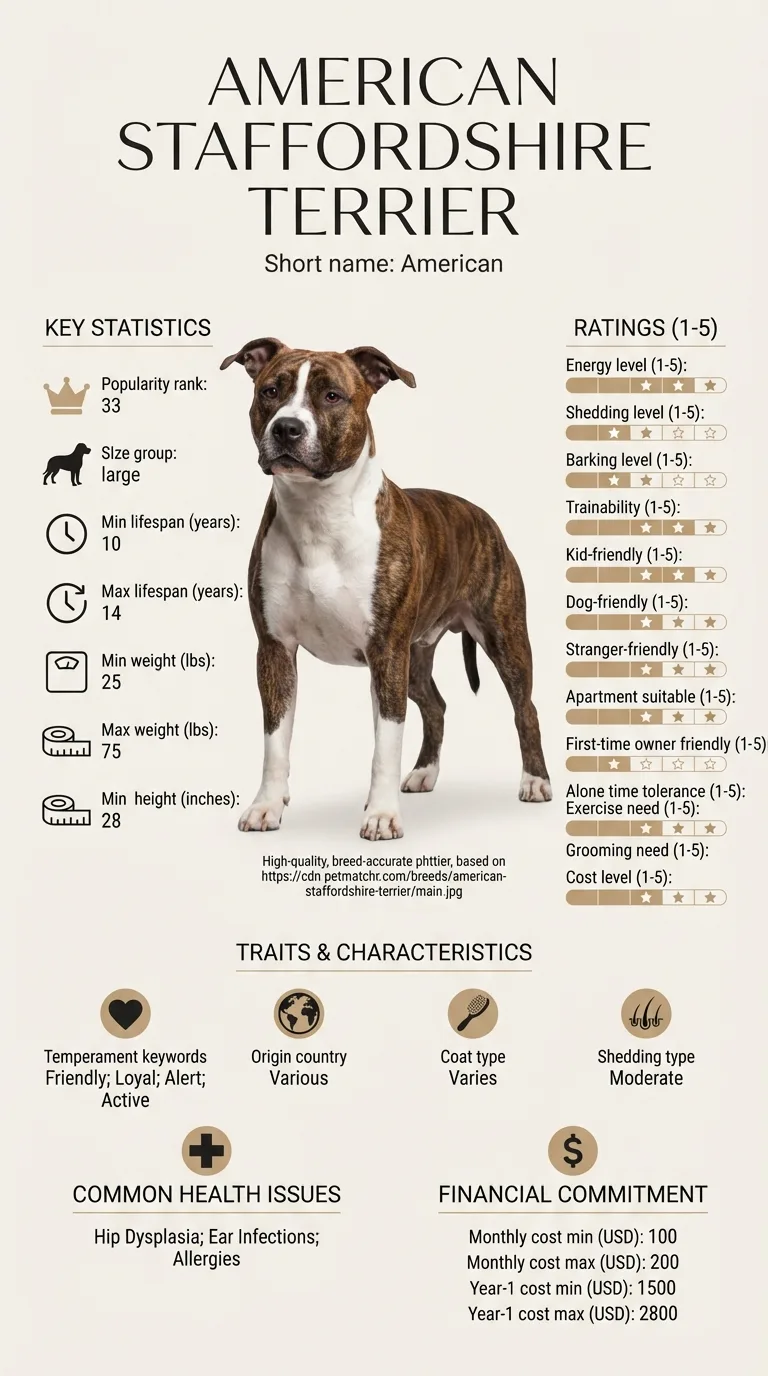
Costs can vary widely, but expect to spend around $100 to $200 monthly on food and medications for management. Check with your vet for a more precise estimate.