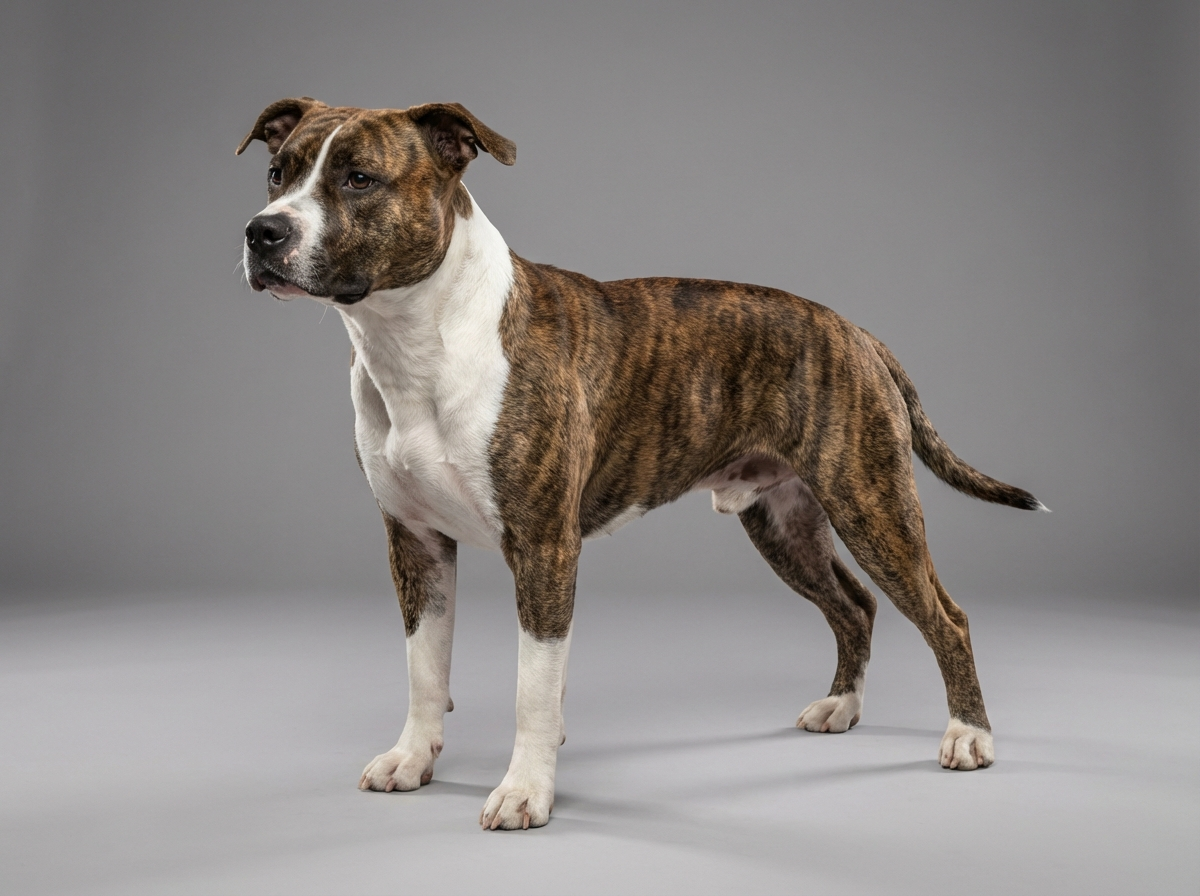
Health
What are quick tips for American Staffordshire Terrier hypothyroidism?
Provide daily medication as prescribed by your vet and schedule regular check-ups to monitor thyroid levels. Maintain a balanced diet and watch for weight fluctuations.

Quick answer
What are quick tips for American Staffordshire Terrier hypothyroidism?
Provide daily medication as prescribed by your vet and schedule regular check-ups to monitor thyroid levels. Maintain a balanced diet and watch for weight fluctuations.
American Staffordshire Terrier hypothyroidism is a serious condition that affects your dog's thyroid levels and overall health. It can lead to lethargy, weight gain, and skin issues if not managed properly.
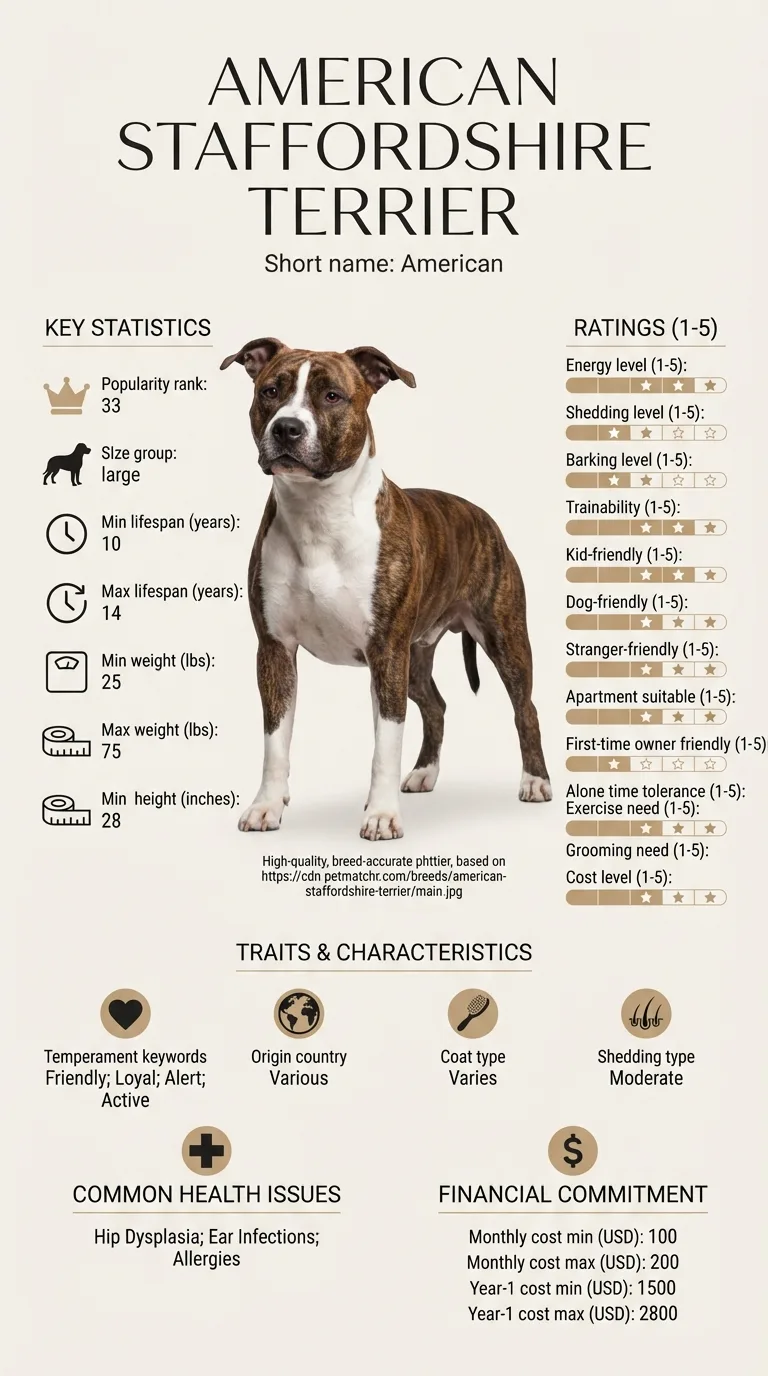
Typical owners who face this problem often include those with American Staffordshire Terriers showing signs of fatigue, unexpected weight gain, or changes in their coat. This can be particularly concerning for first-time dog owners who may not know how to identify or address these health issues.
This guide is not medical advice. If your dog shows pain, sudden behavior change, or worsening symptoms, consult a licensed veterinarian.
Some links may be affiliate links. We may earn a commission at no extra cost to you. We only suggest products we believe are helpful for dog owners.
We research and check what we publish, but we do not warrant that any figure, date, price, or statement is accurate, complete, or current, and we accept no liability for any loss, cost, injury, or other harm arising from the use of this site. Use it as one reference among several. You remain responsible for your own decisions and for your dog's care - confirm anything that matters with a licensed veterinarian or another qualified professional before you act on it. Full disclaimer.
Check this first
Hypothyroidism in your American Staffordshire Terrier can be serious, and knowing when to act is crucial. If you notice any of the following red-flag signs, call your vet immediately.
First, if your dog is showing severe lethargy, a sudden drop in energy, or is unresponsive to stimuli, these could indicate a crisis. Additionally, if you see symptoms like labored breathing, swelling, or a noticeable drop in body temperature, get veterinary help right away. These signs could suggest a more severe underlying issue related to hypothyroidism.
On the other hand, mild cases can often be monitored. If your American Staffordshire Terrier is experiencing slight weight gain, mild skin issues, or a decrease in activity level, these may not require immediate action. Instead, keep a close eye on these symptoms and make a plan to discuss them with your vet during your next appointment. Regular check-ups can help manage hypothyroidism effectively and keep your pup healthy.
If any of these apply, call your vet or an emergency clinic now. The rest of this page is for the cases that are not an emergency.
American Staffordshire Terrier hypothyroidism is a condition where the thyroid gland doesn't produce enough hormones. This can lead to symptoms like weight gain, lethargy, and skin issues. Owners may notice their dog becoming less active or having a dull coat, which can be concerning.
Hypothyroidism is relatively common in American Staffordshire Terriers, affecting around 5% to 10% of the breed. It's important for owners to stay vigilant for early signs and consult with a vet for proper diagnosis.
American Staffordshire Terriers may be predisposed to hypothyroidism due to genetic factors. This breed can have a higher chance of developing this hormone deficiency, which impacts their overall health and energy levels.
Environmental factors can also play a role in hypothyroidism. Poor diet, exposure to toxins, or stress can contribute to thyroid issues. Additionally, obesity, which is common in less active dogs, may worsen the condition.
If you notice symptoms like excessive weight gain, lethargy, or changes in appetite, it's time to visit your vet. They can run tests to diagnose hypothyroidism and recommend appropriate treatments.
Avoiding these common mistakes can help improve your American Staffordshire Terrier's hypothyroidism symptoms and overall health.
Start here: American Staffordshire Terrier Most Common Genetic Disorders
See all American Staffordshire Terrier health problems, which breeds are prone to hypothyroidism, or the full American Staffordshire Terrier breed guide for temperament, exercise needs and ownership costs.
You can expect to see improvements in your American Staffordshire Terrier's symptoms within 6 to 8 weeks of starting treatment. Regular vet check-ups will help monitor progress and adjust medications as needed.
Success means your dog will have stabilized energy levels, a healthy weight, and improved coat condition. You'll also notice behavioral improvements, as your dog feels better overall.
When Sarah adopted Max, her American Staffordshire Terrier, she noticed he was unusually lethargic. After a vet visit, she learned Max had hypothyroidism. Initially overwhelmed, Sarah followed the vet's advice, adjusting Max's diet and starting medication. Within weeks, Max was more energetic and playful. Sarah also implemented a consistent exercise routine, which helped them bond and kept Max healthy.
Key takeaway: Managing hypothyroidism in your American Staffordshire Terrier is a team effort with your vet. Stay committed to treatment and lifestyle changes, and you'll see positive changes in your dog's health and happiness.
Hypothyroidism in American Staffordshire Terriers can occur due to genetics, autoimmune diseases, or inflammation of the thyroid gland. It's important to monitor for symptoms such as weight gain, lethargy, and skin issues. A vet can perform tests to confirm the diagnosis. This answer relates to American Staffordshire Terrier hypothyroidism.
Managing hypothyroidism involves daily medication to replace the missing thyroid hormones. Regular vet check-ups are essential to adjust the dosage and monitor your dog's health. A balanced diet and maintaining a healthy weight can also support their overall well-being.
Common symptoms include weight gain, decreased energy, hair loss, and skin infections. You may also notice behavioral changes, such as increased anxiety or sensitivity to cold. If you see these signs, consult your veterinarian for proper evaluation.
Hypothyroidism is typically a lifelong condition, but it can be effectively managed with medication. With proper treatment, many dogs lead healthy, active lives. It's crucial to follow your vet's recommendations for monitoring and adjusting medication.
While there's no specific diet for hypothyroidism, maintaining a balanced diet is important. Focus on high-quality dog food that meets their nutritional needs. Consult your vet for recommendations tailored to your dog's health status.
Behavioral changes can occur due to hypothyroidism, such as increased anxiety or aggression. Regular exercise, mental stimulation, and consistent training can help manage these issues. If problems persist, consider consulting a professional dog trainer or behaviorist.
With proper treatment, the long-term outlook for an American Staffordshire Terrier with hypothyroidism is positive. Regular vet visits and medication adherence can help maintain their health and quality of life. Early detection and management are key factors in ensuring a happy, active dog.
Hypothyroidism is typically treated with daily medication that replaces the missing thyroid hormone. Your veterinarian will monitor your dog's hormone levels and adjust the dosage as needed to keep them healthy.
Older American Staffordshire Terriers may show more pronounced symptoms of hypothyroidism, such as increased fatigue or weight changes. Regular vet check-ups are essential to monitor their thyroid function as they age.
If you suspect hypothyroidism, it's important to consult your veterinarian. They can perform blood tests to confirm the diagnosis and discuss treatment options tailored to your dog's needs.
Provide daily medication as prescribed by your vet and schedule regular check-ups to monitor thyroid levels. Maintain a balanced diet and watch for weight fluctuations.
Initially, visits should be every 6-12 months to monitor thyroid levels. Once stable, yearly check-ups are usually sufficient unless issues arise.
Yes, consistent training can improve behavior and mental stimulation, helping with any anxiety related to the condition. Positive reinforcement methods work best.
Hypothyroidism is relatively common in American Staffordshire Terriers and other breeds. Regular health checks can help catch it early.
Look for signs of lethargy, changes in appetite, and coat issues. These may indicate a need for a vet visit for potential hypothyroidism.
A one-page prep sheet for this condition: the signs, the questions to ask, what to get priced. Unlocks here.
You get: Vet visit prep sheet
No spam. One-click unsubscribe. See our privacy policy.
Preview page 1 before you decide.