Behavior
What are quick tips for managing American Staffordshire Terrier anxiety?
Provide a safe space, maintain a consistent routine, and engage in regular exercise to help manage your dog's anxiety.

Quick answer
What are quick tips for managing American Staffordshire Terrier anxiety?
Provide a safe space, maintain a consistent routine, and engage in regular exercise to help manage your dog's anxiety.
American Staffordshire Terrier anxiety can impact your dog's happiness and behavior.
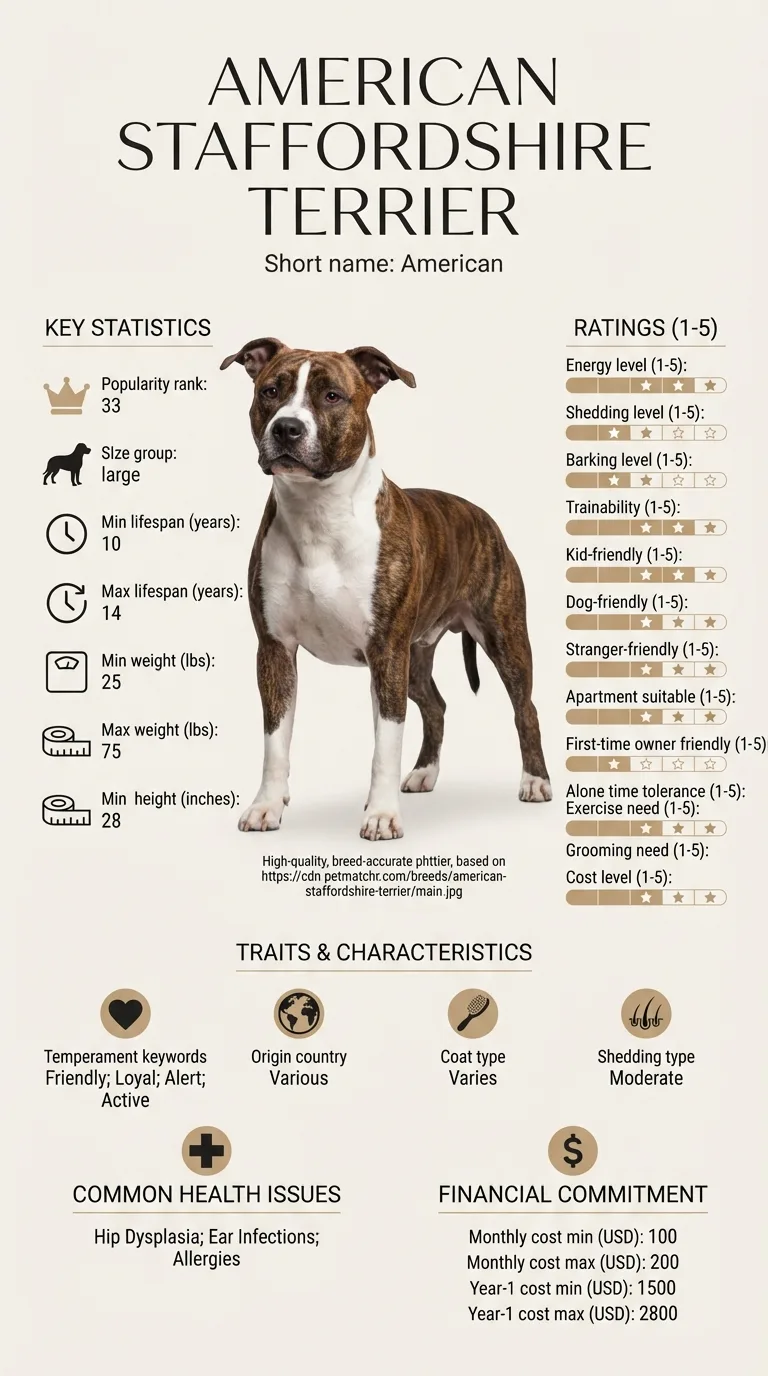
This guide is for American Staffordshire Terrier owners who are noticing anxiety symptoms and want to learn effective training strategies to help their dogs.
American Staffordshire Terrier anxiety often manifests as excessive whining or barking, restlessness, or destructive behaviors. Owners may notice their dog becomes overly clingy or hides when left alone. This anxiety can lead to a cycle of stress for both the dog and the owner, creating tension in the home.
If your American Staffordshire Terrier's anxiety is severe or persistent, consider enrolling them in a training class focused on anxiety reduction techniques.
Consult a vet or a certified behaviorist if your dog's anxiety leads to destructive behaviors, excessive barking, or if they're unable to relax.
There are several tools and products that can help manage American Staffordshire Terrier anxiety effectively.
Managing American Staffordshire Terrier anxiety often requires changes to your daily routine. Start by establishing a consistent schedule for feeding, walks, and playtime. This predictability helps your dog feel secure.
For instance, if you always walk your dog at the same time each day, they’ll learn to anticipate and look forward to it.
Exercise is crucial for reducing anxiety. Aim for at least one long walk and some playtime each day. Activities like fetch or agility training can channel their energy positively.
Additionally, consider introducing short training sessions throughout the day. This not only provides mental stimulation but also strengthens your bond.
Alone-time management is essential too. Gradually increase the amount of time your American Staffordshire Terrier spends alone. Start with short periods and extend them as your dog becomes more comfortable.
Also, create a safe space for them to relax when you’re away. This could be a cozy crate or a specific room where they feel at ease.
Adjusting your household routine can also help. If your dog struggles with loud noises, try to minimize disturbances during their downtime. Using white noise machines or calming music can create a soothing environment.
Finally, incorporating relaxation techniques, like gentle petting or massage, during anxious moments can provide comfort and reassurance.
Tracking progress in managing American Staffordshire Terrier anxiety can feel overwhelming, but small victories can be encouraging. Micro-wins might include your dog settling down quicker after a stressful event or being calm during your departure. These signs indicate that your training efforts are making a difference.
However, setbacks are part of the journey. You might notice your dog has a bad day, exhibiting anxious behaviors like excessive barking or destructive chewing. Recognizing these moments as temporary can help you stay focused on your long-term goals.
To assess if your plan is working, keep a journal of your dog’s behavior. Note improvements and setbacks, and look for trends over time. If you see consistent progress, it’s a good sign your approach is working.
If issues persist or worsen, it may be time to escalate your efforts, such as consulting a trainer or a vet for additional support.

When Lisa adopted Max, her American Staffordshire Terrier, she quickly noticed his anxiety during storms. He would tremble, pace, and hide under the bed. To help him, Lisa tried creating a safe space with blankets and toys, but it didn’t completely ease his fears. Realizing she needed more support, she consulted a dog trainer who specialized in anxiety issues. The trainer suggested gradual desensitization techniques and provided tips for calming exercises. Over several months, they worked on these strategies together. Lisa also introduced calming products like a thunder jacket. Eventually, Max became much more relaxed during storms, allowing Lisa to feel less stressed too.
Key takeaway: With patience and the right support, you can help your American Staffordshire Terrier manage anxiety effectively.
American Staffordshire Terrier anxiety can stem from various factors, including lack of socialization, changes in environment, or separation from their owners. These dogs are loyal and may struggle with being alone or in unfamiliar situations. Recognizing these triggers is the first step in helping your dog feel more secure.
Signs of anxiety in an American Staffordshire Terrier may include excessive barking, destructive behavior, pacing, or hiding. You might also notice changes in their appetite or energy levels. Observing your dog's behavior closely can help you identify when they’re feeling stressed.
To help reduce your American Staffordshire Terrier's anxiety, provide a consistent routine, plenty of exercise, and positive reinforcement training. Engaging them in interactive games can also help. If their anxiety persists, consult a professional trainer or vet for tailored strategies.
If your American Staffordshire Terrier's anxiety leads to harmful behavior or significantly affects their quality of life, it's time to seek professional help. A vet can offer guidance and may recommend a behaviorist or specific training programs. Early intervention can make a big difference.
Absolutely! American Staffordshire Terrier anxiety training can be very effective. Training helps build your dog's confidence and teaches them coping mechanisms for stress. Consistent training sessions can create a more relaxed and secure environment for your dog.
Yes, older American Staffordshire Terriers can develop anxiety, often due to changes in their environment or health. Conditions like arthritis or cognitive decline can contribute to anxiety. It's essential to monitor your senior dog's behavior and consult a vet if you notice signs of distress.
To help your American Staffordshire Terrier with separation anxiety, start by slowly getting them used to being alone. Use positive reinforcement when they stay calm during short absences. You can also consider creating a safe space with their favorite toys and a comforting blanket.
Yes, many American Staffordshire Terriers experience anxiety while traveling. The unfamiliar sights and sounds can be overwhelming. To ease their anxiety, you can make travel more comfortable with familiar items and take breaks during long trips.
Absolutely! Training can significantly help reduce anxiety in your American Staffordshire Terrier. Positive reinforcement techniques can teach them to feel more secure and confident in various situations, which can lessen anxiety-related behaviors.
Provide a safe space, maintain a consistent routine, and engage in regular exercise to help manage your dog's anxiety.
Gradually train your American Staffordshire Terrier to be alone by starting with short periods and using positive reinforcement.
Identifying the triggers and redirecting their attention can help reduce excessive barking caused by anxiety.
Yes, products like calming collars or anxiety wraps can help soothe your American Staffordshire Terrier during stressful situations.
Anxiety and pain look alike from the outside. Get the prep sheet for this breed's separation-anxiety page and take it to the vet.
You get: Vet visit prep sheet
No spam. One-click unsubscribe. See our privacy policy.
Preview page 1 before you decide.
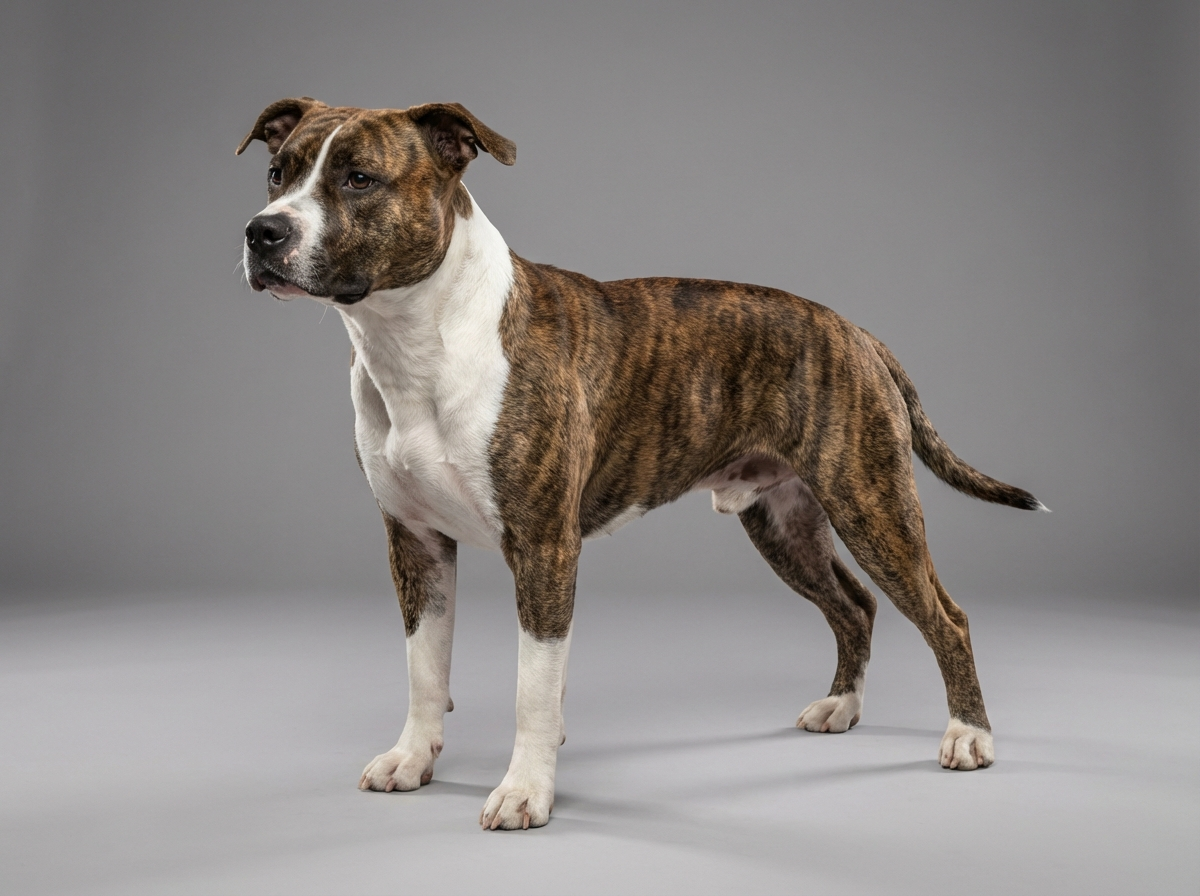
This guide is not medical advice. If your dog shows pain, sudden behavior change, or worsening symptoms, consult a licensed veterinarian.
Some links may be affiliate links. We may earn a commission at no extra cost to you. We only suggest products we believe are helpful for dog owners.
We research and check what we publish, but we do not warrant that any figure, date, price, or statement is accurate, complete, or current, and we accept no liability for any loss, cost, injury, or other harm arising from the use of this site. Use it as one reference among several. You remain responsible for your own decisions and for your dog's care - confirm anything that matters with a licensed veterinarian or another qualified professional before you act on it. Full disclaimer.
Not sure which breed is right for you? Take our 2-minute quiz to find out.
Take the quiz