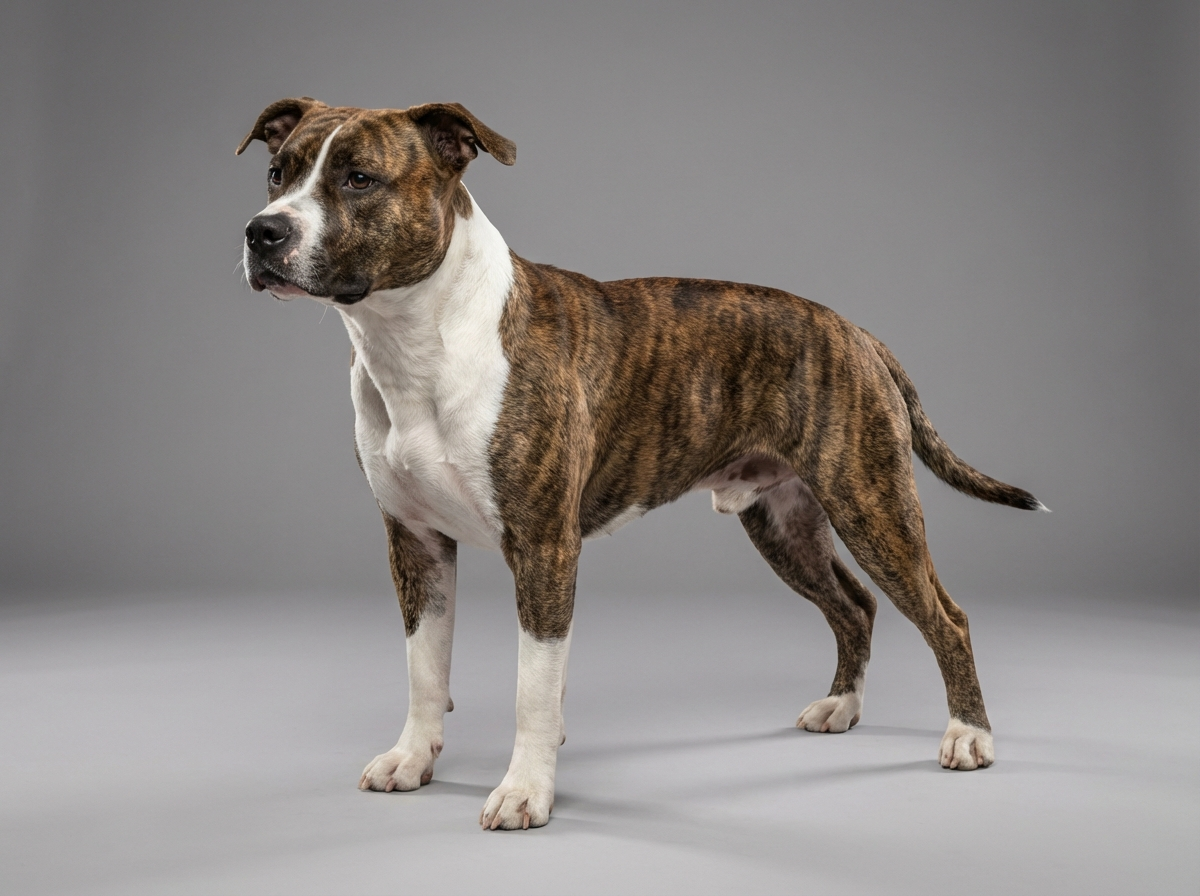
Behavior
What are quick tips for preventing American Staffordshire Terrier obesity?
To prevent obesity, measure your dog's food, limit treats, and ensure daily exercise. Regular vet visits can help monitor their weight.

Quick answer
What are quick tips for preventing American Staffordshire Terrier obesity?
To prevent obesity, measure your dog's food, limit treats, and ensure daily exercise. Regular vet visits can help monitor their weight.
American Staffordshire Terrier obesity is a growing concern for many dog owners. It can lead to serious health issues and affect your dog's quality of life.
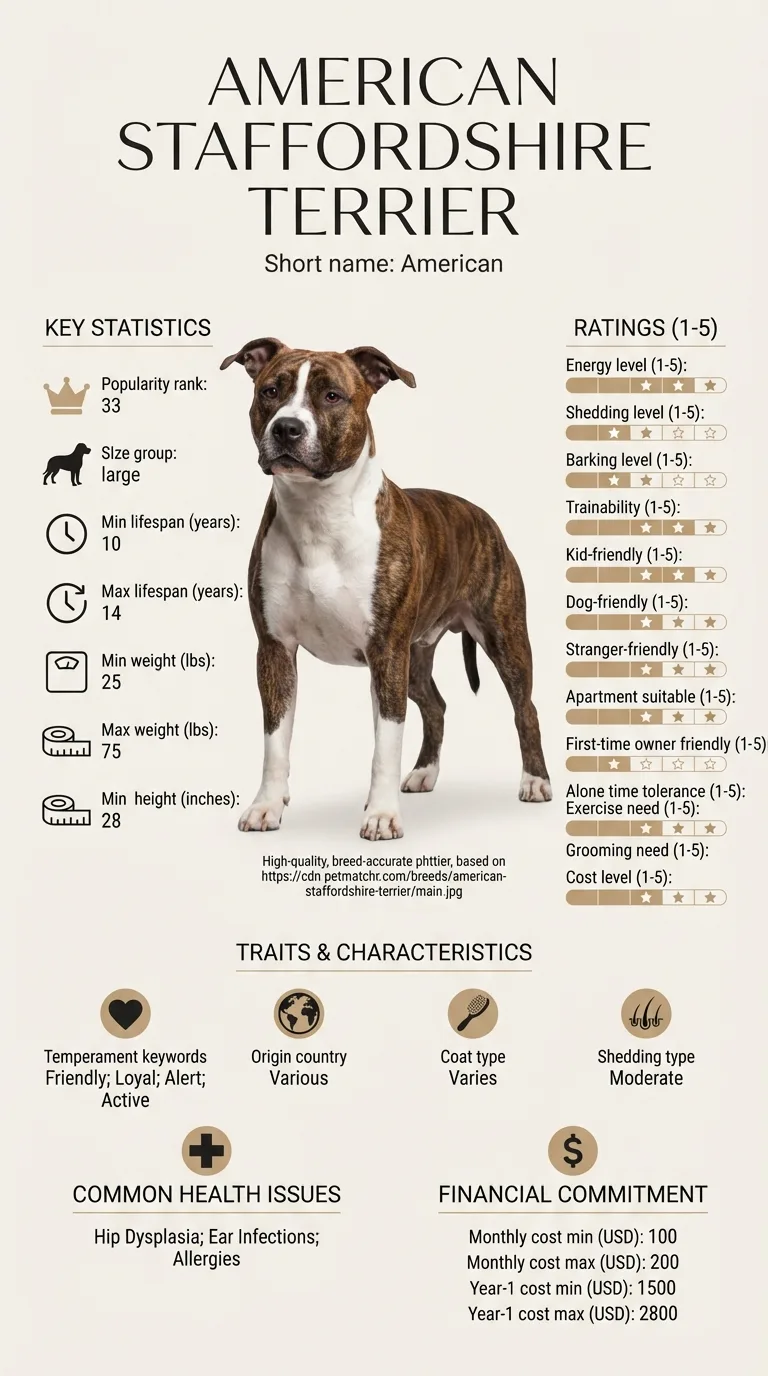
Owners of American Staffordshire Terriers, especially first-time dog parents or busy families, often find it challenging to maintain their dog's ideal weight. They may struggle with balancing proper nutrition, exercise, and training, which can lead to obesity-related problems.
This guide is not medical advice. If your dog shows pain, sudden behavior change, or worsening symptoms, consult a licensed veterinarian.
Some links may be affiliate links. We may earn a commission at no extra cost to you. We only suggest products we believe are helpful for dog owners.
We research and check what we publish, but we do not warrant that any figure, date, price, or statement is accurate, complete, or current, and we accept no liability for any loss, cost, injury, or other harm arising from the use of this site. Use it as one reference among several. You remain responsible for your own decisions and for your dog's care - confirm anything that matters with a licensed veterinarian or another qualified professional before you act on it. Full disclaimer.
Check this first
Not all cases of American Staffordshire Terrier obesity require immediate action. However, there are critical signs that warrant a call to your vet right away. If your dog is experiencing severe lethargy, difficulty breathing, or extreme discomfort when moving, these are red flags. Other emergency signs include vomiting, diarrhea, or any sudden change in appetite. These symptoms could indicate underlying health issues exacerbated by obesity.
On the other hand, if your American Staffordshire Terrier is slightly overweight but still active and playful, you can monitor their condition at home. Create a plan to adjust their diet and increase exercise gradually. Observe their behavior and weight over time, and consider consulting with a vet for a tailored approach. Keep track of their progress and be patient as changes take time.
In summary, call your vet if you notice any severe symptoms. For mild cases, focus on a balanced diet and regular exercise. Consult a vet for help if you’re unsure about your dog's condition.
If any of these apply, call your vet or an emergency clinic now. The rest of this page is for the cases that are not an emergency.
American Staffordshire Terrier obesity is a growing concern among owners. This condition can lead to serious health issues, impacting their quality of life. Daily, you might notice your dog struggling to keep up during walks or becoming less active than usual, which can be alarming.
Obesity is increasingly common in American Staffordshire Terriers, with many estimates suggesting that around 30% of the breed may be overweight or obese. This trend is often linked to lifestyle choices and the availability of food options.
American Staffordshire Terriers can be prone to obesity due to their strong build and natural tendency to gain weight if not properly managed. Their loyalty and friendliness may lead owners to overindulge them with treats and table scraps, which can quickly add up.
The environment also plays a significant role in obesity. If your American Staffordshire Terrier doesn't get enough exercise due to a lack of space or time, or if they are primarily fed high-calorie foods, these factors can contribute to weight gain.
If you notice significant weight gain or if your dog has trouble exercising due to joint pain or lethargy, it's important to talk to your vet. They can assess your dog's health and recommend a tailored diet or a weight loss plan.
Avoid these common mistakes to help manage your American Staffordshire Terrier's obesity effectively.
Start here: American Staffordshire Terrier Most Common Genetic Disorders
See all American Staffordshire Terrier health problems, which breeds are prone to obesity, or the full American Staffordshire Terrier breed guide for temperament, exercise needs and ownership costs.
Expect to see noticeable changes in your American Staffordshire Terrier's weight within 3 to 6 months of implementing a consistent diet and exercise plan. Regular check-ins with your vet can help track progress.
Success means your American Staffordshire Terrier achieves a healthy weight, has more energy, and shows improved mobility. You'll also notice a happier demeanor and a reduction in health issues related to obesity.
Emma, a busy nurse in Chicago, noticed her American Staffordshire Terrier, Max, was gaining weight. She struggled to find time for walks and often fed him table scraps. After a vet visit, Emma learned Max was overweight and at risk for health issues. Determined to help him, she created a daily routine that included scheduled walks and switched to a healthier dog food. With patience and consistency, Max lost 15 pounds over six months and became more active and playful.
Key takeaway: With commitment and a structured plan, you can help your American Staffordshire Terrier overcome obesity and enjoy a healthier life.
Signs of obesity in an American Staffordshire Terrier include a noticeable lack of a waist, difficulty feeling their ribs, and decreased energy levels. You might also notice they struggle with physical activities like walking or playing. Regular vet check-ups can help monitor their weight.
To stop obesity in your American Staffordshire Terrier, start by adjusting their diet to include lower-calorie options and measure their portions. Increasing their daily exercise with walks, playtime, or dog sports can also help them shed excess weight. Regular vet check-ups will ensure their health is on track.
Training for obesity can include positive reinforcement techniques to encourage healthy behaviors. Incorporating more active play sessions or training exercises will help keep them engaged and fit. Consider using food puzzles to make mealtime more stimulating and controlled.
Long-term obesity can lead to serious health issues for American Staffordshire Terriers, including diabetes, joint problems, and heart disease. Maintaining a healthy weight can improve their quality of life and lifespan. Regular vet visits will help track their health and weight.
You can tell if your American Staffordshire Terrier is overweight by checking their body condition score. They should have a defined waist and you should be able to feel their ribs without excess fat covering. If you're unsure, consult your vet for a professional assessment.
Yes, there are specific diets designed for weight management in dogs. Look for low-calorie, high-fiber options that help them feel full without adding extra calories. Your vet can recommend a suitable diet based on your dog's individual needs.
Older American Staffordshire Terriers may need a tailored diet and exercise plan to manage obesity. It’s essential to consult with your vet to create a safe weight loss strategy that considers their age and health status. Gentle walks and low-impact activities can be beneficial.
Obesity in American Staffordshire Terriers can occur even with regular exercise if their diet is not balanced. Overfeeding or high-calorie treats can contribute to weight gain. Keeping track of their food intake and ensuring they get the right nutrition is crucial.
Positive reinforcement training can be effective for managing an obese American Staffordshire Terrier. Encourage movement through fun games and interactive toys that promote activity. Gradually increase exercise intensity while monitoring their weight loss progress.
If you notice significant weight gain, lethargy, or any changes in your American Staffordshire Terrier's behavior, it’s time to see a vet. They can assess your dog's health and recommend a weight management plan tailored to their needs. Regular vet visits are important for ongoing support.
To prevent obesity, measure your dog's food, limit treats, and ensure daily exercise. Regular vet visits can help monitor their weight.
An American Staffordshire Terrier typically needs at least 60 minutes of exercise daily. This can include walks, play, or training.
Costs can vary, but expect to spend around $100 to $200 monthly on food, treats, and vet visits for obesity management.
Yes, anxiety can lead to overeating in some dogs. Managing anxiety through training or calming products may help control their weight.
Signs include difficulty in exercising, visible fat covering ribs, and a lack of a defined waist. Regular weigh-ins can also help detect weight gain.
A one-page prep sheet for this condition: the signs, the questions to ask, what to get priced. Unlocks here.
You get: Vet visit prep sheet
No spam. One-click unsubscribe. See our privacy policy.
See a sample page before you decide.
Early access list
The free prep sheet covers the same-day warning signs, a symptom log and the questions to ask. We are considering a fuller kit that adds a cost worksheet for the usual tests and treatments (US price ranges with their sources) and a plain-English guide to ways of covering the bill. It is not built yet; this list tells us whether it is worth building.
One email, no spam, unsubscribe anytime. Information only, not veterinary advice.