Costs
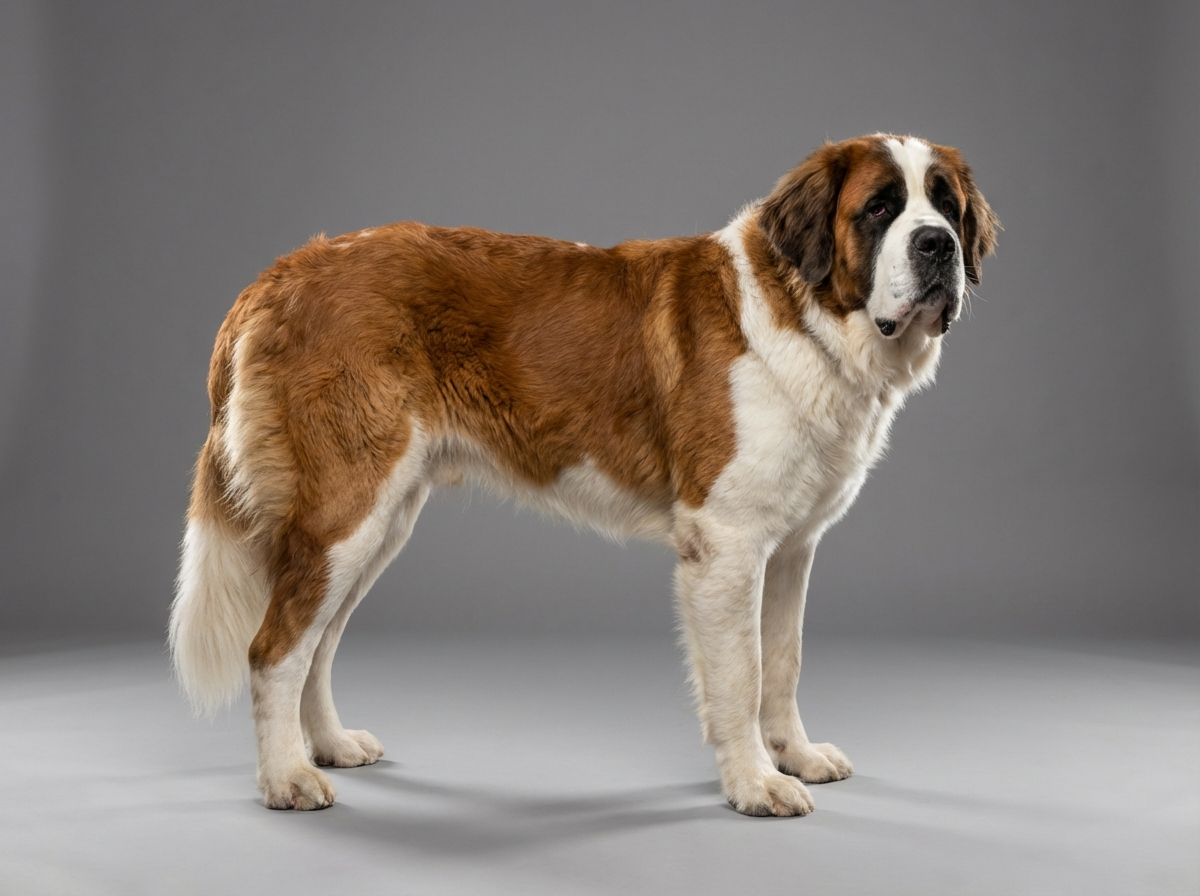
Saint Bernard cost in Charleston
About $150–$310/month and $2,200–$4,200 for year one — near average overall, with giant-breed boarding a genuine scarcity problem in a tourism-driven market.

See Saint Bernard price across all cities →
Quick answer
Saint Bernard cost in Charleston
About $150–$310/month and $2,200–$4,200 for year one — near average overall, with giant-breed boarding a genuine scarcity problem in a tourism-driven market.
A Saint Bernard in Charleston costs about $150 to $310 a month, with the first year near $2,200 to $4,200 — right around the national average on most lines, with one conspicuous exception. Charleston's tourism economy pushes boarding and grooming prices above the South Carolina norm, and boarding kennels price by run size. A 120-to-180-pound dog fits exactly one category: the largest and most expensive one the facility has.
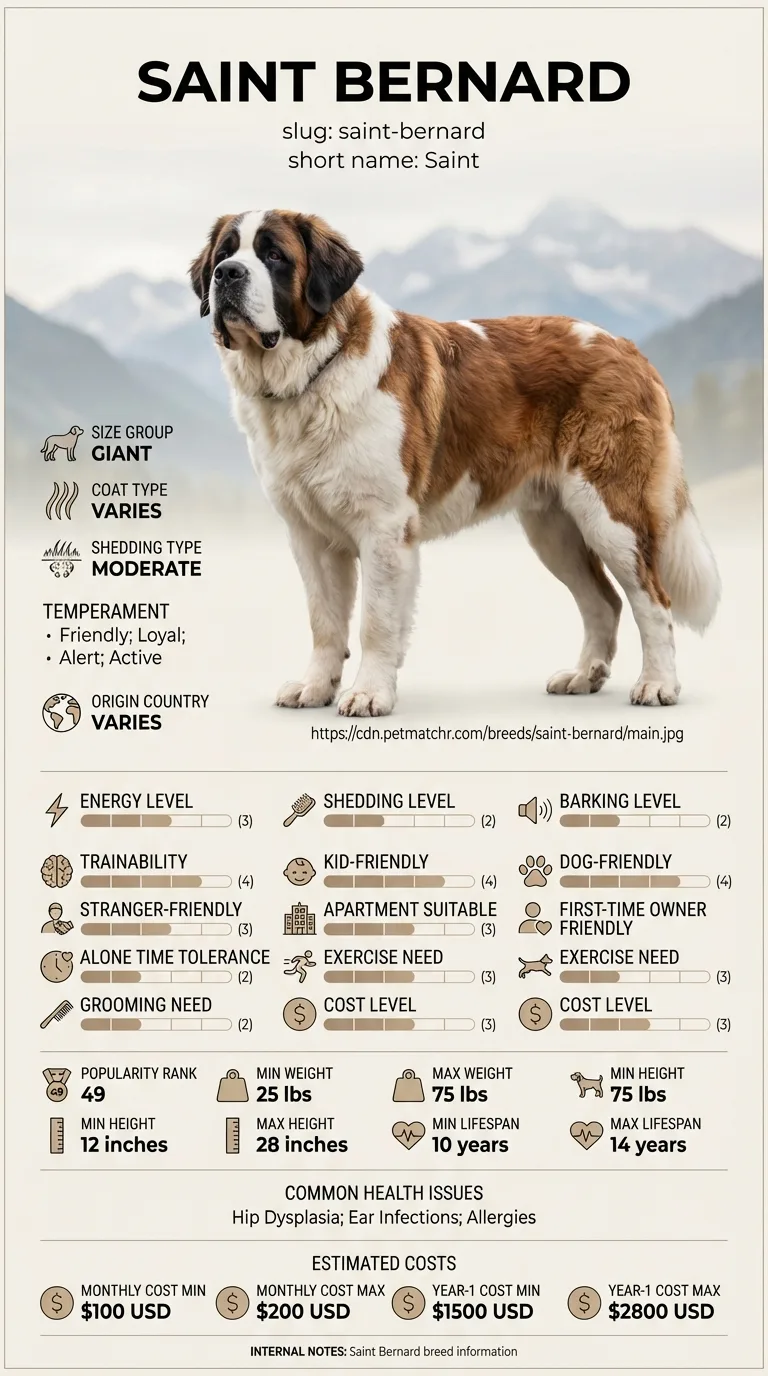
On the medical side the documented risks are Hip Dysplasia, Elbow Dysplasia, Dilated Cardiomyopathy, Entropion and Bloat (GDV). The last is an unscheduled surgical emergency, and coastal Charleston's eleven-month humid season also keeps parasite prevention running at this breed's top dosing weight for most of the year.
Charleston sits near the national average on most lines, with tourism pressure lifting boarding and grooming and the long coastal season lengthening the prevention schedule.
Estimate · source: estimation · confidence: medium · updated 2026-09-06 · not a quote
| Item | Cost range |
|---|---|
One-time setup (giant crate, bed, first exam, spay/neuter) Mid-range local surgical pricing, with the hardware cost driven entirely by the size of the dog rather than the market. | $520 - $900 |
| Item | Cost range |
|---|---|
Food (giant-breed volume) Priced close to the national average, with quantity dictated by an animal that may reach 180 pounds. | $72 - $128 |
Parasite prevention (eleven-month coastal season) Coastal humidity keeps the window open nearly year-round, and this weight class sits in the most expensive dosing tier available. | $32 - $58 |
Each range starts from a national baseline for this breed's size class and is then adjusted for local cost of living and veterinary pricing. The baselines, and the source each one came from, are listed on our sources page (dataset 2026.09). Two inputs, the purchase price and the emergency reserve, have no published national figure we could verify, so we leave them to you rather than invent them.
These are planning estimates, not quotes. Your own numbers will move with the individual dog, your vet and your insurer. Build a budget with your own figures.
Charleston's insurance case is straightforward. Routine care is affordable, boarding is the local annoyance, and surgery on a giant patient is the exposure that actually needs covering.
Enrol before any joint, cardiac or eye finding exists on record, which in this breed is the difference between a covered condition and an excluded one.
An owner with a reserve deep enough to cover overnight abdominal surgery outright can reasonably carry the risk in a market priced near the national average.
The Charleston savings are about timing rather than price. Booking behaviour matters more here than in most cities because the constraint is inventory.
Charleston's general cost of living sits close to the national line, which makes food, routine veterinary care and everyday supplies fairly predictable. Where the city departs from the state average is in the services that visitors also consume, and boarding sits squarely in that category.
For a giant breed, the pricing question and the availability question are the same question. Kennel pricing tiers are built on run dimensions, and a dog of this size needs the biggest run in the building — the tier that is priced highest and stocked thinnest. Add Charleston's peak periods, when a lot of households travel and a lot of visitors bring dogs with them, and the practical result is that giant-run inventory books out first.
The fix is unglamorous and effective: book earlier than feels necessary, and establish a relationship with one facility rather than shopping each time. Kennels that know the dog are more willing to hold space, and knowing your dog matters more at this size than at any other.
Charleston's other cost driver is the calendar. Coastal humidity keeps the parasite-prevention window running close to eleven months, and this breed's weight puts every dose in the highest bracket the product line offers. Over a year that difference against a northern city is real money rather than a rounding error.
Grooming carries the same tourism premium as boarding, and this breed's double coat and moderate grooming needs mean a professional session is more than a nice-to-have during the heavy shed. Local groomers, like local kennels, price by size, and a giant dog occupies a table and a dryer for far longer than a spaniel does.
Everything else is ordinary. Food volume is set by the animal. Routine veterinary care sits near the national average. The gear bill is front-loaded and large because there is no small version of any of it.

A Charleston family planning a week away in early summer called their usual kennel eleven days out and found the giant runs already committed. So were the runs at the next three facilities they tried. They ended up paying for an in-home sitter at short notice, which worked well enough that they now book it deliberately, and they learned that for this breed the reservation calendar runs on a different schedule than it does for everyone else's dog.
Key takeaway: In Charleston, the constraint on boarding a giant breed is not what it costs. It is whether a run that fits exists on the dates you need.
About $150–$310, close to the national average, with boarding and grooming running above the South Carolina norm because of the local tourism market.
Roughly $2,200–$4,200 with the initial exam, spay/neuter and giant-size equipment included.
Kennels price and stock by run size. This breed only fits the largest runs, those are the fewest in any facility, and Charleston's peak travel periods clear that inventory first.
Further than for an average dog, and ideally with one facility you use consistently. Giant runs are scarce, and a kennel that knows your dog is more inclined to hold one.
Worth quoting early, since the breed's documented surgical risks are the real exposure and Charleston's near-average pricing does not make a giant-breed operation cheap.
Around $1,250, reflecting mid-range local pricing applied to a patient at the top of the weight scale.
About $150–$310/month and $2,200–$4,200 for year one — near average overall, with giant-breed boarding a genuine scarcity problem in a tourism-driven market.
This guide is not medical advice. If your dog shows pain, sudden behavior change, or worsening symptoms, consult a licensed veterinarian.
Some links may be affiliate links. We may earn a commission at no extra cost to you. We only suggest products we believe are helpful for dog owners.
We research and check what we publish, but we do not warrant that any figure, date, price, or statement is accurate, complete, or current, and we accept no liability for any loss, cost, injury, or other harm arising from the use of this site. Use it as one reference among several. You remain responsible for your own decisions and for your dog's care - confirm anything that matters with a licensed veterinarian or another qualified professional before you act on it. Full disclaimer.
One sheet with every line item, the emergency fund and when insurance pays off - unlocks on this page.
You get: 12-month budget sheet
No spam. One-click unsubscribe. See our privacy policy.
Preview page 1 before you decide.