Costs
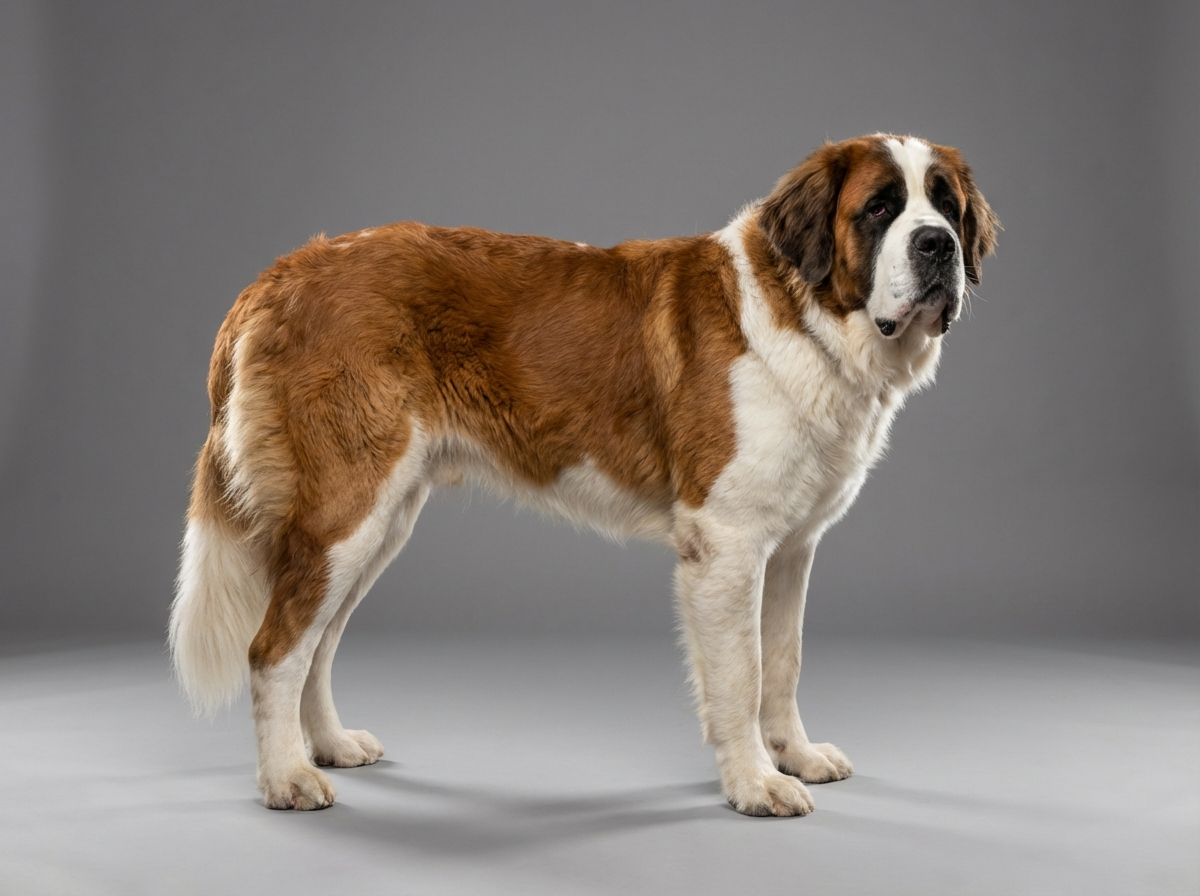
Saint Bernard cost in Burlington
About $153–$316/month and $2,244–$4,284 for year one — near average, with the real Vermont-specific question being who lifts a 150-pound senior dog in the state with the oldest population.

See Saint Bernard price across all cities →
Quick answer
Saint Bernard cost in Burlington
About $153–$316/month and $2,244–$4,284 for year one — near average, with the real Vermont-specific question being who lifts a 150-pound senior dog in the state with the oldest population.
A Saint Bernard in Burlington costs about $153 to $316 a month, with the first year near $2,244 to $4,284 — close to the national average, in line with Vermont's general cost of living. The factor that deserves the most attention here is not the monthly figure. It is what happens at the end. This breed lives roughly 8 to 10 years and weighs 120 to 180 pounds, and Vermont has one of the oldest median-age populations of any state in the country.
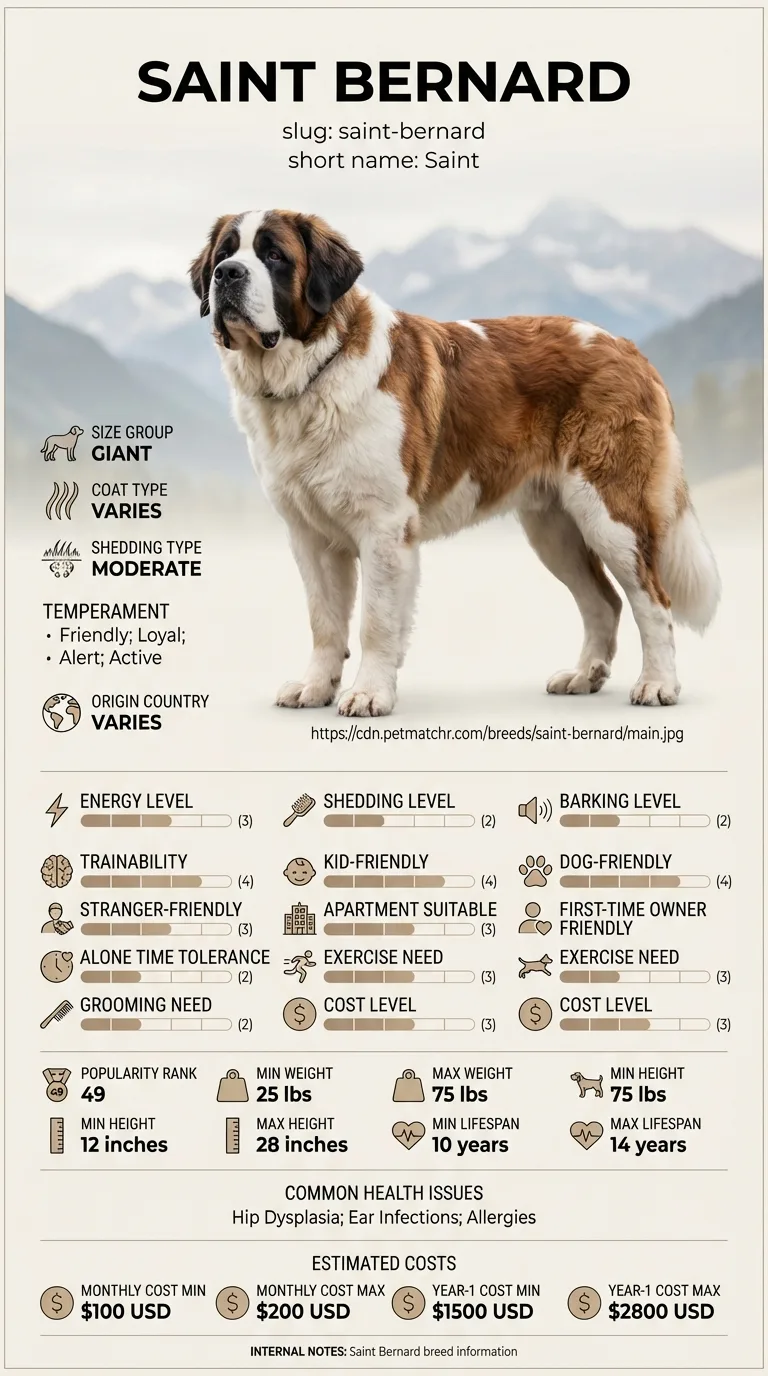
The documented conditions in this breed — Hip Dysplasia, Elbow Dysplasia, Dilated Cardiomyopathy, Entropion and Bloat (GDV) — all bite harder in a short-lived giant, because the timeline is compressed. Joint disease that would be a slow ten-year story in a smaller dog can become a mobility crisis by year seven here.
Burlington prices near the national average, with a short parasite season and an unusually important allowance for mobility equipment that a giant breed's compressed lifespan makes predictable.
Estimate · source: estimation · confidence: medium · updated 2026-09-06 · not a quote
| Item | Cost range |
|---|---|
One-time setup (vehicle ramp, lifting harness, giant crate, first exam, spay/neuter) The ramp and harness are the Vermont-specific inclusions, bought at the start because they will certainly be needed by year seven. | $530 - $918 |
| Item | Cost range |
|---|---|
Food (kept lean to protect the senior years) Body condition in years two to five is what decides how manageable years seven to nine are in a dog this heavy. | $73 - $131 |
Parasite prevention (six-month Vermont window) Genuine winters shorten the schedule, which counts for more at this breed's top dosing weight than it would for a small dog. | $33 - $59 |
Each range starts from a national baseline for this breed's size class and is then adjusted for local cost of living and veterinary pricing. The baselines, and the source each one came from, are listed on our sources page (dataset 2026.09). Two inputs, the purchase price and the emergency reserve, have no published national figure we could verify, so we leave them to you rather than invent them.
These are planning estimates, not quotes. Your own numbers will move with the individual dog, your vet and your insurer. Build a budget with your own figures.
Insurance in Burlington should be assessed against a compressed timeline, since a breed that lives 8 to 10 years reaches its expensive phase far sooner than a small dog does.
Enrol early. In a short-lived giant the window between a clean record and the first orthopedic finding is narrower than most owners assume.
An owner planning to self-fund should size the reserve for the senior years specifically, not for the puppy year, since that is where the spending concentrates.
The Vermont savings come from buying the right equipment once and from keeping the dog light enough that the senior years stay manageable.
Vermont's numbers on a dog budget are unremarkable. Costs sit close to the national line, the six-month parasite window is one of the shorter ones on this list thanks to genuine winters, and Burlington's veterinary market is small enough that there are fewer competing clinics to price against each other.
The part worth planning for is the shape of the breed's life. Eight to ten years is short, and in a giant breed the senior phase does not arrive at the end of it — it arrives around year six or seven. That means the expensive, physically demanding stretch of ownership begins sooner than most first-time giant-breed owners expect.
Combine that with Vermont's demography and you get a genuine, specific question. If an owner is sixty-eight when the puppy arrives, they will be seventy-six when the dog needs help getting into the back of a vehicle. That is not a reason to avoid the breed. It is a reason to buy the ramp and the lifting harness at the beginning rather than discovering the need at the worst moment.
Most cost guides front-load the budget: puppy, gear, vaccinations, spay or neuter. For a giant breed with a short lifespan, the heavier half is the other end, and Burlington owners should plan for it in cash terms.
That means mobility equipment as a scheduled purchase rather than an emergency one — a full-length vehicle ramp rated for the weight, a lifting harness with proper handles, and non-slip runners on the floors the dog uses. It also means asking early whether the practices near you offer home visits, because in Vermont's smaller veterinary market that capability is not universal, and moving an immobile giant to a clinic is exactly the problem you want solved in advance.
The upside is real. This breed rates gentle and patient, it barks little, and it needs very little exercise, which makes it one of the easier large dogs to live with for an owner who is not looking for a hiking partner. The demands it makes are structural rather than daily.

A Burlington couple in their late sixties raised a Saint Bernard from eight weeks and had an easy, affectionate decade planned. By his seventh birthday he could no longer jump into the back of the car, and getting him to the clinic became the hardest part of every appointment. They bought a ramp and a lifting harness that winter and wished they had bought both on day one, when the dog would have learned to use the ramp as a normal thing rather than as an indignity.
Key takeaway: In Vermont, plan a giant breed's last two years at the same time you plan its first two. The equipment is cheap; improvising at year seven is not.
About $153–$316, close to the national average, matching Vermont's general cost of living.
Roughly $2,244–$4,284 with the initial exam, spay/neuter and giant-size gear included.
Because 8 to 10 years in a giant breed means the demanding senior phase starts around year six or seven, and Vermont has one of the oldest owner populations in the country to manage it.
A vehicle ramp rated for the dog's actual weight, a lifting harness with real handles, and non-slip runners for the floors it uses. All are cheaper and easier to buy before they are urgent.
It does. Fewer competing clinics means less price pressure, and home-visit capability is not universal — worth confirming early if moving an immobile giant would be difficult.
Around $1,250, sized to near-average Vermont pricing against the cost of treating a 120-to-180-pound patient.
About $153–$316/month and $2,244–$4,284 for year one — near average, with the real Vermont-specific question being who lifts a 150-pound senior dog in the state with the oldest population.
This guide is not medical advice. If your dog shows pain, sudden behavior change, or worsening symptoms, consult a licensed veterinarian.
Some links may be affiliate links. We may earn a commission at no extra cost to you. We only suggest products we believe are helpful for dog owners.
We research and check what we publish, but we do not warrant that any figure, date, price, or statement is accurate, complete, or current, and we accept no liability for any loss, cost, injury, or other harm arising from the use of this site. Use it as one reference among several. You remain responsible for your own decisions and for your dog's care - confirm anything that matters with a licensed veterinarian or another qualified professional before you act on it. Full disclaimer.
One sheet with every line item, the emergency fund and when insurance pays off - unlocks on this page.
You get: 12-month budget sheet
No spam. One-click unsubscribe. See our privacy policy.
Preview page 1 before you decide.