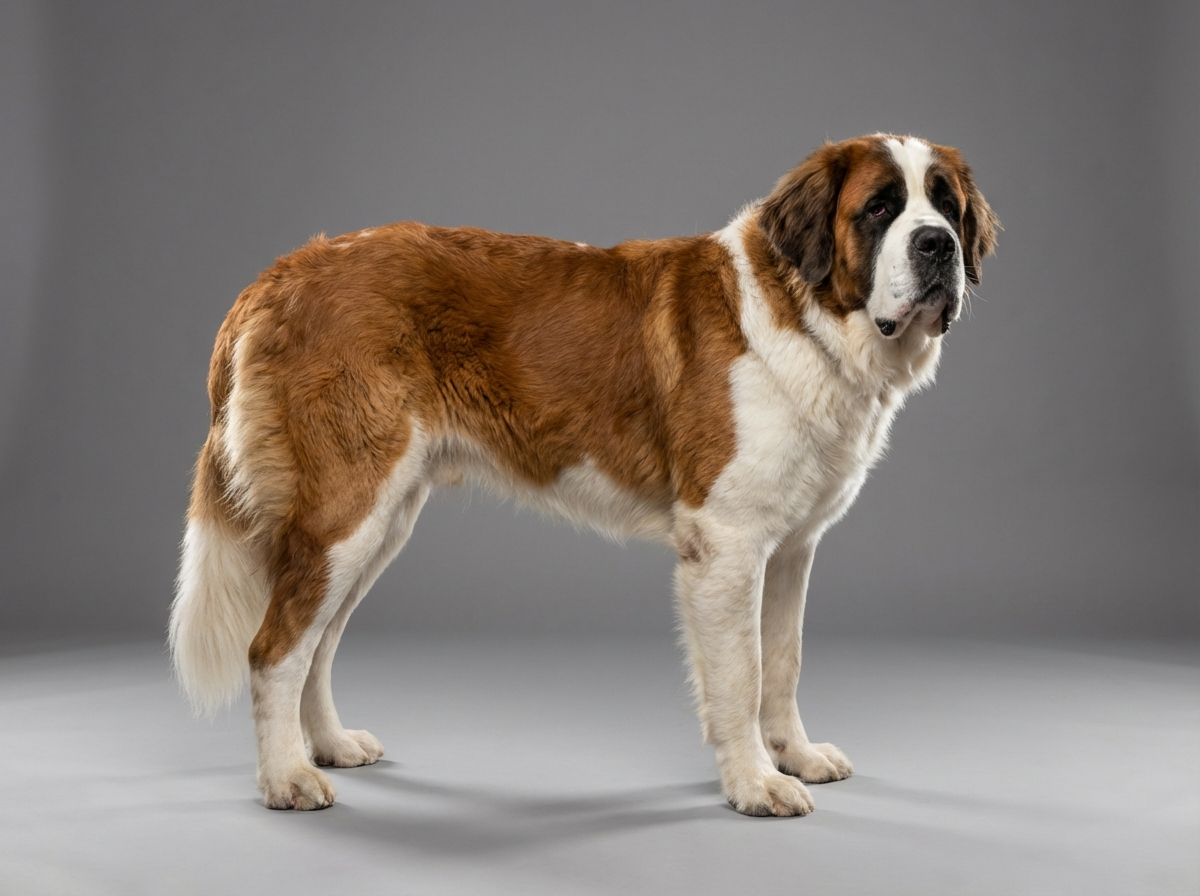
Costs
Saint Bernard cost in Austin
About $158–$326/month and $2,310–$4,410 for year one — above the Texas average, and worth knowing that this breed's 2-out-of-5 exercise need makes it a poor match for the city's trail culture.

See Saint Bernard price across all cities →
Quick answer
Saint Bernard cost in Austin
About $158–$326/month and $2,310–$4,410 for year one — above the Texas average, and worth knowing that this breed's 2-out-of-5 exercise need makes it a poor match for the city's trail culture.
A Saint Bernard in Austin costs roughly $158 to $326 a month, with year one near $2,310 to $4,410 — above the Texas average, because Austin's fast-growing market prices higher than the rest of the state even without a state income tax. The mismatch worth naming first is not financial. Austin sells an outdoor life, and this is a breed with an energy level of 2 out of 5 and an exercise need to match. It is one of the lowest-demand large dogs there is.
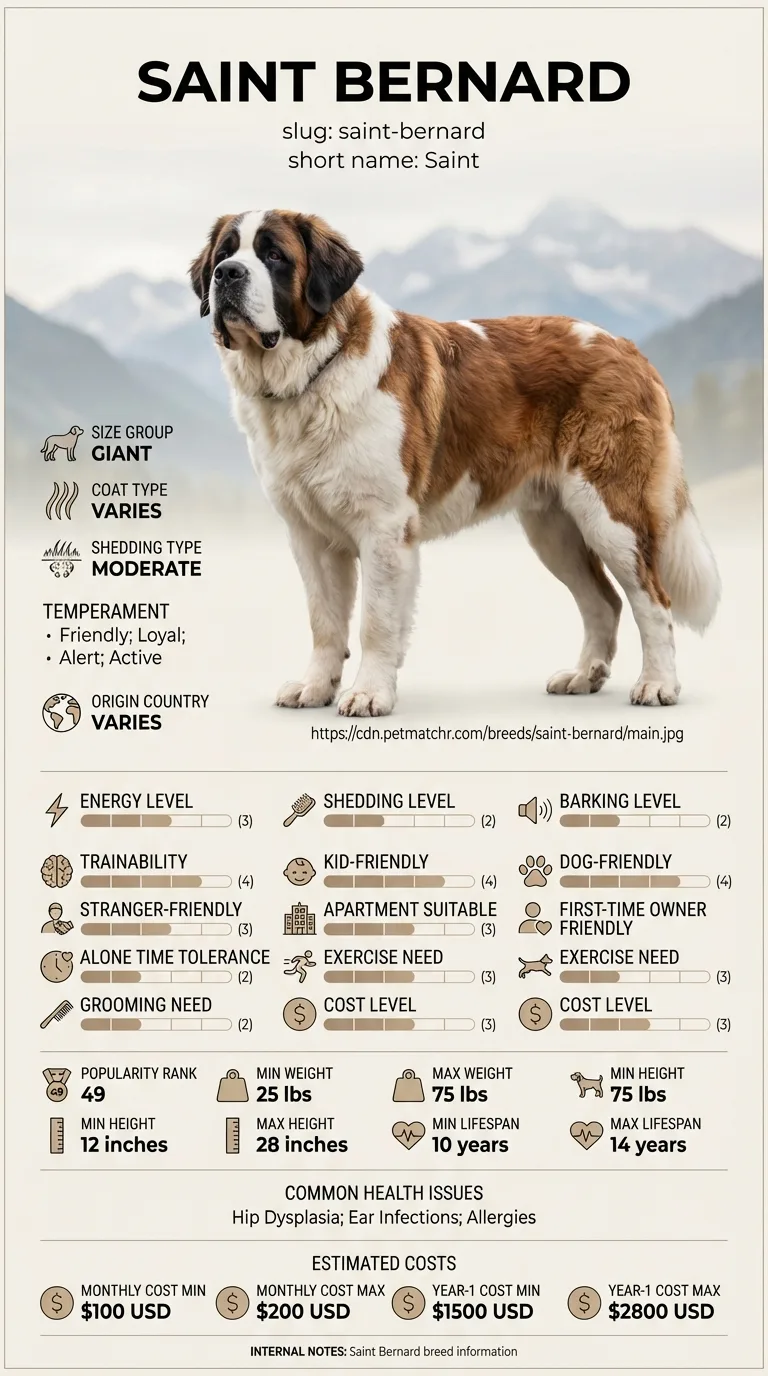
The documented conditions in this breed are Hip Dysplasia, Elbow Dysplasia, Dilated Cardiomyopathy, Entropion and Bloat (GDV). Pushing a low-energy giant into distance work in Texas heat aggravates the first two and risks the last, so an activity mismatch is not just disappointing, it is a route to a bill.
Austin prices above the national average on services, with the unusual feature that this breed's very low exercise demand removes an entire category of spending most large-dog owners carry.
Estimate · source: estimation · confidence: medium · updated 2026-09-06 · not a quote
| Item | Cost range |
|---|---|
One-time setup (giant crate, orthopedic bed, first exam, spay/neuter) Austin's above-average service pricing shows up mainly in the surgical portion of this line rather than in the gear. | $546 - $945 |
| Item | Cost range |
|---|---|
Food (portioned for a low-activity giant) A dog with a 2-out-of-5 energy score burns less than its size suggests, so free-feeding a giant here puts weight on joints already carrying documented dysplasia risk. | $76 - $134 |
Parasite prevention (eleven-month Central Texas season) The warm season runs long, and dosing at this weight sits in the most expensive bracket every product line offers. | $34 - $61 |
Each range starts from a national baseline for this breed's size class and is then adjusted for local cost of living and veterinary pricing. The baselines, and the source each one came from, are listed on our sources page (dataset 2026.09). Two inputs, the purchase price and the emergency reserve, have no published national figure we could verify, so we leave them to you rather than invent them.
These are planning estimates, not quotes. Your own numbers will move with the individual dog, your vet and your insurer. Build a budget with your own figures.
The Austin argument for insurance is unusual: the risk is not that you will spend heavily on activity-related injuries, but that a sedentary giant accumulates weight-linked joint problems quietly.
Enrol early, before any orthopedic finding is recorded, because dysplasia in a heavy dog is the kind of slow diagnosis that insurers later treat as pre-existing.
If you have a substantial reserve and are disciplined about keeping the dog lean, the risk profile is more manageable than in a high-drive breed.
In Austin the biggest saving comes from matching your expectations to the dog. Costs stay reasonable when nobody is trying to turn this breed into something it is not.
The numbers in Austin are straightforward. General costs run modestly above the national average, the metro's growth has pushed service pricing up, and the long humid warm season stretches parasite prevention to about eleven months at this breed's top dosing weight. Texas charges no state income tax, which helps household budgets generally without doing anything specific for a dog.
The interesting part is behavioural. This breed scores 2 out of 5 for both energy and exercise need, which puts it near the bottom for a dog of its stature. That is not laziness; it is what a short-burst mountain working dog looks like when it is not working. It means a couple of unhurried walks and some floor space genuinely satisfy the animal.
That is either the best news in this guide or the worst, depending on why you wanted the dog. If you wanted a companion who is content to be indoors most of the day, the Austin heat problem largely solves itself and your recurring costs stay low. If you wanted a running partner for the lake loop, you have bought a 150-pound dog that will stop, and stopping a 150-pound dog is not a negotiation you win.
The savings are real. You are not paying for the daily long walks, the sport classes or the high-drive enrichment budget that an active working breed extracts from an owner. Austin's dog daycare market is substantial and this breed rarely needs it for energy reasons.
What replaces those costs is space and climate control. This breed scores 1 out of 5 for apartment suitability — the lowest possible score, and an honest one. A dog this size needs floor area, and in an eleven-month warm season it needs that area to be air-conditioned. Central Texas summers are the part of the Austin equation this breed genuinely cannot shrug off, and the electricity bill for keeping a heavy-coated giant comfortable from May to October is a real line in the household budget even though no vet ever invoices it.

A couple who moved to Austin partly for the outdoors chose a Saint Bernard for the size and the temperament, and took him to the lake loop the first cool Saturday they had. He walked cheerfully for about half a mile, lay down in the shade, and declined to continue. They eventually rebuilt the routine around dawn walks in the neighbourhood and long indoor afternoons, and the dog was visibly happier for it.
Key takeaway: Austin will not change this breed's 2-out-of-5 exercise need. Plan the household around a low-demand indoor giant and the budget stays modest; plan around a trail dog and it will not.
About $158–$326, above the Texas average because Austin's fast-growing market prices services higher than the rest of the state.
Roughly $2,310–$4,410 with the initial exam, spay/neuter and giant-size gear folded in.
Realistically, no. This breed scores 2 out of 5 on exercise need and was bred for short-range cold-weather work. Ten miles in Central Texas heat is a serious risk, not a challenge.
Only if you wanted an outdoor athlete. As an indoor, low-demand family dog it works, provided the household has real floor space and reliable air conditioning.
Worth quoting early. Bloat, hip and elbow dysplasia, cardiomyopathy and entropion are all documented here, and giant-breed surgical bills scale with body weight.
Around $1,300, sized to Austin's above-average service pricing and the larger cost of treating a 120-to-180-pound patient.
About $158–$326/month and $2,310–$4,410 for year one — above the Texas average, and worth knowing that this breed's 2-out-of-5 exercise need makes it a poor match for the city's trail culture.
This guide is not medical advice. If your dog shows pain, sudden behavior change, or worsening symptoms, consult a licensed veterinarian.
Some links may be affiliate links. We may earn a commission at no extra cost to you. We only suggest products we believe are helpful for dog owners.
We research and check what we publish, but we do not warrant that any figure, date, price, or statement is accurate, complete, or current, and we accept no liability for any loss, cost, injury, or other harm arising from the use of this site. Use it as one reference among several. You remain responsible for your own decisions and for your dog's care - confirm anything that matters with a licensed veterinarian or another qualified professional before you act on it. Full disclaimer.
One sheet with every line item, the emergency fund and when insurance pays off - unlocks on this page.
You get: 12-month budget sheet
No spam. One-click unsubscribe. See our privacy policy.
Preview page 1 before you decide.