Costs
Saint Bernard cost in Boise
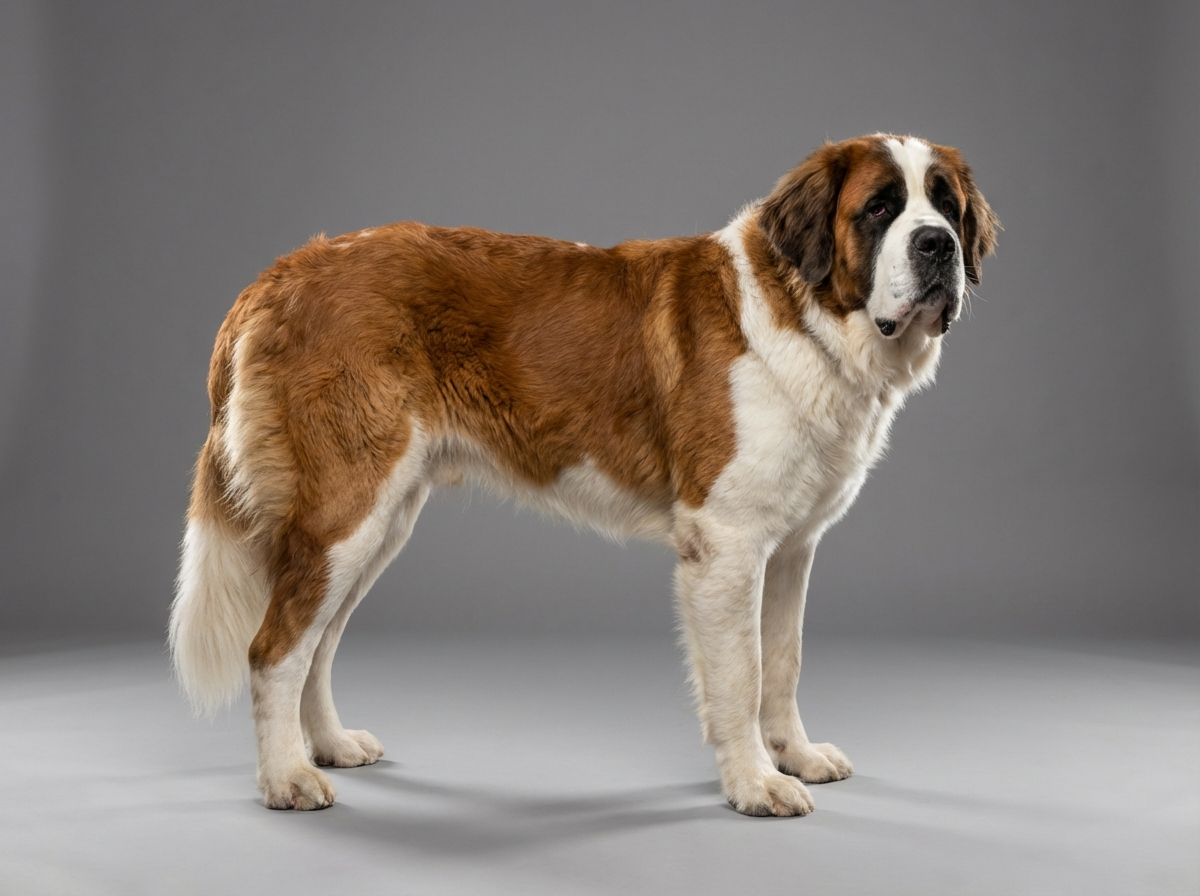
About $143–$295/month and $2,090–$3,990 for year one — below average, and one of the few breeds whose very low exercise need makes Boise's late-summer smoke weeks a non-event.

See Saint Bernard price across all cities →
Quick answer
Saint Bernard cost in Boise
About $143–$295/month and $2,090–$3,990 for year one — below average, and one of the few breeds whose very low exercise need makes Boise's late-summer smoke weeks a non-event.
A Saint Bernard in Boise costs roughly $143 to $295 a month, with year one landing near $2,090 to $3,990 — under the national average, as Idaho's general cost of living sits below the US line. The Boise-specific variable for this breed is air, not money. Late summer in the Interior West regularly brings wildfire smoke into the Treasure Valley, and on those days the standard advice is to cut outdoor exertion. This is a breed rated 2 out of 5 for energy, which makes that advice unusually easy to follow.
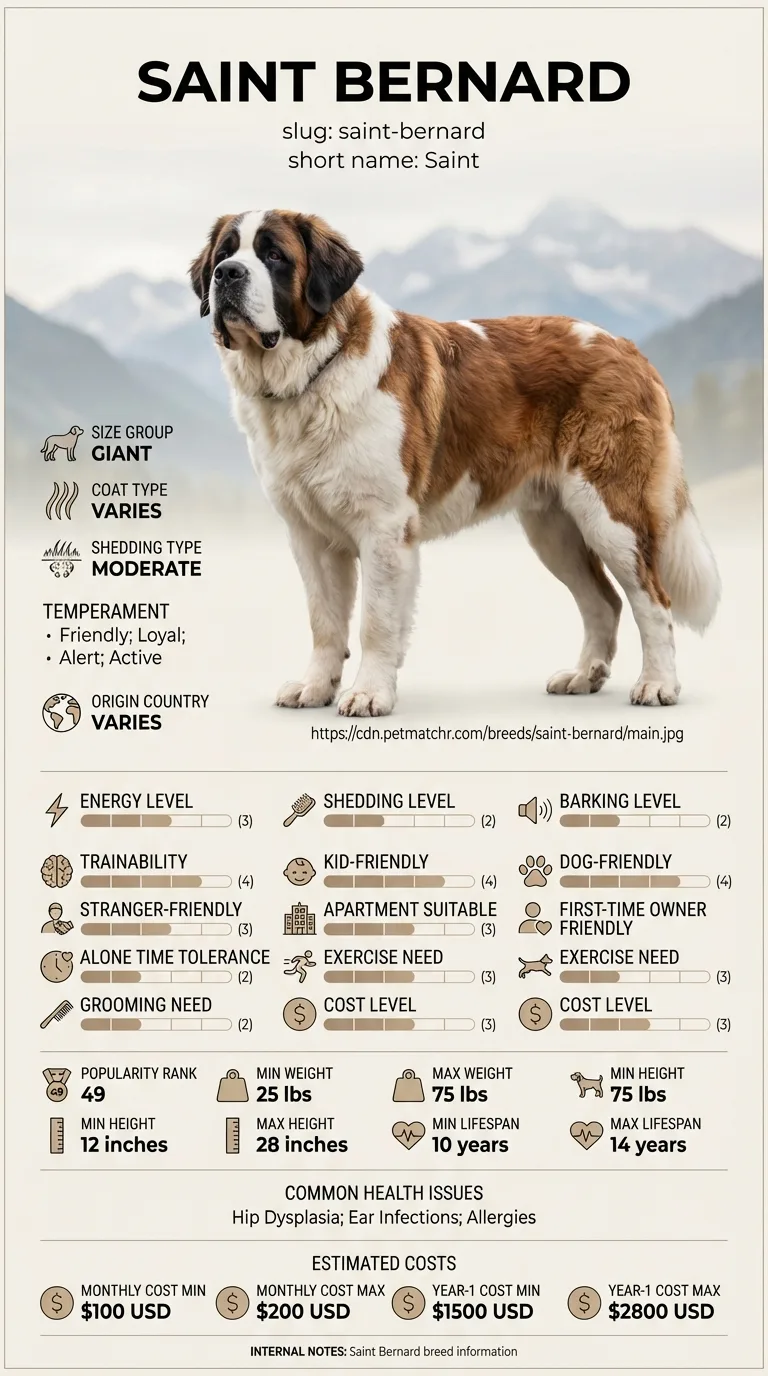
The documented conditions to plan for are Hip Dysplasia, Elbow Dysplasia, Dilated Cardiomyopathy, Entropion and Bloat (GDV). The last of those arrives without notice and needs surgery the same day, and in a 120-to-180-pound dog the anesthetic, surgical and recovery costs all scale with the animal rather than with the diagnosis.
Boise's below-average pricing carries most of this budget, with a seasonal air-quality allowance that costs far less here than the daycare bill a high-energy breed would generate on the same days.
Estimate · source: estimation · confidence: medium · updated 2026-09-06 · not a quote
| Item | Cost range |
|---|---|
One-time setup (giant crate, bed, room air purifier, first exam, spay/neuter) The purifier is the Boise-specific addition, sized to the room where a floor-dwelling dog actually spends its day. | $494 - $855 |
| Item | Cost range |
|---|---|
Food (measured for a low-activity giant) A dog that rates 2 out of 5 for energy burns less than its frame implies, so free-feeding puts avoidable weight onto joints with documented dysplasia risk. | $68 - $122 |
Parasite prevention (seven-month Idaho window) A dry four-season climate keeps the schedule moderate, though each dose at this body weight sits in the top pricing tier. | $30 - $55 |
Each range starts from a national baseline for this breed's size class and is then adjusted for local cost of living and veterinary pricing. The baselines, and the source each one came from, are listed on our sources page (dataset 2026.09). Two inputs, the purchase price and the emergency reserve, have no published national figure we could verify, so we leave them to you rather than invent them.
These are planning estimates, not quotes. Your own numbers will move with the individual dog, your vet and your insurer. Build a budget with your own figures.
Boise's insurance case is the standard giant-breed one. The routine costs here are low enough to self-fund comfortably; the surgical ones are not.
Enrol before any joint or cardiac note exists on the record, which in a breed with this documented list is a genuine timing advantage rather than a formality.
If the household reserve could absorb an unplanned abdominal surgery without strain, self-funding is defensible in a market priced like this one.
Most of Boise's savings are structural. The seasonal advice is about air rather than budget, and it happens to cost this breed almost nothing.
Boise's baseline numbers are friendly. General costs run under the national average, the dry four-season climate keeps parasite prevention to about seven months, and veterinary pricing in the Treasure Valley sits below what a coastal metro charges. None of that is unusual for the Mountain West.
What is genuinely local is the late-summer air. Smoke from regional fire activity is a recurring feature of August and September here, and it produces stretches where the sensible move is to keep exertion low and stay indoors. For a household with a border collie or a shorthair, those stretches cost money — someone has to absorb the energy the dog did not burn.
A breed with an energy score of 2 and a matching exercise need of 2 simply does not generate that bill. Two short, unhurried walks in cleaner morning air and an afternoon on the floor is a complete day for this dog. Boise's smoke season is a genuine reason to own a low-demand giant rather than a reason to avoid one.
The costs that remain are the ones this breed brings with it anywhere. Food volume is the largest recurring line and it is set by body mass, not by the local market. Weight-tier parasite dosing lands in the top price bracket, though the seven-month Idaho window keeps the annual count moderate.
One local addition is worth budgeting: a decent room air purifier is a legitimate dog expense in this city, and it serves a very large animal that will be lying at floor level, where settled particulate collects, for most of the day. It is a modest one-time cost against a recurring seasonal problem.
The other thing Boise's affordability buys is space. The apartment-suitability rating on this breed is 1 out of 5, and Idaho's housing market makes a ground-floor layout with a yard a more reachable proposition than it is in most western metros of comparable appeal.

A Boise owner who had previously kept an Australian shepherd braced for the first bad-air stretch with their Saint Bernard, remembering what four skipped runs had done to the last dog. Nothing happened. The Saint took a short early walk, came home, and slept through the afternoon exactly as he did on clear days. The only adjustment they made all season was moving an air purifier into the living room where he lay.
Key takeaway: In Boise, a breed with a 2-out-of-5 exercise need turns the region's worst seasonal problem into a scheduling footnote rather than a monthly expense.
About $143–$295, below the national average, tracking Idaho's lower general cost of living.
Roughly $2,090–$3,990 with the first exam, spay/neuter and giant-size gear included.
It affects high-energy breeds most. This one rates 2 out of 5 on both energy and exercise need, so the smoke-day guidance to stay in and take it easy matches what the dog wants anyway.
It is a reasonable Boise-specific purchase. A dog this size spends its day at floor level, and a single room unit covering the space it actually uses is inexpensive against a recurring seasonal problem.
Worth pricing early, because Boise's below-average routine costs do very little to reduce the size of a giant-breed emergency surgery.
Around $1,200, reflecting local pricing set against the disproportionate cost of treating a 120-to-180-pound patient.
About $143–$295/month and $2,090–$3,990 for year one — below average, and one of the few breeds whose very low exercise need makes Boise's late-summer smoke weeks a non-event.
This guide is not medical advice. If your dog shows pain, sudden behavior change, or worsening symptoms, consult a licensed veterinarian.
Some links may be affiliate links. We may earn a commission at no extra cost to you. We only suggest products we believe are helpful for dog owners.
We research and check what we publish, but we do not warrant that any figure, date, price, or statement is accurate, complete, or current, and we accept no liability for any loss, cost, injury, or other harm arising from the use of this site. Use it as one reference among several. You remain responsible for your own decisions and for your dog's care - confirm anything that matters with a licensed veterinarian or another qualified professional before you act on it. Full disclaimer.
One sheet with every line item, the emergency fund and when insurance pays off - unlocks on this page.
You get: 12-month budget sheet
No spam. One-click unsubscribe. See our privacy policy.
Preview page 1 before you decide.