Costs
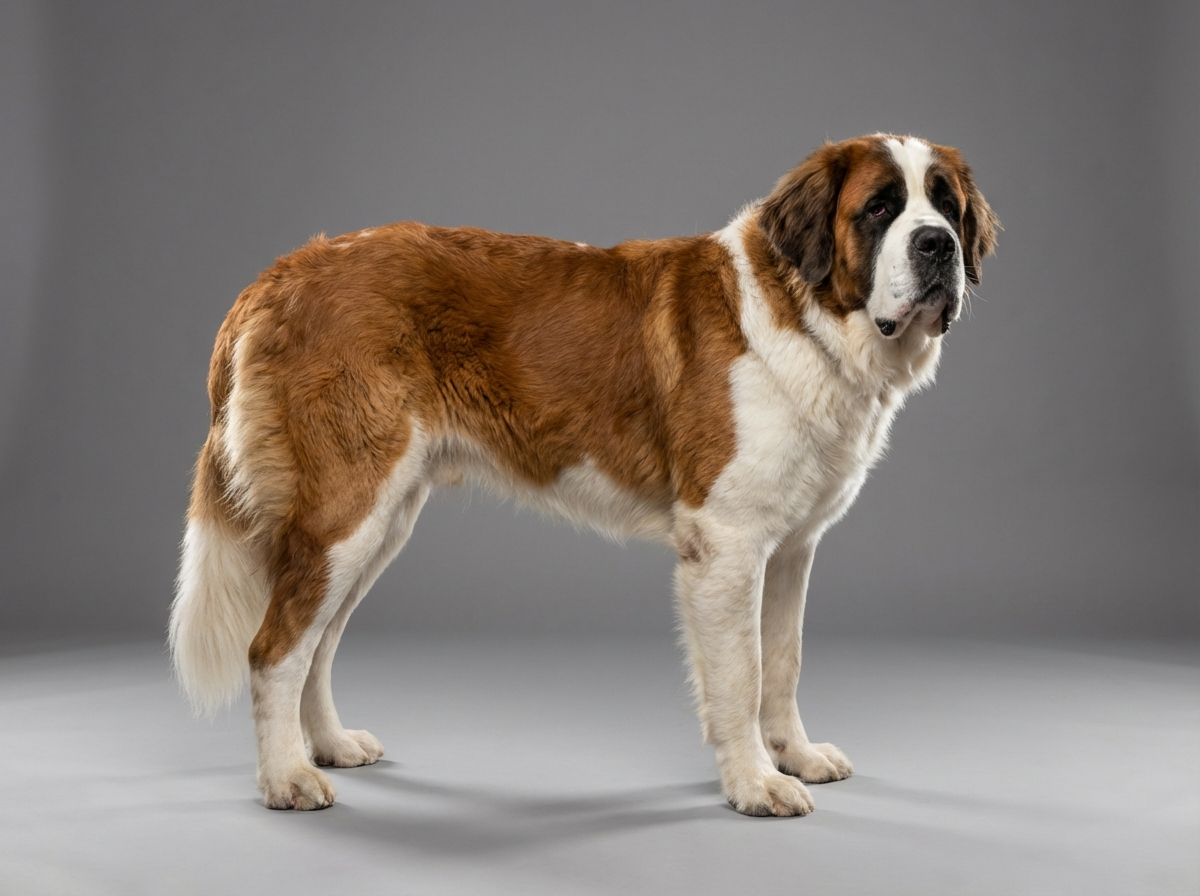
Saint Bernard cost in Fargo
About $135–$279/month and $1,980–$3,780 for year one — one of the cheapest markets here, with a five-month parasite season offsetting a long ice season that a hip-dysplasia-prone giant has to be managed through.

See Saint Bernard price across all cities →
Quick answer
Saint Bernard cost in Fargo
About $135–$279/month and $1,980–$3,780 for year one — one of the cheapest markets here, with a five-month parasite season offsetting a long ice season that a hip-dysplasia-prone giant has to be managed through.
A Saint Bernard in Fargo costs about $135 to $279 a month, with the first year near $1,980 to $3,780 — among the lowest on this list, helped by North Dakota's low cost of living and by a parasite-prevention season of roughly five months, the shortest of any city covered here outside Alaska. The offsetting local problem is underfoot. Fargo winters produce months of packed snow and freeze-thaw ice, and Hip Dysplasia is documented in this breed.
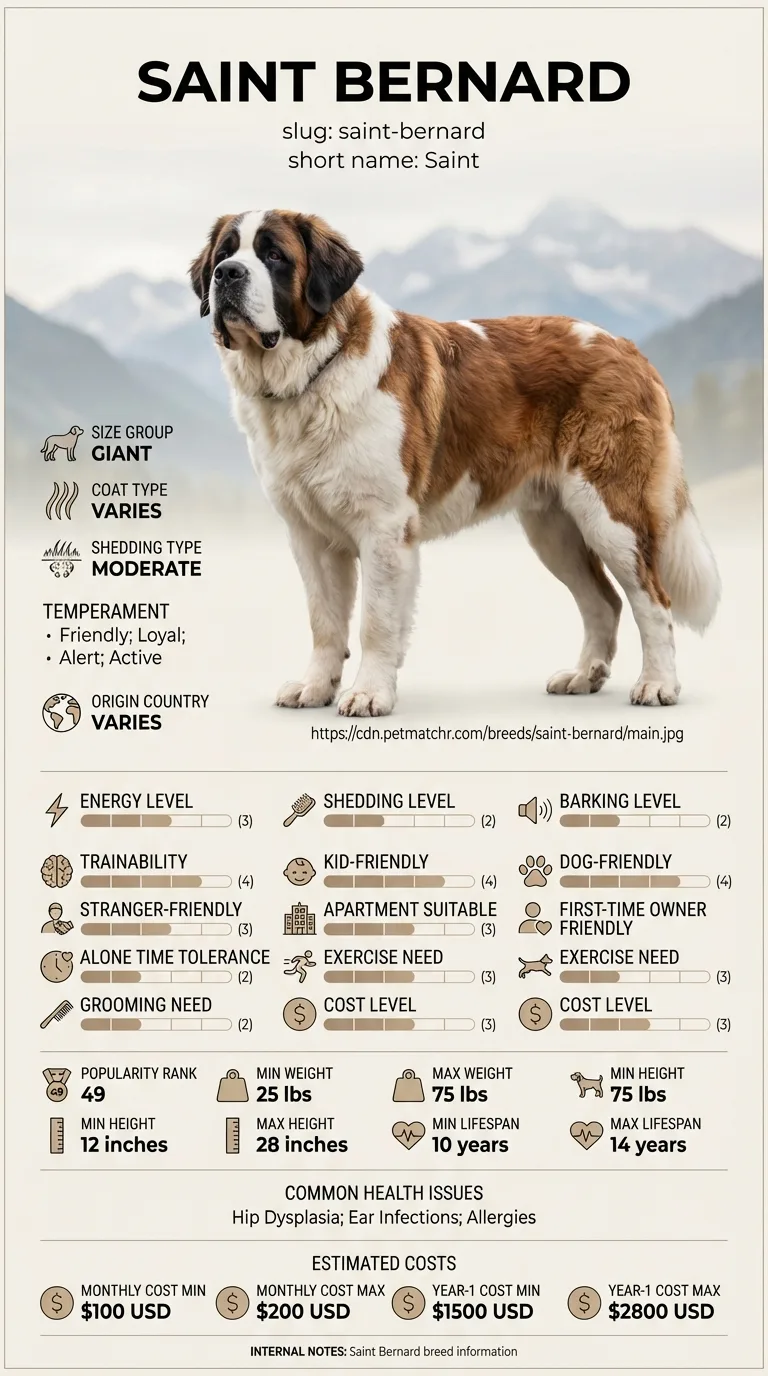
The documented conditions here are Hip Dysplasia, Elbow Dysplasia, Dilated Cardiomyopathy, Entropion and Bloat (GDV). North Dakota's affordable market softens routine care substantially, but orthopedic and emergency work is priced against the patient's weight, and that number does not shrink because the town is inexpensive.
Fargo combines some of the lowest service pricing on this list with the shortest prevention season, offset by a traction and flooring budget the ice season genuinely justifies.
Estimate · source: estimation · confidence: medium · updated 2026-09-06 · not a quote
| Item | Cost range |
|---|---|
One-time setup (giant crate, orthopedic bed, first exam, spay/neuter) Low local surgical pricing makes this one of the more affordable setup figures on this list. | $468 - $810 |
| Item | Cost range |
|---|---|
Food (giant-breed volume) North Dakota's low retail costs apply to a quantity dictated by an animal that may reach 180 pounds. | $65 - $115 |
Parasite prevention (five-month northern plains window) The shortest schedule on this list outside Alaska, which is worth several times more to a top-weight-tier dog than to a small one. | $29 - $52 |
Each range starts from a national baseline for this breed's size class and is then adjusted for local cost of living and veterinary pricing. The baselines, and the source each one came from, are listed on our sources page (dataset 2026.09). Two inputs, the purchase price and the emergency reserve, have no published national figure we could verify, so we leave them to you rather than invent them.
These are planning estimates, not quotes. Your own numbers will move with the individual dog, your vet and your insurer. Build a budget with your own figures.
Fargo's routine care is cheap enough to self-fund comfortably, which leaves insurance to do the job it is actually good at: covering an orthopedic or abdominal event.
Enrol before any hip finding is recorded. In this breed that is the condition most likely to be excluded later and the most expensive to treat.
An owner with a solid reserve, a level yard and disciplined winter footing management carries a genuinely lower risk profile.
The market is already inexpensive. The savings that matter in Fargo come from keeping a heavy dog upright through five months of ice.
Fargo is genuinely cold for a genuinely long time, and this breed is superbly equipped for that part. A heavy double coat is what the animal was built around, and there is no city on this list where a Saint Bernard is more comfortable in January. The cold is not the issue.
The surface is. Sidewalks, driveways and the strip between a back door and a yard spend months alternating between packed snow and glazed ice, and every one of those surfaces is a slip risk for a very heavy dog with a documented predisposition to hip disease. It is not the dramatic fall that does the damage so much as the repeated small slides, each one loading a joint in a direction it does not handle well.
The answer is cheap and boring. Keep the dog's own route clear and gritted rather than relying on the general path, put down mats over the transition from door to ground, and consider boots if the dog will accept them — though be warned that giant sizes are hard to find and correspondingly expensive.
There is a genuine financial upside to a winter like this. Fargo's flea, tick and heartworm window runs roughly five months, which is the shortest of any city on this list apart from Anchorage.
That matters disproportionately for this breed. Preventive products are dosed by body weight, and a dog in the top weight bracket pays the highest per-dose price the product line offers. Seven months off the schedule is therefore worth several times what it would be worth to a terrier owner, and it partially funds the traction and flooring measures the ice season demands.
The rest of the Fargo picture is straightforwardly affordable. Veterinary and boarding pricing sits under the national line, housing is largely detached with yards, which suits a breed rated 1 out of 5 for apartment living, and there is no meaningful paid-walking market to buy into.

A Fargo owner noticed his Saint Bernard had started hesitating at the back step in February, and worked out that the same short stretch of driveway had been glazed since December. The dog had been sliding on it twice a day for two months. Rubber matting and a bag of grit fixed the hesitation within a week. The vet's view was that the repetition, not any single fall, had been the thing to worry about.
Key takeaway: In Fargo the cold suits this breed and the ice does not. Manage the ten feet the dog actually uses and most of the winter risk goes away.
About $135–$279, among the lowest on this list, reflecting North Dakota's low general cost of living.
Roughly $1,980–$3,780 including the initial exam, spay/neuter and giant-size equipment.
The cold is not — a heavy double coat handles it well. The ice is the problem, because a slipping 150-pound dog loads its hips in the direction they resist least.
Grit and clear the dog's own route rather than relying on the general path, put mats over the door-to-ground transition, and consider boots if the dog tolerates them.
Roughly five months, the shortest on this list outside Alaska, which saves real money for a dog dosed in the top weight bracket.
Around $1,100. Fargo's low prices help, though orthopedic and emergency work on a giant patient stays expensive in absolute terms.
About $135–$279/month and $1,980–$3,780 for year one — one of the cheapest markets here, with a five-month parasite season offsetting a long ice season that a hip-dysplasia-prone giant has to be managed through.
This guide is not medical advice. If your dog shows pain, sudden behavior change, or worsening symptoms, consult a licensed veterinarian.
Some links may be affiliate links. We may earn a commission at no extra cost to you. We only suggest products we believe are helpful for dog owners.
We research and check what we publish, but we do not warrant that any figure, date, price, or statement is accurate, complete, or current, and we accept no liability for any loss, cost, injury, or other harm arising from the use of this site. Use it as one reference among several. You remain responsible for your own decisions and for your dog's care - confirm anything that matters with a licensed veterinarian or another qualified professional before you act on it. Full disclaimer.
One sheet with every line item, the emergency fund and when insurance pays off - unlocks on this page.
You get: 12-month budget sheet
No spam. One-click unsubscribe. See our privacy policy.
Preview page 1 before you decide.