Costs
What is the Miniature Schnauzer first year cost?
Fargo owners spend $1,800 to $3,900 on a Miniature Schnauzer in the first twelve months. Ongoing care is $100 to $190 a month of that.

See Miniature Schnauzer price across all cities →
Quick answer
What is the Miniature Schnauzer first year cost?
Fargo owners spend $1,800 to $3,900 on a Miniature Schnauzer in the first twelve months. Ongoing care is $100 to $190 a month of that.
Bringing a Miniature Schnauzer into your life can cost between $1,300 and $2,500 in the first year in Fargo.
Keep in mind that emergencies and big-ticket items, like surgeries or specialized treatments, can significantly increase your costs.
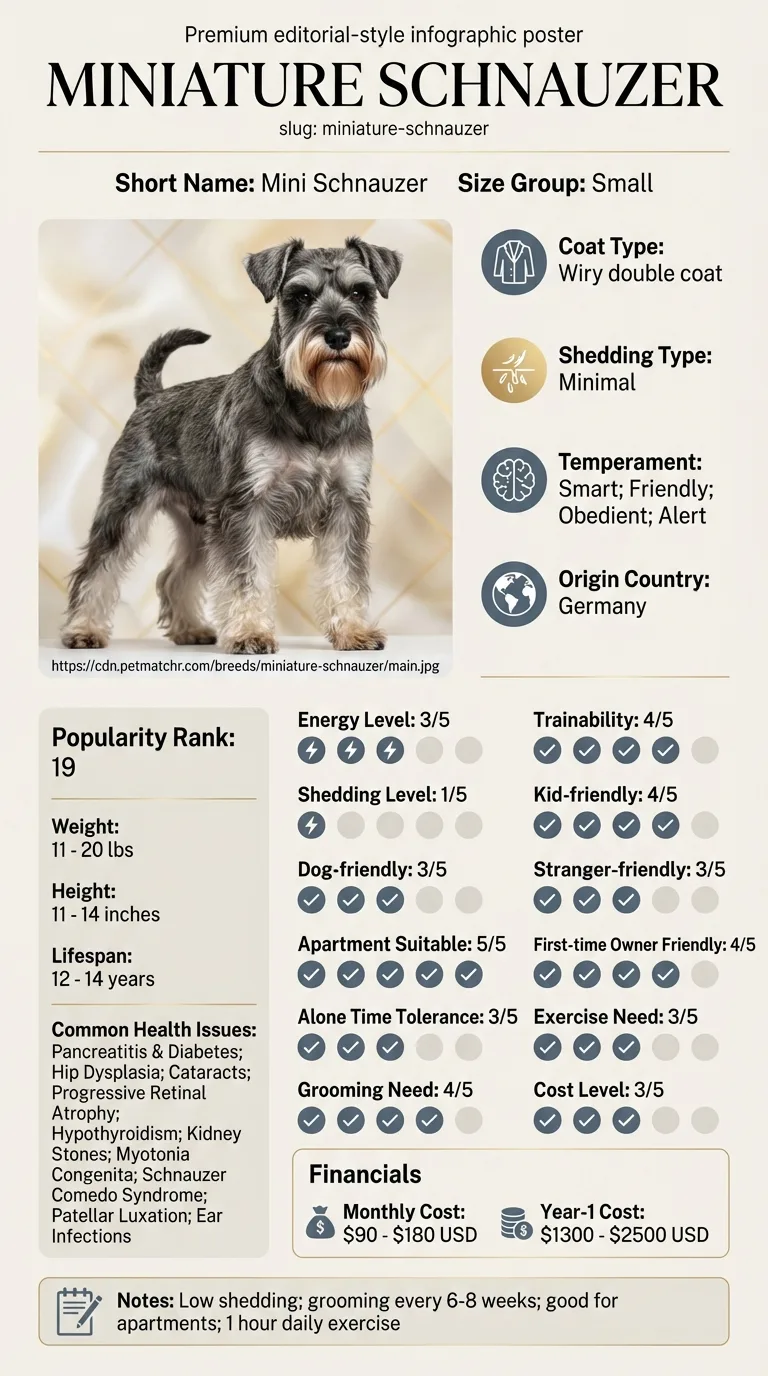
The total cost of owning a Miniature Schnauzer in Fargo ranges from about $1,300 to $2,500 in the first year. Monthly expenses can vary between $90 and $180. Factors like food, grooming, vet visits, and pet insurance significantly drive these costs.
Estimate · source: us average · confidence: medium · updated 2026-10-06 · not a quote
| Item | Cost range |
|---|---|
Initial adoption fee This fee varies based on the source (shelter vs. breeder) and includes vaccinations and initial health checks. | $200 - $800 |
Supplies (bed, toys, etc.) Initial setup for supplies can vary widely based on personal preferences. | $100 - $300 |
Training classes Training is recommended for good behavior and socialization. | $100 - $200 |
| Item | Cost range |
|---|---|
Food and treats Quality dog food is essential. Costs can vary based on diet choices. | $40 - $80 |
Grooming Mini Schnauzers require regular grooming every 6-8 weeks to maintain their wiry coat. | $30 - $50 |
Pet insurance Pet insurance helps cover unexpected vet bills, particularly for common health issues. | $30 - $60 |
Each range starts from a national baseline for this breed's size class and is then adjusted for local cost of living and veterinary pricing. The baselines, and the source each one came from, are listed on our sources page (dataset 2026.09). Two inputs, the purchase price and the emergency reserve, have no published national figure we could verify, so we leave them to you rather than invent them.
These are planning estimates, not quotes. Your own numbers will move with the individual dog, your vet and your insurer. Build a budget with your own figures.
Pet insurance can be a smart choice for Miniature Schnauzer owners in Fargo.
If your Miniature Schnauzer has a history of health issues or is predisposed to certain conditions like hip dysplasia or cataracts, insurance can be a lifesaver. Additionally, if you're on a tight budget and want to avoid hefty vet bills after an accident or illness, insurance becomes even more valuable. Always consider the age of your dog, as younger dogs may benefit from starting insurance early.
Some owners prefer to set aside a savings fund for pet care instead of paying monthly premiums. Also, if your Miniature Schnauzer is healthy and you’re confident in your ability to cover potential costs, skipping insurance could be an option.
Owning a Miniature Schnauzer in Fargo can be a rewarding experience, but costs can add up.
While the purchase price and basic care might seem manageable, recurring fees can quickly add up. For example, grooming is essential for this breed due to their wiry double coat, and you should expect to spend about $50 to $100 every 6 to 8 weeks. That's over $300 a year, just for grooming!
Unexpected vet visits can be another financial shock. Miniature Schnauzers are prone to specific health issues like pancreatitis and hip dysplasia. These can lead to surprise bills ranging from $200 to $2,000 for treatment, depending on the severity.
It's wise to set aside an emergency fund for such expenses.

Don’t forget about gear replacements! Collars, leashes, and toys wear out faster than you might think. Budget about $50 to $100 annually for replacements.
Additionally, lifestyle-driven costs can sneak up on you. If you want to travel or even just go out for a day, pet sitters or boarding can cost from $20 to $50 a day.

The Miniature Schnauzer cost in Fargo can vary based on several local factors. Housing costs, such as rent or mortgage, can significantly affect your overall expenses. Fargo's cost of living is generally lower than in many major cities, which can make it more affordable to own a dog here compared to urban areas with higher rents.

Her first-year expenses for Max totaled around $2,000, which included the initial vet visits, vaccinations, and supplies like a bed, toys, and food. Jessica learned to set aside extra funds for unexpected health issues, which helped ease her worries.
Key takeaway: Planning for both routine and unexpected costs is essential when bringing a Miniature Schnauzer into your home.
The cost of a Miniature Schnauzer in Fargo typically ranges from $1,300 to $2,500 in the first year. This includes expenses like adoption fees, vaccinations, and initial supplies.
Overall, a Miniature Schnauzer is moderately priced to own.
In Fargo, you can expect annual vet bills for a Miniature Schnauzer to be around $300 to $600. This covers routine check-ups, vaccinations, and preventive care.
This varies based on the coverage level and the insurance provider.
The first year cost for a Miniature Schnauzer includes adoption fees, supplies, and medical expenses, totaling between $1,300 and $2,500. Be prepared for additional costs for training and grooming.
It's wise to budget an extra $200 to $500 for these potential expenses.
The average monthly cost for a Miniature Schnauzer is between $90 and $180. This includes food, grooming, and routine medical care.
In Fargo, Miniature Schnauzer vet bills can range from $300 to $600 annually, depending on routine care and any unexpected health issues. Regular check-ups, vaccinations, and preventive treatments are key components of these costs.
Yes, pet insurance can be valuable for Miniature Schnauzers, especially considering their predisposition to certain health issues like pancreatitis and hip dysplasia.
Beyond basic care, consider grooming costs, which can be around $50 every 6-8 weeks. Additionally, dog training classes and quality dog food can add to your monthly budget, typically increasing your Miniature Schnauzer monthly cost to about $120 to $200.
Living in Fargo can impact costs related to climate-specific needs, such as winter gear for outdoor activities. Additionally, local vet prices may vary, so it’s wise to shop around for affordable care options while ensuring quality.
It's wise to have an emergency fund for your Miniature Schnauzer, ideally around $1,000 to $2,000. This can cover unexpected health issues or emergencies, ensuring you’re prepared to provide immediate care without financial stress.
Fargo owners spend $1,800 to $3,900 on a Miniature Schnauzer in the first twelve months. Ongoing care is $100 to $190 a month of that.
Plan on $100 to $190 a month for a Miniature Schnauzer in Fargo. Most of that is food and treats, at $40 to $80.
Budget about $300 to $600 annually for vet bills for a Miniature Schnauzer.
Grooming a Miniature Schnauzer can cost around $50 to $100 every 6-8 weeks.
Insuring a Miniature Schnauzer in Fargo costs $30 to $60 a month, depending on how much of a claim you cover yourself.
This guide is not medical advice. If your dog shows pain, sudden behavior change, or worsening symptoms, consult a licensed veterinarian.
Some links may be affiliate links. We may earn a commission at no extra cost to you. We only suggest products we believe are helpful for dog owners.
We research and check what we publish, but we do not warrant that any figure, date, price, or statement is accurate, complete, or current, and we accept no liability for any loss, cost, injury, or other harm arising from the use of this site. Use it as one reference among several. You remain responsible for your own decisions and for your dog's care - confirm anything that matters with a licensed veterinarian or another qualified professional before you act on it. Full disclaimer.
One sheet with every line item, the emergency fund and when insurance pays off - unlocks on this page.
You get: 12-month budget sheet
No spam. One-click unsubscribe. See our privacy policy.
See a sample page before you decide.