Labrador Retriever vs Yorkshire Terrier: A Comprehensive Comparison
Quick answer
Which is the better overall choice?
Pick the Lab for an active family dog that handles kids, strangers, and other dogs easily. Pick the Yorkie if space is tight, allergies are a concern, and you don't have small children roughhousing in the house.
Choosing between a Labrador Retriever and a Yorkshire Terrier? Both breeds offer unique traits that cater to different lifestyles and preferences. Let's break down their differences to help you decide.
This comparison is ideal for individuals or families weighing the options between a Labrador Retriever and a Yorkshire Terrier. You might be a busy professional living in a small apartment or a family looking for a friendly companion. Understanding the key differences in size, energy levels, and care needs will help you make an informed choice that fits your home and lifestyle.
Quick verdict
If you're looking for a friendly, active dog that loves the outdoors, choose a Labrador Retriever; if you want a small, low-shedding companion for apartment living, the Yorkshire Terrier is your best bet.
Choose labrador retriever if...
Pick a Labrador Retriever if you have space for exercise, enjoy outdoor activities, and want a loyal, social dog that thrives on interaction with people and other pets.
Choose yorkshire terrier if...
Opt for a Yorkshire Terrier if you need a dog that adapts well to small living spaces, requires minimal shedding, and has a big personality in a small package.
Head-to-head comparison
Feature
labrador retriever
yorkshire terrier
Winner
Size class
large
small
Equal
Weight
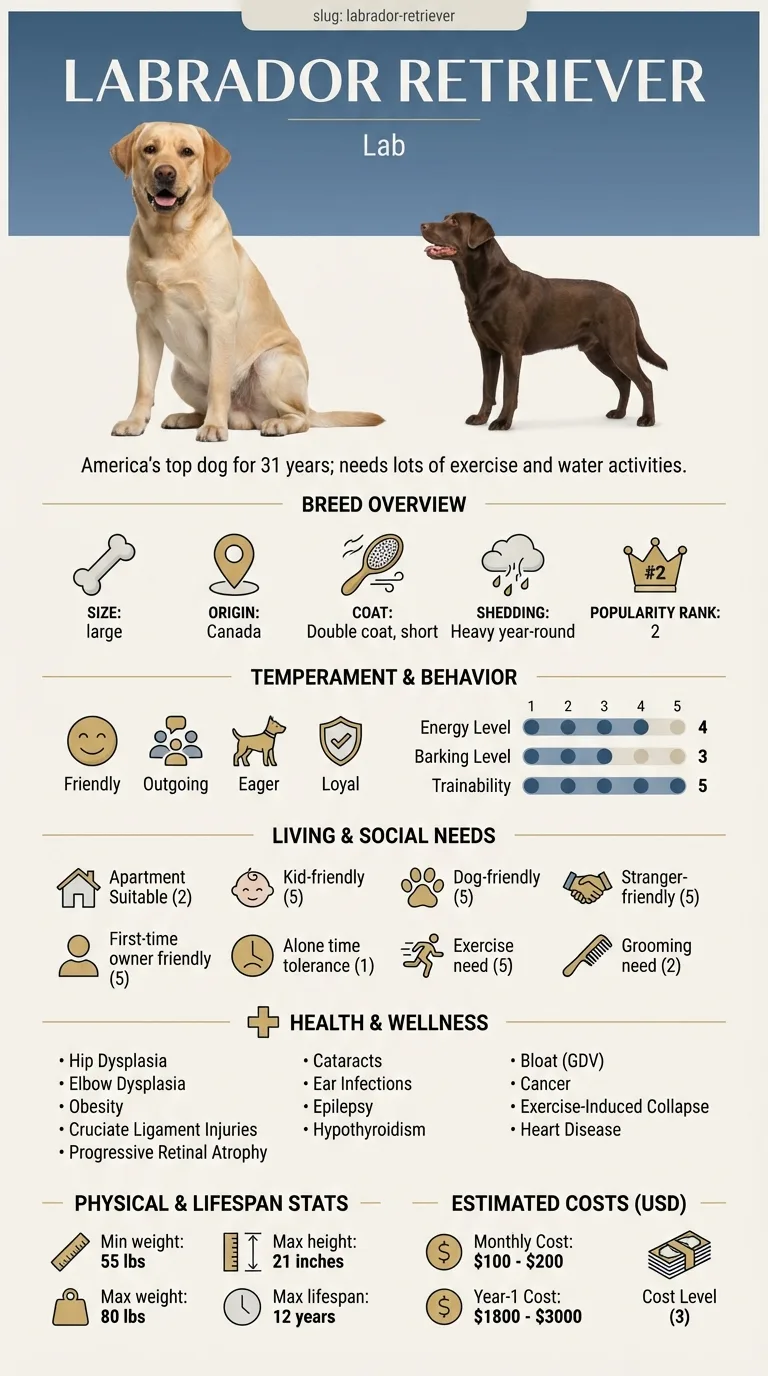
55–80 lbs
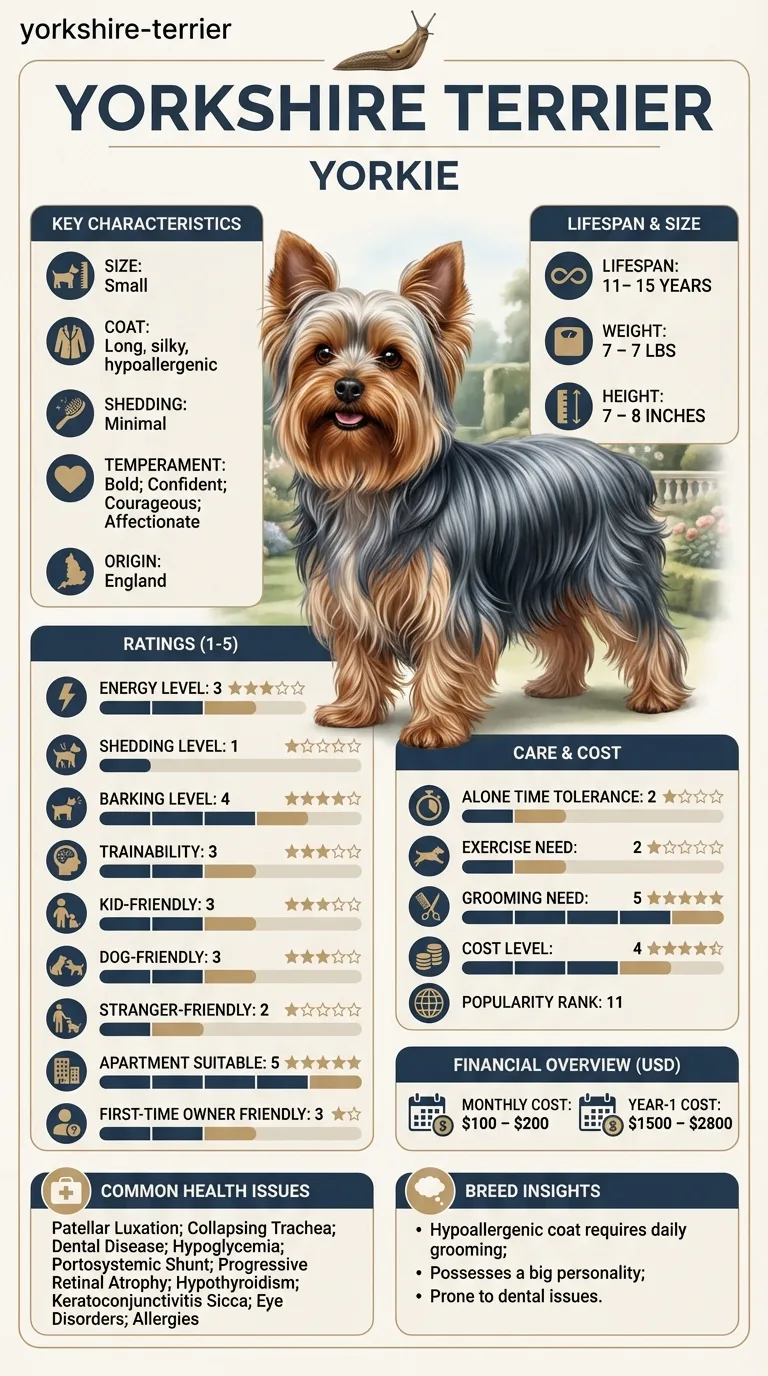
4–7 lbs
Equal
Height
21–24 in
7–8 in
Equal
Lifespan
10–12 years
11–15 years
yorkshire terrier
Exercise need
Very high (5/5)
Low (2/5)
yorkshire terrier
Grooming need
Low (2/5)
Very high (5/5)
labrador retriever
Shedding
High (4/5)
Very low (1/5)
yorkshire terrier
Energy level
High (4/5)
Moderate (3/5)
Equal
Barking
Moderate (3/5)
High (4/5)
labrador retriever
Apartment suitability
Low (2/5)
Very high (5/5)
yorkshire terrier
Good for first-time owners
Very high (5/5)
Moderate (3/5)
labrador retriever
Tolerates being alone
Very low (1/5)
Low (2/5)
yorkshire terrier
Trainability
Very high (5/5)
Moderate (3/5)
labrador retriever
Good with kids
Very high (5/5)
Moderate (3/5)
labrador retriever
Good with other dogs
Very high (5/5)
Moderate (3/5)
labrador retriever
Friendly to strangers
Very high (5/5)
Low (2/5)
labrador retriever
Cost level
Moderate (3/5)
High (4/5)
labrador retriever
Coat
Double coat, short
Long, silky, hypoallergenic
Equal
Origin
Canada
England
Equal
Typical monthly cost
$100–$200
$100–$190
Equal
Typical first-year cost
$1,800–$3,000
$1,400–$2,900
Equal
Deep dive
Size and build
This is about as extreme a size gap as you'll find in a breed comparison: the Lab runs 55 to 80 pounds and stands 21 to 24 inches, while the Yorkie tops out around 7 pounds and 8 inches. You're not really choosing between two dogs of the same category here, you're choosing between a large sporting breed and a toy breed that can ride in a bag.
Energy and exercise
The gap holds in exercise need too: the Lab rates a full 5 out of 5, the Yorkie a low 2 out of 5. A brisk indoor play session and a short walk can satisfy a Yorkie's daily needs, while a Lab left with that little activity will start finding its own entertainment, usually at the expense of your furniture.
Grooming and shedding
The two swap places completely here. The Lab needs minimal grooming (2 out of 5) but sheds heavily (4 out of 5); the Yorkie needs the maximum grooming effort (5 out of 5) for its long, silky, hypoallergenic coat but sheds almost nothing (1 out of 5). If allergies are a factor in your household, that hypoallergenic coat is worth the extra brushing and trims.
Apartment living, noise and time alone
The Yorkie is built for small-space living, a 5 out of 5 apartment suitability score against the Lab's low 2 out of 5, but it's also the more vocal of the two, barking at a high 4 out of 5 versus the Lab's moderate 3. A Yorkie fits your floor plan more easily; whether it fits your walls depends on how forgiving your neighbors are.
Training and owner experience
The Lab is the more universally recommended dog for first-timers, rating 5 out of 5 against the Yorkie's moderate 3 out of 5, and it also holds a clear trainability edge (5 versus 3). Yorkies are bold and confident by temperament, traits that read as charming in a small dog but that can also translate into a more opinionated training process than their size suggests.
Kids, other dogs and visitors
The Lab wins every social category here, and by a notable margin with kids and other dogs (5 versus 3 on both). Small toy breeds like the Yorkie are often more fragile around rough play and less naturally tolerant of boisterous kids or unfamiliar dogs, which shows up clearly in these numbers, worth weighing carefully if your household includes young children.
Health and lifespan
The Yorkie lives longer on average, typically 11 to 15 years against the Lab's 10 to 12, and carries a health list weighted toward small-breed issues, collapsing trachea, hypoglycemia, and a portosystemic shunt among ten documented conditions. The Lab's list runs to thirteen conditions and leans toward large-breed risks like bloat, cancer, and heart disease. Either way, regular vet checkups matter more than the raw count of conditions on paper.
Cost to keep
The Lab is rated cheaper to keep overall, a moderate 3 out of 5 against the Yorkie's high 4 out of 5, even though the actual monthly figures land close ($100-$200 for the Lab, $100-$190 for the Yorkie). The gap likely reflects grooming upkeep and higher-maintenance vet needs more than raw food cost, since a toy breed eats far less.
Breed photos
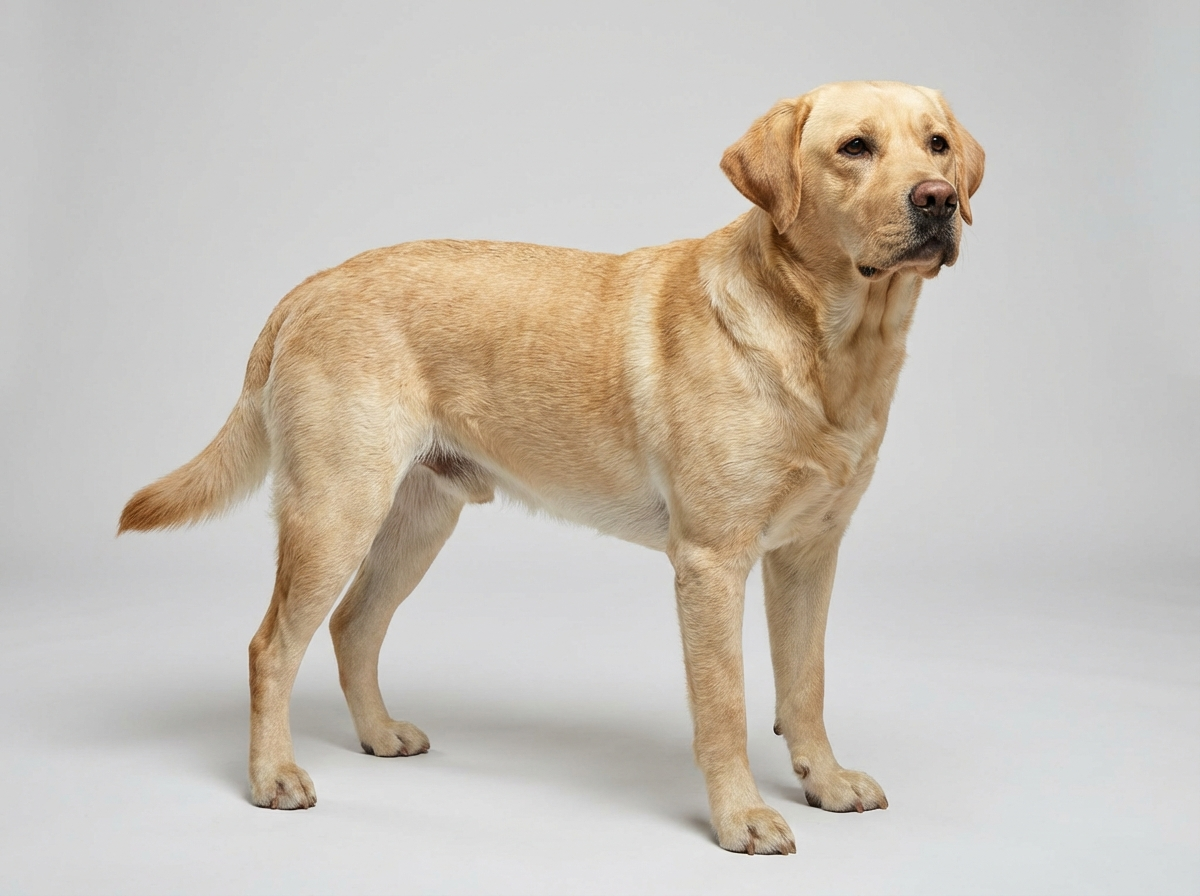
Labrador Retriever vs Yorkshire Terrier: A Comprehensive Comparison - Photo 1Labrador Retriever vs Yorkshire Terrier: A Comprehensive Comparison - Photo 2Labrador Retriever vs Yorkshire Terrier: A Comprehensive Comparison - Photo 3Labrador Retriever vs Yorkshire Terrier: A Comprehensive Comparison - Photo 4Labrador Retriever vs Yorkshire Terrier: A Comprehensive Comparison - Photo 5Labrador Retriever vs Yorkshire Terrier: A Comprehensive Comparison - Photo 6Labrador Retriever vs Yorkshire Terrier: A Comprehensive Comparison - Photo 7Labrador Retriever vs Yorkshire Terrier: A Comprehensive Comparison - Photo 8Labrador Retriever vs Yorkshire Terrier: A Comprehensive Comparison - Photo 9Labrador Retriever vs Yorkshire Terrier: A Comprehensive Comparison - Photo 10
Frequently asked questions
How different is their size?
Enormously, the Lab weighs roughly 55 to 80 pounds, the Yorkie just 4 to 7 pounds. This is one of the widest size gaps you'll find in any breed comparison.
Which sheds more?
The Yorkie sheds almost nothing (1 out of 5) against the Lab's heavy 4 out of 5, thanks to its hypoallergenic coat, though that coat needs far more grooming to stay tangle-free.
Is either good for a first-time owner?
The Lab is the stronger first-timer pick, rated 5 out of 5 against the Yorkie's moderate 3 out of 5. Yorkies are confident and a bit stubborn, which can surprise new owners expecting an easy toy breed.
Which fits an apartment better?
The Yorkie is built for it, a 5 out of 5 apartment suitability score, the best possible, against the Lab's low 2 out of 5. Just budget for a more vocal dog, since it barks more too.
What will either cost me monthly?
The overall cost rating favors the Lab (moderate versus the Yorkie's high), even though the monthly dollar ranges are close. Grooming and vet costs likely tip the Yorkie's rating higher.
Do they share health risks?
There's little overlap, progressive retinal atrophy and hypothyroidism appear on both lists, but otherwise the Lab skews toward large-breed risks like bloat and cancer, while the Yorkie's list is dominated by small-breed issues like collapsing trachea and hypoglycemia.
Which is better with kids?
The Lab, clearly, rated very high (5 out of 5) against the Yorkie's moderate 3 out of 5. Toy breeds are generally more vulnerable to rough handling from young children.
Pick the Lab for an active family dog that handles kids, strangers, and other dogs easily. Pick the Yorkie if space is tight, allergies are a concern, and you don't have small children roughhousing in the house.
Costs
What's the monthly cost?
Close either way, $100-$200 for the Lab, $100-$190 for the Yorkie, though the Yorkie's overall cost rating runs slightly higher due to grooming needs.
Behavior
How much exercise do they need?
Worlds apart, 5 out of 5 for the Lab, just 2 out of 5 for the Yorkie. A short daily walk covers a Yorkie's needs; a Lab needs far more.
Health
Which breed lives longer?
The Yorkie, typically 11 to 15 years against the Lab's 10 to 12 years.
This guide is not medical advice. If your dog shows pain, sudden behavior change, or worsening symptoms, consult a licensed veterinarian.
Some links may be affiliate links. We may earn a commission at no extra cost to you. We only suggest products we believe are helpful for dog owners.
We research and check what we publish, but we do not warrant that any figure, date, price, or statement is accurate, complete, or current, and we accept no liability for any loss, cost, injury, or other harm arising from the use of this site. Use it as one reference among several. You remain responsible for your own decisions and for your dog's care - confirm anything that matters with a licensed veterinarian or another qualified professional before you act on it. Full disclaimer.