Chow Chow vs German Wirehaired Pointer: Which Suits Your Home?
Quick answer
Which breed should most people choose?
Choose the Pointer if you can provide serious daily exercise and want a dog that lives a bit longer on average. Choose the Chow if you want low exercise needs and better apartment suitability, and don't mind the heavier grooming load.
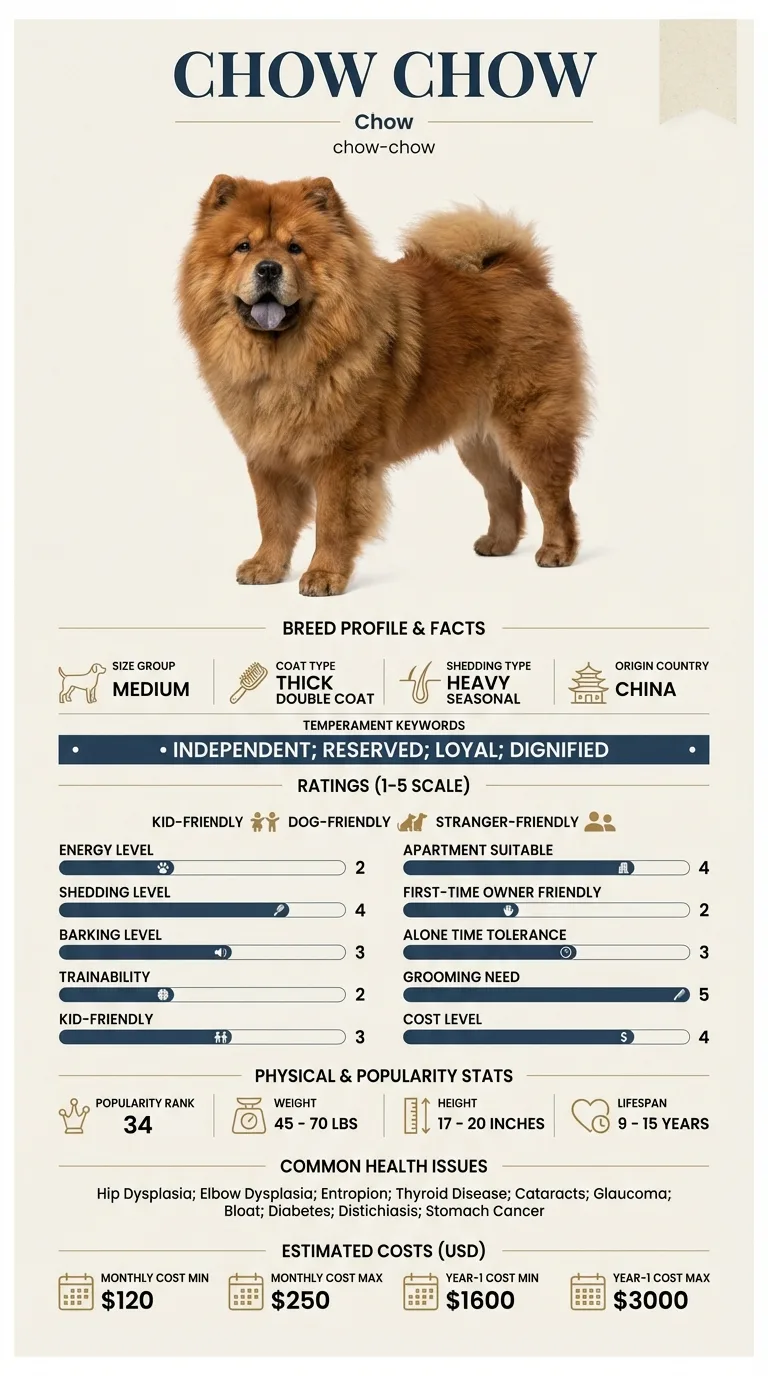
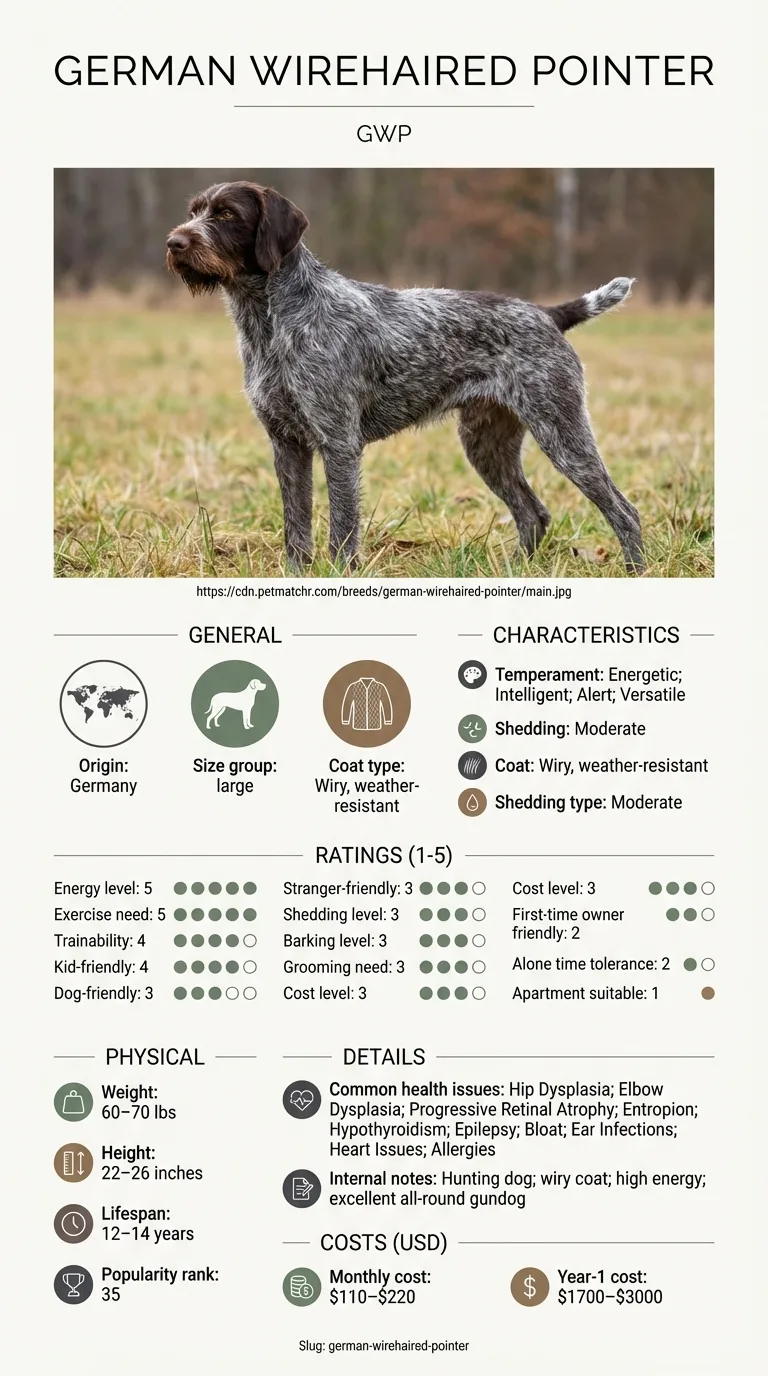
Chow Chow or German Wirehaired Pointer? On paper they differ most on exercise need, and on the scales German Wirehaired Pointer is the heavier at 60–70 lbs. Here is how the two compare on everything that shapes an ordinary week.
This is for someone already down to Chow Chow and German Wirehaired Pointer and deciding between them. For this pair the decision usually turns on exercise need and energy level, so those are covered first and in most detail. Anyone choosing from a flat has a clear answer here: Chow Chow rates 4/5 against 1/5. The focus throughout is on daily consequences rather than breed background.
Quick verdict
Between Chow Chow and German Wirehaired Pointer, exercise need is what separates them, and Chow Chow is the lower-effort dog of the two to keep.
Choose chow chow if...
Choose Chow Chow if you are in a flat or a smaller home, your walking routine is modest and the dog will be alone during the working day.
Choose german wirehaired pointer if...
Choose German Wirehaired Pointer if you do not want a standing grooming appointment, shedding is a problem in your house and there are young children at home.
Head-to-head comparison
Feature
chow chow
german wirehaired pointer
Winner
Size class
medium
large
Equal
Weight
45–70 lbs
60–70 lbs
Equal
Height
17–20 in
22–26 in
Equal
Lifespan
9–15 years
12–14 years
german wirehaired pointer
Exercise need
Low (2/5)
Very high (5/5)
chow chow
Grooming need
Very high (5/5)
Moderate (3/5)
german wirehaired pointer
Shedding
High (4/5)
Moderate (3/5)
german wirehaired pointer
Energy level
Low (2/5)
Very high (5/5)
Equal
Barking
Moderate (3/5)
Moderate (3/5)
Equal
Apartment suitability
High (4/5)
Very low (1/5)
chow chow
Good for first-time owners
Low (2/5)
Low (2/5)
Equal
Tolerates being alone
Moderate (3/5)
Low (2/5)
chow chow
Trainability
Low (2/5)
High (4/5)
german wirehaired pointer
Good with kids
Moderate (3/5)
High (4/5)
german wirehaired pointer
Good with other dogs
Low (2/5)
Moderate (3/5)
german wirehaired pointer
Friendly to strangers
Low (2/5)
Moderate (3/5)
german wirehaired pointer
Cost level
High (4/5)
Moderate (3/5)
german wirehaired pointer
Coat
Thick double coat
Wiry, weather-resistant
Equal
Origin
China
Germany
Equal
Typical monthly cost
$120–$250
$110–$220
Equal
Typical first-year cost
$1,600–$3,000
$1,700–$3,000
Equal
Deep dive
Size and build
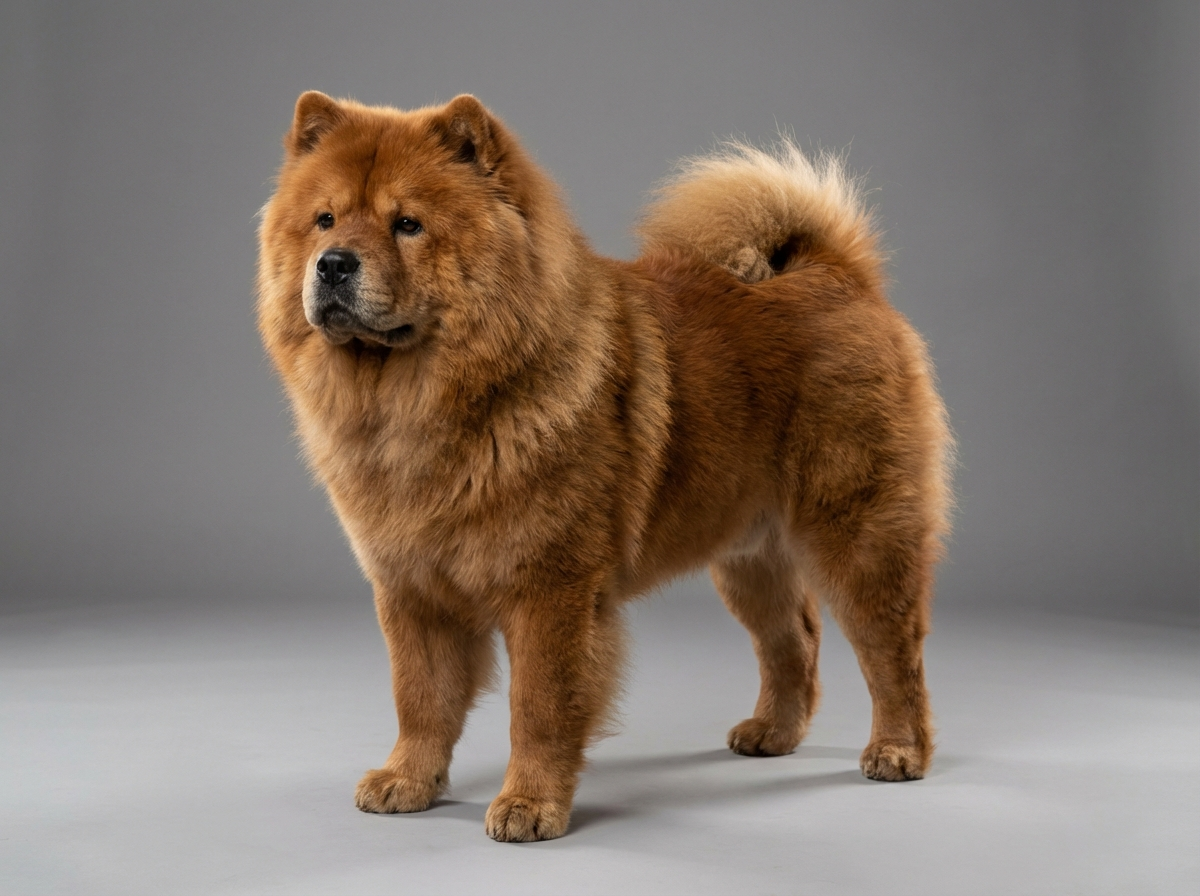
The Wirehaired Pointer sits at the upper end of the Chow's weight range and above it, 60-70 lbs against the Chow's 45-70, and stands taller at 22-26 inches to the Chow's 17-20. Coat texture is where the real contrast shows: the Chow's plush double coat next to the Pointer's wiry, weather-resistant one, built to shrug off brush and cold water.
Energy and exercise
The Wirehaired Pointer needs serious daily exercise, rated 5/5, having been bred for long days pointing and retrieving in rough terrain. The Chow rates 2/5. As with the other pointing breeds in this batch, this single number probably matters more to daily life than anything else in the table. Field time, long hikes, or serious off-leash running all count for the Pointer; a couple of short walks won't cut it.
Grooming and shedding
The gap here is real but less extreme than with some other breeds, the Chow rates 5/5 for grooming and 4/5 for shedding, the Pointer 3/5 and 3/5. That wiry coat needs occasional hand-stripping to stay in condition, so low maintenance isn't quite right, even if it's a lighter job than the Chow's daily brushing. Plan on a hand-stripping session every few months for the Pointer alongside weekly brushing, versus near-daily brushing for the Chow.
Apartment living, noise and time alone
Apartment suitability splits sharply: 4/5 for the Chow against a very low 1/5 for the Pointer. Barking ties at 3/5. The Pointer's poor apartment score traces directly to its exercise needs rather than noise or temperament, it's simply bred for wide-open spaces. Neither dog is loud by nature, but only one of them can realistically thrive without regular access to open space.
Training and owner experience
The Pointer trains at a high 4/5 against the Chow's 2/5, though both rate low (2/5) for first-time owners, the Pointer because it needs an experienced, active handler, the Chow because it's just not inclined to take direction easily. Mental stimulation matters as much as physical exercise for the Pointer, so puzzle toys and training games help fill the gap between walks.
Kids, other dogs and visitors
The Pointer edges out the Chow with kids (4/5 vs 3/5) and strangers (3/5 vs 2/5), with a smaller gap for other dogs (3/5 vs 2/5). Its temperament, energetic, alert, versatile, suits a household that keeps it busy. The Chow's more reserved, independent nature suits a quieter one. A Pointer's enthusiasm around new people can come across as pushy to a stranger who isn't expecting it, so some early manners training helps.
Health and lifespan
The Pointer actually outlives the Chow on paper, 12-14 years against the Chow's wider 9-15 range. Health overlap runs to four conditions here, the most of any pairing besides the German Shepherd: hip dysplasia, elbow dysplasia, entropion, and bloat all appear on both ten-condition lists. Entropion overlap in particular is worth flagging to a vet early, since it's an eyelid condition that can affect either breed.
Cost to keep
The Pointer runs a touch cheaper, 3/5 cost rating and $110-$220 monthly against the Chow's 4/5 and $120-$250. First-year totals are nearly matched, $1,700-$3,000 versus $1,600-$3,000, so the annual difference is smaller than the monthly numbers imply. Add in occasional professional hand-stripping for the Pointer's coat and the annual cost gap narrows even further, so the deciding factor really is your own time rather than your wallet.
Chow Chow vs German Wirehaired Pointer at a glance
Chow Chow weighs 45–70 lbs and lives 9–15 years; German Wirehaired Pointer weighs 60–70 lbs and lives 12–14 years. The two diverge most on exercise need, energy level and apartment suitability and 2 other rated axes. They are level on barking and good for first-time owners, so those cannot decide it. The table below marks a winner only where one breed is genuinely easier for a typical owner; size and origin are facts rather than merits and stay level. Ratings come from one source applied to both breeds, so they are meaningful against each other rather than as absolute scores.
Chow Chow vs German Wirehaired Pointer: Which Suits Your Home? - Chow Chow vs German Wirehaired Pointer at a glance
Frequently asked questions
Which is bigger?
The German Wirehaired Pointer, on both counts, 60-70 lbs and 22-26 inches against the Chow's 45-70 lbs and 17-20 inches.
Which needs more exercise?
The Pointer, rated 5/5 against the Chow's 2/5. This is a serious working-dog exercise requirement, not a nice-to-have.
Which fits an apartment better?
The Chow, decisively, 4/5 apartment suitability versus the Pointer's very low 1/5, driven by the Pointer's need for daily vigorous exercise.
Do they share health conditions?
Four: hip dysplasia, elbow dysplasia, entropion, and bloat appear on both breeds' lists, the most overlap of any comparison in this batch besides the Chow-Shepherd pairing.
Which lives longer?
The Pointer, with a tighter range of 12-14 years against the Chow's wider 9-15 year spread.
Which is easier to train?
The Pointer, rated 4/5 versus the Chow's 2/5, though both rate low (2/5) for first-time-owner suitability overall.
What's the grooming difference?
Real but not extreme, 5/5 for the Chow against 3/5 for the Pointer. The Pointer's wiry coat benefits from occasional hand-stripping, so it's not a no-maintenance coat, just a lighter one.
Choose the Pointer if you can provide serious daily exercise and want a dog that lives a bit longer on average. Choose the Chow if you want low exercise needs and better apartment suitability, and don't mind the heavier grooming load.
Costs
What will I spend monthly?
$120-$250 for the Chow, $110-$220 for the Pointer, close enough that first-year totals land almost identically.
Behavior
How much exercise does each need?
The Pointer needs very high exercise (5/5), a serious daily commitment; the Chow needs very little (2/5).
Health
Which lives longer?
The Pointer edges it out here, 12-14 years against the Chow's wider 9-15 year range.
Related DogBreedCompass guides
Chow Chow breed guide – Readers comparing the two usually want the full profile of Chow Chow before deciding.
Health information here is general and is not veterinary advice. If your dog shows pain, sudden behaviour change, or worsening symptoms, consult a licensed veterinarian.
Some links on this site are affiliate links. We may earn a commission at no extra cost to you, and we only suggest products we believe are helpful for dog owners.
We research and check what we publish, but we do not warrant that any figure, date, price, or statement is accurate, complete, or current, and we accept no liability for any loss, cost, injury, or other harm arising from the use of this site. Use it as one reference among several. You remain responsible for your own decisions and for your dog's care - confirm anything that matters with a licensed veterinarian or another qualified professional before you act on it. Full disclaimer.