What are quick tips for managing Belgian Malinois bone & growth issues?
Monitor your dog's growth and consult your vet regularly to catch potential issues early. Provide a balanced diet and avoid excessive exercise during their growth phase.
Belgian Malinois bone & growth issues are common but can be concerning for owners. These problems arise due to the breed's large size and rapid growth.

Typically, first-time or busy owners may struggle with recognizing and managing these bone and growth problems. Owners with active lifestyles or those living in apartments may find it even more challenging to provide the necessary exercise and care.
This guide is not medical advice. If your dog shows pain, sudden behavior change, or worsening symptoms, consult a licensed veterinarian.
Some links may be affiliate links. We may earn a commission at no extra cost to you. We only suggest products we believe are helpful for dog owners.
Belgian Malinois bone & growth issues can manifest in various ways, impacting their overall health and mobility. These problems often stem from their large size and rapid growth, leading to conditions such as hip and elbow dysplasia. Owners may notice limping, difficulty getting up, or reluctance to engage in physical activities that were once easy for their dog.
Bone & growth issues are relatively common in Belgian Malinois, especially during their early years. Many dogs in this breed experience some form of bone-related challenges, making it crucial for owners to monitor their growth and activity levels.
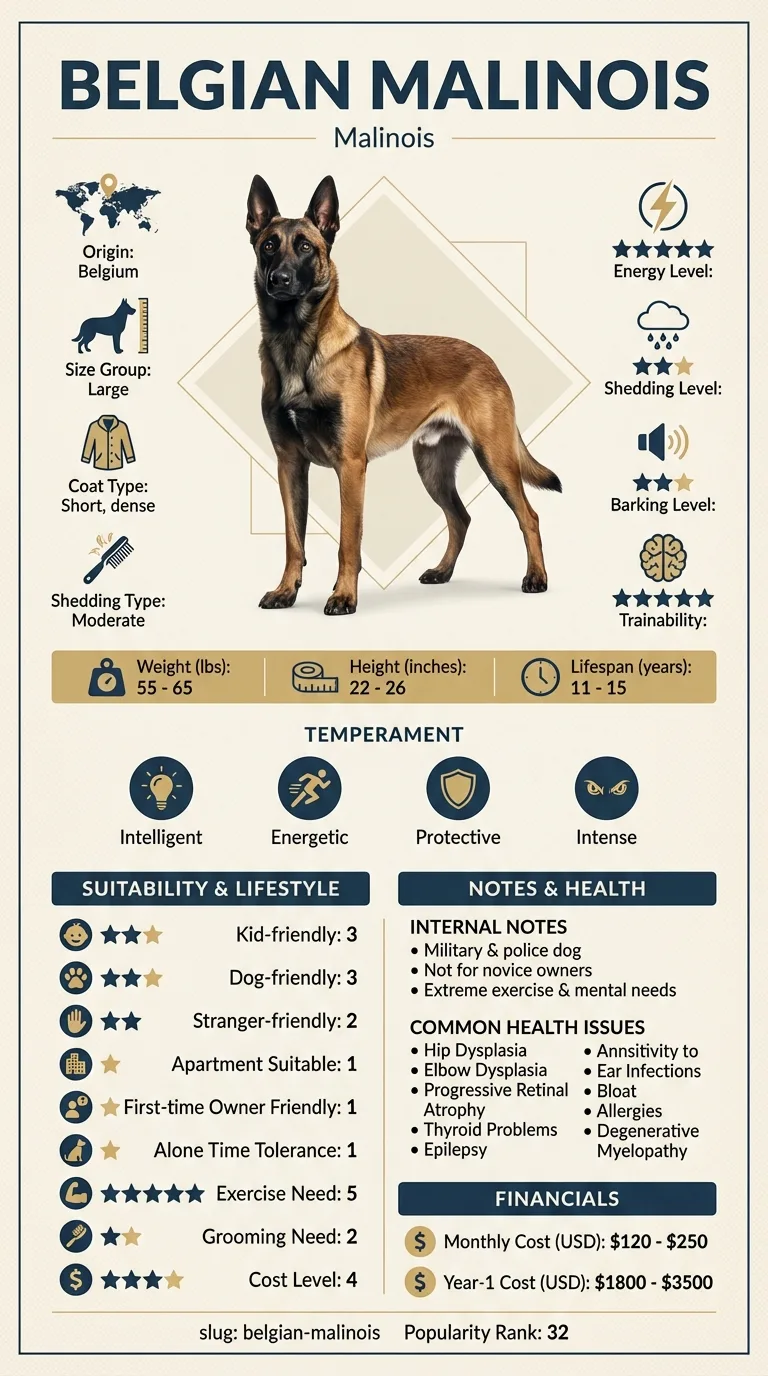
Belgian Malinois are a large, active breed that experiences rapid growth. Their genetic predisposition can lead to bone and growth issues, especially if not properly managed. This breed is also prone to conditions like hip dysplasia and elbow dysplasia, which can affect their skeletal development.
Environmental factors play a significant role in bone health. Inadequate nutrition, excessive exercise during critical growth phases, and lack of proper veterinary care can exacerbate bone issues. Overweight conditions from overfeeding or lack of exercise can also put additional strain on their developing bones.
If you notice persistent limping, reluctance to exercise, or if your dog is struggling with basic commands due to discomfort, consider consulting a qualified trainer. They can help adjust training techniques to accommodate your dog's needs.
Consult your vet if you suspect bone growth issues, especially if your Malinois shows signs of pain or discomfort. Regular check-ups can help catch any developing problems early, ensuring your dog receives the best care possible.
Most owners will see significant improvement in their Belgian Malinois's bone and growth issues within 3 to 6 months with appropriate care and management. This includes a tailored diet, regular vet check-ups, and proper exercise.
Success means your Malinois will have improved bone health, less discomfort, and a stable growth pattern. Ideally, they will be active and playful without signs of pain or mobility issues.
When dealing with Belgian Malinois bone and growth issues, certain mistakes can hinder progress. Here are some common pitfalls to avoid.
Knowing when to call the vet for Belgian Malinois bone & growth issues is crucial. There are clear red flags that indicate immediate action is needed. If your Malinois shows persistent limping, swelling in the joints, or signs of extreme pain, call your vet right away. These symptoms could mean serious conditions like fractures or severe dysplasia.
Other alarming signs include difficulty standing or walking, noticeable changes in appetite, or lethargy. If your dog is suddenly less active than usual or seems to be in distress, don't hesitate to seek professional help. These could be indicators of underlying health issues that require prompt attention.
On the other hand, if your Malinois is experiencing mild discomfort, like occasional stiffness after exercise, this may not be an emergency. In these cases, you can monitor their condition at home. Keeping track of their activity levels and adjusting exercise routines can help manage minor issues. Regular check-ups with your vet are also advisable to ensure your dog's growth is on track and to address any concerns early on.

Emily, a busy nurse from Chicago, adopted Max, a lively Belgian Malinois. Soon after bringing him home, she noticed he limped often and seemed unsteady during play. Concerned, she took him to the vet, who diagnosed him with bone growth issues common in large breeds. After consulting with a vet nutritionist, Emily adjusted Max's diet to include specially formulated food to support bone health. She also started a structured exercise routine that balanced play with rest. Over the months, Max's limping decreased, and he became more energetic and playful.
Key takeaway: With the right diet and management, you can help your Belgian Malinois overcome bone and growth issues, ensuring a healthier, happier life.

Belgian Malinois are prone to bone and growth issues due to their large size and rapid growth rates. Genetic factors, diet, and exercise levels can all contribute to these problems. It's crucial to monitor your dog's growth and consult a vet if you notice any irregularities.
To address bone and growth issues in your Belgian Malinois, focus on a balanced diet rich in essential nutrients. Regular, controlled exercise is essential to avoid overexertion. Consulting a vet for tailored advice is also recommended.
Signs of bone and growth issues can include limping, difficulty standing or walking, and swelling in the joints. If your Malinois is showing these symptoms, it is important to seek veterinary care immediately. Early detection can lead to more effective treatment.
Yes, proper training can help manage bone and growth issues by promoting healthier habits. Training should focus on controlled exercise to prevent injury and encourage good posture. Always ensure that training sessions are age-appropriate and not overly strenuous.
Choosing the right diet for a Belgian Malinois involves selecting high-quality dog food that meets their nutritional needs. Look for options that are designed for large breeds and avoid excessive calcium, which can lead to growth issues. A vet can provide recommendations based on your dog's specific needs.
Exercise is crucial for a Belgian Malinois to maintain a healthy weight and strong bones. However, too much high-impact exercise can exacerbate growth issues. Aim for moderate, regular walks and playtime rather than intense workouts.
Look for signs such as limping, reluctance to exercise, or noticeable swelling in the joints. If your Malinois seems uncomfortable or is avoiding weight-bearing activities, it may indicate bone or growth issues.
If you notice persistent limping, unusual gait, or any signs of pain, consult your vet. Early intervention can prevent more severe complications related to bone & growth issues.
Absolutely! A balanced diet with the right nutrients is crucial for healthy bone development. Consult your vet about high-quality dog food that meets the specific needs of large breeds like the Belgian Malinois.
Yes, older Belgian Malinois can develop age-related bone and joint problems, such as arthritis. Regular vet check-ups can help manage these issues and maintain their quality of life.
Ensure your dog gets appropriate exercise without overdoing it. Provide a comfortable resting area and consider supplements recommended by your vet for joint health. Consistency in care can make a significant difference.
Monitor your dog's growth and consult your vet regularly to catch potential issues early. Provide a balanced diet and avoid excessive exercise during their growth phase.
It's best to take your Belgian Malinois to the vet at least once a year, but more frequent visits may be necessary during their growth phase to monitor bone health.
Consult your vet about supplements like glucosamine and omega-3 fatty acids, which may help support joint health in growing dogs.


![Ultimate Guides: "Complete Guide to Choosing a Dog for [X] | Ultimate Guides: Complete Guide to Choosing a Dog for You thumbnail](/images/breeds/golden-retriever/golden%20retriever1.jpg)