Belgian Malinois vs Bloodhound: Which Suits Your Home?
Quick answer
Malinois or Bloodhound — which is the better fit?
Depends what you want: the Bloodhound is friendlier and needs less structured exercise, but is notoriously hard to train. The Malinois trains beautifully but needs an experienced handler and serious daily work.
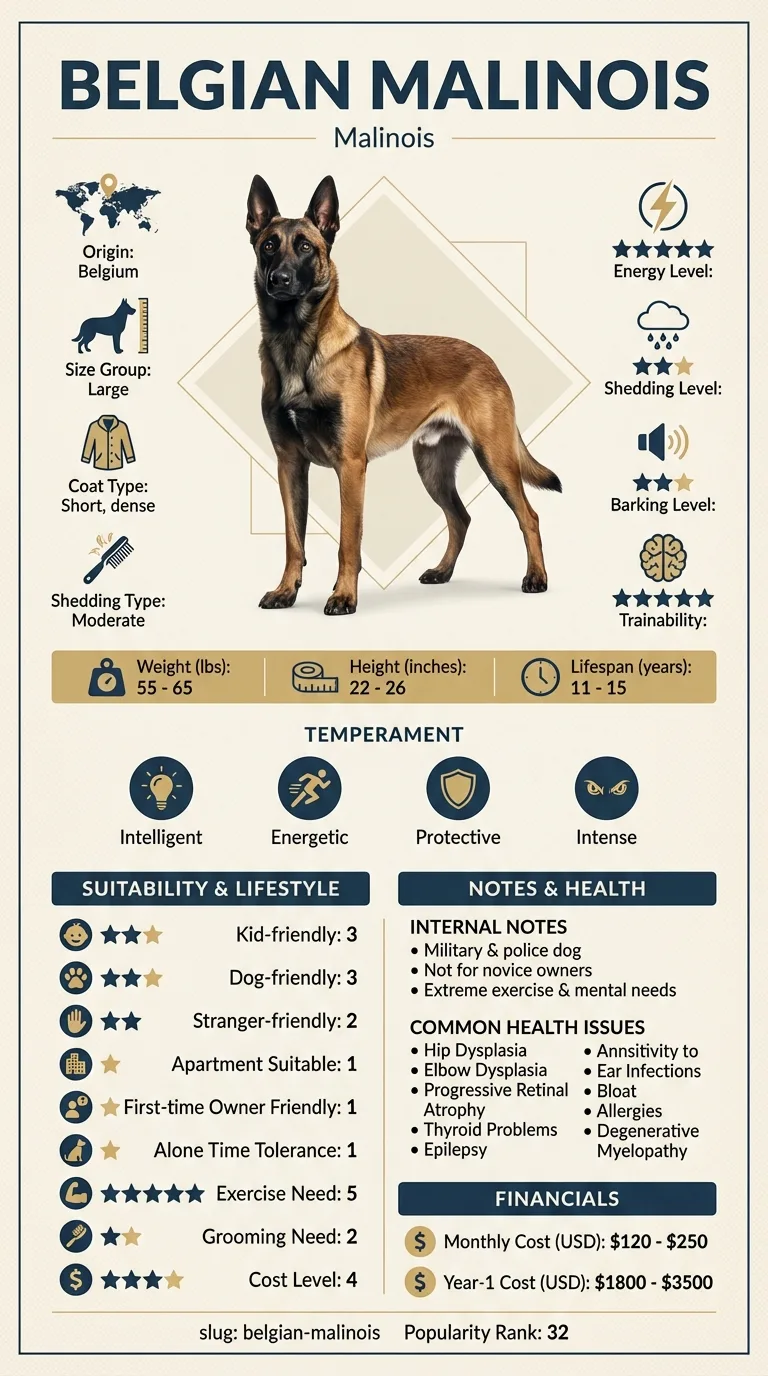
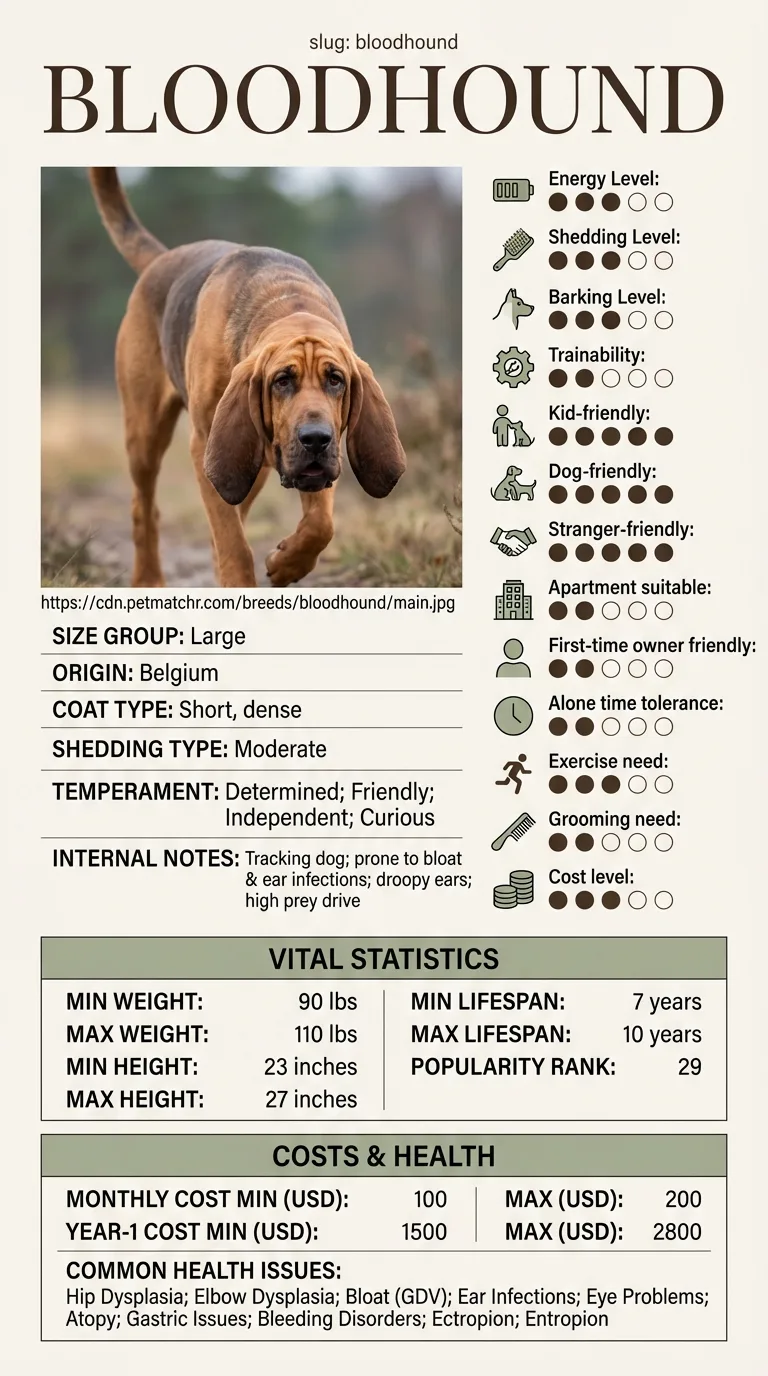
Belgian Malinois or Bloodhound? On paper they differ most on trainability, and on the scales Bloodhound is the heavier at 90–110 lbs. Here is how the two compare on everything that shapes an ordinary week.
This is for someone already down to Belgian Malinois and Bloodhound and deciding between them. For this pair the decision usually turns on trainability and exercise need, so those are covered first and in most detail. Anyone choosing from a flat has a clear answer here: Bloodhound rates 2/5 against 1/5. Breed history is left out; what follows is what you will actually live with.
Quick verdict
Between Belgian Malinois and Bloodhound, trainability is what separates them, and Bloodhound is the lower-effort dog of the two to keep.
Choose belgian malinois if...
Choose Belgian Malinois if you want a dog that picks up training quickly, a smaller dog suits your car, your home or your back and you want a dog that can keep up with an active routine.
Choose bloodhound if...
Choose Bloodhound if your walking routine is modest, there are young children at home and you already have another dog.
Head-to-head comparison
Feature
belgian malinois
bloodhound
Winner
Size class
large
large
Equal
Weight
55–65 lbs
90–110 lbs
Equal
Height
22–26 in
23–27 in
Equal
Lifespan
11–15 years
7–10 years
belgian malinois
Exercise need
Very high (5/5)
Moderate (3/5)
bloodhound
Grooming need
Low (2/5)
Low (2/5)
Equal
Shedding
Moderate (3/5)
Moderate (3/5)
Equal
Energy level
Very high (5/5)
Moderate (3/5)
Equal
Barking
Moderate (3/5)
Moderate (3/5)
Equal
Apartment suitability
Very low (1/5)
Low (2/5)
bloodhound
Good for first-time owners
Very low (1/5)
Low (2/5)
bloodhound
Tolerates being alone
Very low (1/5)
Low (2/5)
bloodhound
Trainability
Very high (5/5)
Low (2/5)
belgian malinois
Good with kids
Moderate (3/5)
High (4/5)
bloodhound
Good with other dogs
Moderate (3/5)
High (4/5)
bloodhound
Friendly to strangers
Low (2/5)
High (4/5)
bloodhound
Cost level
High (4/5)
Moderate (3/5)
bloodhound
Coat
Short, dense
Short, dense
Equal
Origin
Belgium
Belgium
Equal
Typical monthly cost
$120–$250
$100–$200
Equal
Typical first-year cost
$1,800–$3,500
$1,500–$2,800
Equal
Deep dive
Size and build
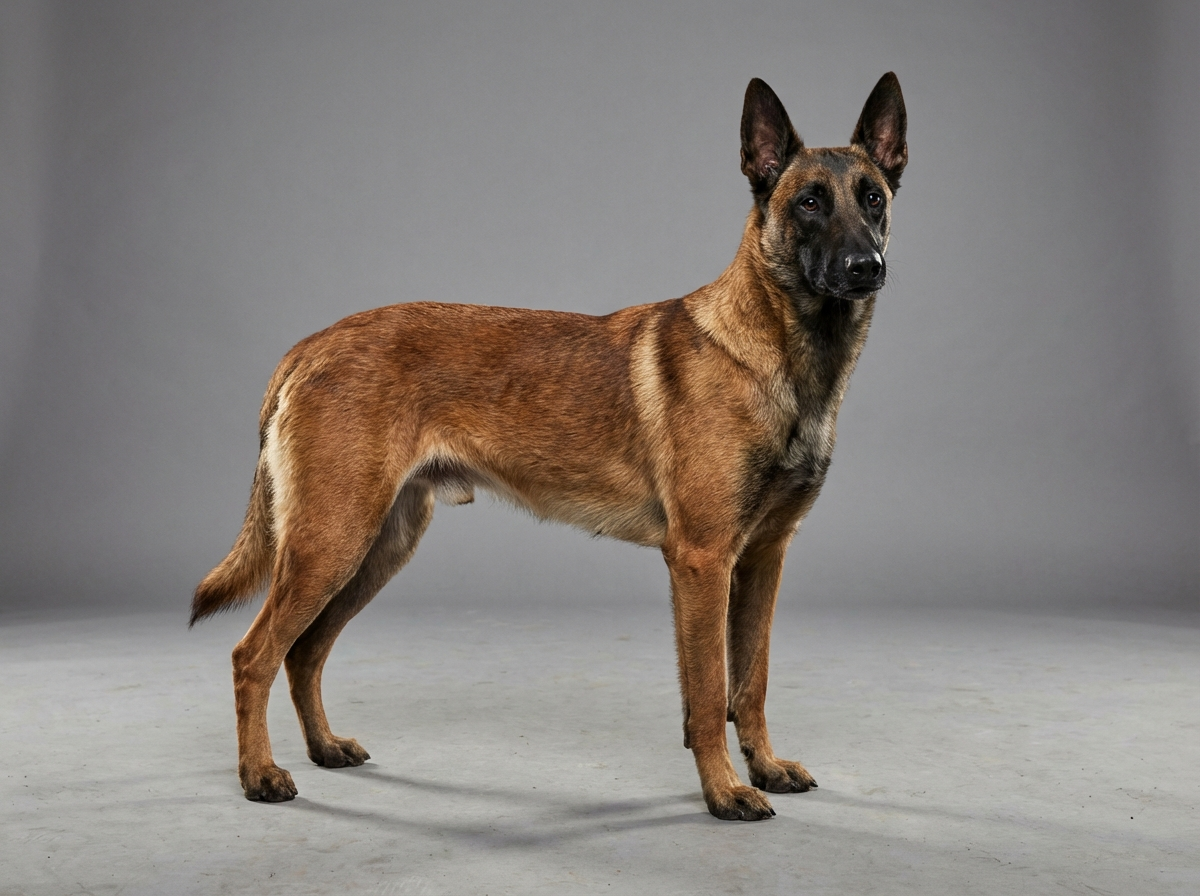
Both breeds land in the large category, but the Bloodhound is built heavier — 90 to 110 pounds against the Malinois's 55 to 65, with loose, wrinkled skin and long ears that add bulk without much added height (23 to 27 inches versus 22 to 26). The Malinois is lean muscle throughout; the Bloodhound carries a droopier, houndier frame designed for tracking scent low to the ground for miles, not for speed or agility work.
Energy and exercise
The Malinois rates very high (5/5) for exercise need against the Bloodhound's moderate (3/5) — a real gap, though don't mistake the Bloodhound's lower rating for low stamina. It can track for hours once it's on a scent; it just doesn't need the structured, high-intensity work the Malinois demands to stay balanced. A long walk covers a Bloodhound's needs. It won't come close to covering a Malinois's.
Grooming and shedding
These two are evenly matched on coat care — both rate low (2/5) for grooming and moderate (3/5) for shedding. The Bloodhound's short coat is easy to brush, though its wrinkled skin needs regular cleaning to prevent infections, which the simple grooming score doesn't fully capture. The Malinois's coat is just as low-maintenance without the skin-fold upkeep.
Apartment living, noise and time alone
Neither dog is a natural fit for small spaces, and both bark at a moderate (3/5) rate. The Bloodhound edges ahead slightly on apartment suitability (low, 2/5, versus the Malinois's very low, 1/5) and tolerates alone time a bit better too. Realistically, though, a 100-pound scent hound and a high-drive working dog both want a house with a yard, not a one-bedroom on the fourth floor.
Training and owner experience
This is the widest trainability gap in the batch: the Malinois rates very high (5/5), among the most trainable working breeds there is, while the Bloodhound rates low (2/5) — famously independent-minded and led by its nose rather than its handler. Neither is a great first dog, both rated low-to-very-low for beginners, but for opposite reasons: the Malinois needs an owner who can channel its intensity, the Bloodhound needs one who can tolerate its stubbornness.
Kids, other dogs and visitors
The Bloodhound is the friendlier breed by every household measure here — high (4/5) with kids, other dogs, and strangers, against the Malinois's moderate (3/5) with kids and other dogs and low (2/5) with strangers. Bloodhounds were bred to work in packs with handlers and the public around them; Malinois were bred for protection and single-handler work, and the personality difference shows clearly in these numbers.
Health and lifespan
The Malinois lives notably longer — 11 to 15 years against the Bloodhound's 7 to 10, one of the larger lifespan gaps in this batch. Four conditions overlap between them: hip dysplasia, elbow dysplasia, bloat, and ear infections. Beyond that the Bloodhound's list is heavy on eye and skin issues tied to its loose skin and long ears — ectropion, entropion, atopy — problems the tighter-skinned Malinois doesn't share.
Cost to keep
The Malinois costs more to keep — high (4/5) overall against the Bloodhound's moderate (3/5), with monthly costs of $120 to $250 versus $100 to $200 and first-year totals of $1,800 to $3,500 versus $1,500 to $2,800. Factor in that a Bloodhound's skin folds may mean extra vet attention for infections not reflected in the baseline cost range.
Belgian Malinois vs Bloodhound at a glance
Belgian Malinois weighs 55–65 lbs and lives 11–15 years; Bloodhound weighs 90–110 lbs and lives 7–10 years. The two diverge most on trainability, exercise need and energy level and 1 other rated axes. They are level on barking, grooming need and shedding, so those cannot decide it. The comparison marks an easier option only where one exists. Facts like weight and country of origin are not scored. Both dogs are rated from the same dataset, which is what makes the numbers comparable with each other even though any individual dog sits somewhere inside its breed's range.
Belgian Malinois vs Bloodhound: Which Suits Your Home? - Belgian Malinois vs Bloodhound at a glance
Frequently asked questions
Which is heavier, the Malinois or the Bloodhound?
The Bloodhound, at 90 to 110 pounds versus the Malinois's 55 to 65 — nearly double the weight, though they stand at similar heights.
Which sheds more?
Neither has an edge — both rate moderate (3/5) for shedding.
Is either breed good for a first-time owner?
Not really. The Bloodhound rates low (2/5) and the Malinois very low (1/5) — both need an owner ready for a strong-willed, demanding dog.
Can a Bloodhound live in an apartment?
Not comfortably — it rates low (2/5), though that's still better than the Malinois's very low (1/5). Both do best with a house and yard.
Which costs more to keep?
The Malinois — roughly $300 to $700 more in the first year than the Bloodhound.
Do Malinois and Bloodhounds share health risks?
Some — hip dysplasia, elbow dysplasia, bloat, and ear infections appear on both lists. The Bloodhound's loose skin and long ears add unique risks like ectropion, entropion, and atopy that the Malinois doesn't have.
Why is the Bloodhound rated so low for trainability if it's so friendly?
Because trainability and friendliness measure different things — the Bloodhound is famously independent and nose-driven, rated low (2/5) for training, even though it's rated high (4/5) for friendliness with kids, other dogs, and strangers.
Depends what you want: the Bloodhound is friendlier and needs less structured exercise, but is notoriously hard to train. The Malinois trains beautifully but needs an experienced handler and serious daily work.
Costs
What's the monthly cost?
$120 to $250 for the Malinois versus $100 to $200 for the Bloodhound.
Living
Which needs more exercise?
The Malinois, rated very high (5/5) versus the Bloodhound's moderate (3/5).
Health
Which breed lives longer?
The Malinois, typically 11 to 15 years versus the Bloodhound's 7 to 10.
Related DogBreedCompass guides
Belgian Malinois breed guide – Readers comparing the two usually want the full profile of Belgian Malinois before deciding.
Bloodhound breed guide – The same for Bloodhound, so the comparison can be checked against the detail.
Belgian Malinois vs German Shorthaired Pointer – German Shorthaired Pointer is the closest breed to Belgian Malinois on the measured axes, so it is the natural next comparison.
Bloodhound vs Old English Sheepdog – Old English Sheepdog sits closest to Bloodhound, which makes it the alternative worth ruling out.
Health information here is general and is not veterinary advice. If your dog shows pain, sudden behaviour change, or worsening symptoms, consult a licensed veterinarian.
Some links on this site are affiliate links. We may earn a commission at no extra cost to you, and we only suggest products we believe are helpful for dog owners.
We research and check what we publish, but we do not warrant that any figure, date, price, or statement is accurate, complete, or current, and we accept no liability for any loss, cost, injury, or other harm arising from the use of this site. Use it as one reference among several. You remain responsible for your own decisions and for your dog's care - confirm anything that matters with a licensed veterinarian or another qualified professional before you act on it. Full disclaimer.