Living
What is the size and energy level of a Bloodhound?
Bloodhounds are large dogs, weighing between 90 to 110 pounds. They have a moderate energy level, requiring daily exercise to stay happy.

The Bloodhound dog breed is renowned for its incredible sense of smell and friendly nature, making it an excellent companion for families and active owners.
Best for: This breed is perfect for active families or individuals who enjoy outdoor activities and have the time to engage in regular exercise. If you love the outdoors and have a large, secure yard, a Bloodhound can be a loyal and affectionate companion. They're also a good fit for those who appreciate a dog with a unique personality and a strong sense of adventure.
Avoid if: Bloodhounds may not be the best choice for apartment dwellers or first-time dog owners. Their moderate exercise needs and tendency to bark can be challenging in small living spaces. Additionally, if you're looking for a dog that is easy to train or one that can be left alone for long periods, this breed might not be for you.
"Life with a Bloodhound dog breed is an adventure filled with curiosity and determination. These large dogs, known for their incredible sense of smell, thrive on exploration and can be quite independent. While they are friendly and good with kids, their strong instincts and playful nature require plenty of exercise and supervision."
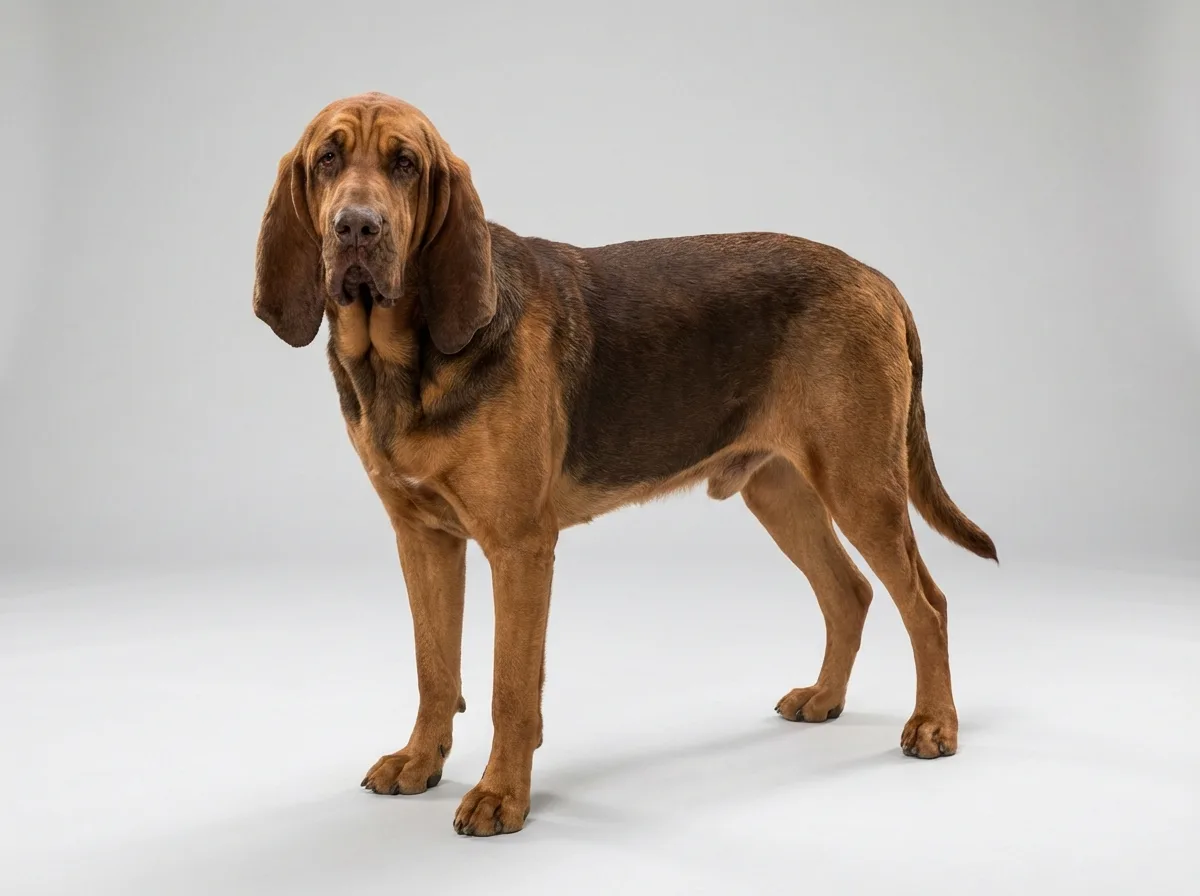
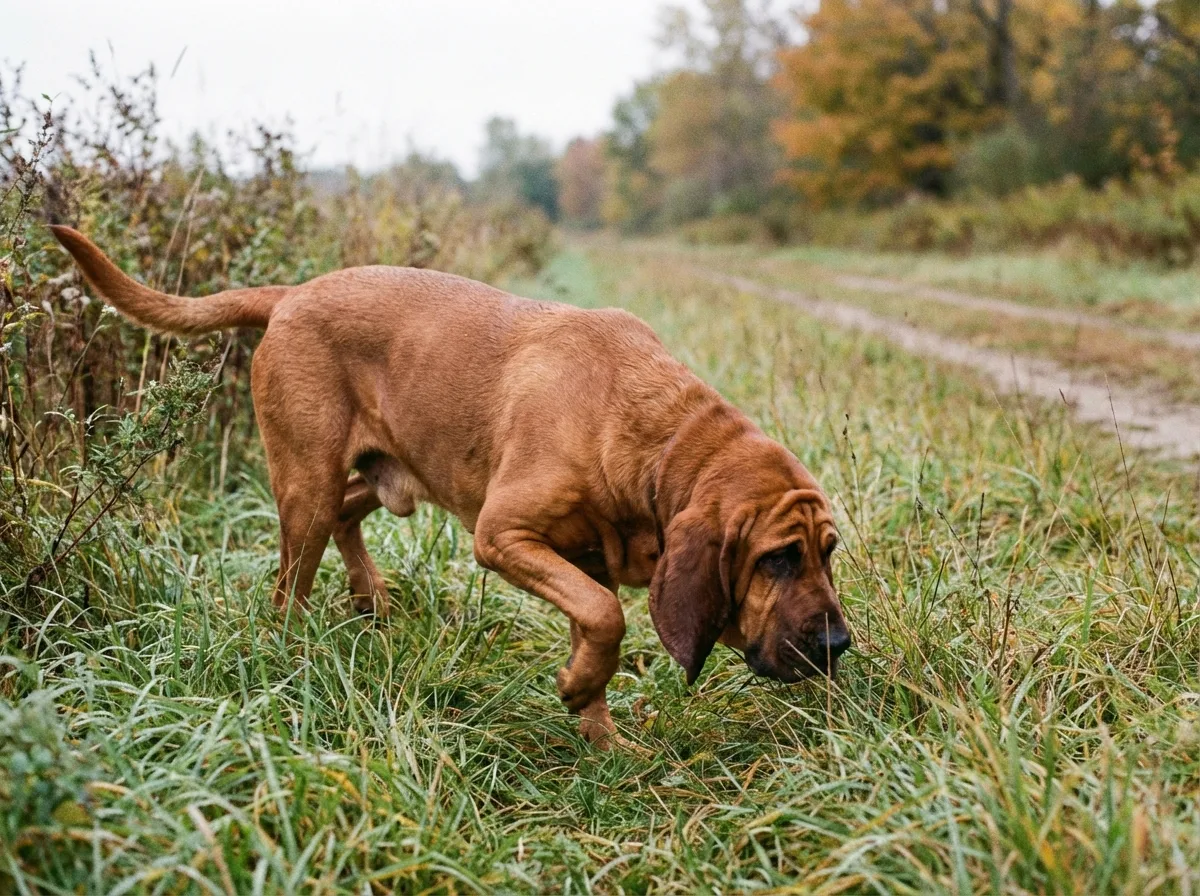
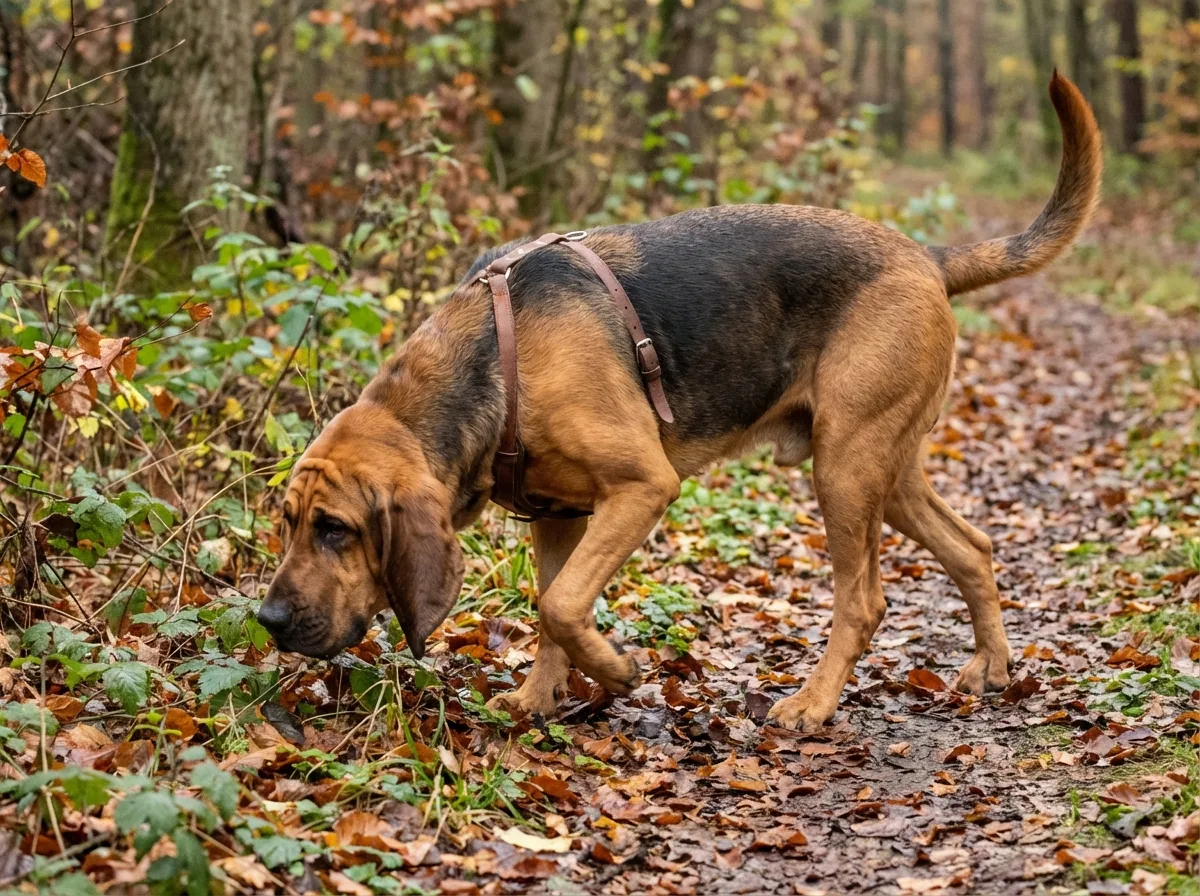
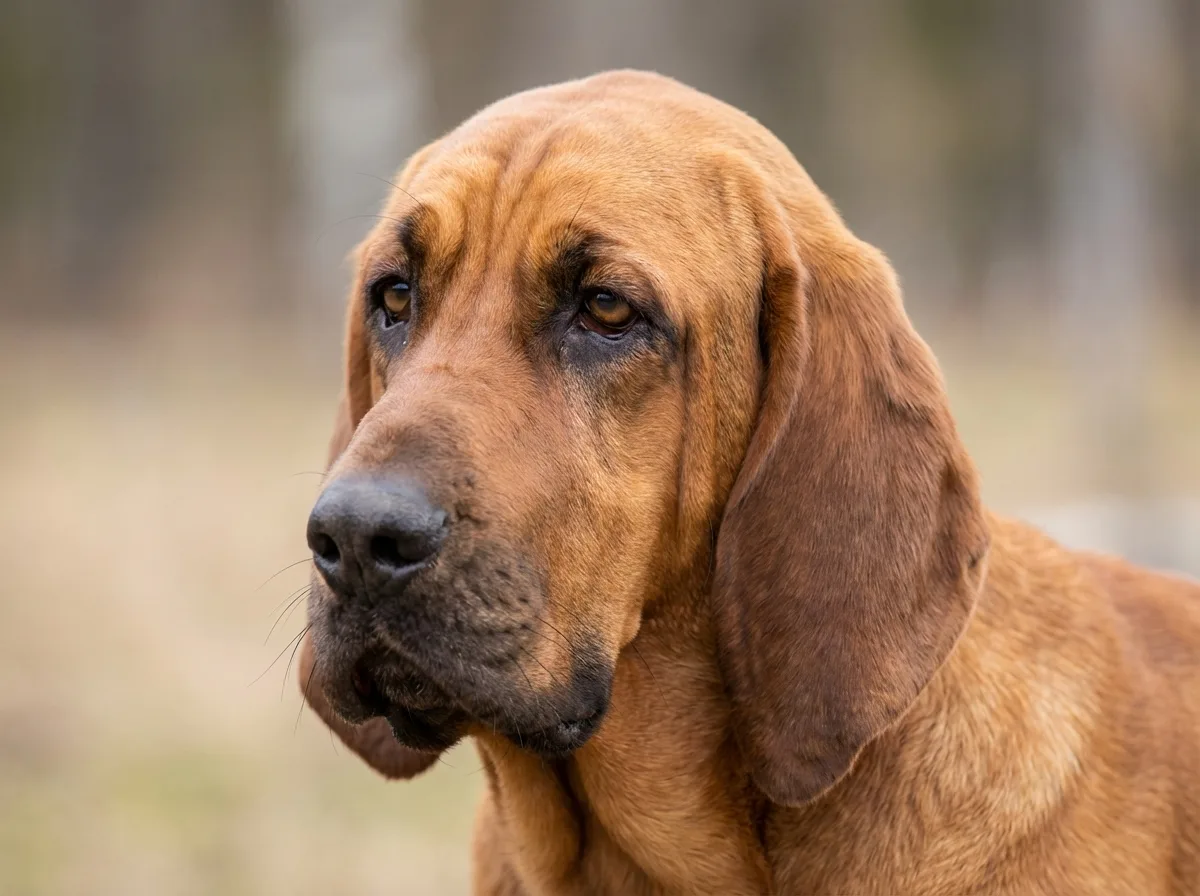
The Bloodhound dog breed is a friendly and determined companion, but they require ample space and exercise. They thrive in active households but may not be ideal for everyone.
Build my first 30 days with a Bloodhound →
The Bloodhound dog breed is known for its friendly and curious nature. They are determined and independent, making them excellent trackers but sometimes stubborn. With proper training, they can be loving companions, especially for families.
Bloodhounds thrive in homes with plenty of space to roam. While they can adapt to some apartment living, they require regular exercise to stay happy. A minimum of an hour of daily activity is ideal to keep their energy in check.

Understanding the pros and cons of the Bloodhound dog breed can help you make an informed decision. Here are some key points to consider:

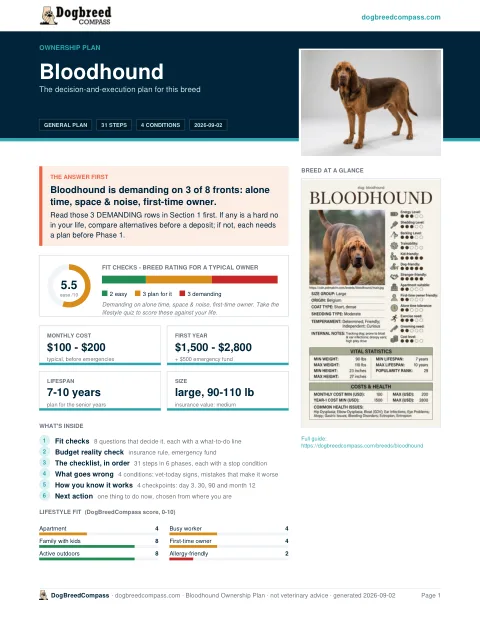
The Bloodhound is demanding on 3 of 8 fronts: alone time, space & noise, first-time owner. If any of those is a hard no in your life, this is not a good fit - compare a close cousin instead. If not, each one needs a plan before you commit, not after.
How many hours a day will the dog be alone? Demanding - Alone-time tolerance: low. Away 6+ hours most days means daily cover (walker or daycare) or a different breed. Decide this before anything else.
Where will the dog live, and how much noise can the building take? Demanding - Apartment suitability: low; barking: moderate. Rated poorly for apartment living: needs a house with space, or an owner who will out-walk the building.
What can you spend every month, including a buffer for vet bills? Plan for it - Typical monthly cost: $100 - $200; cost level 3/5. Mid-range running costs ($100 - $200 a month); the first-year setup and an emergency fund are what people underestimate.
Have you trained a dog before? Demanding - First-time-owner friendliness: low; trainability: low. Not a first-dog breed. For a first-time owner a trainer from week one is part of the budget, not an option.
Are there children in the home (now or soon)? Easy - Kid-friendly: high. Good with children when supervised; size and energy are the things to manage around toddlers.
How much exercise will you actually give, on a bad week? Plan for it - Exercise need: moderate; energy: moderate. Needs a real daily walk plus play - about an hour a day, in the calendar, not 'when there is time'.
How much hair and grooming can you live with? Plan for it - Shedding: moderate (Short, dense); grooming need: low. Moderate shedding or grooming: brush weekly, and expect hair on the sofa.
Any other pets at home? Easy - Dog-friendly: high. Generally easy with other dogs; cats are an individual question to ask the breeder or rescue.
A good fit if the demanding rows above have a plan you can name today; you should avoid this breed if one of them is something you would be hoping to change later. Take the lifestyle quiz to have these scored against your own answers.

The Bloodhound dog breed is known for its friendly and gentle nature, making it a solid choice for families with children. They have a playful energy level that can keep kids engaged, but it's essential to supervise interactions, especially with younger children. Bloodhounds are also relatively tolerant of other dogs, which is a plus for multi-pet households.
The Bloodhound dog breed can adapt to both apartment and house living, but there are important factors to consider. In an apartment, they may feel cramped due to their large size and moderate exercise needs. Bloodhounds are known for their vocal nature, which could lead to noise complaints from neighbors if they bark frequently.
They require regular outdoor time to satisfy their exercise needs, so living in an apartment with nearby parks is essential for their well-being.
On the other hand, a house with a yard is ideal for Bloodhounds. They enjoy exploring and having space to roam. A yard allows them to play freely and engage in their natural tracking instincts.
This setup also provides a more manageable environment for their barking habits, reducing potential conflicts with neighbors. Owners with a yard can also better accommodate the Bloodhound's exercise needs, making it easier to provide ample physical activity.
If you're considering a Bloodhound in an apartment, ensure you have the time and commitment to give them the exercise they need. Daily walks and playtime are crucial. However, if your lifestyle involves a lot of time at home or access to open spaces, a house with a yard will be a better fit for this breed.
They thrive in environments where they can explore and run freely, making them happier and healthier.
Caring for a Bloodhound dog breed involves regular grooming and health maintenance tasks. They have a short, dense coat that requires weekly brushing to control shedding and keep their skin healthy. Bathing should be done every few months or as needed, especially if they get muddy during their scent-tracking adventures.
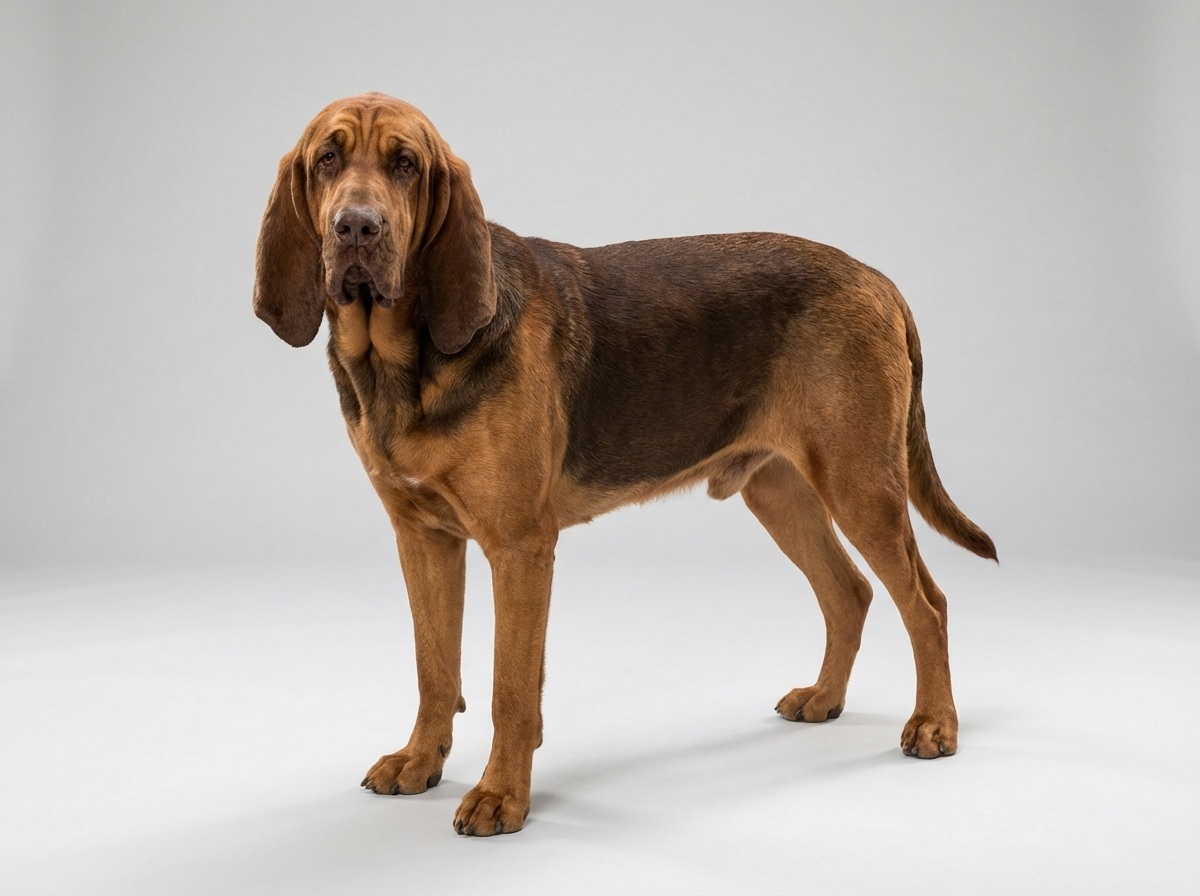
Don't forget to check and clean their droopy ears regularly to prevent infections, as Bloodhounds are prone to ear issues due to their ear structure.

Routine vet visits are recommended at least once a year for healthy Bloodhounds. However, given their potential health issues, such as hip dysplasia and bloat, more frequent check-ups may be wise. Budget for annual vet visits, which can range from $200 to $500, plus any additional costs for vaccinations or treatments.

Overall, expect to spend about 1-2 hours per week on grooming and health tasks for your Bloodhound. This includes brushing, ear cleaning, and routine dental care, like brushing their teeth a few times a week. When considering ongoing costs, plan for $100 to $200 monthly for food, grooming supplies, and vet visits.
Expect 7 to 10 years with a Bloodhound. Senior status arrives near 6 for this breed; screening from that point catches most age-related problems early. Health-wise, hip dysplasia is the item that most often turns up in this breed's records. Weight caps this range: a 110 lb Bloodhound grows fast, and fast growth is associated with earlier ageing. Before buying, ask the breeder for screening results covering hip dysplasia, elbow dysplasia, bloat (gdv) — those are the Bloodhound conditions our records list first.
| Bloodhound lifecycle | Figure |
|---|---|
| Typical Bloodhound lifespan | 7–10 years |
| Bloodhound counts as senior from | about 6 years |
| Bloodhound size class | Large |
| Adult Bloodhound weight | 90–110 lb |
| Origin | Belgium |
Where your Bloodhound lands between 7 and 10 is mostly body condition, dental health and early screening — the parts an owner controls.
A Bloodhound reaches 90 to 110 lb once fully grown. You are dealing with moderate shedding and a short, dense coat. Most of the growing is finished by 18 months.
| Bloodhound measurement | Figure |
|---|---|
| Adult Bloodhound weight | 90–110 lb |
| Bloodhound height at the shoulder | 23–27 in |
| Bloodhound shedding | moderate |
| Bloodhound coat | short, dense |
| Bloodhound grooming need | light |
Day-to-day grooming is light; budget accordingly for brushes, baths or a groomer. If anyone in the household reacts to dogs, the Bloodhound's moderate shedding figure matters more than its short, dense coat description. Temperament ratings for the Bloodhound read determined, friendly, independent, and the breed sits at number 29 for popularity in our data, with the breed developed in Belgium.
Owning a Bloodhound can be manageable if you budget correctly. Expect some substantial costs in the first year, along with ongoing monthly expenses.
The Bloodhound dog breed is known for its unique physical characteristics and strong scent-tracking abilities. However, potential owners should be aware of several health issues that may affect them throughout their lives.
Bloodhounds typically live between 7 to 10 years and require regular veterinary care to monitor for these health issues. Their droopy ears and skin folds can lead to infections if not properly cared for.
Training a Bloodhound can be a rewarding but challenging experience. Their independent nature and strong instincts require consistent and patient training methods.
If you struggle with training or behavior issues, consider seeking help from a professional trainer or behaviorist. This is especially important if your Bloodhound is showing signs of aggression or severe anxiety.
Bloodhounds are large dogs, weighing between 90 to 110 pounds. They have a moderate energy level, requiring daily exercise to stay happy.
Bloodhounds are prone to health issues like hip dysplasia, bloat, and ear infections. Regular vet visits can help manage these concerns.
The first-year cost of owning a Bloodhound can range from $1,500 to $2,800. Monthly expenses typically fall between $100 and $200.
Bloodhounds have moderate trainability due to their independent nature. Consistent and positive reinforcement methods work best.
7–10 years, with senior care usually starting around 6.
Yes, the Bloodhound dog breed is known for being friendly and patient, making them great companions for families. They tend to be good with children and enjoy being part of family activities. However, supervision is always recommended, especially with younger kids, as their size can unintentionally overwhelm them.
Bloodhounds are not the best choice for apartment living due to their large size and moderate exercise needs. They require space to roam and explore, which can be challenging in a small apartment. If you live in an apartment, you must commit to daily outdoor walks and playtime.
A Bloodhound typically needs about an hour of exercise each day. This can include walks, playtime in a secure yard, or engaging in scent work, which they love. Keeping them mentally and physically stimulated is important to prevent boredom.
The Bloodhound is known for its determined and independent nature. They are friendly and curious, making them great companions. However, their independent streak can make training a bit challenging, so consistent, positive reinforcement is key.
Common health issues for Bloodhounds include hip and elbow dysplasia, bloat, ear infections, and various eye problems. Regular vet check-ups and a healthy diet can help manage these risks. It's important to be aware of these potential issues when considering this breed.
Bloodhounds have a short, dense coat that requires moderate grooming. Regular brushing can help control shedding and keep their coat healthy. Pay special attention to their ears, as they are prone to infections due to their droopy nature.
Yes, Bloodhounds are generally good with other dogs. They have a friendly disposition and can socialize well if introduced properly. However, their high prey drive means they may chase smaller animals, so supervision is important.
Yes, the Bloodhound dog breed is known for being kid-friendly. Their gentle nature and playful demeanor make them great companions for families.
Bloodhounds require a moderate amount of exercise, generally about 60 minutes each day. Regular walks and playtime help keep them happy and healthy.
While they can adapt to apartment living, Bloodhounds are better suited for homes with yards. They need space to roam and explore, as they can be quite active.
Bloodhounds have a short, dense coat that requires moderate grooming. Regular brushing helps manage shedding and keeps their coat healthy.
Bloodhounds typically live 7 to 10 years, and are usually treated as senior dogs from about 6. Keeping the dog lean, staying current on dental care and screening for the conditions this breed carries are what move an individual dog toward the top of that range.
Yes — shedding for the Bloodhound is moderate on our 1-to-5 scale. The coat is short, dense, and grooming need is light. No breed is truly hypoallergenic; the difference is how much hair and dander reaches your floor.
An adult Bloodhound weighs 90–110 lb and stands 23–27 inches at the shoulder. Growth finishes at around 18 months for a large breed.
Every condition we have documented for the Bloodhound, grouped by body system.
Open the Bloodhound health hub →
Open the Bloodhound comparison hub →
Also see: Bloodhound Anxiety: Signs, Triggers & a 7-Day Plan
7-day money-back guarantee. Instant access.
Take the lifestyle quiz first to get it personalised to your home, schedule and budget.
DogBreedCompass is an information website. Everything here - including breed traits, cost estimates, health explanations and calculator results - is general reference material shared for information only. It is not veterinary, medical, legal, or financial advice, and reading it does not create a veterinarian-client-patient or any other professional relationship.
We research and check what we publish, but we do not warrant that any figure, date, price, or statement is accurate, complete, or current, and we accept no liability for any loss, cost, injury, or other harm arising from the use of this site. Use it as one reference among several. You remain responsible for your own decisions and for your dog's care - confirm anything that matters with a licensed veterinarian or another qualified professional before you act on it.
Read the full disclaimer for the complete position on accuracy, liability and your responsibility as the reader.
Take the Lifestyle Match quiz to see how this breed fits your day-to-day life, schedule, and budget.
Take the quizAlready settled on a Bloodhound? Find names for this breed