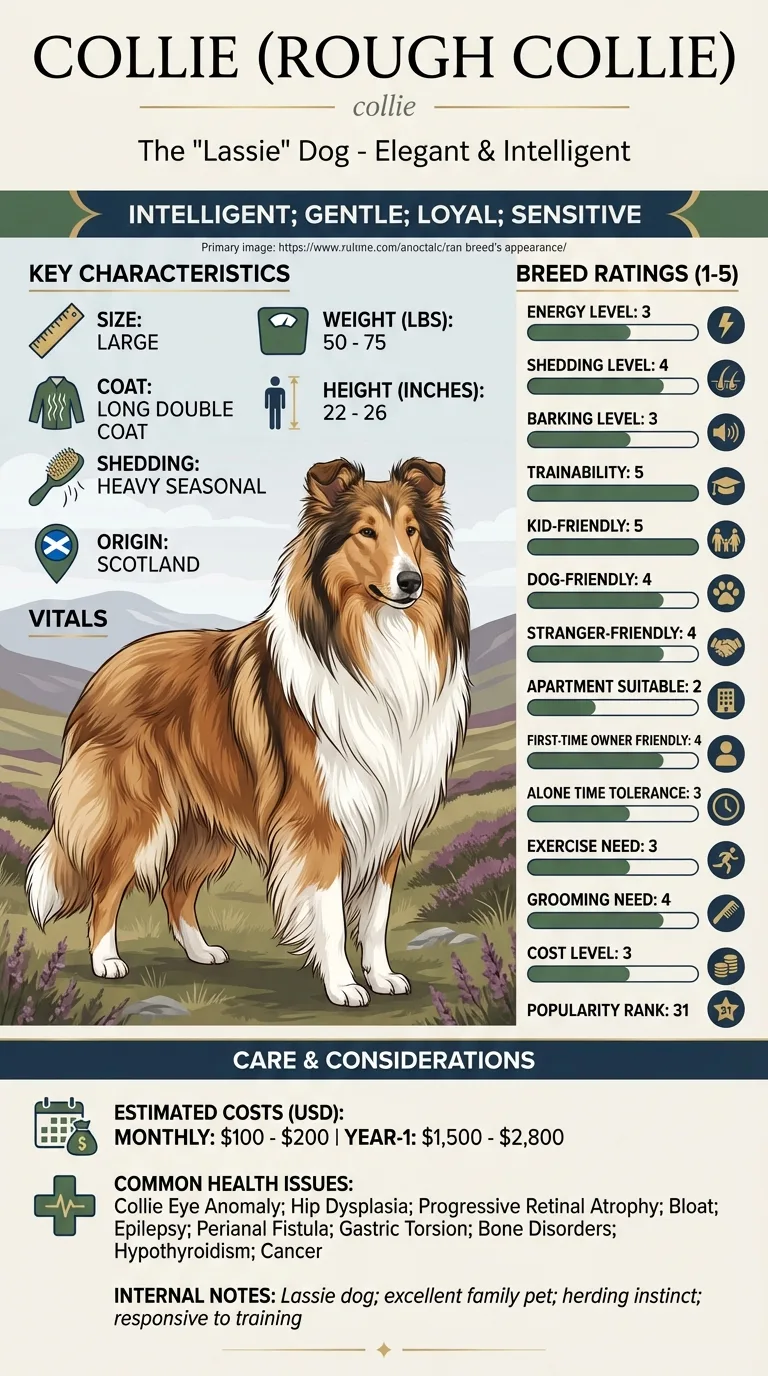
Perianal fistula sits on the Collie's health list and it is the condition most Collie buyers have never heard of, which is unfortunate because early recognition changes the outcome substantially.
The condition produces chronic ulcerating tracts in the skin around the anus. It is painful and progressive, and it is now understood to be immune-mediated rather than simply an infection — which is why the treatment that works is immunosuppressive medication, most commonly ciclosporin, rather than antibiotics alone. Older approaches involving extensive surgery have largely been superseded.
What makes it easy to miss is that the early signs look like ordinary discomfort. A dog that strains or seems uncomfortable when passing a stool, licks obsessively at its rear, scoots along the carpet, holds its tail low, is reluctant to sit, or has a faint unpleasant smell around the hindquarters. Owners often assume anal glands, and vets treat for that first, which delays the diagnosis.
A long, heavily furnished tail carried over the area does not help, and keeping the hair around the rear trimmed is sensible in the breed.
The practical advice is simply to ask for the area to be looked at properly if those signs persist, and to raise the possibility by name. It is a condition where the right label unlocks the right treatment.
Bloat and gastric torsion appear separately on the list, which reinforces the same point for a deep-chested breed: split meals, quiet time around eating, a slow-feeder bowl for a fast eater, and a known route to an out-of-hours clinic. A restless dog retching without producing anything, with a swelling abdomen, needs surgery within hours.
Hip dysplasia, epilepsy, bone disorders, hypothyroidism and cancer complete the list.
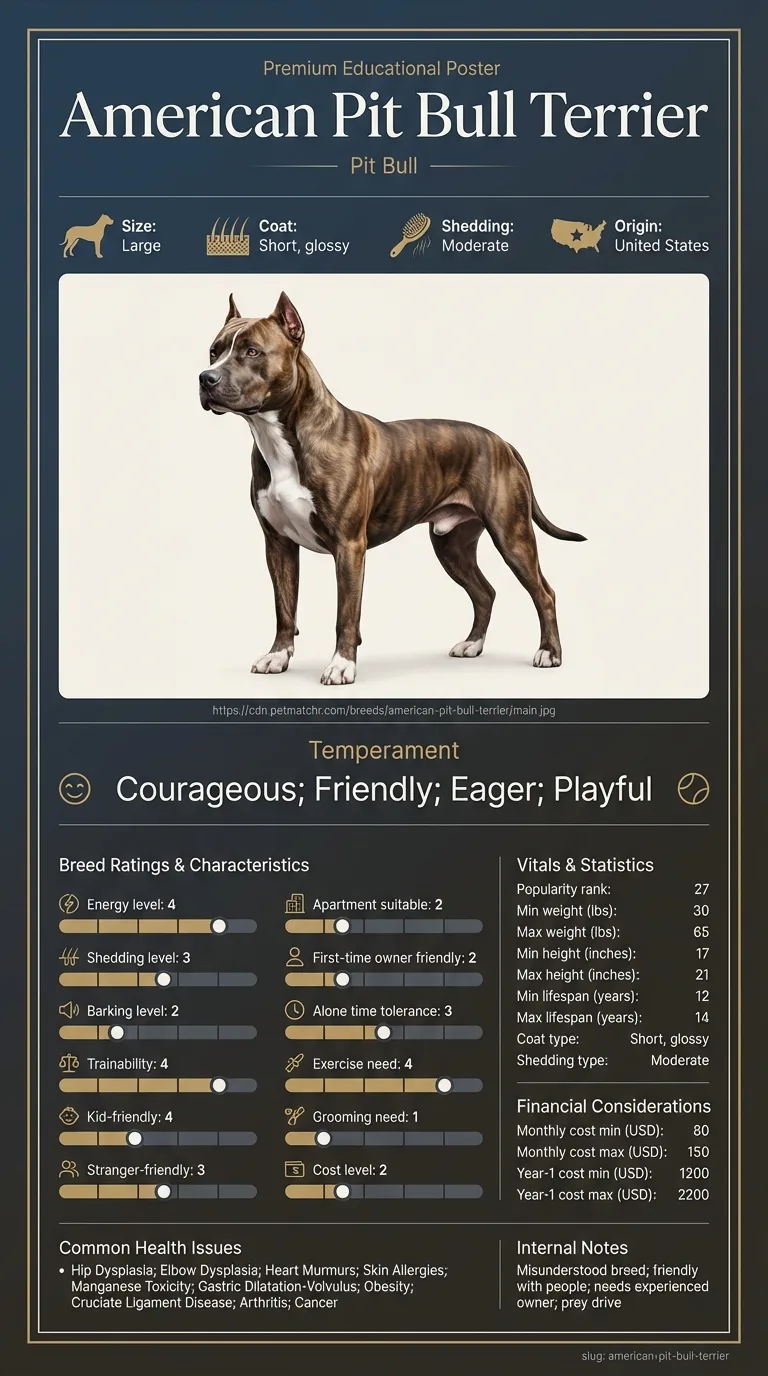
The Pit Bull's list is orthopaedic and dermatological: hip and elbow dysplasia, skin allergies, heart murmurs, bloat, obesity, cruciate ligament disease, arthritis and cancer.