Health
What is chronic active hepatitis?
Ongoing liver inflammation with progressive cell damage and scarring, usually detected through persistently raised liver enzymes before any outward illness appears.

Quick answer
What is chronic active hepatitis?
Ongoing liver inflammation with progressive cell damage and scarring, usually detected through persistently raised liver enzymes before any outward illness appears.
The liver is unusually good at hiding damage. It has substantial functional reserve, which means a dog can lose a considerable amount of working liver tissue and still look, to its owner, entirely well. Chronic active hepatitis exploits that: sustained inflammation quietly replaces working tissue with scar over months or years, and by the time an owner notices something is wrong, the disease is usually well established.
Owners whose dog had 'slightly elevated liver values' on a routine panel that nobody followed up. That single line on a pre-anaesthetic or wellness screen is frequently the first and only warning, and treating it as an incidental finding rather than a reason to recheck is how years get lost.
This guide is not medical advice. If your dog shows pain, sudden behavior change, or worsening symptoms, consult a licensed veterinarian.
Some links may be affiliate links. We may earn a commission at no extra cost to you. We only suggest products we believe are helpful for dog owners.
We research and check what we publish, but we do not warrant that any figure, date, price, or statement is accurate, complete, or current, and we accept no liability for any loss, cost, injury, or other harm arising from the use of this site. Use it as one reference among several. You remain responsible for your own decisions and for your dog's care - confirm anything that matters with a licensed veterinarian or another qualified professional before you act on it. Full disclaimer.
Ongoing inflammation of the liver with progressive cell damage and scarring. It typically produces persistently raised liver enzymes long before visible illness, and is characterised properly through repeat bloodwork, imaging and liver biopsy. Management is long-term and aims to slow progression rather than restore a normal liver.
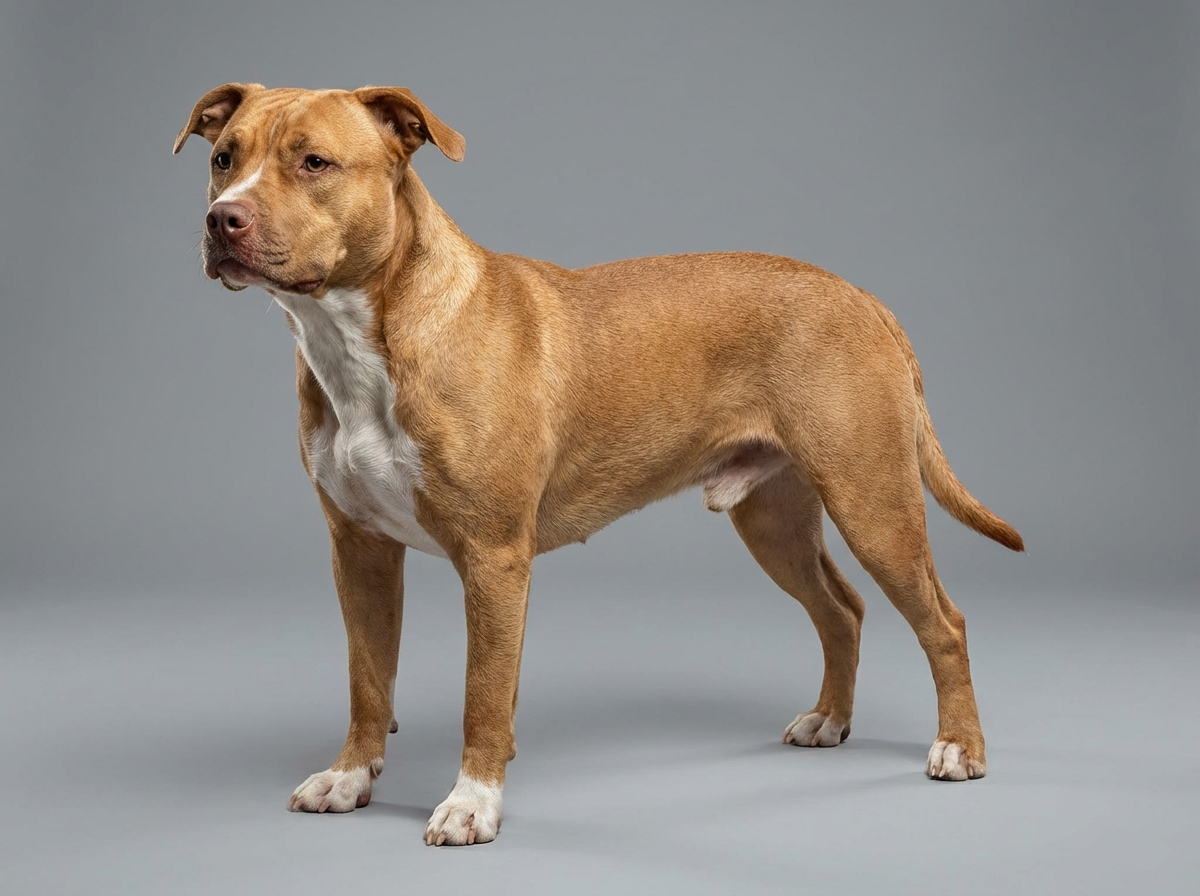
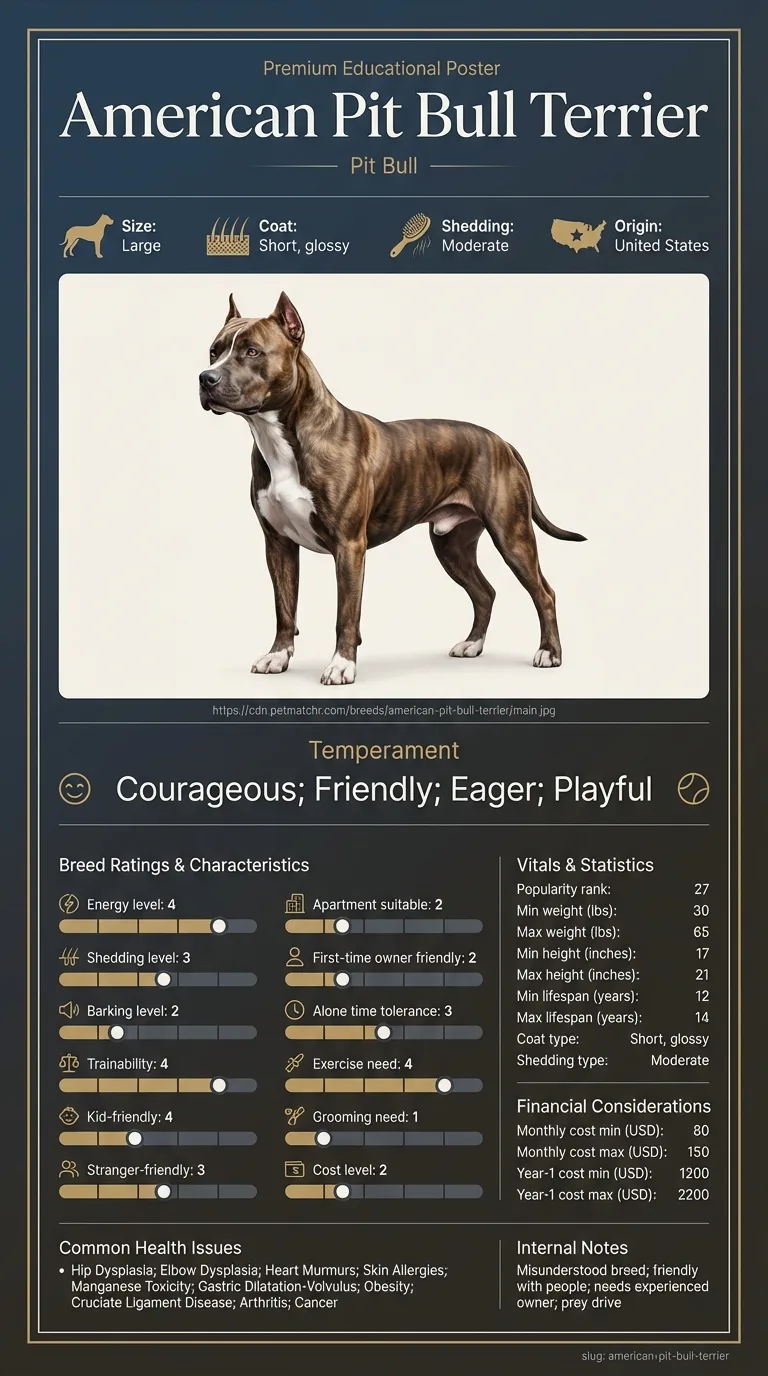
Chronic hepatitis is a recognised cause of liver disease in dogs generally rather than a condition unique to this breed. It appears among the health considerations documented for the American Pit Bull Terrier, and the practical significance is that abnormal liver values in this breed deserve follow-up rather than dismissal.
Chronic active hepatitis is documented among this breed's health considerations, but the mechanism is not a breed-specific structural quirk in the way hip dysplasia is — the liver's response to injury is broadly similar across dogs. What the breed contributes is a masking effect: an athletic dog with a documented high energy level and strong drive continues to present as lively well past the point at which a lower-energy dog would seem obviously unwell. The breed's documented obesity risk is separately relevant, because excess body condition adds its own burden to liver health.
Environment matters mainly through exposures. Access to toxins, certain plants, human medications and household chemicals is a real and preventable driver of liver injury. Long-term medication for unrelated conditions — which an older dog with documented arthritis may well be on — requires periodic liver monitoring precisely because some drugs load the liver. Vaccination status against leptospirosis is worth discussing with a vet in areas where it occurs, since it is an infectious cause with a preventable route.
Ask for a recheck panel any time liver enzymes come back elevated, even if your dog seems perfectly well and even if the elevation is described as mild — that follow-up is the single most valuable step available. Book an appointment for reduced appetite, gradual weight loss, increased drinking and urination, or intermittent vomiting. Seek urgent, same-day attention for jaundice — yellow gums, eye whites or ear skin — a distended abdomen, black tarry stool, marked lethargy or collapse, disorientation, circling or seizure-like episodes, since advanced liver disease can affect the brain and these signs indicate serious decompensation. Discuss biopsy explicitly, and ask what it would change about treatment. Never give human liver supplements or pain relief without direction; several common human drugs are dangerous to a compromised liver.
Start here: American Pit Bull Terrier Most Common Genetic Disorders
See all American PIT Bull Terrier health problems, which breeds are prone to chronic active hepatitis, or the full American PIT Bull Terrier breed guide for temperament, exercise needs and ownership costs.
This is managed, not cured. Where a specific cause is identified — copper accumulation, an infection, a drug reaction — targeted treatment can substantially slow or in some cases largely halt progression. Where no cause is found, treatment aims at reducing inflammation and supporting liver function. Expect an ongoing rhythm of rechecks: bloodwork every few months, dose adjustments, and periodic imaging. Fibrosis that has already formed does not reverse.
Success is a stable dog with stable numbers: enzymes that have come down and stayed down, a maintained weight, normal appetite and energy, and years of ordinary life. It is measured in slope rather than cure — a disease progressing slowly enough that the dog dies of something else, decades-old and unrelated, is a genuinely good outcome here and worth naming as one.
In most conditions, symptoms come first and testing confirms them. Liver disease commonly runs the other way. Raised ALT and ALP on a wellness panel or a pre-anaesthetic screen frequently appear in a dog whose owner has noticed nothing at all.
That gap is the opportunity. Enzyme elevations at that stage do not tell you what is wrong — they can reflect many things, some transient and harmless — but they tell you to look again. A recheck a few weeks later that shows the same or worse is the finding that actually matters, and it is the one that gets missed when a single abnormal result is filed away as a blip.
When signs do appear they are unglamorous and non-specific: reduced appetite, weight loss, drinking and urinating more, intermittent vomiting or loose stools, low energy. Jaundice — yellowing of the gums, the whites of the eyes, or the skin inside the ears — is a later and much more serious sign, as is a swollen abdomen from fluid accumulation, and either warrants prompt veterinary attention rather than a routine appointment.
Owners understandably resist a liver biopsy — it is invasive, it requires anaesthesia, and it costs money on top of everything already spent. It is worth understanding what it buys.
Chronic active hepatitis is a description of what the liver is doing, not an explanation of why. Copper accumulation, infection, immune-mediated disease and drug reactions can all produce chronic inflammation, and they are managed very differently. Copper-associated disease, for example, calls for a specific dietary and medical approach that would be pointless or counterproductive in a dog whose hepatitis has another cause. Biopsy with copper quantification is what distinguishes them.
Treating blind is possible and sometimes necessary, but it means committing to potentially lifelong medication without knowing whether it targets the actual mechanism. Ask your vet directly what the biopsy would change about the plan. If the honest answer is 'quite a lot', that is your answer.

A six-year-old Pit Bull was booked for a dental, and the pre-anaesthetic blood panel came back with mildly raised liver enzymes. He was, by every visible measure, in excellent shape — lean, muscular, still hauling his owner toward the park. The practice postponed the dental and rechecked in three weeks. The values were higher. Ultrasound was inconclusive; a biopsy identified copper accumulation. He went onto a prescribed low-copper diet and specific medication, and his enzymes came down over the following months and stayed down. He is now ten, still walking daily. His owner's reflection was that if the dental had gone ahead without the screen, nobody would have looked at his liver for another two or three years.
Key takeaway: The abnormal number on a healthy-looking dog's routine panel is the whole opportunity. Rechecking it is what turns a lucky finding into a good outcome.
It matters enough to recheck. The liver hides damage well, so 'seems fine' is weak reassurance. A repeat panel a few weeks later distinguishes a transient blip from a pattern.
It is what separates copper-associated disease from immune-mediated and other causes, and those are treated differently. Ask your vet what the biopsy would change about the plan — the answer tells you whether it is worth it for your dog.
Usually something vague — reduced appetite, gradual weight loss, drinking more. Jaundice and abdominal swelling are later signs and warrant urgent attention.
Diet is central in copper-associated hepatitis and supportive in other forms, but it is not a cure. A prescribed therapeutic diet should be followed exactly rather than approximated with supermarket food.
Not usually, but there is an important exception: leptospirosis is infectious and can spread to other animals and to people. That is one of the reasons identifying the cause matters.
Inflammation can be reduced and progression slowed, sometimes dramatically. Scarring that has already formed does not reverse, which is why catching it early changes outcomes so much.
Never stop or change prescribed medication on your own — but do raise it with your vet, since some long-term drugs need liver monitoring or dose adjustment in a dog with hepatic disease.
Typically every few months once stable, more frequently while treatment is being established. Keeping your own record of the numbers makes the trend far easier to see.
Ongoing liver inflammation with progressive cell damage and scarring, usually detected through persistently raised liver enzymes before any outward illness appears.
On routine or pre-anaesthetic bloodwork in a dog that seems perfectly well. A repeat panel confirming the elevation is the step that matters most.
Jaundice, a swollen abdomen, black tarry stool, collapse, disorientation or seizure-like episodes need same-day veterinary attention.
It identifies the cause — copper accumulation, immune-mediated disease, infection — and those are treated very differently. Without it, treatment is partly guesswork.
It is managed rather than cured. Targeted treatment can slow or largely halt progression, but existing scarring does not reverse.
A one-page prep sheet for this condition: the signs, the questions to ask, what to get priced. Unlocks here.
You get: Vet visit prep sheet
No spam. One-click unsubscribe. See our privacy policy.
Preview page 1 before you decide.