DogBreedCompass

Pit Bull or Bernese: The Smaller Dog Lives Four Years Longer

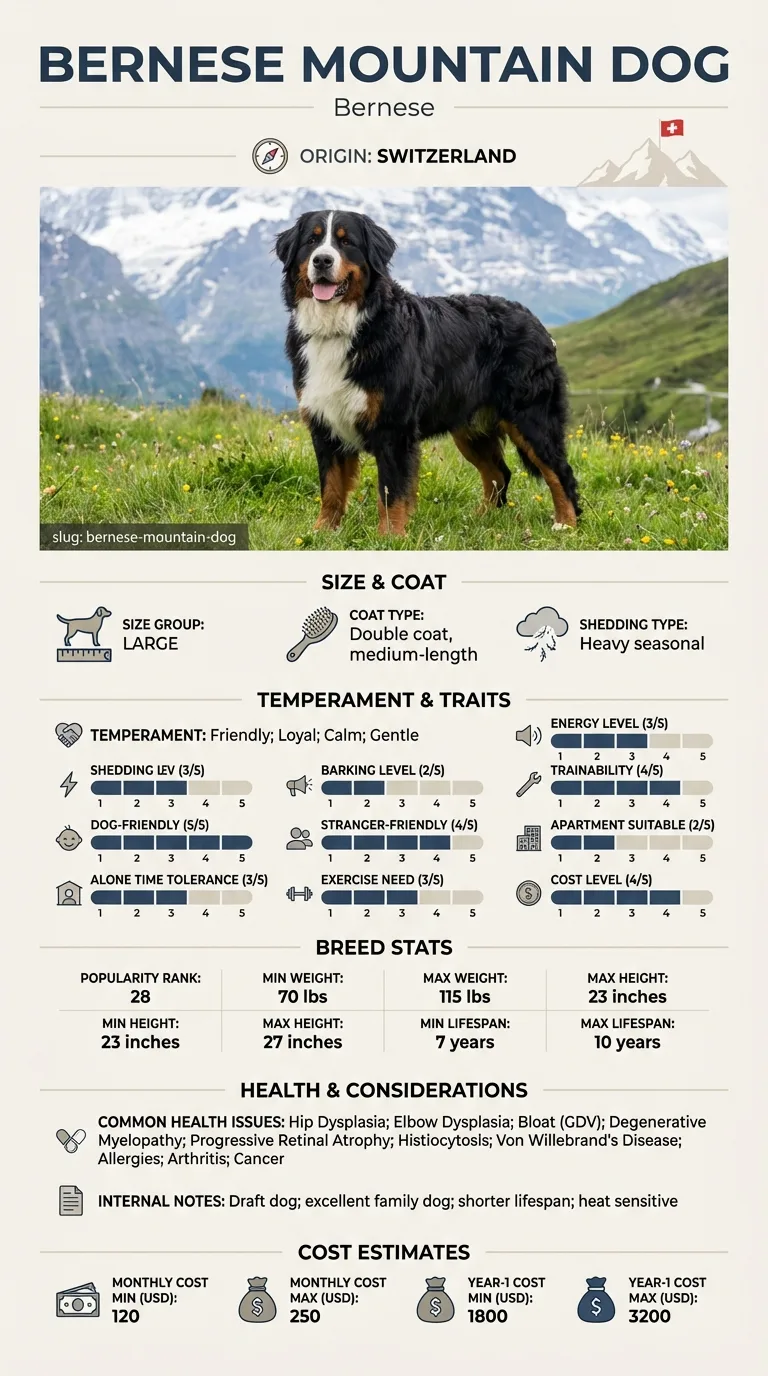
The Bernese Mountain Dog rates 5/5 with children, 5/5 with other dogs and 4/5 with strangers — one of the friendliest profiles on this site. It also has one of the shortest lifespans of any breed here at 7 to 10 years.

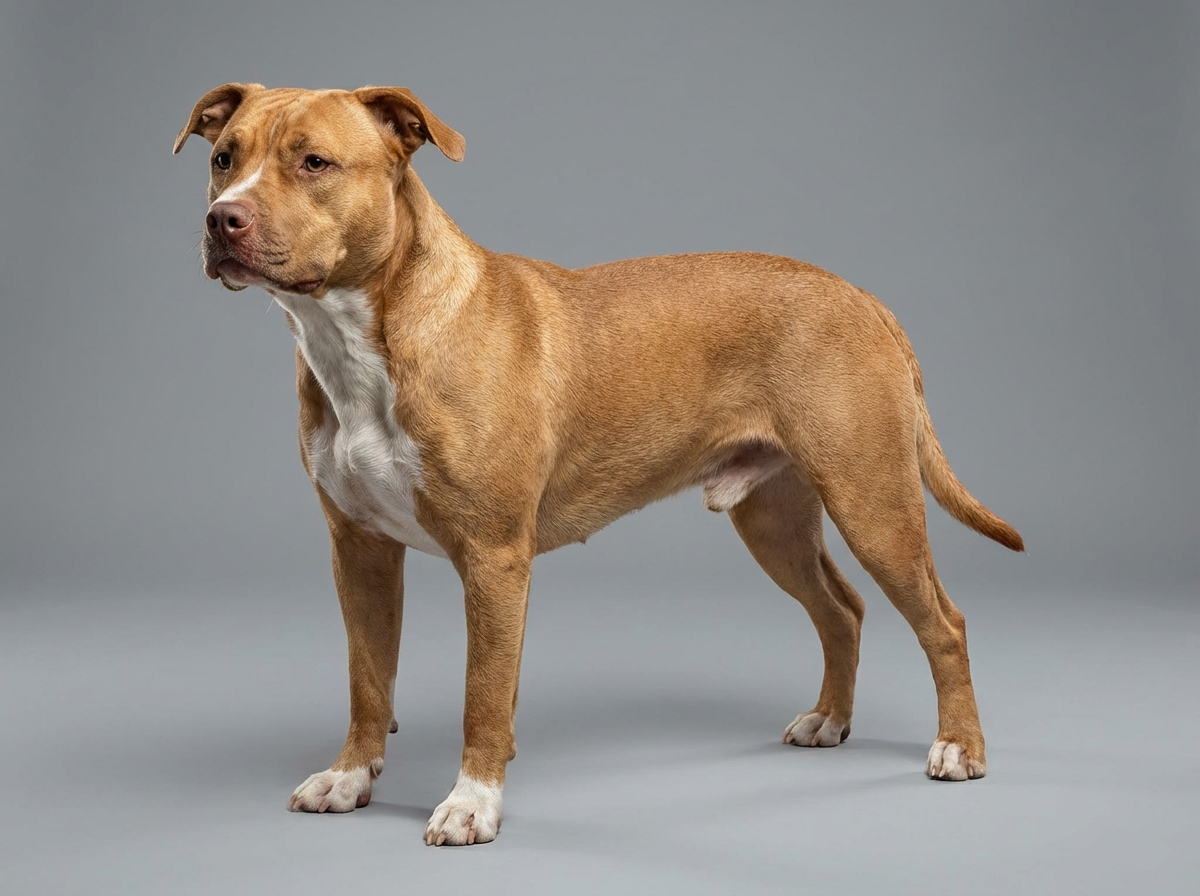
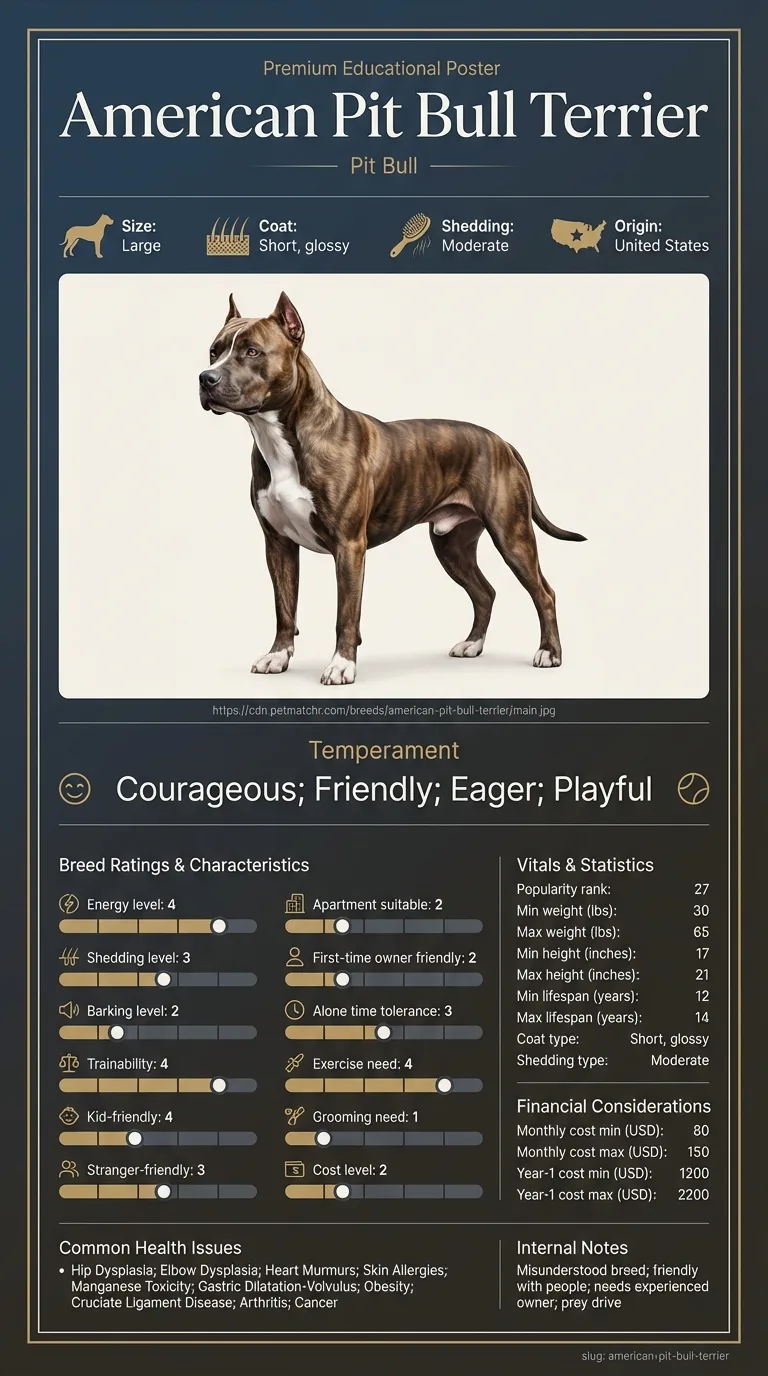
american pit bull terrier infographic
bernese mountain dog infographic

This page is for a family weighing a large gentle giant against a smaller athletic breed, and needing the lifespan question and the cancer behind it addressed directly rather than glossed over.

Quick verdict

The Bernese is the easier dog socially and the harder one emotionally and financially — it gets on with everybody, costs more to keep, and its cancer burden means most owners get seven to ten years rather than twelve to fourteen.

Choose american pit bull terrier if...

Choose the American Pit Bull Terrier if you want an athletic, long-lived, low-cost dog with almost no grooming, and you can commit to careful management around other dogs and to checking the restrictions that apply to bully-type breeds.

Choose bernese mountain dog if...

Choose the Bernese Mountain Dog if you want a calm, universally friendly family dog with a modest 3/5 exercise need, you have a cool climate and the budget, and you go in knowing the lifespan figure.

Head-to-head comparison

Featureamerican pit bull terrierbernese mountain dogWinner
Weight30–65 lbs70–115 lbsamerican pit bull terrier
Height17–21 in23–27 inamerican pit bull terrier
Lifespan12–14 years7–10 yearsamerican pit bull terrier
CoatShort, glossyMedium double coatamerican pit bull terrier
Grooming need1/53/5american pit bull terrier
Shedding3/5 — moderate4/5 — heavy seasonalamerican pit bull terrier
Energy level4/53/5bernese mountain dog
Exercise need4/53/5bernese mountain dog
Trainability4/54/5Equal
Barking2/52/5Equal
Good with kids4/55/5bernese mountain dog
Good with other dogs2/55/5bernese mountain dog
Friendly to strangers3/54/5bernese mountain dog
Apartment suitability2/52/5Equal
Good for first-time owners2/54/5bernese mountain dog
Tolerates being alone3/53/5Equal
Typical monthly cost$80–150$120–250american pit bull terrier
Typical first-year cost$1,200–2,200$1,800–3,200american pit bull terrier

Deep dive

Seven to ten years, and the cancer behind the number

The Bernese Mountain Dog's expected lifespan is among the shortest of any breed on this site, and unusually the explanation is specific rather than general.

Size alone does not account for it. Plenty of dogs in the 70 to 115 pound range live eleven or twelve years. What sets the Bernese apart is histiocytic sarcoma, which appears explicitly on its health list as histiocytosis. It is an aggressive cancer arising from histiocytes, immune cells found throughout the body, and the Bernese is more affected by it than any other breed. It can present in the spleen, liver, lungs, joints or bone marrow, it spreads quickly, and it typically strikes between about five and eight years — the middle of a dog's life rather than the end.

The signs are non-specific, which is part of what makes it hard: weight loss, lethargy, loss of appetite, lameness in the joint-associated form, or laboured breathing. There is no screening test in routine use.

What a buyer can do is choose the breeder carefully. Ask about longevity in the line — what age the grandparents reached and what they died of — and treat a breeder who tracks that as a serious one. Some breed clubs run health surveys and registries specifically because of this cancer, and a breeder engaged with them is a meaningfully better bet.

The rest of the list runs hip and elbow dysplasia, bloat, degenerative myelopathy, progressive retinal atrophy, Von Willebrand's disease, allergies, arthritis and cancer generally.

The Pit Bull's 12 to 14 years reflects a list that is broad but not dominated by a single killer: hip and elbow dysplasia, skin allergies, heart murmurs, bloat, obesity, cruciate ligament disease, arthritis and cancer.

None of this is a reason not to own a Bernese. It is a reason to know the number before you fall in love with the puppy.

5/5 with children and other dogs against 4/5 and 2/5

The Bernese social profile is one of the best here. Five with children, five with other dogs, four with strangers, and a temperament described as friendly, loyal, calm and gentle.

That is the product of a farm dog that pulled carts, moved stock and lived among a family, other dogs, livestock and visitors. There is no guarding sharpness, no reactivity worth managing, and no prey drive that causes trouble with cats. In practice a Bernese is easy in the places dogs are usually difficult — a busy park, a house full of visiting children, a multi-dog household.

The practical caveats are physical rather than temperamental. A 100 pound dog turning around in a kitchen displaces a small child, and Bernese puppies are enormous and clumsy well into their second year. Loose-lead training matters, because a dog that outweighs its handler and has never learned to walk politely eventually stops being walked.

The Pit Bull's profile is split and it is the defining fact of ownership. Warm with people at 4/5 with children and 3/5 with strangers, and 2/5 with other dogs. The management is specific and permanent: no dog parks, no on-lead greetings with unknown dogs, careful neutral-ground introductions with a handler at each end, and the knowledge that tolerance can decline at social maturity between eighteen months and three years even in a dog that was easy as an adolescent.

Alongside that sits an administrative layer the Bernese never encounters. Breed restrictions in tenancy agreements, housing association rules and insurance policies commonly cover bully-type dogs, and enforcement often works from appearance rather than pedigree. Check the rules where you live and where you might move, in writing, before committing.

Heat sensitivity and a coat built for Swiss winters

The Bernese's own notes flag heat sensitivity, and it is a genuine constraint rather than a footnote.

The combination is unhelpful in warm weather: a large body that sheds heat poorly, a thick medium-length double coat, and a predominantly black coat that absorbs sun. A Bernese in a hot climate needs summer exercise moved to the cool ends of the day, shade and cooling indoors, and careful attention on any warm walk. This is a breed developed for Alpine farm work, and it is genuinely happier in winter.

The coat rates 3/5 for grooming and 4/5 for shedding, described as heavy seasonal. It needs brushing two or three times a week with an undercoat rake and a slicker, more during the spring and autumn blows, with attention to the ruff, behind the ears, the britches and the feathering on the legs and tail. It should never be shaved: a double coat insulates in both directions, protects skin from sun, and regrows unpredictably after clipping.

The Pit Bull's short glossy coat is the opposite proposition. Grooming 1/5 — a rubber curry mitt once a week and nothing else — with 3/5 moderate shedding. Its thin coat means the reverse climate problem: it feels cold quickly, benefits from a coat in winter, and pale-skinned dogs can sunburn on the belly and nose.

On cost the Bernese runs $120–250 a month at cost level 4/5 against $80–150 at 2/5, with first years of $1,800–3,200 against $1,200–2,200. Food volume and weight-scaled veterinary pricing account for most of it — anaesthesia, prevention and medication are all dosed by kilogram, and a 100 pound dog costs proportionally more at every appointment.

3/5 against 4/5, and a growth window that matters

The Bernese is the calmer dog by a rating on both energy and exercise. An adult is content with an hour split across the day at a steady pace, plus the chance to stretch out properly. It was bred for draft work — short bursts of power pulling a cart — rather than for distance, and it settles very well indoors.

Many Bernese enjoy carting or drafting as a hobby, and it is a genuinely satisfying outlet for the breed's build. Cold-weather walks and snow are where it comes alive.

The caveat is puppyhood. A Bernese goes from a few pounds to seventy or more in a year, and that growth window is fragile. Forced exercise, long walks, stairs and repetitive jumping before around eighteen months are avoidable risks that feed directly into the hip and elbow dysplasia on its list. A Bernese puppy needs deliberately restrained exercise and a large-breed puppy food with controlled calcium — the instinct to build muscle early is exactly wrong.

The Pit Bull's 4/5 asks for an hour to ninety minutes with content in it: a brisk walk plus a flirt pole, spring pole, tug or a training session. It is a strong, athletic dog that takes to structured work readily at 4/5 trainability, and it settles hard once the work is done. It also has a growth window worth respecting, though a shorter and more forgiving one.

Both rate 4/5 for trainability and 2/5 for barking, and both tolerate a working day at 3/5, which is better than most working breeds.

Where they diverge for beginners is the 4/5 against 2/5. The Bernese is forgiving, soft and slow to take offence; the Pit Bull needs an owner who will do the management and the paperwork properly.

Trading four years for a much easier social life

Set out plainly, the choice looks like this.

The Bernese gives you a dog that is easy with everyone and everything, needs an hour a day, settles indoors, suits a first-time owner at 4/5, and is one of the most genuinely pleasant family dogs there is. It costs roughly twice as much to keep, needs regular brushing, struggles in heat, and is likely to be gone at eight or nine — often after a fast decline rather than a gentle one.

The Pit Bull gives you four more years, half the running cost, five minutes of grooming a week and an athletic dog that trains well. It asks in return for lifelong management around other dogs, a socialisation commitment, and a legal and insurance landscape that most breeds never encounter.

Neither is the better dog in the abstract. What decides it is usually the household. A family with young children, other pets, and lots of visitors will find the Bernese dramatically easier. Someone in a place where bully-type restrictions do not apply, who walks at quiet times and wants a long-lived athletic companion, will find the Pit Bull the more practical animal.

One last consideration that is easy to underrate: the shape of the ending. Giant and large heavy breeds tend to concentrate their veterinary spending and their difficulty into the final eighteen months, and with the Bernese that period often arrives while the dog is still, by any other measure, middle-aged. Ramps, non-slip flooring and a plan for lifting a heavy dog are worth having before they are needed.

For either breed, the single best free habit is the same: keep the dog lean. It protects the joints, the heart and the cruciate ligaments, and it is the one variable entirely in an owner's hands.

American Pit Bull Terrier vs Bernese Mountain Dog at a glance

The Bernese Mountain Dog rates 5/5 with children, 5/5 with other dogs, and 4/5 with strangers — one of the friendliest profiles on this site. It also has one of the shortest lifespans of any breed here, at 7 to 10 years.

The Bernese is the easier dog socially and the harder one emotionally and financially: it gets on with everybody, costs more to keep than the Pit Bull, and its cancer burden means most owners get seven to ten years rather than twelve to fourteen.

Choose the American Pit Bull Terrier if you want an athletic, long-lived, low-cost dog with almost no grooming, and you can commit to careful management around other dogs and to checking restrictions that apply to bully-type breeds. Choose the Bernese Mountain Dog if you want a calm, universally friendly family dog with a modest exercise need, you have a cool climate and the budget, and you go in knowing the lifespan figure.

Frequently asked questions

Why do Bernese Mountain Dogs live such short lives?

Largely because of histiocytic sarcoma, an aggressive cancer the breed is more affected by than any other. It typically strikes between five and eight years, spreads quickly and has no routine screening test, which holds the breed's expectancy at 7 to 10 years.

Which is better with children and other dogs?

The Bernese comfortably — 5/5 on both, against the Pit Bull's 4/5 with children and 2/5 with other dogs. The practical caution with a Bernese is size rather than temperament.

How much exercise does a Bernese need?

About an hour split across the day at a steady pace, on a 3/5 rating. Carting and cold-weather walking suit the breed. Puppy exercise should be deliberately restrained until growth plates close at around eighteen months.

Can a Bernese cope with a hot climate?

Poorly. A large body, a thick double coat and a predominantly black coat combine badly in heat. Summer exercise moves to dawn and dusk, and indoor cooling matters. The coat should never be shaved as a workaround.

Which is cheaper to keep?

The Pit Bull, at $80–150 a month against $120–250, and $1,200–2,200 in the first year against $1,800–3,200. Cost level 2/5 against 4/5, driven mostly by food volume and weight-based veterinary pricing.

What should I ask a Bernese breeder?

About longevity in the line — what age the grandparents reached and what they died of — plus hip and elbow scores, Von Willebrand's status and whether they take part in breed health surveys.

Which is better for a first-time owner?

The Bernese at 4/5 against 2/5. It is soft, forgiving and slow to take offence. The Pit Bull's difficulties are dog-dog management and the legal and insurance landscape rather than temperament.

Quick answers

View more answers
Living

Pit Bull or Bernese Mountain Dog: which should I choose?

The Bernese if you want a calm, universally friendly family dog, have a cool climate and the budget, and accept seven to ten years. The Pit Bull if you want four more years, half the cost, and can manage dog-dog introductions.

Costs

Which costs more per month?

The Bernese Mountain Dog at $120–250 against $80–150, at cost level 4/5 against 2/5. Food and weight-scaled veterinary charges account for most of the difference.

Health

What is histiocytic sarcoma?

An aggressive cancer of immune cells that the Bernese is more prone to than any other breed. It usually appears between five and eight years with vague signs — weight loss, lethargy, lameness — and there is no routine screening test.

Living

Which needs more grooming?

The Bernese at 3/5 with 4/5 seasonal shedding, needing brushing two or three times a week. The Pit Bull rates 1/5 — a curry mitt once a week and nothing else.

Related DogBreedCompass guides

  • American Pit Bull Terrier breed guideThe Pit Bull profile covers temperament, exercise and the practical realities of ownership.
  • Bernese Mountain Dog breed guideThe Bernese profile covers growth-stage care, coat maintenance and heat sensitivity.
  • common genetic disorders in Bernese Mountain DogsThe breed's inherited risks include the cancer that most limits its lifespan.
  • bloat in Pit Bull TerriersBoth breeds are deep-chested enough for bloat to be worth planning around in advance.
  • obesity in Pit Bull TerriersArthritis catches up with both, and weight is the variable that most affects when.
  • American Pit Bull Terrier vs BernedoodleBuyers drawn to the Bernese temperament often look at the Poodle cross built on it.

Related guides

Important reminder

Health information here is general and is not veterinary advice. Cancer risk, screening and individual cases should be discussed with your own veterinarian.

Some links on this site are affiliate links. We may earn a commission if you buy through them, at no additional cost to you.

Find Your Perfect Breed

Match your lifestyle to the right dog.

Take quiz

Find your match

Not sure which breed is right for you? Take our 2-minute quiz to find out.

Take the quiz