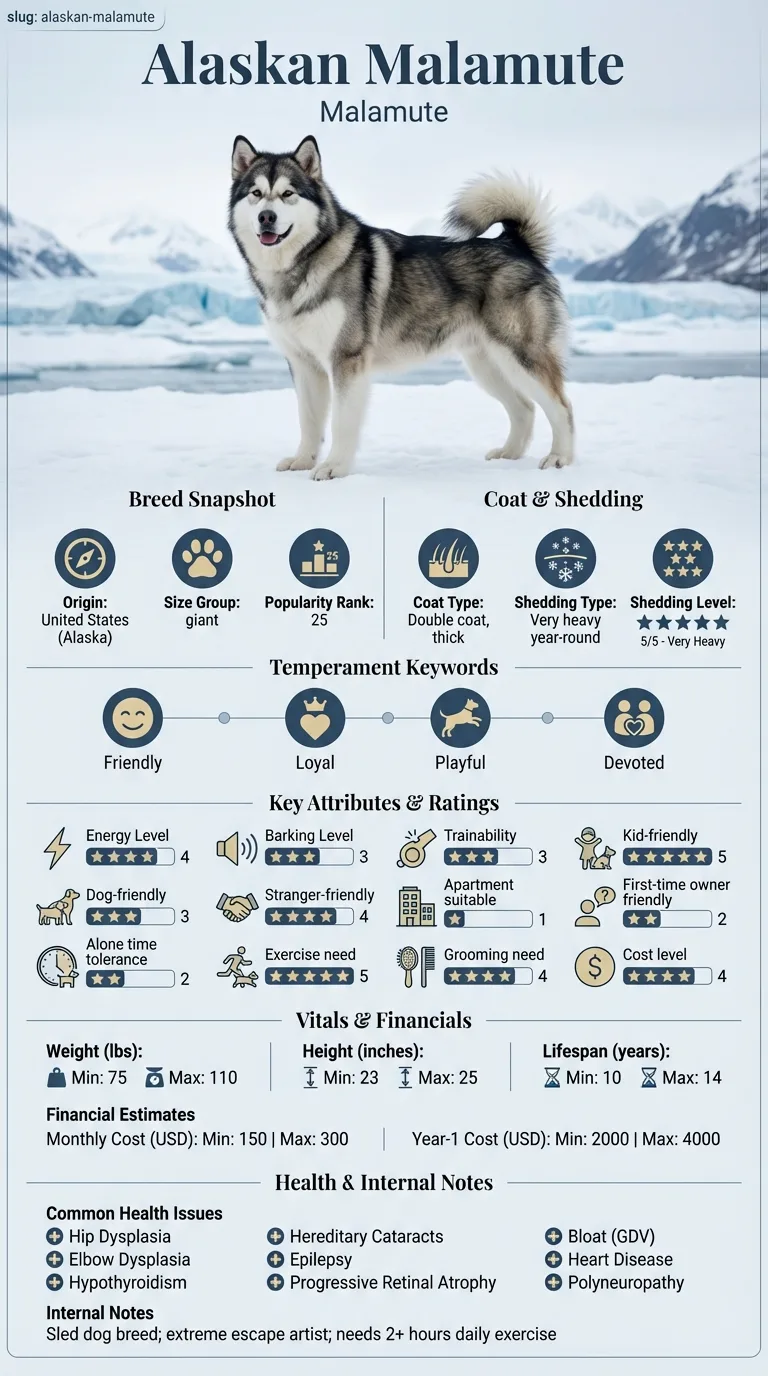
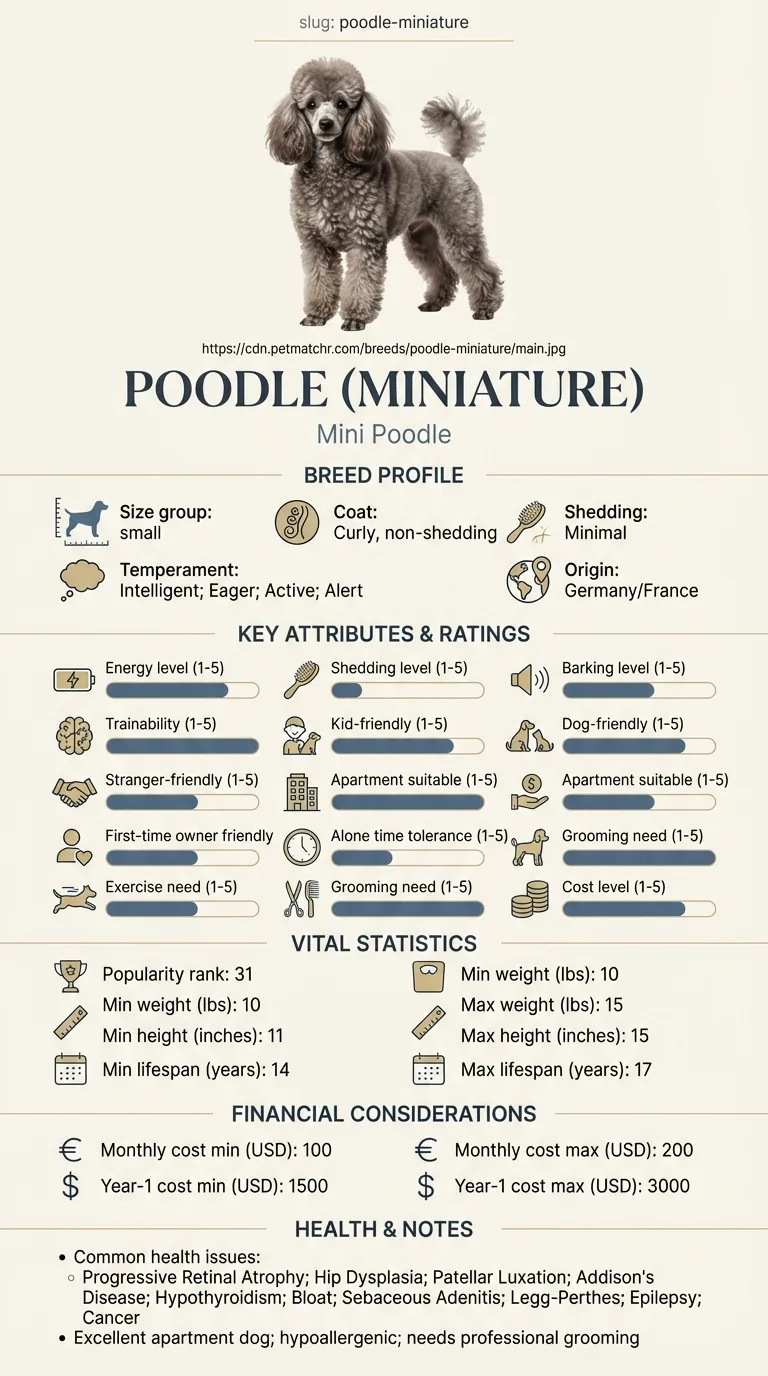
The Miniature Poodle rates 5/5 for apartments against the Malamute's 1/5, and the gap is entirely earned. Thirty to forty-five minutes of walking, indoor training to fill the rest, no shedding to speak of, and a size that fits a lift, a train and a car footwell.
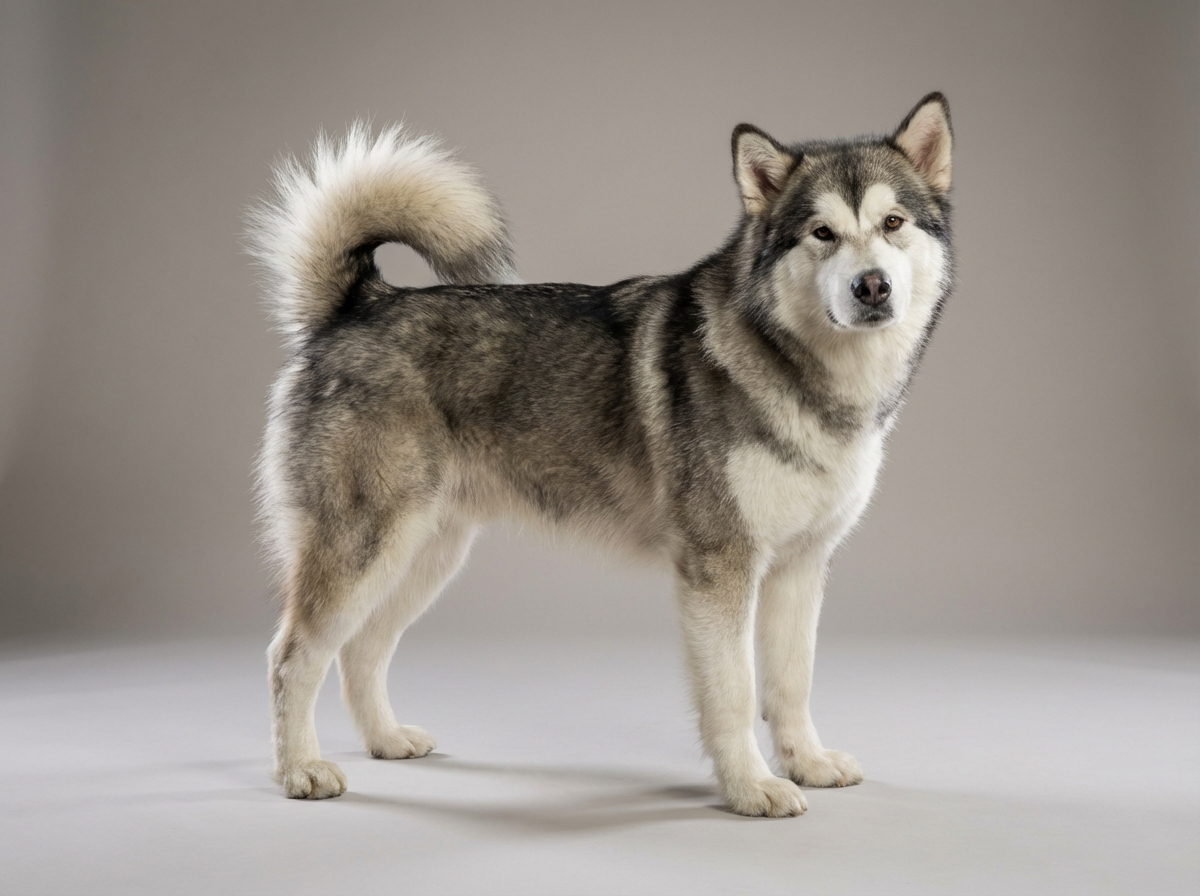
The Malamute's 1/5 is not about square footage but about the two-hour daily requirement with physical resistance in it — a pack, a harness, a rig, steep ground — for which no indoor or bad-weather substitute exists, plus an Arctic coat that pushes summer exercise to first and last light for months.
With children the Malamute leads 5/5 to 4/5. The Poodle is good with children but it is a 12 pound dog with fine legs, and a fall or a rough grab causes real injury. The supervision protects the dog, which is the reverse of the Malamute situation, where a 95 pound dog can knock a child over without intending anything.
With other dogs the Poodle leads 4/5 to 3/5 and is generally easy in group settings. Around cats it is safe; the Malamute retains a hunting drive that owners manage rather than resolve.
On cost both rate 4/5, with the Poodle at $100–200 a month against $150–300 and a first year of $1,500–3,000 against $2,000–4,000. That gap looks decisive and mostly is not. The Poodle's grooming schedule runs for up to seventeen years, its dental care is a recurring anaesthetic cost, and its insurance climbs late. The Malamute's spend is food volume and weight-scaled veterinary pricing, front-loaded into a shorter life.
If the shortlist genuinely contains both, the deciding question is not cost. It is whether you want a dog to train or a dog to walk.