Behavior
What are some quick tips for Shiba Inu patellar luxation?
Keep your Shiba Inu at a healthy weight and provide low-impact exercise. Monitor their movements for signs of discomfort. Consult your vet regularly for the best care.

Quick answer
What are some quick tips for Shiba Inu patellar luxation?
Keep your Shiba Inu at a healthy weight and provide low-impact exercise. Monitor their movements for signs of discomfort. Consult your vet regularly for the best care.
Shiba Inu patellar luxation is a common issue that affects many owners. This condition, characterized by the dislocation of the kneecap, can cause pain and mobility problems.
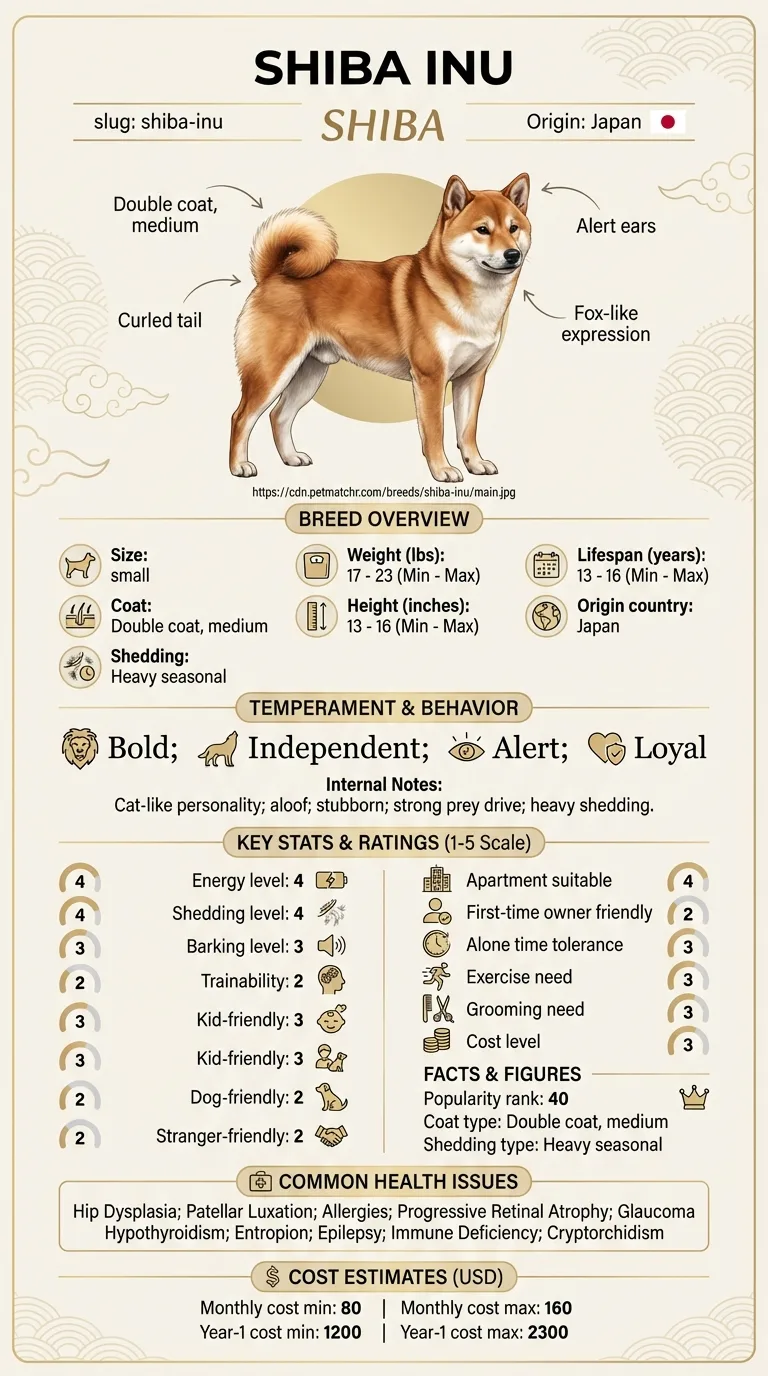
Typically, first-time Shiba Inu owners or those unfamiliar with this breed's unique health challenges may struggle with patellar luxation. Busy families and individuals who may not have extensive experience with dog training might also find themselves navigating this issue.
This guide is not medical advice. If your dog shows pain, sudden behavior change, or worsening symptoms, consult a licensed veterinarian.
Some links may be affiliate links. We may earn a commission at no extra cost to you. We only suggest products we believe are helpful for dog owners.
We research and check what we publish, but we do not warrant that any figure, date, price, or statement is accurate, complete, or current, and we accept no liability for any loss, cost, injury, or other harm arising from the use of this site. Use it as one reference among several. You remain responsible for your own decisions and for your dog's care - confirm anything that matters with a licensed veterinarian or another qualified professional before you act on it. Full disclaimer.
Check this first
Recognizing when Shiba Inu patellar luxation is an emergency can be crucial for your dog's health. If your Shiba Inu is suddenly unable to walk, limping severely, or yelping in pain, it may be time to call your vet immediately. Additionally, if you notice swelling around the knee or your dog is showing signs of distress, these are red flags that require urgent attention.
If any of these apply, call your vet or an emergency clinic now. The rest of this page is for the cases that are not an emergency.
Shiba Inu patellar luxation is a common issue where the knee cap dislocates, causing pain and difficulty in movement. This problem can appear as limping, reluctance to jump, or an abnormal gait. Owners may notice their Shiba Inu suddenly favoring one leg or being hesitant during playtime.
Patellar luxation is fairly common in small breeds like the Shiba Inu, affecting roughly 15-20% of these dogs. While it can occur in any dog, Shiba Inus are particularly susceptible due to their structure and size.
Shiba Inus are small dogs with a unique bone structure that can predispose them to patellar luxation. Their compact size means their knees may not develop properly, leading to dislocation. Additionally, genetic factors can play a role, making some Shiba Inus more susceptible than others.
Environmental factors can also contribute to this issue. If a Shiba Inu is overweight, the extra weight can put additional stress on their knees. Inadequate exercise or overly strenuous activities can further exacerbate the problem, leading to dislocations.
If you notice persistent limping, difficulty jumping, or any signs of pain, contact your vet. They can assess the severity of the patellar luxation and suggest treatments, which may include physical therapy or surgery.
Avoiding these common mistakes can help manage your Shiba Inu's patellar luxation more effectively.
Start here: Shiba Inu Most Common Genetic Disorders: What to Screen For
See all Shiba INU health problems, which breeds are prone to patellar luxation, or the full Shiba INU breed guide for temperament, exercise needs and ownership costs.
You should expect to see improvements in about 4 to 8 weeks with consistent care and follow-up with your vet.
Success means your Shiba Inu is more comfortable and shows fewer signs of pain or discomfort. They should be able to walk and play without frequent knee issues.
On the other hand, if your Shiba Inu occasionally hops or seems to have mild discomfort after playtime, monitor the situation closely. These mild symptoms can often be managed at home with rest and gentle exercise. Keep an eye on your dog's behavior and activity level, and consult your vet if symptoms persist or worsen over time.

Maya, a busy nurse from San Francisco, noticed her Shiba Inu, Koda, limping and sometimes holding up his leg. After a vet visit confirmed patellar luxation, she felt overwhelmed. With the vet's guidance, she started a gentle exercise routine and used positive reinforcement training. Over weeks, Koda became more active, and his limping reduced significantly. Maya realized that patience and a consistent routine made all the difference.
Key takeaway: With the right training and care, managing Shiba Inu patellar luxation can lead to a happier, more active dog.
Common signs of patellar luxation in your Shiba Inu include limping, skipping a leg while walking, or sudden changes in activity levels. You may also notice them holding their leg up or favoring it after playing. If you see these signs, it's a good idea to consult your vet.
To manage Shiba Inu patellar luxation, ensure your dog maintains a healthy weight to reduce stress on their joints. Regular exercise, tailored to their ability, can also strengthen muscles around the knee. Consult your vet for specific training and treatment options.
Surgery may be needed if the patellar luxation is severe or causes significant pain. Your vet will assess your Shiba Inu's condition and recommend the best course of action, which may include both surgical and non-surgical options.
Yes, training can help strengthen the muscles around the knee and improve joint stability. Incorporating specific exercises, as advised by a vet or trainer, can be beneficial. Always avoid high-impact activities that may worsen the condition.
Yes, patellar luxation can develop in older Shiba Inus, especially if they have had previous knee injuries or other joint issues. As they age, their ligaments may weaken, increasing the risk of dislocation. Regular vet check-ups can help monitor their joint health.
Gentle exercises focusing on building muscle strength around the knee can be beneficial for your Shiba Inu. Activities like swimming or short, controlled walks can help. Always consult your vet for tailored exercise recommendations that suit your dog's condition.
If your Shiba Inu shows persistent lameness, seems to be in pain, or cannot bear weight on a leg, it's time to see a vet. Additionally, if you observe frequent dislocations or if their condition worsens, don't hesitate to seek professional advice. Early intervention can help prevent further complications.
The long-term outlook for a Shiba Inu with patellar luxation varies based on the severity of the condition. Many dogs can lead active lives with proper management, which may include weight control, exercise, and potential surgery. Regular vet visits are essential to ensure their health and mobility.
Keep your Shiba Inu at a healthy weight and provide low-impact exercise. Monitor their movements for signs of discomfort. Consult your vet regularly for the best care.
Regularly check for symptoms, especially if your Shiba Inu is older or has had past issues. Weekly observations can help catch any changes early.
Gentle exercises like walking on a leash or swimming are often good options. Always consult your vet for a tailored exercise plan.
Avoid high-impact activities, like jumping or running on hard surfaces. These can exacerbate the condition. Focus on gentle, controlled movements instead.
A one-page prep sheet for this condition: the signs, the questions to ask, what to get priced. Unlocks here.
You get: Vet visit prep sheet
No spam. One-click unsubscribe. See our privacy policy.
Preview page 1 before you decide.