DogBreedCompass
← Back to breed profile

Shiba Inu Most Common Genetic Disorders: What Owners Should Know

Knowing a Shiba Inu's possible genetic health concerns helps you notice changes early and have better conversations with your veterinarian.

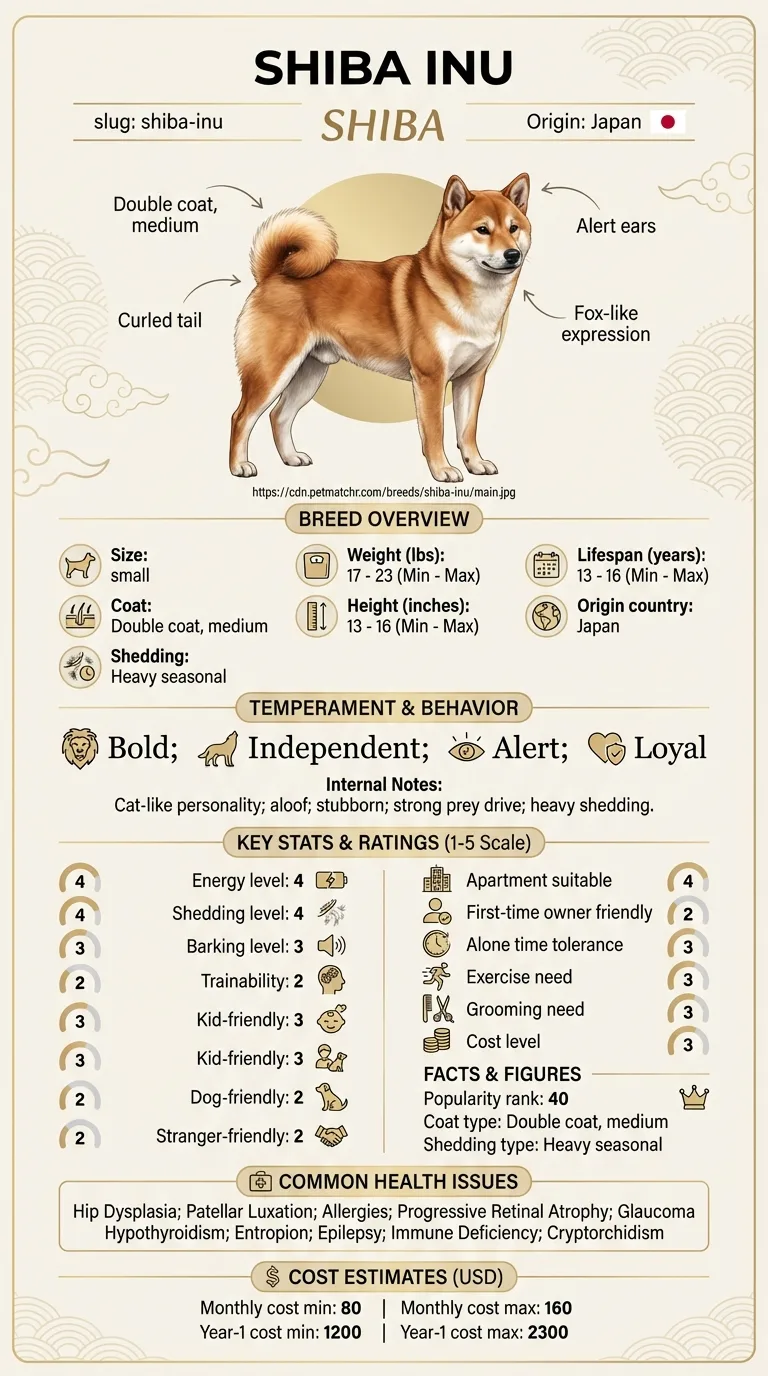
Shiba Inu Most Common Genetic Disorders: What Owners Should Know infographic

This can feel especially confusing for prospective owners comparing breeders, and for current owners who have noticed a change in movement, vision, skin, energy, or behavior. A symptom does not confirm a genetic disorder, but it is worth documenting and discussing.

Important reminder

This guide is not medical advice. If your dog shows pain, sudden behavior change, or worsening symptoms, consult a licensed veterinarian.

Some links may be affiliate links. We may earn a commission at no extra cost to you. We only suggest products we believe are helpful for dog owners.

What this problem looks like

A Shiba Inu can have inherited health risks without showing signs, and many changes that concern owners have causes unrelated to genetics. The useful takeaway is to know the conditions listed for the breed, watch your individual dog over time, and get veterinary help when something changes.

Common triggers

  • A family history or health information that raises a question about inherited risk
  • A new limp, change in movement, or reluctance to jump
  • Changes in the eyes or apparent vision
  • A seizure-like event, collapse, or unexplained weakness
  • Changes in skin, appetite, energy, or behavior that persist

The available breed data identifies several health concerns that may occur in Shiba Inus, but it does not provide prevalence figures. Not every Shiba Inu will develop one of these conditions, and only a veterinarian can assess an individual dog.

Why this happens

Breed factors

Some conditions can have an inherited component, which is why family history and responsible breeding conversations can be helpful. Genetics are only one part of a dog's health picture, and a listed breed concern does not establish the cause of a particular symptom.

Environment factors

Injury, body condition, activity, diet, parasite exposure, aging, and other medical issues can influence how a dog feels or moves. These factors can also produce signs that resemble an inherited problem, so a veterinary examination matters.

What you can try

At-home strategies

  • Keep a dated log of symptoms, including changes in movement, eyes, appetite, energy, skin, or behavior.
  • Maintain routine preventive care and regular veterinary check-ups appropriate for your dog's age and health history.
  • Keep copies of breeder records, adoption information, and any known family health details to share with your veterinarian.
  • Use calm, reward-based handling practice so your Shiba Inu is more comfortable with routine examinations and care.
  • Follow your veterinarian's advice on exercise, diet, testing, and medication instead of using online advice as a treatment plan.

When to consider a trainer

Consider a qualified, reward-based trainer if medical care is making handling difficult or if your dog is fearful during examinations. A trainer should work alongside, not instead of, your veterinary team.

When to talk to your vet

Talk to a veterinarian whenever you notice a persistent or worsening change, including lameness, difficulty moving, eye changes, unexplained weight or energy changes, recurrent skin concerns, or seizure-like episodes. Seek urgent care for severe or sudden symptoms.

Realistic expectations

The next step may be as simple as monitoring or scheduling an examination, while some concerns need ongoing veterinary management. The timeline depends on the cause and should be set with your veterinarian.

Success means your Shiba Inu receives timely, appropriate care; you understand what to monitor; and you have a practical plan that supports comfort and quality of life.

Shiba Inu Most Common Genetic Disorders: Mistakes to Avoid

Genetic risk cannot be managed by guesswork, but owners can avoid delays and keep useful records for their veterinary team. The goal is observation and appropriate care, not self-diagnosis.

  • Assuming every Shiba Inu will develop a listed condition: breed-level risk information is not a diagnosis. Focus on your individual dog's history, signs, and veterinary examinations.
  • Waiting out a new limp, eye change, collapse, seizure-like episode, or sudden behavior change: prompt veterinary advice can help determine whether urgent care or an appointment is appropriate.
  • Using online symptom lists to choose treatment: similar signs can have many causes, and medication or supplements should be discussed with a veterinarian.
  • Ignoring family and health records when choosing a puppy: ask the breeder what health information is available for the parents and how they support prospective owners' questions.
  • Changing food, exercise, and supplements all at once: keep notes and make changes with veterinary guidance so you can tell what is helping or causing problems.
  • Treating pain or reduced activity as stubbornness: an independent Shiba may still show discomfort through reluctance to jump, walk, or be handled.

When a Shiba Inu Health Concern Needs Urgent Care

Seek urgent veterinary help if your Shiba Inu has trouble breathing, collapses, has a seizure that is prolonged or repeated, suddenly cannot stand or walk, appears to have severe pain, or develops a sudden eye problem such as marked redness, cloudiness, swelling, or apparent vision loss. These signs can have different causes and need professional assessment.

For less urgent changes—such as a recurring limp, difficulty rising, altered appetite, skin changes, reduced energy, or a gradual change in vision—make a veterinary appointment and bring a simple timeline of what you have observed. Note when the change started, what makes it better or worse, and any relevant family or breeder health information.

Do not give human pain medicines or use another dog's prescription. A veterinarian can examine your dog, explain the possible causes, and recommend the next step.

Turning a Worry Into a Useful Veterinary Conversation

Mina noticed that her adult Shiba Inu, Kumo, was hesitating before jumping onto the sofa and occasionally holding up a rear leg after play. Rather than assuming the cause, she recorded when it happened and booked a veterinary appointment. She also brought the health information she had received when Kumo joined the family. The examination gave Mina a clear plan for the next steps and for managing Kumo's activity while they learned more. The important change was not a home diagnosis; it was turning vague observations into useful information for a professional.

Key takeaway: A careful symptom record and prompt veterinary guidance are more helpful than trying to label a genetic condition at home.

Frequently asked questions

What genetic disorders are seen in Shiba Inus?

The breed information for this page lists hip dysplasia, patellar luxation, progressive retinal atrophy, glaucoma, hypothyroidism, entropion, epilepsy, immune deficiency, and cryptorchidism among concerns owners may encounter. That list describes possible breed-associated concerns, not a prediction for every Shiba Inu.

How do I manage Shiba Inu most common genetic disorders at home?

No owner can guarantee that a genetic condition will never occur. You can support early detection by keeping regular veterinary visits, sharing family health information when available, and seeking advice promptly when you notice a new change.

Why does my Shiba Inu seem to have a genetic health problem?

Possible signs depend on the condition. Examples that deserve veterinary advice include limping or difficulty rising, changes in the eyes or vision, unexplained changes in energy or weight, recurrent skin concerns, or seizure-like episodes. These signs are not specific to inherited disease.

What should I ask a Shiba Inu breeder about health?

Ask about the puppy's parents, available health records, family history, and the breeder's plan for discussing health concerns after placement. A responsible conversation should be clear about what is known and what cannot be guaranteed.

When should I call the vet about my Shiba Inu's health?

If you notice a new limp, eye change, seizure-like event, weakness, pain, or a sudden behavior change, contact a veterinarian. They can decide whether your dog needs emergency care, an exam soon, or monitoring.

Can training help a Shiba Inu with a genetic disorder?

Training does not treat a genetic disorder. However, gentle, reward-based training can help with cooperative care, such as calm handling, medication routines, or veterinary visits, when your veterinarian says activity is appropriate.

Quick answers

View more answers
Health

What are quick tips for Shiba Inu genetic health concerns?

Keep a record of new signs, your dog's activity and appetite, and any family health information. Share it with your veterinarian rather than trying to identify a disorder from a checklist alone.

Health

Which Shiba Inu symptoms need prompt veterinary advice?

Arrange a veterinary visit for gradual changes such as recurring limping, lower energy, or changes in the eyes. Seek urgent advice for collapse, breathing trouble, severe pain, repeated seizure-like events, or sudden vision changes.

Training

How can I make veterinary care easier for my Shiba Inu?

Use rewards and short sessions to help your Shiba Inu become comfortable with gentle handling, resting on a mat, and routine care. Stop if your dog seems painful or distressed and ask your veterinarian for guidance.

Living

What can I do at home while I wait for a vet visit?

Avoid adding supplements or changing exercise because of a suspected disorder without veterinary guidance. The best plan depends on the dog's examination, diagnosis, and overall health.

Behavior

Does every Shiba Inu develop a genetic disorder?

Genetic risk is not a verdict for an individual dog. Regular care and timely attention to changes are more useful than assuming a diagnosis from breed information alone.

Related DogBreedCompass guides

  • Shiba Inu breed profileReview the Shiba Inu breed profile for a broader view of the breed's care needs and characteristics.
  • Shiba Inu anxiety guideLearn about anxiety-related behavior that may be separate from a medical concern but can be useful to understand with veterinary guidance.
  • Shiba Inu vs. Akita comparisonCompare the Shiba Inu with the Akita when you are researching the care considerations of these Japanese breeds.
  • dogs with few health issuesExplore a broader guide to choosing dogs when long-term health considerations are part of your research.
  • Shiba Inu cost guidePlan for routine and unexpected care when considering the overall cost of owning a Shiba Inu.

Related guides