Health
What causes subvalvular aortic stenosis?
A band of extra tissue narrows the area just below the aortic valve, forcing the heart to work harder to push blood through.

Quick answer
What causes subvalvular aortic stenosis?
A band of extra tissue narrows the area just below the aortic valve, forcing the heart to work harder to push blood through.
A dog can be born with a narrowed outflow tract and show absolutely no symptoms as a puppy, only for the defect to reveal itself years later as the heart finally struggles to keep compensating.
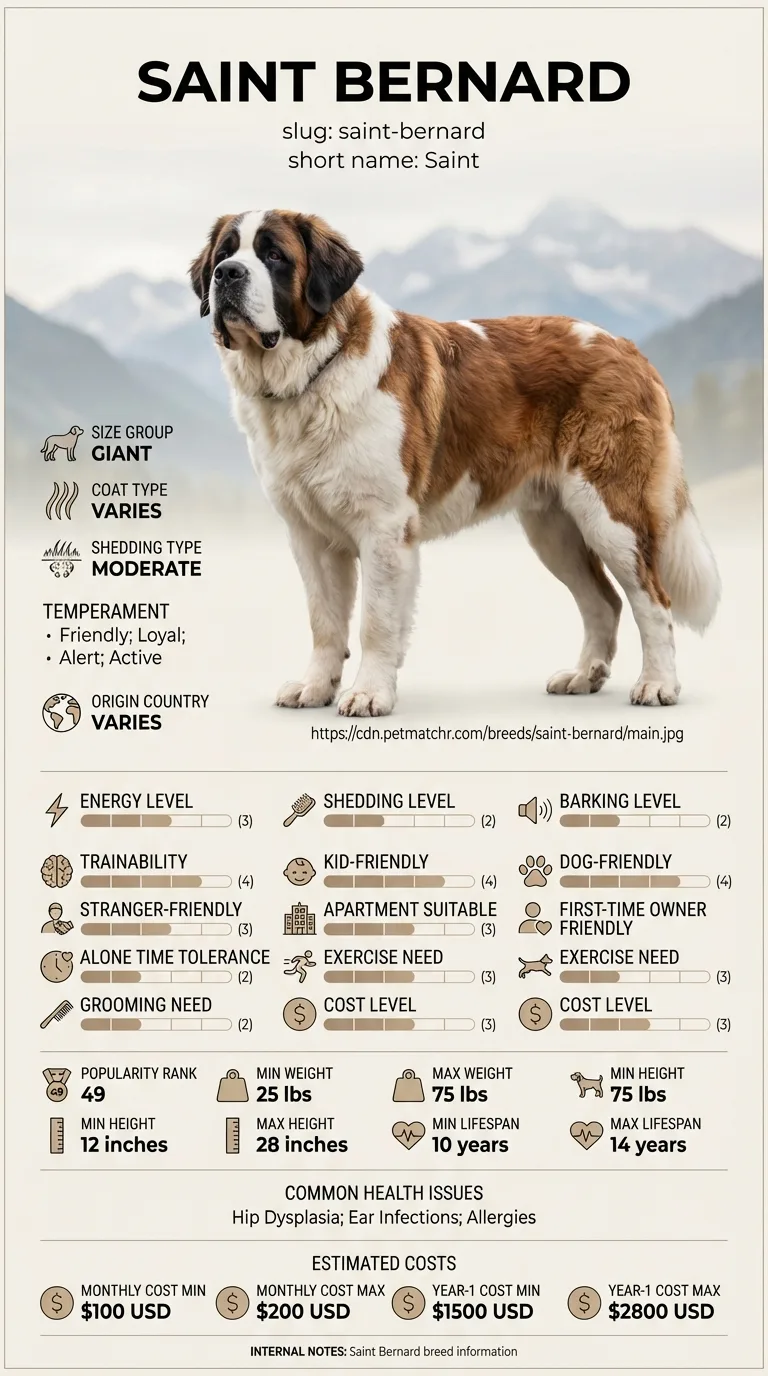
This is most relevant to owners of young Saint Bernards, especially those buying from a breeder, since congenital defects like this one are exactly what pre-purchase cardiac screening in puppies is designed to catch.
This guide is not medical advice. If your dog shows pain, sudden behavior change, or worsening symptoms, consult a licensed veterinarian.
Some links may be affiliate links. We may earn a commission at no extra cost to you. We only suggest products we believe are helpful for dog owners.
Check this first
Subvalvular aortic stenosis forces the heart to pump against extra resistance, which over years can lead to sudden, severe complications, including collapse during exercise or, in serious cases, sudden death. Fainting spells, especially ones tied to excitement or exertion, are a red flag that needs urgent veterinary attention rather than a wait-and-see approach, because they can signal the heart is struggling to supply enough blood under demand.
A mild case, confirmed through echocardiogram to have only a small pressure gradient across the narrowed area, is generally lower risk and may only need periodic monitoring rather than aggressive intervention. The severity is graded specifically by how much extra pressure the heart has to generate to push blood past the narrowing, and that grading is what determines whether a dog needs activity restriction, medication, or simply routine rechecks.
Because this defect is congenital, its risk profile doesn't really change with age the way acquired heart disease does; a moderate or severe case identified in puppyhood carries elevated risk throughout the dog's life, which is why an accurate early diagnosis matters so much for long-term planning.
If any of these apply, call your vet or an emergency clinic now. The rest of this page is for the cases that are not an emergency.
Subvalvular aortic stenosis is a structural narrowing below the aortic valve that a Saint Bernard is born with rather than develops later. It forces the left ventricle to generate extra pressure with every beat, and depending on severity, that extra strain can range from a lifelong non-issue to a serious risk of collapse or sudden death under exertion.
Congenital defects like this are less frequently seen than acquired conditions such as dilated cardiomyopathy, but they are well enough documented in giant breeds that cardiac screening in puppyhood is a reasonable, commonly recommended precaution.
This defect has a heritable component documented across several giant breeds, including the Saint Bernard, meaning it can be passed from parent to puppy through breeding lines that haven't been cardiac-screened. The extra tissue narrowing the outflow tract forms during fetal heart development, well before birth.
Environmental factors don't cause this defect, since it's present from birth, but exertion, excitement, and growth-related increases in body mass can all increase the practical demand placed on a heart already working against the narrowing, which is why activity management matters once a case is identified.
Talk to your vet about any murmur found in a puppy, especially one that seems louder over time or is accompanied by fatigue during play. Fainting or collapse, particularly during exercise or excitement, is an emergency and needs immediate veterinary evaluation.
Congenital heart defects respond to a different set of decisions than age-related disease, and getting these wrong can be costly.
See all Saint Bernard health problems, which breeds are prone to heart problems, or the full Saint Bernard breed guide for temperament, exercise needs and ownership costs.
Diagnosis typically happens in puppyhood or young adulthood, often from a murmur found at a routine visit, and severity classification from an echocardiogram usually happens within the same visit or a follow-up scheduled shortly after.
For a mild case, success often just means periodic monitoring with no real lifestyle change. For a moderate to severe case, success means a stable dog living within cardiologist-set activity limits, avoiding the exertional episodes that carry the highest risk.
Colin's Saint Bernard puppy, Winston, had a murmur noted at his eight-week checkup that his vet described as possibly innocent but worth rechecking. At four months, the murmur hadn't faded, so Colin's vet referred Winston to a cardiologist. An echocardiogram confirmed mild subvalvular aortic stenosis, with a low enough pressure gradient that the cardiologist recommended annual monitoring rather than activity restriction. Winston, now three years old, has had two follow-up echocardiograms showing the condition unchanged, and lives an otherwise completely normal, active life.
Key takeaway: Following up on a murmur that didn't fade by four months, rather than assuming it would eventually disappear, gave Colin a clear diagnosis and the reassurance that Winston's specific case needed monitoring rather than restriction.
It's a congenital narrowing of tissue just below the aortic valve that forces the heart's left ventricle to generate extra pressure to push blood out to the body, which over time can thicken and stress the heart muscle.
It is documented across several giant breeds, and giant-breed puppies are reasonable candidates for cardiac screening specifically because of this risk, even when a breeder reports no known issues in the line.
An echocardiogram identifies the narrowing directly and measures the pressure gradient across it, which is how a vet determines whether the case is mild, moderate, or severe.
Mild cases often do, sometimes with no treatment beyond monitoring. Moderate to severe cases carry a real risk of complications, including sudden death during exertion, and typically need activity restriction and ongoing cardiology involvement.
Management usually centers on activity restriction and sometimes medication to reduce strain on the heart; surgical correction exists but carries significant risk and is not routinely recommended for most cases.
Yes, cardiac screening before breeding is a standard recommendation specifically to avoid passing a congenital narrowing like this to puppies, since it has a heritable component in several giant breeds.
A cardiology consult with an echocardiogram for a puppy typically costs several hundred dollars, which is a meaningful but one-time expense compared to potentially catching a serious lifelong condition early.
A band of extra tissue narrows the area just below the aortic valve, forcing the heart to work harder to push blood through.
Yes, it's congenital, meaning the dog is born with it rather than developing it later in life.
Yes, a cardiology exam and echocardiogram can identify or rule out this defect in puppies.
Moderate to severe cases often need real activity restrictions set by a cardiologist to reduce the risk of collapse.
For a breed with documented risk, most vets consider it a worthwhile one-time investment before intense activity begins.
A one-page prep sheet for this condition: the signs, the questions to ask, what to get priced. Unlocks here.
You get: Vet visit prep sheet
No spam. One-click unsubscribe. See our privacy policy.
Preview page 1 before you decide.