Saint Bernard Most Common Genetic Disorders: What Owners Should Know
Quick answer
What are quick tips for Saint Bernard genetic-health concerns?
Keep notes on new changes in movement, energy, breathing, appetite, or comfort, and bring them to your veterinarian. Avoid trying to diagnose a genetic disorder from one sign alone.
A Saint Bernard's health needs are individual. Knowing what to watch for can support timely, veterinary-led care.
This guide is for current or prospective Saint Bernard owners who want to understand genetic-health questions without assuming that their dog will develop a particular condition.
Important reminder
This guide is not medical advice. If your dog shows pain, sudden behavior change, collapse, breathing difficulty, or worsening symptoms, consult a licensed veterinarian promptly.
Some links may be affiliate links. We may earn a commission at no extra cost to you. We only suggest products we believe are helpful for dog owners.
We research and check what we publish, but we do not warrant that any figure, date, price, or statement is accurate, complete, or current, and we accept no liability for any loss, cost, injury, or other harm arising from the use of this site. Use it as one reference among several. You remain responsible for your own decisions and for your dog's care - confirm anything that matters with a licensed veterinarian or another qualified professional before you act on it. Full disclaimer.
What this problem looks like
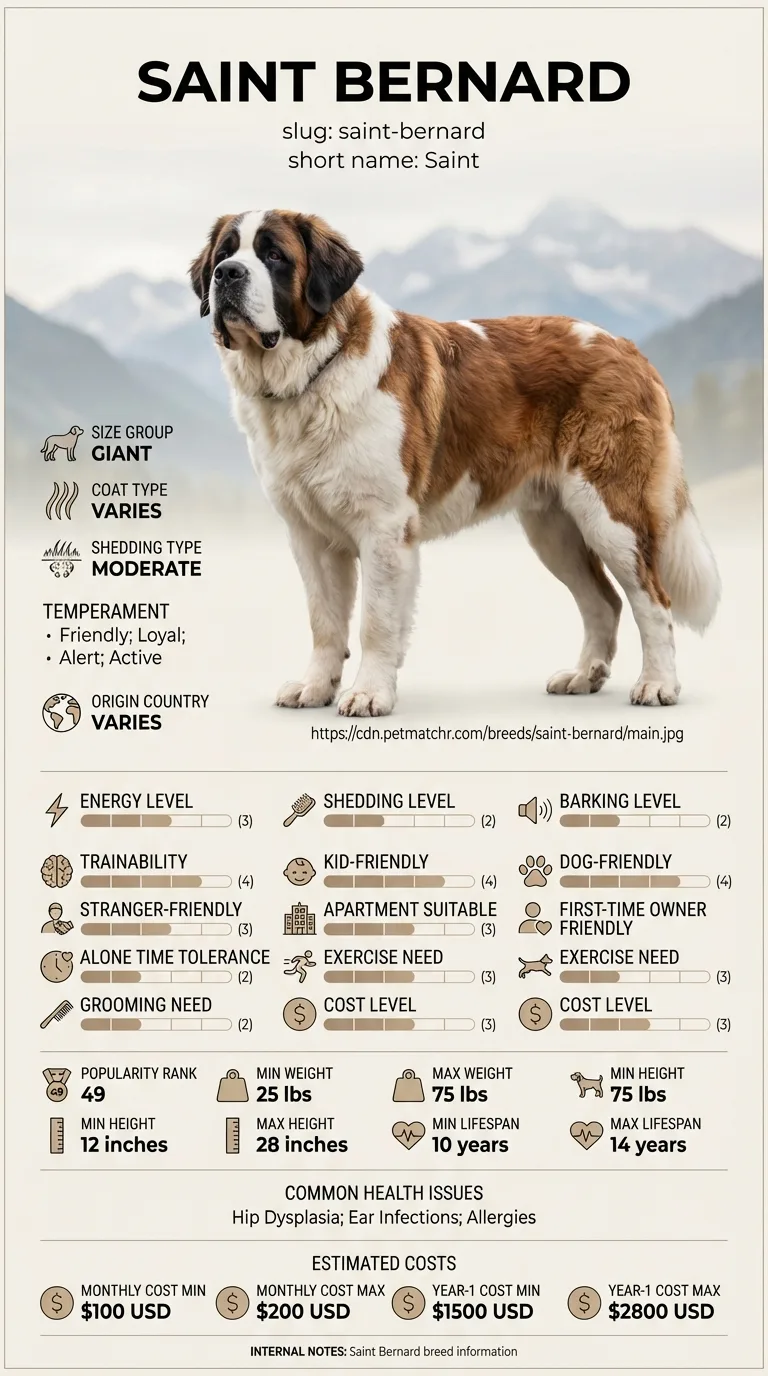
The phrase Saint Bernard most common genetic disorders can lead owners to look for a definitive list, but breed-level information is only a starting point. This page's Saint Bernard record identifies hip dysplasia as a common health issue. Elbow dysplasia and dilated cardiomyopathy are also named in the page topic as concerns seen more often in purebred dogs, not as a prediction for every Saint Bernard.
Common triggers
A new limp, stiffness, reluctance to move, or changed gait
A change in stamina, weakness, collapse, or breathing difficulty
A veterinary discussion about family history or breed-level health concerns
Recurring ear discomfort or skin irritation that needs an individual assessment
This page does not provide prevalence figures. Breed health information can identify topics worth discussing, but it cannot determine whether an individual Saint Bernard has or will develop a disorder.
Why this happens
Breed factors
Some conditions have an inherited component, which is why a breed's health background may be part of a veterinary conversation. Inheritance is complex, however, and breed membership alone does not diagnose a disorder or predict an outcome for one dog.
Environment factors
Daily environment, activity, body condition, age, injuries, and unrelated illness can all affect how a dog feels or moves. Those factors are reasons to seek a professional assessment rather than assume that a symptom has a genetic cause.
What you can do at home (once it is not an emergency)
When to talk to your vet
Make an appointment for persistent or recurring changes in movement, comfort, energy, ears, or skin. Seek prompt or emergency care for collapse, breathing difficulty, severe pain, marked weakness, or rapidly worsening signs.
At home, alongside your vet's plan
Keep a simple log of changes in movement, energy, appetite, breathing, and comfort, including when they happen and what seems to make them better or worse.
Take a short video of an intermittent limp, gait change, or unusual episode if it is safe to do so; it may help the veterinarian understand what you observed.
Use calm, non-slip routines around the home and avoid forcing activity when your dog appears uncomfortable.
Follow the nutrition, activity, medication, and follow-up guidance given by your veterinarian instead of using a one-size-fits-all online plan.
Saint Bernard Most Common Genetic Disorders: Mistakes to Avoid
Owners cannot prevent every health problem, but careful observation and professional advice can prevent guesswork from delaying an appropriate evaluation.
Treating stiffness, reluctance to move, or a changed gait as a normal part of getting older: note when the change began and ask a veterinarian to assess it.
Assuming a family history predicts a diagnosis: inherited risk is not the same as certainty, and an individual examination matters.
Starting supplements, pain medicines, or exercise restrictions without veterinary guidance: the right plan depends on the dog and the cause of the signs.
Waiting through fainting, collapse, trouble breathing, or marked weakness: these signs need prompt veterinary attention.
Making abrupt changes to food or activity after reading online advice: discuss sustainable changes with the veterinarian who knows your Saint Bernard.
Focusing on one possible disorder and overlooking other causes of discomfort: a veterinarian can help distinguish among orthopedic, heart, skin, ear, and other health concerns.
The timing of improvement depends on the cause of the signs and the plan your veterinarian recommends. Focus first on a clear assessment rather than expecting a fixed timeline.
Success means your Saint Bernard has an appropriate veterinary plan, changes are noticed early, and daily routines support comfort and safe care.
When a Saint Bernard Needs Urgent Veterinary Help
Contact an emergency veterinary service promptly if your Saint Bernard collapses, has difficulty breathing, becomes suddenly very weak, or appears to be in severe pain. These signs are not specific to a genetic disorder, but they should not be monitored at home while you try to identify the cause.
For less urgent changes, such as a new limp, reduced willingness to exercise, repeated ear discomfort, skin irritation, or a gradual change in stamina, arrange a regular veterinary appointment. Bring notes about when you first noticed the change, whether it comes and goes, and any videos of movement or episodes that may help the veterinarian.
A veterinarian may recommend an examination and further assessment based on your dog's history and current signs. That process is more reliable than trying to confirm hip dysplasia, elbow dysplasia, dilated cardiomyopathy, or another condition from symptoms alone.
Saint Bernard Most Common Genetic Disorders: What Owners Should Know - When a Saint Bernard Needs Urgent Veterinary Help
Turning a Mobility Change Into a Useful Vet Visit
A Saint Bernard owner notices that their dog is slower to rise after rest and occasionally avoids a familiar step. Rather than assuming it is hip dysplasia, the owner records when it happens and schedules a veterinary visit. The veterinarian uses the history and examination to discuss possible causes and next steps.
The useful outcome is not a self-diagnosis; it is a clearer plan based on the individual dog and a record of changes that the veterinarian can evaluate.
Key takeaway: Breed information can guide questions, but observed changes and a veterinary assessment are the safest basis for decisions.
Frequently asked questions
What genetic disorders should Saint Bernard owners ask about?
The breed information for this page lists hip dysplasia as a common health issue. The page topic also identifies elbow dysplasia and dilated cardiomyopathy as genetic-health concerns that can be discussed in purebred dogs. This does not mean every Saint Bernard will develop any of these conditions.
How do I manage Saint Bernard most common genetic disorders with a vet plan?
You cannot reliably stop a genetic disorder with training or home care. The practical step is to watch for changes, keep regular veterinary care, and follow an individualized plan if your veterinarian identifies a concern.
What signs should I watch for with hip dysplasia in a Saint Bernard?
Hip dysplasia can affect comfort and movement, but a limp, stiffness, or reluctance to exercise can have several causes. A veterinarian should evaluate new or persistent mobility changes rather than assuming a diagnosis.
Will my Saint Bernard develop a genetic disorder?
No. A breed-level health concern describes a possibility, not a prediction for an individual dog. Your veterinarian can advise you based on your Saint Bernard's history, examination, and any appropriate follow-up assessment.
When should I worry about a possible heart problem in my Saint Bernard?
Dilated cardiomyopathy is a heart condition, but symptoms alone cannot confirm it. If your dog has collapse, breathing difficulty, marked weakness, or a sudden change in stamina, seek veterinary advice promptly; collapse or breathing difficulty can be urgent.
Can training help with Saint Bernard genetic disorders?
Training cannot treat a genetic health condition. Gentle handling and cooperative-care skills may make veterinary visits easier, but medical decisions should remain with a licensed veterinarian.
What are quick tips for Saint Bernard genetic-health concerns?
Keep notes on new changes in movement, energy, breathing, appetite, or comfort, and bring them to your veterinarian. Avoid trying to diagnose a genetic disorder from one sign alone.
Health
Are genetic disorders common in Saint Bernards?
The page's breed record lists hip dysplasia as a common health issue. It does not establish that every Saint Bernard is affected or provide a rate of occurrence.
Training
Can training prevent Saint Bernard genetic disorders?
Training does not prevent or cure a genetic disorder. It can, however, help a dog cooperate with calm handling and routine veterinary care when taught safely and gradually.
Costs
What does it cost to investigate a Saint Bernard health concern?
Costs vary with the condition, diagnostic approach, location, and treatment plan. A veterinarian can outline likely next steps after examining your individual dog.
Related DogBreedCompass guides
Saint Bernard breed profile – See the broader Saint Bernard breed profile, including the health information recorded for the breed.
Saint Bernard anxiety guide – Read about supporting a Saint Bernard who is showing anxiety or stress alongside veterinary care.
Great Dane vs. Saint Bernard comparison – Compare Saint Bernard ownership considerations with another giant breed when you are researching a dog that fits your household.
Mastiff vs. Saint Bernard comparison – Explore a comparison with a Mastiff to weigh size, daily care, and household fit before choosing a giant-breed dog.