Health
What are quick tips for Great Dane heart problems?
Monitor your Great Dane's weight, keep them active with low-impact exercises, and ensure regular vet visits for check-ups.

Quick answer
What are quick tips for Great Dane heart problems?
Monitor your Great Dane's weight, keep them active with low-impact exercises, and ensure regular vet visits for check-ups.
Great Dane heart problems can be serious and affect your dog's quality of life. Understanding these issues is crucial for responsible ownership.
New and experienced Great Dane owners alike may struggle with heart issues in their pets. Many owners are concerned about the long-term health implications and how to provide the best care for their beloved dogs.
This guide is not medical advice. If your dog shows pain, sudden behavior change, or worsening symptoms, consult a licensed veterinarian.
Some links may be affiliate links. We may earn a commission at no extra cost to you. We only suggest products we believe are helpful for dog owners.
We research and check what we publish, but we do not warrant that any figure, date, price, or statement is accurate, complete, or current, and we accept no liability for any loss, cost, injury, or other harm arising from the use of this site. Use it as one reference among several. You remain responsible for your own decisions and for your dog's care - confirm anything that matters with a licensed veterinarian or another qualified professional before you act on it. Full disclaimer.
Check this first
Understanding when Great Dane heart problems become an emergency can save your dog's life. If your Great Dane shows any severe symptoms, it's crucial to call your vet immediately. These red flags include sudden collapse, difficulty breathing, or persistent coughing. Other signs like bluish gums or extreme lethargy are also serious and require urgent care.
On the other hand, if your Great Dane is experiencing mild symptoms, such as occasional coughing or a slight decrease in activity, you might be able to monitor the situation at home. Create a plan to observe their behavior closely and note any changes. If symptoms persist or worsen over a few days, it's best to consult your vet. Regular check-ups can also help catch potential heart issues early, so don't skip those visits!
Being proactive about your dog's health can help you distinguish between emergencies and situations that can be monitored. Always trust your instincts; if something feels off, it’s better to err on the side of caution.
If any of these apply, call your vet or an emergency clinic now. The rest of this page is for the cases that are not an emergency.
Great Dane heart problems, such as dilated cardiomyopathy and subvalvular aortic stenosis, can lead to serious health issues. Owners may notice symptoms like coughing, fatigue, or difficulty breathing. These problems are especially concerning due to the breed's large size and short lifespan, often leading to distress for both the dog and its family.
Heart problems are relatively common in Great Danes, with studies suggesting that nearly 30% of this breed may experience some form of heart disease during their lifetime.
Great Danes are prone to specific heart issues like dilated cardiomyopathy and subvalvular aortic stenosis due to their genetic makeup. Their large size increases the strain on their hearts, making them more susceptible to these problems. Additionally, their shorter lifespan means that these issues can develop more quickly than in smaller breeds.
Environmental factors can also play a role in heart problems for Great Danes. Poor diet, lack of exercise, and obesity can exacerbate heart issues. Stressful living conditions or inadequate training can lead to anxiety, which may indirectly affect heart health.
If you notice symptoms like coughing, lethargy, or difficulty breathing, consult your vet immediately. These can be signs of serious heart problems and require prompt attention. Regular vet visits are essential for monitoring your Great Dane's heart health.
Addressing Great Dane heart problems can be challenging. Here are some common mistakes owners make that can worsen the situation and the safer alternatives you can try.
Start here: Great Dane Most Common Genetic Disorders: What to Screen For
See all Great Dane health problems, which breeds are prone to heart problems, or the full Great Dane breed guide for temperament, exercise needs and ownership costs.
Addressing Great Dane heart problems can take several months. You may notice improvements within 4-6 weeks of consistent care and follow-up with your vet.
Success means your Great Dane shows fewer symptoms, has more energy, and maintains regular vet check-ups to monitor heart health.
Emily, a first-time Great Dane owner, noticed her dog Max was unusually lethargic and had trouble breathing after moderate exercise. Concerned, she took Max to the vet, where he was diagnosed with dilated cardiomyopathy. Following the vet's advice, Emily adjusted Max's diet, began a gentle exercise routine, and enrolled in a training program focused on reducing stress and anxiety. Within a few months, Max's stamina improved, and he seemed happier and more engaged during their daily walks.
Key takeaway: With the right care and training, even a Great Dane with heart problems can lead a fulfilling life. Regular vet visits and a dedicated approach to health can make a significant difference.
Great Danes can be prone to heart problems due to genetics, particularly conditions like dilated cardiomyopathy. Regular vet check-ups can help catch issues early. It's vital to monitor their health closely, especially as they age.
Preventing heart problems involves maintaining a healthy diet and regular exercise. Also, keep up with vet visits for preventive care and screenings for heart conditions. Early detection is key to managing any issues.
Signs of heart problems can include coughing, difficulty breathing, lethargy, and fainting. If you notice these symptoms, consult your veterinarian immediately. Timely action can make a significant difference.
Stopping heart problems often isn't possible, but you can manage them through a healthy lifestyle. Ensure your Dane gets a balanced diet, regular exercise, and routine veterinary check-ups. Medications may also be required based on vet recommendations.
While training won't fix heart problems, it can help keep your Great Dane active and mentally stimulated. Incorporate gentle exercises and training routines that promote heart health without overexerting them. Always follow your vet's advice.
Early signs of heart problems in a Great Dane may include coughing, difficulty breathing, or lethargy. You might also notice a decrease in their exercise tolerance. If you see these symptoms, it's important to consult your vet for a thorough examination.
Yes, heart problems in Great Danes can be hereditary, especially conditions like dilated cardiomyopathy. Regular check-ups and responsible breeding practices are key to managing these risks. Always discuss your dog's family history with your vet.
For an aging Great Dane with heart problems, a balanced diet and gentle exercise are crucial. Consider incorporating supplements as recommended by your vet. Also, regular vet check-ups are essential to monitor their condition and adjust care as needed.
If your Great Dane suddenly shows signs of heart distress, such as severe coughing or difficulty breathing, seek emergency veterinary care immediately. Quick intervention can be critical in these situations to address potential life-threatening issues.
While Great Danes are prone to certain heart conditions, other breeds like Boxers and Doberman Pinschers also face significant risks. Understanding breed-specific health issues can help you be proactive in your dog's care. Always consult with your vet for tailored advice.
Monitor your Great Dane's weight, keep them active with low-impact exercises, and ensure regular vet visits for check-ups.
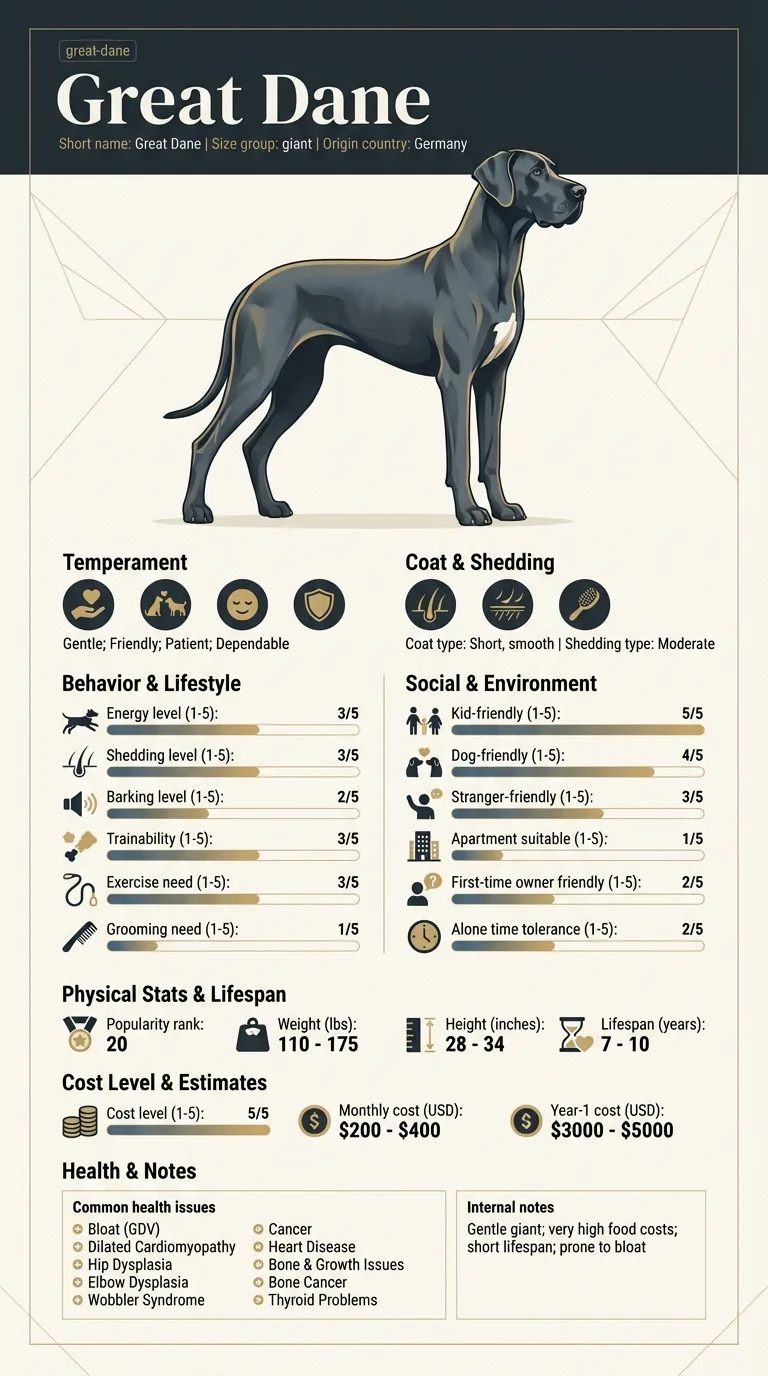
Caring for a Great Dane with heart issues can range from $200 to $400 monthly, depending on medication and vet visits.
If your Great Dane shows signs like coughing, fatigue, or difficulty breathing, take them to the vet immediately.
Yes, a balanced diet low in sodium and high in nutrients can support heart health in your Great Dane.
A one-page prep sheet for this condition: the signs, the questions to ask, what to get priced. Unlocks here.
You get: Vet visit prep sheet
No spam. One-click unsubscribe. See our privacy policy.
Preview page 1 before you decide.