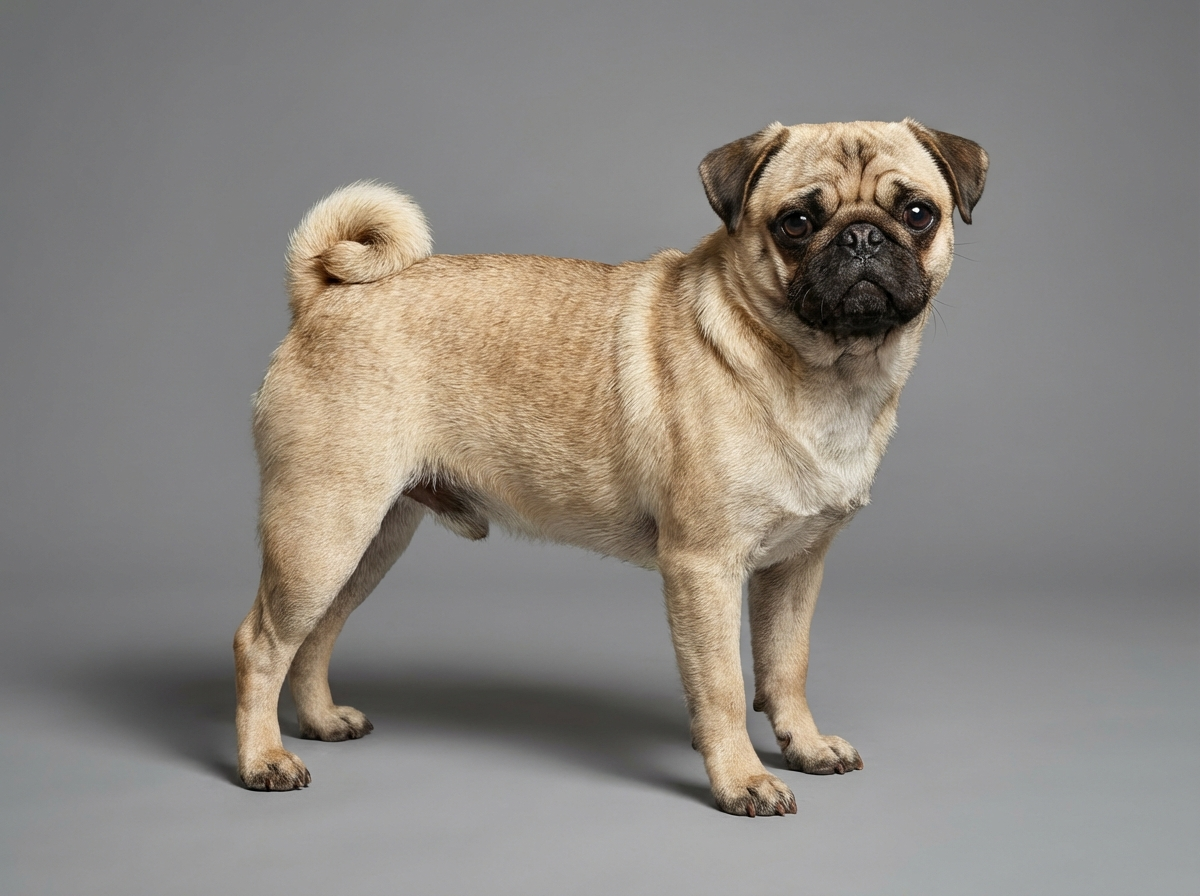
Health
What's the shared cause behind most Pug eye issues?
Shallow eye sockets that leave the eyes more prominent and exposed than in longer-muzzled breeds.

Quick answer
What's the shared cause behind most Pug eye issues?
Shallow eye sockets that leave the eyes more prominent and exposed than in longer-muzzled breeds.
Several separate-sounding eye conditions in this breed all trace back to the same basic fact: these eyes sit further out in the world than most dogs' do.
This is especially useful for new Pug owners who want one practical starting point for eye health before diving into any single specific condition, and for any owner building a simple, regular eye-check habit.
This guide is not medical advice. If your dog shows pain, sudden behavior change, or worsening symptoms, consult a licensed veterinarian.
Some links may be affiliate links. We may earn a commission at no extra cost to you. We only suggest products we believe are helpful for dog owners.
This breed's shallow eye sockets and prominent eyes create a shared vulnerability underlying several distinct eye conditions, from traumatic injury to gland prolapse to internal structural disease. A simple weekly home check, comparing both eyes for symmetry and watching for cloudiness, redness, or discharge, is a practical habit that catches early changes between scheduled vet visits.
Some degree of elevated eye vulnerability is close to universal in this breed given its shared anatomical structure, though which specific condition, if any, an individual dog develops varies significantly.
The shortened muzzle that defines this breed's face results in shallow eye sockets, leaving the eyes positioned more prominently and with less structural protection than in a dog with a longer nose, which underlies most of this breed's specific eye conditions.
Everyday household hazards, low furniture corners, other pets, rough play, pose more risk to prominently positioned eyes, making a mindful home environment a meaningful part of general eye health management in this breed.
See a vet promptly for any new eye asymmetry, visible bulging, cloudiness, redness, discharge, or squinting. Given how many different conditions can present with overlapping symptoms in this breed, a proper exam is what actually determines which specific issue is occurring rather than guessing from appearance alone.
Start here: Pug Most Common Genetic Disorders: What to Screen For
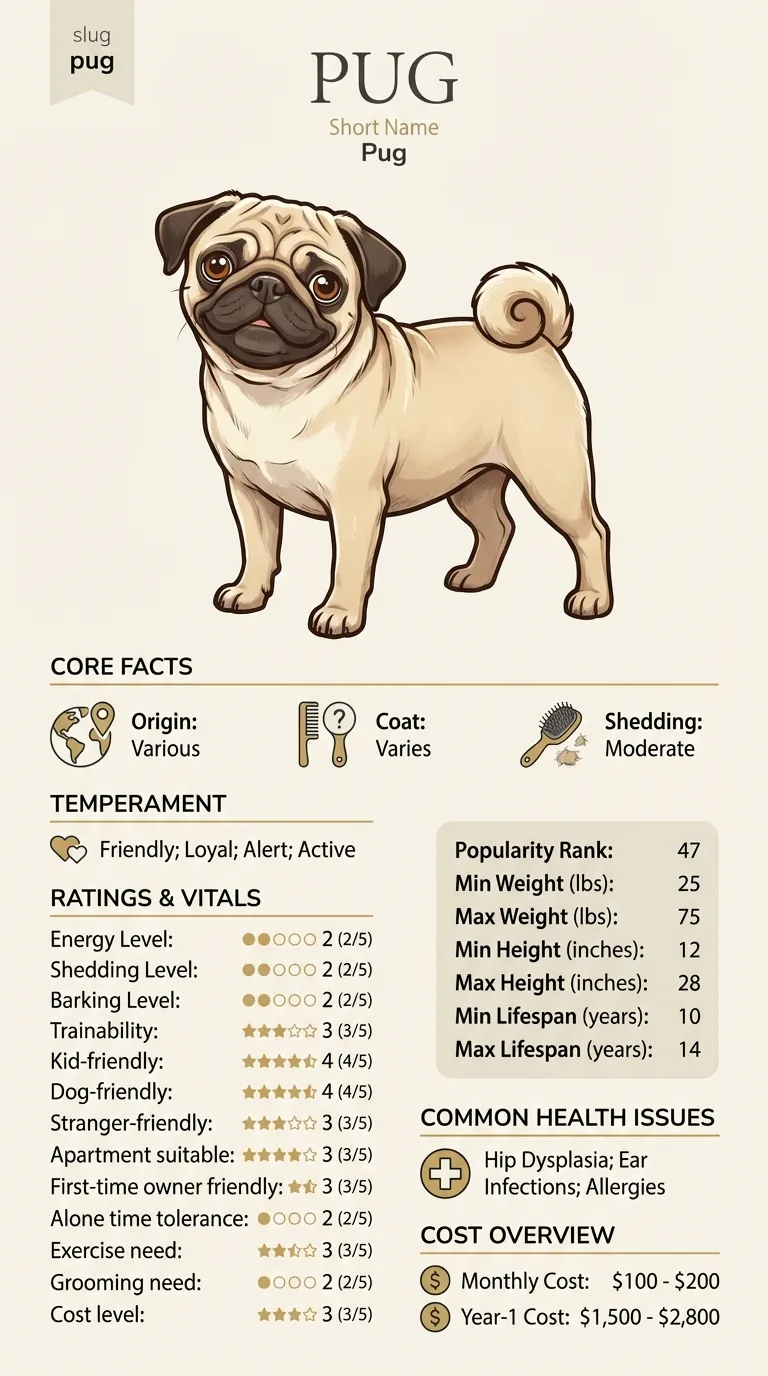
See all PUG health problems, which breeds are prone to eye disorders, or the full PUG breed guide for temperament, exercise needs and ownership costs.
A weekly home check habit takes just a couple of minutes and can be established immediately. This is an ongoing, lifelong habit given this breed's persistent elevated eye vulnerability, not something with a defined end point.
Success means catching changes early through a consistent habit, giving you and your vet the best chance to address whichever specific condition arises before it progresses further.
This breed's shortened muzzle results in noticeably shallow eye sockets, meaning the eyes sit more prominently exposed than in a dog with a longer nose to help shield and cushion them. This single anatomical feature is the common thread connecting an unusually wide range of specific eye conditions: it raises the risk of traumatic injury from everyday bumps, increases exposure to airborne debris and dryness, and creates less structural support for tissues like the third-eyelid gland, contributing to conditions like cherry eye. Understanding this shared root cause is what makes this breed's seemingly long list of individual eye conditions easier to make sense of as a connected pattern rather than a series of unrelated bad luck.
A quick weekly habit catches more early eye trouble than waiting for obvious symptoms: look at both eyes in good light, comparing them for symmetry, checking that the surface looks clear and moist without cloudiness, that there's no unusual redness, discharge, or squinting, and that the eyes look equally sized and positioned. Any asymmetry between the two eyes is often more telling than either eye looked at alone, since it suggests something specific has changed on one side. This isn't a substitute for professional eye exams, but it's what actually catches early changes between those scheduled visits, when most eye emergencies and slow-developing conditions first become noticeable.

If you think your Pug has eye disorders, the plan is three steps: write down what you have seen and when it started, book a veterinary appointment rather than waiting for the next flare, and take video of the behaviour or symptom before you go — the thing you are worried about rarely happens in the consulting room. Screening in the parents covers brachycephalic airway syndrome (boas), pug dog encephalitis, corneal ulcers.
What the vet visit should produce is a diagnosis and a written plan, not just reassurance: what is being ruled out, what the monitoring interval is, and which signs mean you come back sooner. Ask what the treatment costs across a year rather than per visit, because that is the number that decides whether you are managing this condition or reacting to it.
Between appointments, keep a short log — dates, what you saw, what changed. It is the single most useful thing an owner brings to a follow-up, and for eye disorders it is often what separates a clear pattern from a guess.
After reading about how many separate eye conditions Pugs can face, new owner Priya committed to a simple Sunday-morning eye check for her puppy Biscuit, just a minute or two comparing both eyes in the kitchen window light. Over the following two years, the habit caught a mild, early cherry eye prolapse in one eye before it became severely irritated, prompting a same-week vet visit and straightforward surgical correction. Priya said the habit felt unnecessary at first, but having a clear sense of what "normal" looked like for Biscuit's eyes made the one abnormal week immediately obvious.
Key takeaway: A simple, consistent weekly eye check builds a baseline of what's normal for your specific dog, making it far easier to notice and act on the one week something actually changes.
Most trace back to one shared anatomical feature: shallow eye sockets that leave the eyes more exposed and prominent than in a longer-muzzled breed. This single trait raises risk across several distinct conditions rather than being several unrelated coincidences.
A weekly check in good light is a reasonable habit for most owners, comparing both eyes for symmetry and looking for cloudiness, redness, discharge, or squinting, in addition to any professional eye exams at routine vet visits.
Sudden asymmetry between the eyes, visible pain, discharge, or any sign the eye itself looks like it's bulging further than normal are all reasons for same-day veterinary attention rather than a wait-and-see approach.
Many share the same underlying anatomical vulnerability, shallow sockets and prominent eyes, but they're still distinct conditions with different mechanisms, from lens clouding to gland prolapse to pressure buildup, each needing its own specific approach.
Many vets do recommend somewhat more frequent eye checks for brachycephalic breeds given this elevated overall vulnerability, though the exact frequency should be discussed with your own vet based on your dog's specific history.
No, some conditions, like inherited corneal dystrophy or cataracts, aren't preventable through home care. What good home care and regular checks do is catch problems early, when they're generally easier and less costly to manage.
Shallow eye sockets that leave the eyes more prominent and exposed than in longer-muzzled breeds.
Weekly, comparing both eyes for symmetry and looking for cloudiness, redness, or discharge.
Sudden asymmetry between the eyes or visible bulging, which needs same-day veterinary attention.
Many vets recommend somewhat more frequent checks for this breed given its overall elevated vulnerability.
It varies widely by condition; routine checks are affordable, while surgery for some conditions is a significant cost.
A one-page prep sheet for this condition: the signs, the questions to ask, what to get priced. Unlocks here.
You get: Vet visit prep sheet
No spam. One-click unsubscribe. See our privacy policy.
Preview page 1 before you decide.