DogBreedCompass
← Back to breed profile

Managing Poodle (Miniature) Diabetes: What You Need to Know

Poodle (Miniature) diabetes is a serious condition that affects many dogs, especially as they age. It can lead to significant health issues if not managed properly.

Managing Poodle (Miniature) Diabetes: What You Need to Know infographic

Typically, this issue affects dog owners who have older Mini Poodles or those with a family history of diabetes. Busy families and first-time owners may find it particularly challenging to navigate this health concern.

Important reminder

This guide is not medical advice. If your dog shows pain, sudden behavior change, or worsening symptoms, consult a licensed veterinarian.

Some links may be affiliate links. We may earn a commission at no extra cost to you. We only suggest products we believe are helpful for dog owners.

What this problem looks like

Poodle (Miniature) diabetes is a serious condition that can affect your dog's daily life. This endocrine disorder often manifests as excessive thirst, increased urination, and weight loss. If you notice these signs, it's essential to consult your vet promptly.

Common triggers

  • Obesity due to overeating or lack of exercise
  • Genetic predisposition, especially in older dogs
  • Poor diet or sudden dietary changes

Diabetes in Poodle (Miniature) dogs is not the most common health issue but can occur, especially as they age. Regular vet check-ups can help catch this condition early.

Why this happens

Breed factors

Poodle (Miniature) diabetes can be influenced by genetic factors, as some breeds are predisposed to endocrine disorders. This breed may have a higher risk due to its small size and specific health vulnerabilities.

Environment factors

Environmental factors such as poor diet, lack of exercise, and obesity can significantly contribute to diabetes in Poodles. Stressful living conditions and inadequate vet care also play a role.

What you can try

At-home strategies

  • Maintain a balanced diet: Feed your Mini Poodle a high-quality, low-sugar diet. Consult your vet for specific food recommendations.
  • Regular exercise: Aim for at least 30 minutes of daily activity, like walks or playtime, to help maintain a healthy weight.
  • Monitor weight: Regularly check your dog's weight and adjust feeding portions to prevent obesity.
  • Use treat alternatives: Opt for low-calorie treats or fruits and vegetables instead of high-carb snacks.
  • Routine vet check-ups: Schedule regular vet visits to monitor your dog's health and catch any issues early.

When to consider a trainer

If your Poodle shows signs of anxiety or behavioral issues related to diabetes, consider hiring a trainer. A professional can help with behavior modification to reduce stress and improve your dog's well-being.

When to talk to your vet

Talk to your vet if your Mini Poodle shows symptoms like excessive thirst, increased urination, or sudden weight loss. These signs could indicate diabetes or other serious health issues that require immediate attention.

Realistic expectations

Managing Poodle (Miniature) diabetes typically requires consistent monitoring for several weeks to see improvements. With the right care, you can expect to stabilize your dog's blood sugar levels within 1 to 3 months.

Success means your Poodle (Miniature) maintains stable blood sugar levels, shows increased energy, and enjoys a good quality of life. You'll notice less frequent symptoms like excessive thirst or urination.

Mistakes that make this worse

When managing Poodle (Miniature) diabetes, certain behaviors can inadvertently make the situation worse. Here are some common mistakes to avoid, along with safer alternatives.

  • Ignoring vet advice: Skipping or not following through on veterinary recommendations can lead to worsening health. Always stick to the management plan your vet provides.
  • Inconsistent feeding schedule: Feeding your Mini Poodle at irregular times can disrupt their blood sugar levels. Establish a consistent feeding routine to help regulate their insulin.
  • Overindulging in treats: Giving too many treats, especially high-sugar ones, can spike blood sugar. Opt for low-calorie, diabetic-friendly treats in moderation.
  • Neglecting exercise: Lack of physical activity can contribute to weight gain and worsen diabetes. Ensure your Poodle gets regular, moderate exercise suitable for their energy level.
  • Failing to monitor blood sugar: Not checking their blood sugar levels can lead to undetected fluctuations. Regularly monitor their levels as advised by your vet to catch any issues early.
  • Not educating yourself: Underestimating the importance of understanding diabetes can hinder effective management. Take time to learn about Poodle (Miniature) diabetes to make informed decisions.
  • Assuming all foods are safe: Feeding your Poodle table scraps can lead to unbalanced nutrition. Stick to veterinary-approved food that meets their dietary needs.

When Poodle (Miniature) Diabetes is an Emergency

If your Mini Poodle shows any of the following red-flag signs, don’t hesitate to contact your vet: excessive vomiting, lethargy, rapid breathing, or signs of dehydration. These symptoms could indicate severe complications like diabetic ketoacidosis, which requires immediate medical attention. Additionally, if your dog becomes disoriented or has a seizure, call your vet right away.

On the other hand, you can monitor mild cases of diabetes at home. Symptoms like increased thirst, frequent urination, and slight weight loss often indicate diabetes but may not require immediate vet visits. Instead, keep track of your dog's eating habits and energy levels. Adjusting their diet and exercise routine with guidance from your vet can be effective in managing these conditions without rushing to the clinic.

It’s essential to have a plan in place. Schedule regular check-ups and blood tests to help catch any changes early. By staying informed and prepared, you can ensure your Mini Poodle receives the best care possible. If you're ever unsure, it's always safer to contact your vet for advice.

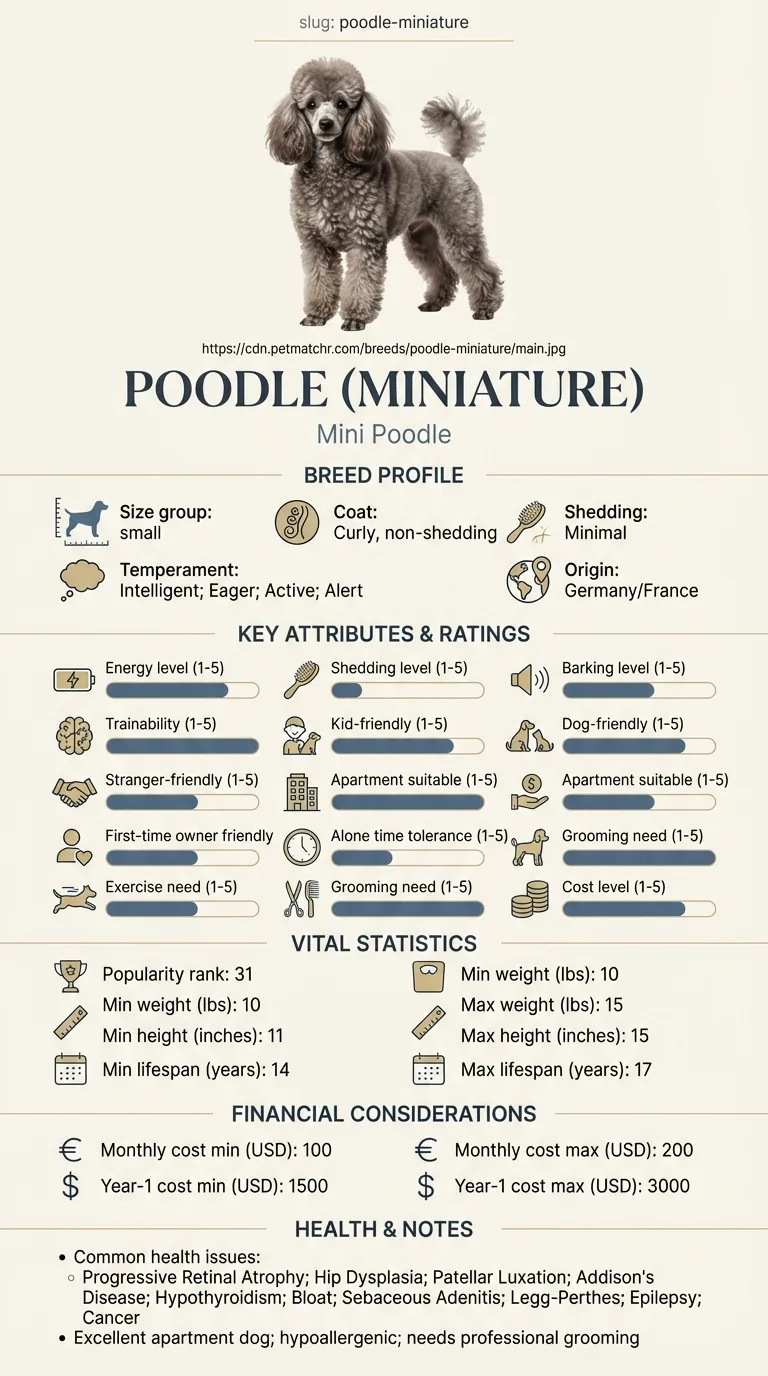
Managing Poodle (Miniature) Diabetes: What You Need to Know - When Poodle (Miniature) Diabetes is an Emergency

Finding Balance: Max's Journey with Diabetes

When Sarah adopted Max, her Mini Poodle, she never expected to face diabetes. After noticing Max's unusual thirst and weight loss, a vet confirmed the diagnosis. Initially overwhelmed, Sarah learned about managing his diet and insulin requirements. With a structured feeding schedule and regular vet check-ups, they established a routine. Over time, Max's energy returned, and he once again enjoyed his daily walks and playtime in the park. Sarah felt relieved and empowered by the positive changes.

Key takeaway: With dedication and the right support, managing Poodle (Miniature) diabetes can lead to a fulfilling and active life for your dog.

Frequently asked questions

Why does my Poodle (Miniature) have diabetes?

Poodle (Miniature) diabetes can be caused by genetic factors, obesity, or a lack of physical activity. Senior dogs are particularly susceptible to this endocrine disorder, as their metabolism changes over time. Regular vet check-ups and a balanced diet can help manage their health.

How can I manage my Poodle (Miniature) diabetes?

Managing Poodle (Miniature) diabetes involves a consistent routine of feeding, exercise, and monitoring their blood sugar levels. Work closely with your vet to establish a proper diet and medication plan that suits your dog's needs. Regularly check for signs of fluctuating blood sugar, like excessive thirst or lethargy.

What are the symptoms of diabetes in Poodle (Miniature)?

Common symptoms of diabetes in Poodle (Miniature) include increased thirst, frequent urination, weight loss despite a good appetite, and lethargy. If you notice these signs, consult your vet for a proper diagnosis and treatment plan. Early intervention can greatly improve their quality of life.

Can diabetes in Poodle (Miniature) be cured?

Currently, diabetes in Poodle (Miniature) cannot be cured, but it can be effectively managed through diet, insulin therapy, and regular monitoring. With the right regimen, many dogs can lead happy, active lives. Always follow your vet's recommendations for the best results.

How to stop Poodle (Miniature) diabetes from getting worse?

To prevent Poodle (Miniature) diabetes from worsening, maintain a healthy weight, provide regular exercise, and stick to a consistent feeding schedule. Monitor their blood sugar levels and consult your vet regularly for assessments. A proactive approach is key to managing their health.

What are the early signs of diabetes in a Poodle (Miniature)?

Early signs of diabetes in a Poodle (Miniature) can include increased thirst, frequent urination, and weight loss despite a good appetite. If you notice these symptoms, it's essential to consult your vet for a proper diagnosis.

Can diabetes be managed in older Poodles (Miniature)?

Yes, diabetes can be managed in older Poodles (Miniature) with proper treatment and care. This usually involves insulin therapy, a controlled diet, and regular exercise to help maintain stable blood sugar levels.

Is diabetes hereditary in Poodle (Miniature) breeds?

While the exact cause of diabetes in Poodles (Miniature) isn't fully understood, genetics can play a role. Some Poodles may be predisposed to certain health issues, so it's crucial to choose a reputable breeder and monitor your dog's health closely.

How can I help prevent diabetes in my Poodle (Miniature)?

To help prevent diabetes in your Poodle (Miniature), focus on maintaining a healthy weight and providing a balanced diet. Regular exercise and routine veterinary check-ups can also help catch any potential health issues early.

What should I do if my Poodle (Miniature) has diabetes?

If your Poodle (Miniature) has diabetes, work closely with your veterinarian to create a management plan. This may include insulin injections, dietary changes, and monitoring your dog's blood sugar levels to keep them healthy and happy.

Quick answers

View more answers
Behavior

What are some quick tips for managing Poodle (Miniature) diabetes?

Feed your Poodle (Miniature) a balanced diet with controlled portions. Regular exercise is crucial, as it helps maintain a healthy weight. Schedule consistent vet visits to monitor their condition.

Costs

How much does it cost to manage Poodle (Miniature) diabetes?

Managing Poodle (Miniature) diabetes can cost between $100 to $200 monthly, covering food, medication, and vet visits. Be prepared for potential additional costs for insulin and monitoring supplies.

Health

What should I do if my Poodle (Miniature) has low blood sugar?

If your Poodle (Miniature) exhibits signs of low blood sugar, such as weakness or disorientation, offer them a small amount of honey or sugar water. Contact your vet immediately for further instructions.

Related DogBreedCompass guides

  • Poodle (Miniature) health issues guideLearn about common health issues that affect Mini Poodles, including diabetes.
  • How to stop Poodle (Miniature) diabetesDiscover how to manage diabetes and improve your Mini Poodle's quality of life.
  • Poodle (Miniature) behavior problemsExplore behavioral problems that Mini Poodles may face and how to address them.
  • Poodle (Miniature) cost breakdownUnderstand the financial responsibilities of owning a Mini Poodle, including potential health costs.
  • Poodle (Miniature) diabetes trainingGet tips on training your Mini Poodle, especially if they have diabetes or other health issues.

Related guides