Health
Are all French Bulldog heart problems the same condition?
No, valve disease, muscle disease, arrhythmias, and congenital narrowing are all distinct conditions with different implications.

Quick answer
Are all French Bulldog heart problems the same condition?
No, valve disease, muscle disease, arrhythmias, and congenital narrowing are all distinct conditions with different implications.
A single stethoscope exam can pick up several different kinds of cardiac clues, and knowing what each one might mean helps an owner ask sharper follow-up questions instead of just hearing 'there's something with the heart.'
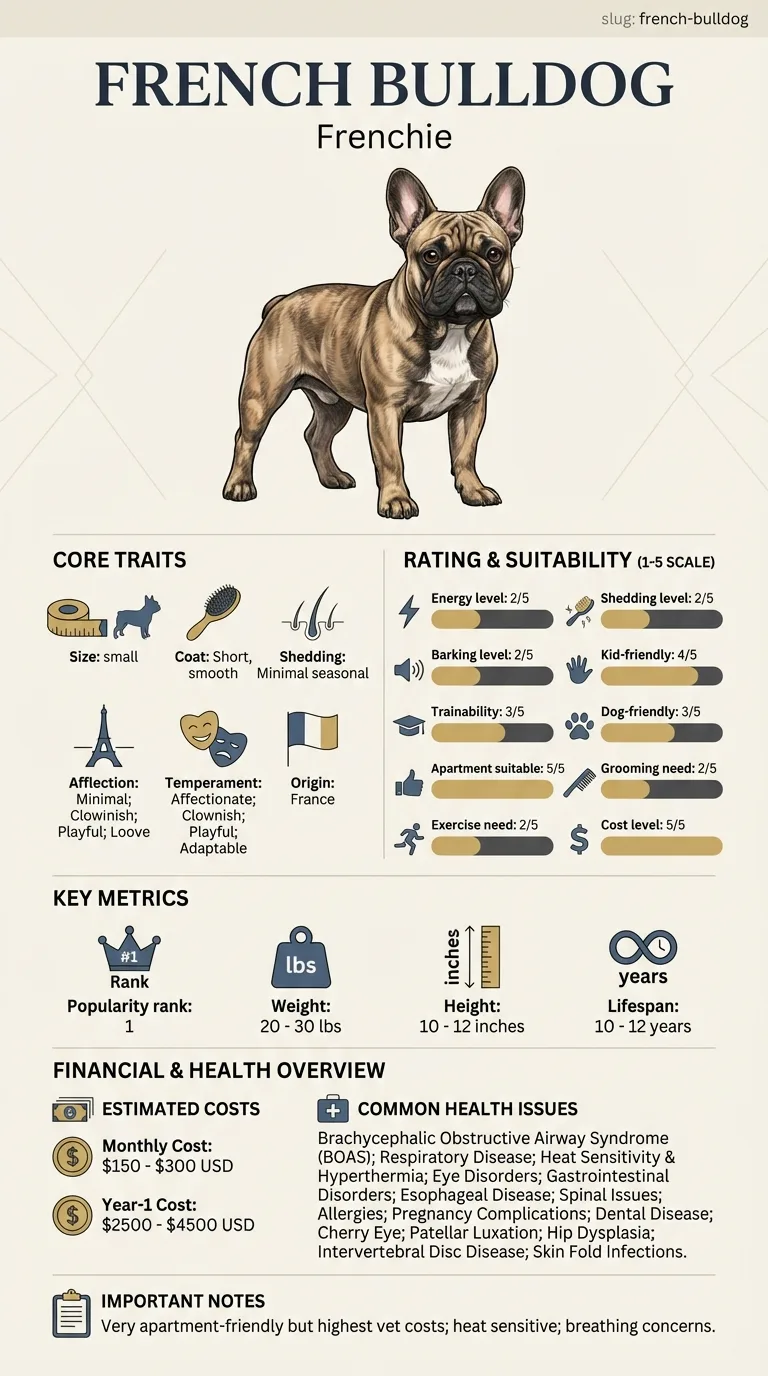
New owners researching the breed's health risks often find the sheer number of separate heart-related terms overwhelming, without a clear sense of how a murmur, an arrhythmia, and a muscle disease actually differ from one another.
This guide is not medical advice. If your dog shows pain, sudden behavior change, or worsening symptoms, consult a licensed veterinarian.
Some links may be affiliate links. We may earn a commission at no extra cost to you. We only suggest products we believe are helpful for dog owners.
French Bulldogs face several distinct categories of cardiac risk: valve disease causing murmurs, muscle disease like dilated cardiomyopathy, electrical rhythm disorders, and congenital structural narrowing present from birth. Rather than a single 'heart problem,' owners are better served understanding this as a landscape of separate conditions, each requiring its own diagnostic approach and management plan.
Cardiac findings of some kind are common enough in French Bulldogs that many vets treating the breed maintain a routine of regular cardiac auscultation, with echocardiogram referral as needed based on findings, age, and family history.
Different cardiac conditions in this breed trace to different root causes: some, like certain congenital narrowings, are structural abnormalities present from birth; others, like DCM, are believed to have a genetic muscle-specific basis; and valve disease often reflects age-related degeneration common across many breeds, not unique to French Bulldogs specifically.
For most of these conditions, environmental factors play a secondary role to genetics, though general cardiovascular health — maintained through appropriate weight and activity levels suited to the individual dog's condition — supports overall heart function regardless of the specific underlying diagnosis.
Bring up any newly detected murmur, irregular rhythm, or change in exercise tolerance at your next visit, and seek same-day care for fainting, collapse, or labored breathing at rest, which can indicate a more serious underlying cardiac issue.
Because 'heart problem' covers so much ground, a few common assumptions blur distinctions that actually matter.
See all French Bulldog health problems, which breeds are prone to heart conditions, or the full French Bulldog breed guide for temperament, exercise needs and ownership costs.
Diagnosis and classification of a specific cardiac condition typically takes one to a few vet visits, potentially including an echocardiogram and ECG. Ongoing management, once a specific condition is identified, is usually a long-term, periodically reassessed plan.
Success means having a clear, specific diagnosis for any cardiac finding rather than a vague sense that 'something's going on with the heart,' since that specificity is what actually guides an effective management plan.
Structural valve disease, most notably myxomatous mitral valve degeneration, causes the classic murmur many owners have heard of, where a valve leaflet thickens and no longer closes fully, allowing blood to leak backward with an audible whooshing sound.
Muscle disease, primarily dilated cardiomyopathy, is a separate and generally more serious category where the heart's pumping chambers themselves weaken and enlarge, sometimes without ever producing an obvious murmur at all.
Electrical problems, such as ventricular arrhythmias, involve the heart's rhythm rather than its structure, and can occur alongside either of the above or independently. Congenital narrowing, like subvalvular aortic stenosis, is present from birth and involves a physical obstruction to blood flow rather than a valve or muscle problem. Each of these needs its own specific workup, and a general mention of 'a heart issue' should always prompt the follow-up question of which one.

If you think your Frenchie has heart conditions, the plan is three steps: write down what you have seen and when it started, book a veterinary appointment rather than waiting for the next flare, and take video of the behaviour or symptom before you go — the thing you are worried about rarely happens in the consulting room. Screening in the parents covers brachycephalic obstructive airway syndrome (boas), respiratory disease, heat sensitivity & hyperthermia.
What the vet visit should produce is a diagnosis and a written plan, not just reassurance: what is being ruled out, what the monitoring interval is, and which signs mean you come back sooner. Ask what the treatment costs across a year rather than per visit, because that is the number that decides whether you are managing this condition or reacting to it.
Between appointments, keep a short log — dates, what you saw, what changed. It is the single most useful thing an owner brings to a follow-up, and for heart conditions it is often what separates a clear pattern from a guess.
Willa's family had been told for two years that she had 'a bit of a heart murmur' without much further explanation, and they'd mentally filed it away as a minor, stable quirk. When Willa needed a dental procedure requiring anesthesia, her vet recommended a full cardiac workup first given the breed's range of possible conditions. An echocardiogram revealed the murmur was from mild, stable valve disease — good news, but also a much clearer picture than 'a bit of a heart murmur' had ever given them. The anesthesia team proceeded with extra monitoring in place, and the dental procedure went smoothly.
Key takeaway: A vague label like 'heart murmur' is a starting point, not an answer — asking for the specific diagnosis behind it changes how confidently you can plan for anything from anesthesia to long-term care.
Valve disease (causing murmurs), muscle disease (dilated cardiomyopathy), electrical rhythm problems (arrhythmias), and congenital structural issues like subvalvular aortic stenosis are the main categories documented in the breed.
Because anesthesia already carries elevated risk in brachycephalic breeds due to airway anatomy, ruling out undiagnosed heart disease beforehand helps the anesthesia team plan appropriately and reduces the chance of a cardiac complication during a routine procedure.
Not necessarily — some murmurs are mild and stable for years, while others indicate more significant valve disease. An echocardiogram, not just the murmur itself, determines the actual severity and next steps.
Cardiac auscultation is a standard part of routine annual vet visits; more frequent or advanced screening (like echocardiogram) depends on age, family history, and whether anything unusual has been noted.
Yes, it's possible to have, for example, both valve disease and an arrhythmia, which is part of why a full cardiac workup rather than treating one finding in isolation is important.
No, many cardiac conditions in dogs, when caught and managed appropriately, allow for good quality of life for years. Prognosis varies significantly by specific condition and how advanced it is at diagnosis.
Many vets recommend it, particularly before anesthesia or breeding, or simply as part of proactive senior wellness care given how many distinct cardiac conditions are documented in the breed.
No, valve disease, muscle disease, arrhythmias, and congenital narrowing are all distinct conditions with different implications.
Because airway-related anesthesia risk is already elevated, and undiagnosed heart disease adds an additional risk factor worth ruling out first.
Not necessarily — murmur intensity doesn't reliably predict severity on its own.
An echocardiogram is the key tool for distinguishing between the different possible conditions behind a heart finding.
Yes, many conditions are manageable long-term with appropriate monitoring and medication.
A one-page prep sheet for this condition: the signs, the questions to ask, what to get priced. Unlocks here.
You get: Vet visit prep sheet
No spam. One-click unsubscribe. See our privacy policy.
Preview page 1 before you decide.