DogBreedCompass
← Back to breed profile

Maltese Heart Conditions: What You Need to Know

Maltese heart conditions can be serious, impacting your dog's health and happiness.

Maltese Heart Conditions: What You Need to Know infographic

Owners of Maltese dogs, especially first-time pet parents, may find heart conditions particularly concerning. They often worry about symptoms and how to provide the best care for their furry friends.

Important reminder

This guide is not medical advice. If your dog shows pain, sudden behavior change, or worsening symptoms, consult a licensed veterinarian.

Some links may be affiliate links. We may earn a commission at no extra cost to you. We only suggest products we believe are helpful for dog owners.

What this problem looks like

Maltese heart conditions can manifest in various ways, affecting their daily lives. You might notice your Maltese coughing, being less active, or having difficulty breathing. These symptoms can be alarming and often indicate underlying heart issues that need attention.

Common triggers

  • Genetic predisposition to heart conditions
  • Obesity due to inactivity or poor diet
  • Age-related changes in heart function
  • Stress or anxiety that can exacerbate symptoms

Heart conditions are relatively common in Maltese dogs, especially as they age. It's crucial to stay vigilant and consult with a vet if you notice any unusual behavior.

Why this happens

Breed factors

Maltese are small dogs that can inherit various heart conditions, such as heart murmurs and congestive heart failure. Their compact size can lead to structural heart issues, making them more susceptible than larger breeds.

Environment factors

Stressful environments can exacerbate heart problems in Maltese. Factors like separation anxiety, lack of exercise, or obesity can contribute to their heart health deterioration.

What you can try

At-home strategies

  • Maintain a balanced diet: Feed your Maltese high-quality dog food that supports heart health. Look for options that are low in sodium and contain omega-3 fatty acids.
  • Regular exercise: Engage your Maltese in daily walks and light playtime to keep them active without overexerting them.
  • Stress reduction: Create a calm home environment. Use soothing music or provide a cozy space where your Maltese can retreat when feeling anxious.
  • Monitor their weight: Keep track of your dog's weight to prevent obesity, which can strain their heart.

When to consider a trainer

If your Maltese shows signs of anxiety or stress that lead to heart issues, consider consulting a dog trainer. They can provide strategies to manage anxiety and improve your dog's overall well-being.

When to talk to your vet

If you notice symptoms like coughing, difficulty breathing, or fatigue, it's essential to consult a vet. They can diagnose any underlying heart conditions and suggest appropriate treatments.

Realistic expectations

Managing Maltese heart conditions typically takes several weeks to months. Regular vet check-ups and monitoring are crucial during this time.

Success means your Maltese shows improved energy levels, reduced symptoms, and responds well to treatment or lifestyle adjustments.

Mistakes that make this worse

Addressing Maltese heart conditions requires careful attention. Unfortunately, some common mistakes can exacerbate the situation or delay improvement. Here are a few to avoid.

  • Ignoring signs of distress: If your Maltese shows signs like coughing or lethargy, don’t brush it off. Seek veterinary advice immediately to prevent worsening heart issues.
  • Overfeeding: Excess weight can strain your dog's heart. Instead, provide proper portion sizes and focus on high-quality dog food to maintain a healthy weight.
  • Skipping regular vet visits: Regular check-ups are vital for early detection of heart conditions. Make sure to schedule annual visits and follow your vet's recommendations.
  • Neglecting exercise: While Maltese dogs don’t need excessive exercise, keeping them active is essential. Opt for short, daily walks and playtime to support their heart health.
  • Self-diagnosing: Avoid trying to treat heart issues on your own. Always consult a vet for appropriate treatment options rather than relying on online advice.
  • Stressful environments: Maltese can be sensitive to stress. Create a calm space for them, and avoid loud noises or chaotic situations that might elevate anxiety.
  • Lack of mental stimulation: Boredom can lead to anxiety, which may worsen heart conditions. Engage your Maltese with puzzle toys or training sessions to keep their mind active.

When Maltese Heart Conditions Are an Emergency

Recognizing when your Maltese heart conditions may be an emergency is crucial for their health. If you notice any severe symptoms, it's time to call your vet immediately. Red flags include sudden coughing, difficulty breathing, fainting, or severe lethargy. These signs could indicate serious issues like congestive heart failure or other critical cardiac problems.

On the other hand, if your Maltese shows mild symptoms, you can monitor them at home. Symptoms such as slight coughing, occasional fatigue, or lack of interest in play can be concerning but often don’t require immediate vet visits. Instead, create a plan to observe their behavior and note any changes in their condition over a few days. Make sure to consult your vet if these mild symptoms persist or worsen, as they could signal the need for further evaluation.

It's essential to stay vigilant about your Maltese's health. Keeping track of their daily behavior can help you catch problems early. If you’re unsure, it's always better to err on the side of caution and reach out to your vet for advice.

Maltese Heart Conditions: What You Need to Know - When Maltese Heart Conditions Are an Emergency

Maggie's Journey with Heart Conditions

Maggie, a cheerful Maltese, was only four years old when her owner, Sarah, noticed her getting tired during walks. After a vet visit, Sarah learned Maggie had a heart murmur. With guidance, Sarah adjusted Maggie's diet, added light exercise, and scheduled regular vet check-ups. Over time, Maggie regained her playful spirit, and Sarah felt relieved knowing she was doing everything to help her furry friend.

Key takeaway: Early detection and proactive management of Maltese heart conditions can lead to a happier, healthier life for your dog.

Frequently asked questions

Why does my Maltese have heart conditions?

Maltese heart conditions can be caused by genetic factors, age, or other health issues. Regular vet check-ups can help catch these problems early. If you notice symptoms like coughing or lethargy, consult your vet immediately.

How can I prevent heart conditions in my Maltese?

To help prevent heart conditions in your Maltese, maintain a healthy diet and weight. Regular exercise is important, but be cautious not to overdo it, as small breeds can be sensitive. Routine veterinary visits will also aid in early detection and management.

What are the signs of heart conditions in Maltese dogs?

Signs of heart conditions in Maltese dogs include excessive panting, coughing, fatigue, or difficulty breathing. If your dog shows any of these symptoms, it's crucial to see a vet. Early intervention can lead to better outcomes.

What treatments are available for Maltese heart conditions?

Treatment for Maltese heart conditions may include medications, dietary changes, and in some cases, surgery. Your vet will help determine the best course of action based on the specific condition. Regular follow-ups are essential for managing the health of your Maltese.

Can training help with Maltese heart conditions?

While training itself won't cure heart conditions, it can help manage anxiety and stress that may worsen health problems. Positive reinforcement training can create a calm environment for your Maltese. Always consult with your vet before starting a new training routine.

What are the signs of heart conditions in Maltese dogs?

Signs of heart conditions in Maltese dogs may include coughing, fatigue, difficulty breathing, and a decreased tolerance for exercise. If you notice these symptoms, it's important to consult your vet for a thorough evaluation.

Can Maltese heart conditions worsen with age?

Yes, heart conditions can worsen as your Maltese ages. Regular check-ups with your vet are essential to monitor their heart health and adjust treatment plans as needed.

Are certain Maltese more prone to heart conditions?

While any Maltese can develop heart conditions, those with a family history of heart issues may be at higher risk. Responsible breeding practices can help reduce the likelihood of inherited heart problems.

How can I help my Maltese manage heart conditions at home?

To help your Maltese manage heart conditions, ensure they have a balanced diet, maintain a healthy weight, and provide gentle exercise. Always follow your vet's recommendations for medications and lifestyle adjustments.

What should I do if my Maltese has sudden heart issues?

If your Maltese experiences sudden heart issues, such as collapse or severe difficulty breathing, seek emergency veterinary care immediately. Timely intervention can be critical for their health.

Quick answers

View more answers
Health

What are quick tips for managing Maltese heart conditions?

To manage Maltese heart conditions, ensure regular vet check-ups, maintain a balanced diet, and provide moderate exercise. Monitor your dog's weight and be attentive to any behavioral changes.

Costs

How much does it cost to care for a Maltese with heart problems?

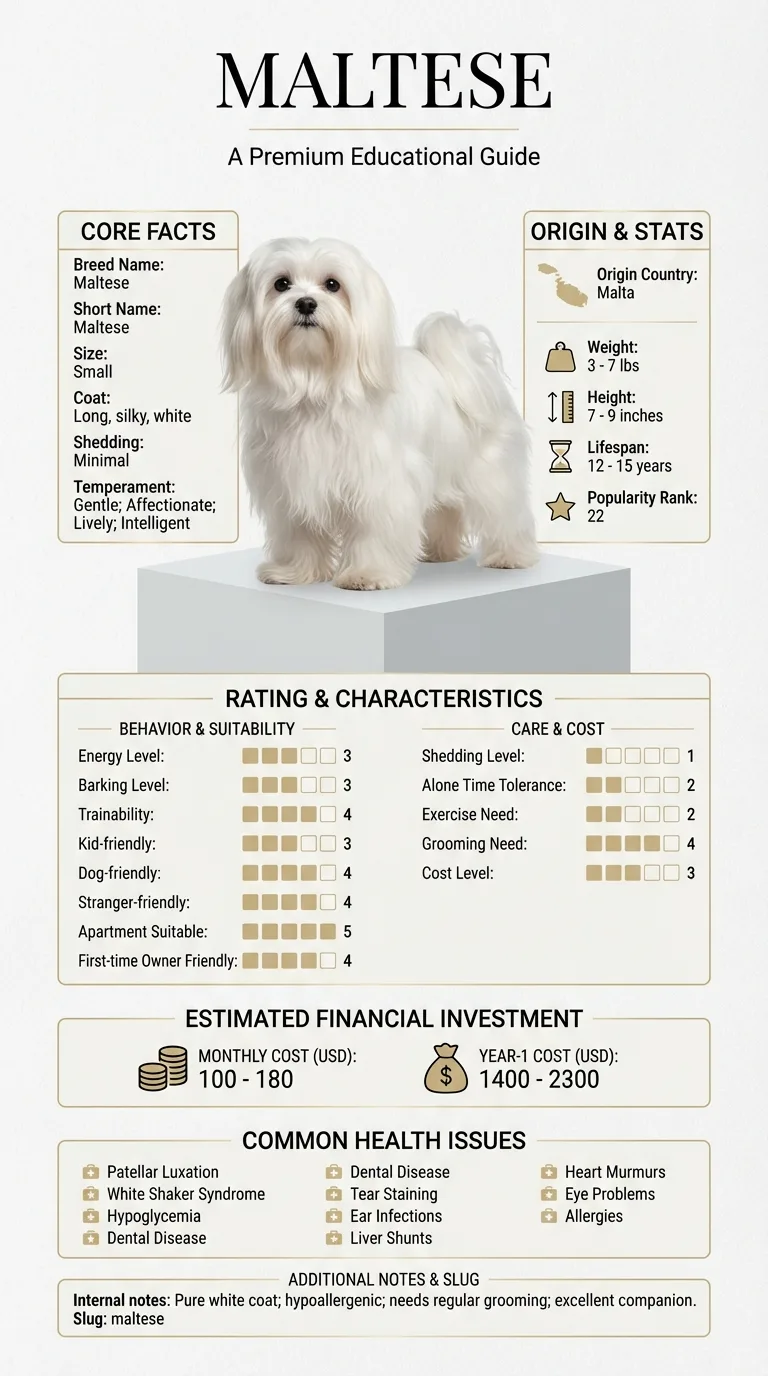
Caring for a Maltese with heart problems can range from $100 to $180 monthly, depending on medication and special dietary needs. Annual costs could be between $1,400 and $2,300.

Living

What living adjustments can help a Maltese with heart conditions?

Create a calm and comfortable living space to reduce stress for your Maltese. Avoid high stairs and provide soft bedding to support their health.

Related DogBreedCompass guides

  • Maltese behavior problemsUnderstanding the common health issues faced by Maltese dogs can help you prepare for potential heart conditions.
  • Maltese separation anxiety guideThis guide offers insights into how separation anxiety can affect Maltese dogs, which may relate to overall heart health.
  • Maltese cost breakdownLearn about the specific costs involved in caring for a Maltese, including potential health issues like heart conditions.
  • Common heart conditions in small breedsExplore various heart conditions in small dog breeds, including the Maltese, to understand risks and treatments.
  • Maltese heart conditions trainingFind training tips that can help manage stress and anxiety in your Maltese, which may positively influence heart health.

Related guides