Health
What usually causes exercise collapse in French Bulldogs?
Airway limitation and heat intolerance, rather than the specific genetic mutation seen in some other breeds.

Quick answer
What usually causes exercise collapse in French Bulldogs?
Airway limitation and heat intolerance, rather than the specific genetic mutation seen in some other breeds.
A dog that's running and playing normally one moment, then suddenly wobbles, weakens in the back end, or goes down entirely, is showing a pattern that needs to be taken seriously rather than explained away as clumsiness.
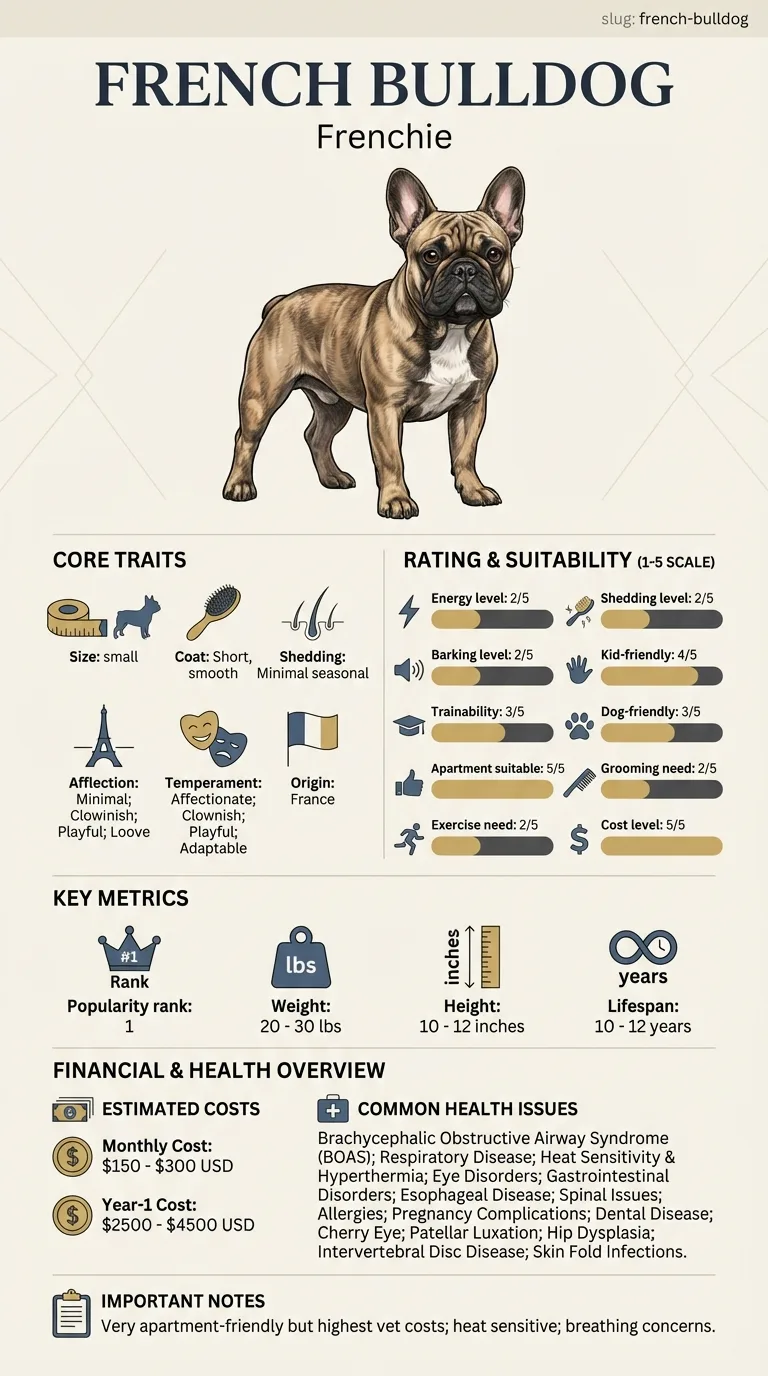
This is most frightening for owners of active, playful Frenchies who love a good game of fetch or a run at the dog park, since the very enthusiasm that makes those moments fun is exactly what can push the airway past its limit.
This guide is not medical advice. If your dog shows pain, sudden behavior change, or worsening symptoms, consult a licensed veterinarian.
Some links may be affiliate links. We may earn a commission at no extra cost to you. We only suggest products we believe are helpful for dog owners.
Check this first
Any collapse accompanied by blue or pale gums, prolonged inability to stand, seizure-like activity, or failure to recover within a couple of minutes needs immediate emergency veterinary care.
A brief episode where the dog recovers quickly on its own still warrants a prompt (same-day or next-day) vet visit for a full workup, since repeat episodes can be more dangerous and the underlying cause (airway, cardiac, or otherwise) needs to be identified.
Stop activity immediately at the very first sign of wobbling, weakness, or excessive distress, rather than waiting to see if it resolves on its own — in a brachycephalic breed, early intervention before a full collapse is far safer than waiting for one to happen.
If any of these apply, call your vet or an emergency clinic now. The rest of this page is for the cases that are not an emergency.
Exercise-induced collapse in French Bulldogs refers to episodes of sudden weakness or full collapse occurring during or shortly after physical exertion. Unlike the specific inherited muscle gene mutation associated with the same term in some other breeds, collapse in French Bulldogs is more commonly linked to the breed's limited airway capacity struggling to meet oxygen demand during intense activity, particularly compounded by heat.
Collapse episodes are documented in French Bulldogs as part of the breed's broader exercise intolerance and airway limitation profile, though exact prevalence is harder to pin down than more routinely screened conditions, since episodes are often situational and tied to specific triggers rather than constant.
The breed's narrowed airway structures limit how efficiently oxygen can be brought in during periods of high demand, and when exercise intensity exceeds what that limited airway can supply, the body's response can include the sudden weakness or collapse owners describe, distinct from the specific genetic muscle mechanism responsible for classic EIC in some other breeds.
Heat and humidity dramatically compound the underlying airway limitation, since the same reduced panting efficiency responsible for the breed's heat sensitivity also reduces the margin available during intense physical exertion, making hot-weather exercise a particularly high-risk combination for triggering an episode.
Seek emergency care immediately for any collapse with blue or pale gums, failure to recover within a couple of minutes, or seizure-like activity, and schedule a prompt full workup after any collapse episode, even a brief one that seemed to resolve on its own.
Because collapse is frightening and often brief, a few common reactions delay the workup that would actually explain and help prevent it.
See all French Bulldog health problems, which breeds are prone to exercise induced collapse eic, or the full French Bulldog breed guide for temperament, exercise needs and ownership costs.
A full diagnostic workup after a first episode typically takes one to a few vet visits. Once the underlying cause is identified, activity adjustments and, if needed, airway surgery are generally ongoing, ideally preventing future episodes rather than curing a one-time event.
Success means identifying the specific trigger pattern for your dog and adjusting exercise, weather timing, and any underlying airway issues so that collapse episodes don't recur — most dogs can still enjoy meaningful activity within those adjusted limits.
Chief, a three-year-old Frenchie who loved fetch more than almost anything, suddenly wobbled and went down mid-game on a warm afternoon, recovering within about a minute once his owner stopped play and got him to shade. Shaken, she brought him in the next day for a full workup. An airway assessment showed moderate stenotic nares and a somewhat long soft palate, and cardiac testing came back clear. Given the findings, Chief's vet recommended surgical correction of his airway alongside a permanent shift to shorter, cooler-weather fetch sessions. He hasn't had another episode since.
Key takeaway: A frightening collapse gave Chief's family the push to get a full workup rather than just avoiding fetch altogether — the answer turned out to be a fixable airway limitation, not a reason to stop exercise entirely.
Most commonly, it's linked to the breed's limited airway capacity being unable to keep up with oxygen demand during intense exercise, especially combined with heat, rather than the specific inherited muscle gene mutation associated with EIC in some other breeds like Labradors.
Not typically — the Labrador form involves a specific muscle-related gene mutation, while collapse in French Bulldogs is more commonly attributed to airway limitation and heat intolerance, though a full veterinary workup is needed to identify the actual cause in any individual dog.
Signs range from sudden weakness, particularly in the back end, wobbling, and reluctance to continue moving, up to full collapse, typically occurring during or shortly after intense exercise or in hot conditions.
A full workup typically includes an airway assessment, cardiac evaluation (to rule out arrhythmias or structural heart disease), and sometimes bloodwork, since several different underlying causes can produce a similar collapse presentation.
Avoiding intense exercise in heat, keeping play sessions shorter and lower-intensity, maintaining a lean weight, and addressing any identified airway obstruction surgically if significant can all reduce the risk of a repeat episode.
A single episode itself may resolve without lasting effect, but it signals an underlying limitation that, left unaddressed, raises the risk of a more severe or dangerous repeat episode.
Not necessarily, but activity should be adjusted based on a vet's evaluation and recommendations — often meaning shorter, lower-intensity sessions in cool conditions rather than eliminating exercise altogether.
Airway limitation and heat intolerance, rather than the specific genetic mutation seen in some other breeds.
Sudden weakness or wobbling, especially in the back end, sometimes progressing to full collapse during or after exertion.
It warrants an urgent vet visit, and is a true emergency if the dog doesn't recover within a couple of minutes or shows blue gums.
Yes, largely by avoiding intense exercise in heat and keeping activity sessions shorter and lower intensity.
Yes, to rule out airway, cardiac, and other causes before assuming it won't happen again.
A one-page prep sheet for this condition: the signs, the questions to ask, what to get priced. Unlocks here.
You get: Vet visit prep sheet
No spam. One-click unsubscribe. See our privacy policy.
Preview page 1 before you decide.