Health
What is chronic active hepatitis?
Ongoing, active liver inflammation that persists over time and can progressively damage liver tissue.

Quick answer
What is chronic active hepatitis?
Ongoing, active liver inflammation that persists over time and can progressively damage liver tissue.
Vague signs like reduced appetite, occasional vomiting, and general low energy are easy to write off individually, but together over weeks, they're the kind of pattern this condition often presents with.
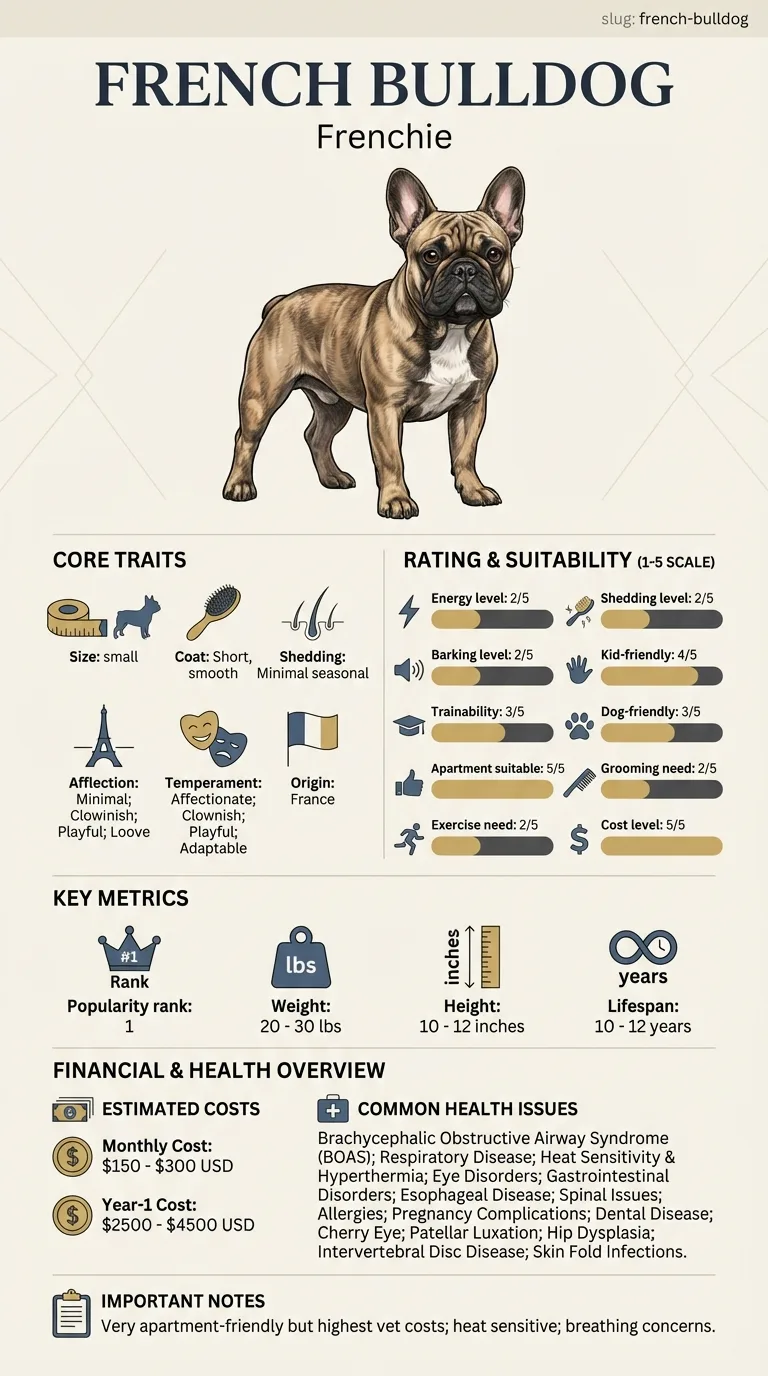
Owners of middle-aged and senior Frenchies are most likely to encounter this, often after a routine bloodwork panel flags elevated liver enzyme values well before any dramatic symptom prompts a vet visit on its own.
This guide is not medical advice. If your dog shows pain, sudden behavior change, or worsening symptoms, consult a licensed veterinarian.
Some links may be affiliate links. We may earn a commission at no extra cost to you. We only suggest products we believe are helpful for dog owners.
We research and check what we publish, but we do not warrant that any figure, date, price, or statement is accurate, complete, or current, and we accept no liability for any loss, cost, injury, or other harm arising from the use of this site. Use it as one reference among several. You remain responsible for your own decisions and for your dog's care - confirm anything that matters with a licensed veterinarian or another qualified professional before you act on it. Full disclaimer.
Chronic active hepatitis is an ongoing, active inflammatory process within the liver that can progressively damage liver tissue if not identified and managed. It's often first detected through elevated liver enzyme values on routine bloodwork, sometimes well before any symptom appears, and confirming the specific diagnosis typically requires additional testing, often including a liver biopsy, given the liver's substantial capacity to compensate for early damage.
Chronic active hepatitis is a recognized, if not overwhelmingly common, condition in middle-aged and senior dogs across breeds, and it's specifically documented as part of the broader liver and organ health conditions relevant to French Bulldogs, often carrying an annual management cost in the range of $500 to $2,500.
The specific breed-linked mechanism behind chronic active hepatitis in French Bulldogs isn't as clearly mapped as some of the breed's more extensively studied structural conditions, though it's documented as part of the breed's broader organ health profile, and some cases may share an immune-mediated pattern with other autoimmune conditions also seen in the breed.
Diet composition, particularly copper content in cases where copper accumulation is a factor, along with exposure to certain toxins or medications over time, can influence how the underlying inflammatory process develops and progresses, making some aspects of management directly tied to dietary and environmental choices.
Follow up on any elevated liver enzyme finding from routine bloodwork rather than assuming it's incidental, and bring in a dog showing reduced appetite, low energy, or intermittent vomiting for evaluation, since these vague signs together can indicate ongoing liver inflammation.
Because early signs are subtle and bloodwork changes can be easy to downplay, a few common assumptions delay a diagnosis that benefits from earlier intervention.
See all French Bulldog health problems, which breeds are prone to chronic active hepatitis, or the full French Bulldog breed guide for temperament, exercise needs and ownership costs.
Diagnosis, including biopsy if recommended, typically takes a few weeks from the initial bloodwork finding. Management, once started, is generally a long-term or lifelong commitment involving regular monitoring bloodwork every few months.
Success means stable, well-controlled liver enzyme values and good quality of life maintained through consistent medication, diet, and monitoring — not a cure, but effective long-term control of an ongoing process.
Chronic active hepatitis involves ongoing inflammation within the liver, sometimes driven by the body's own immune system mistakenly attacking liver tissue, sometimes linked to copper accumulation or an underlying infectious or toxic trigger that isn't always identified. Because the liver has substantial regenerative capacity, it can compensate for a meaningful amount of ongoing damage before symptoms become obvious.
Routine bloodwork showing elevated liver enzyme values is often the first clue, sometimes appearing well before any symptom the owner would notice at home. Confirming the specific diagnosis, and ruling out other causes of elevated liver values, typically requires additional testing and often a liver biopsy.
Because this is an ongoing, active inflammatory process rather than a one-time injury, treatment is usually a long-term commitment — often involving anti-inflammatory or immune-modulating medication, a specific diet, and regular bloodwork monitoring to track how well the inflammation is being controlled over time.

If you think your Frenchie has chronic active hepatitis, the plan is three steps: write down what you have seen and when it started, book a veterinary appointment rather than waiting for the next flare, and take video of the behaviour or symptom before you go — the thing you are worried about rarely happens in the consulting room. Screening in the parents covers brachycephalic obstructive airway syndrome (boas), respiratory disease, heat sensitivity & hyperthermia.
What the vet visit should produce is a diagnosis and a written plan, not just reassurance: what is being ruled out, what the monitoring interval is, and which signs mean you come back sooner. Ask what the treatment costs across a year rather than per visit, because that is the number that decides whether you are managing this condition or reacting to it.
Between appointments, keep a short log — dates, what you saw, what changed. It is the single most useful thing an owner brings to a follow-up, and for chronic active hepatitis it is often what separates a clear pattern from a guess.
Ingrid, an eight-year-old Frenchie, seemed completely normal at home when her annual senior bloodwork came back with notably elevated liver enzyme values. Her vet recommended additional testing, and a subsequent liver biopsy confirmed chronic active hepatitis, likely immune-mediated given the biopsy findings. Ingrid started on an anti-inflammatory medication and a liver-support diet, with bloodwork rechecks every three months. A year into treatment, her liver values have stabilized at a much-improved level, and she's shown no outward symptoms throughout the process.
Key takeaway: Ingrid's condition was caught entirely because her family didn't skip a routine senior bloodwork panel — by the time symptoms might have appeared on their own, meaningfully more liver damage could have already occurred.
Ongoing, active inflammation of the liver that persists over time and can progressively damage liver tissue if not controlled, distinct from a single acute liver injury from something like toxin exposure.
Causes can include immune-mediated processes where the body's immune system attacks liver tissue, copper accumulation in some cases, or an underlying infectious or toxic trigger, though a specific cause isn't always identified.
Bloodwork showing elevated liver enzymes is often the first clue, with additional testing and frequently a liver biopsy needed to confirm the specific diagnosis and rule out other causes of liver enzyme elevation.
Reduced appetite, occasional vomiting, low energy, and sometimes increased thirst and urination are common, though early-stage disease can be entirely without obvious symptoms, detected only through bloodwork.
Treatment often includes anti-inflammatory or immune-modulating medication, a specific liver-support diet (sometimes copper-restricted), and regular bloodwork monitoring, typically as a long-term or lifelong management plan.
Diagnostic workup including biopsy can run $1,000 to $2,500, with ongoing annual management (medication, diet, monitoring bloodwork) commonly in the range of $500 to $2,500 per year depending on the specific plan.
It's not typically curable, but with consistent treatment and monitoring, the inflammation can often be well controlled, allowing for a good quality of life and slowed progression of liver damage.
Ongoing, active liver inflammation that persists over time and can progressively damage liver tissue.
Elevated liver enzyme values on routine bloodwork, often before any obvious symptom appears.
Additional testing and often a liver biopsy to confirm the diagnosis and rule out other causes.
No, but consistent medication, diet, and monitoring can often control it well long-term.
Roughly $500–$2,500 per year depending on the specific medication and monitoring plan.
A one-page prep sheet for this condition: the signs, the questions to ask, what to get priced. Unlocks here.
You get: Vet visit prep sheet
No spam. One-click unsubscribe. See our privacy policy.
Preview page 1 before you decide.