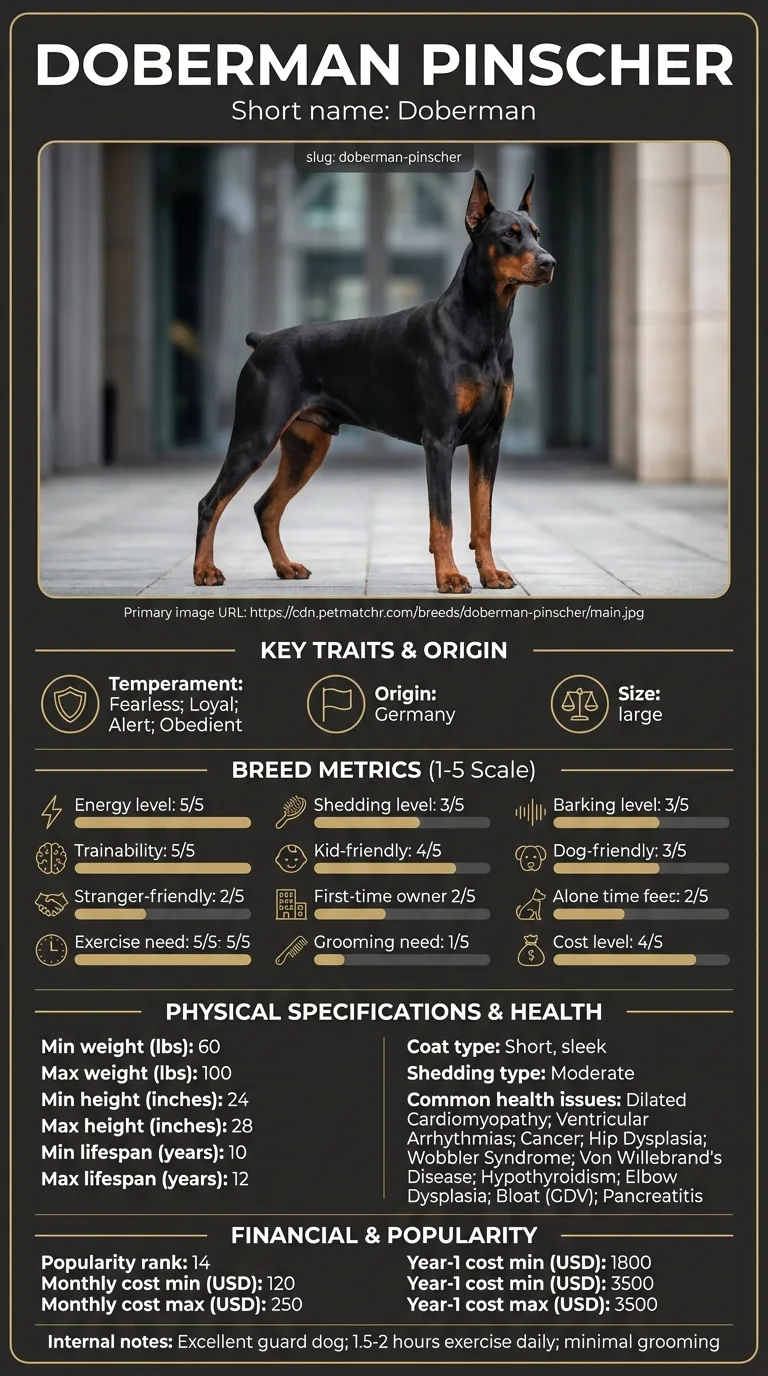
Doberman Pinscher Excessive Barking: Causes and Solutions
Quick answer
What are quick tips for Doberman Pinscher excessive barking?
To reduce excessive barking, ensure your Doberman gets plenty of exercise, engage them in training, and provide mental stimulation. Also, consider using calming products if anxiety is a factor.
Doberman Pinscher excessive barking can be a frustrating issue for owners. This behavior often stems from their protective instincts.
Many first-time or busy owners may struggle with a Doberman's barking, especially those living in apartments or close quarters. Owners who are away from home for long periods may also find this behavior challenging.
Important reminder
This guide is not medical advice. If your dog shows pain, sudden behavior change, or worsening symptoms, consult a licensed veterinarian.
Some links may be affiliate links. We may earn a commission at no extra cost to you. We only suggest products we believe are helpful for dog owners.
We research and check what we publish, but we do not warrant that any figure, date, price, or statement is accurate, complete, or current, and we accept no liability for any loss, cost, injury, or other harm arising from the use of this site. Use it as one reference among several. You remain responsible for your own decisions and for your dog's care - confirm anything that matters with a licensed veterinarian or another qualified professional before you act on it. Full disclaimer.
What this problem looks like
Doberman Pinscher excessive barking can be a frustrating issue for owners. This breed may bark at strangers, other animals, or even in response to noises. It's essential to address this behavior early, as it can become a habit that’s hard to break.
Common triggers
Strangers approaching the home
Loud noises like sirens or construction
Boredom or lack of exercise
Anxiety or fear of new situations
Excessive barking is a common problem among Doberman Pinschers. Their alert nature makes them prone to barking, especially if they feel the need to protect their territory or if they're not adequately socialized.
Why this happens
Breed factors
Doberman Pinschers are naturally alert and protective, which can lead to excessive barking. Their strong instincts make them vocal when they perceive a threat or unusual situation. This breed is also known for being intelligent and energetic, which means they may bark out of boredom or frustration if not properly engaged.
Environment factors
Excessive barking can also stem from environmental factors. For instance, a noisy neighborhood or lack of socialization can trigger a Doberman's barking. Additionally, if they feel isolated or are left alone for extended periods, they may bark to express their anxiety or seek attention.
What you can try
At-home strategies
Provide regular exercise: Ensure your Doberman gets at least 1.5 to 2 hours of exercise daily. This helps burn off excess energy that can lead to barking.
Create a calm environment: Use soundproofing or white noise to minimize external distractions. This can help reduce barking triggered by outside noises.
Train with positive reinforcement: Teach your Doberman the 'quiet' command using treats and praise. Reward them when they stop barking on command.
Engage their mind: Provide puzzle toys or interactive games to keep your Doberman mentally stimulated. A busy mind is less likely to bark excessively.
Increase socialization: Expose your Doberman to different environments and people. This can help reduce their reactivity and barking around strangers.
When to consider a trainer
If your Doberman's excessive barking persists despite your efforts, consider hiring a professional trainer. A trainer can provide tailored strategies and help address underlying behavioral issues.
When to talk to your vet
If your Doberman's barking is accompanied by signs of distress or changes in behavior, consult your veterinarian. They can rule out any medical issues or anxiety disorders that may be contributing to the problem.
You can expect to see improvements in 4-6 weeks with consistent training and patience.
Success means your Doberman Pinscher only barks when necessary, allowing you to enjoy a quieter home.
Mistakes that make Excessive Barking worse
Many Doberman Pinscher owners unknowingly reinforce excessive barking through common mistakes. Here are some behaviors to avoid, along with better alternatives.
Ignoring the barking: Some owners think that barking is normal and ignore it. This can make the behavior worse. Instead, address the barking early with training.
Rewarding barking: If you respond to your Doberman when it barks, even with attention, it can encourage the behavior. Instead, wait for quiet moments to reward your dog.
Using harsh corrections: Yelling or using physical punishment can increase anxiety and worsen barking. Focus on positive reinforcement techniques instead.
Not providing enough exercise: Dobermans have high energy needs, and boredom can lead to excessive barking. Ensure your dog gets enough physical and mental stimulation.
Overreacting to barking: If you panic every time your Doberman barks, it can signal to them that barking is the right response. Stay calm and redirect their attention instead.
Lack of socialization: Failing to expose your Doberman to various situations can lead to fear-based barking. Gradually introduce your dog to new experiences in a controlled manner.
When Doberman Pinscher Excessive Barking is an Emergency
Red-flag signs include barking that is accompanied by physical symptoms like pacing, trembling, or aggression. If your Doberman is barking at an unusual intensity or duration and seems unable to calm down, this could be a sign of distress. Additionally, if your dog is barking in response to an emergency situation, like someone approaching the house or a loud noise, it's essential to assess the situation carefully.
On the other hand, mild cases of excessive barking can often be monitored. If your Doberman is barking out of boredom or to get your attention, you can implement a training plan. Consider using positive reinforcement methods to teach your dog when it's appropriate to bark and when to be quiet. Keeping a consistent routine can also help reduce barking caused by anxiety or frustration.
In summary, if your Doberman Pinscher shows signs of distress or if the barking seems unmanageable, it's best to consult with your vet. However, if the barking appears to stem from boredom or habit, a training approach may suffice. Remember, understanding the root cause of your dog's barking is key to addressing the issue effectively.
Doberman Pinscher Excessive Barking: Causes and Solutions - When Doberman Pinscher Excessive Barking is an Emergency
Training Bella: A Doberman's Journey to Calm
When Sarah adopted Bella, her energetic Doberman Pinscher, she quickly realized that excessive barking was a problem. Bella barked at every passerby and even the wind, which made Sarah anxious about her new pup's behavior. After researching how to stop Doberman Pinscher excessive barking, Sarah began a structured training routine that included positive reinforcement and daily exercise. Gradually, Bella learned to bark less and only when appropriate, allowing Sarah to enjoy her time with Bella more fully.
Key takeaway: With patience and the right training techniques, you can help your Doberman Pinscher manage excessive barking.
Frequently asked questions
Why does my Doberman Pinscher have excessive barking?
Doberman Pinschers may bark excessively for several reasons, including boredom, anxiety, or a lack of proper training. They are naturally alert and protective, which can lead to barking at unfamiliar sounds or people. Understanding the root cause is essential for effectively addressing the behavior.
How can I stop my Doberman Pinscher from barking excessively?
To stop Doberman Pinscher excessive barking, start by identifying triggers. Training techniques such as positive reinforcement for quiet behavior, distracting them with toys, or redirecting their attention can be effective. Consistency is key, so ensure all family members enforce the same rules.
Is excessive barking common in Doberman Pinschers?
While Doberman Pinschers are known to be vocal, excessive barking can be a sign of an underlying issue. It’s important to assess their environment, exercise needs, and socialization to ensure they are well-adjusted. If the barking persists, consider consulting a trainer.
Can training help reduce my Doberman’s excessive barking?
Yes, training can significantly reduce excessive barking in Doberman Pinschers. Implementing commands like 'quiet' or 'enough' and rewarding them when they respond can help. Regular training sessions will reinforce these commands and improve their overall behavior.
What are some effective training methods for excessive barking?
Effective training methods for Doberman Pinscher excessive barking include desensitization to triggers, providing mental stimulation, and teaching alternative behaviors. Techniques like clicker training can also help reinforce positive behavior. Patience and consistency are essential for success.
Are there specific products that can help with barking?
There are several products that can assist with excessive barking, such as anti-bark collars, toys that dispense treats, and calming supplements. However, it's crucial to use these as part of a broader training plan rather than as standalone solutions.
What can trigger excessive barking in a Doberman Pinscher?
Doberman Pinschers may bark excessively due to boredom, anxiety, or the need to alert their owners to potential threats. Providing ample exercise and mental stimulation can help reduce this behavior.
Is excessive barking a sign of separation anxiety in Doberman Pinschers?
Yes, excessive barking can be a sign of separation anxiety in Doberman Pinschers. If your dog barks a lot when left alone, it may be useful to consult a veterinarian or a professional trainer for help.
How can I train my Doberman Pinscher to stop excessive barking?
Training your Doberman Pinscher to stop excessive barking can be achieved through consistent commands and positive reinforcement. Techniques such as rewarding quiet behavior and redirecting attention can be effective.
Are older Doberman Pinschers more likely to bark excessively?
Older Doberman Pinschers can develop excessive barking due to age-related issues such as hearing loss or cognitive decline. Observing any changes in behavior and discussing them with a vet is important.
When should I consult a vet about my Doberman's barking?
If your Doberman's excessive barking persists despite training or is accompanied by other concerning behaviors, it's time to consult a vet. They can rule out health issues and suggest further training options.
What are quick tips for Doberman Pinscher excessive barking?
To reduce excessive barking, ensure your Doberman gets plenty of exercise, engage them in training, and provide mental stimulation. Also, consider using calming products if anxiety is a factor.
Living
How much exercise does my Doberman need?
Doberman Pinschers typically require 1.5 to 2 hours of exercise daily to stay healthy and happy. This can include walks, playtime, and training sessions.
Behavior
Is barking a sign of separation anxiety?
Yes, excessive barking can indicate separation anxiety in Doberman Pinschers. If your dog barks when left alone, consider implementing crate training and gradually increasing alone time.
Training
Can I train my Doberman to be less vocal?
Absolutely! Training your Doberman Pinscher using commands and positive reinforcement can help teach them to bark less and understand when it’s appropriate.