Health
What are quick tips for Doberman Pinscher heart problems?
Monitor for signs of distress like coughing or fatigue, maintain a healthy diet, and ensure regular vet check-ups.

Quick answer
What are quick tips for Doberman Pinscher heart problems?
Monitor for signs of distress like coughing or fatigue, maintain a healthy diet, and ensure regular vet check-ups.
Doberman Pinscher heart problems can be serious and life-threatening. Understanding these issues is crucial for your dog's health.
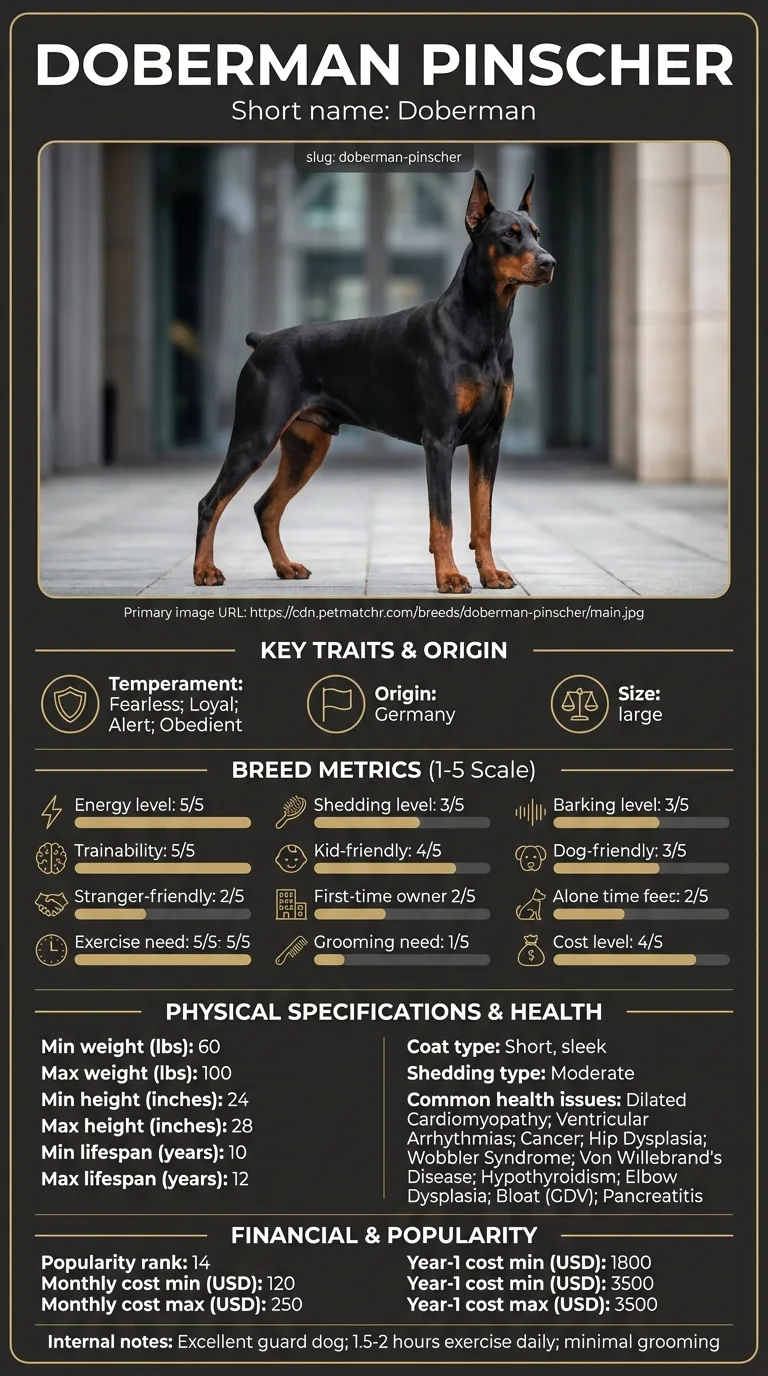
Owners of Doberman Pinschers, especially those new to the breed, often find themselves facing these challenges. Many might be unaware of these risks until symptoms arise.
This guide is not medical advice. If your dog shows pain, sudden behavior change, or worsening symptoms, consult a licensed veterinarian.
Some links may be affiliate links. We may earn a commission at no extra cost to you. We only suggest products we believe are helpful for dog owners.
We research and check what we publish, but we do not warrant that any figure, date, price, or statement is accurate, complete, or current, and we accept no liability for any loss, cost, injury, or other harm arising from the use of this site. Use it as one reference among several. You remain responsible for your own decisions and for your dog's care - confirm anything that matters with a licensed veterinarian or another qualified professional before you act on it. Full disclaimer.
Check this first
Understanding when Doberman Pinscher heart problems become emergencies is crucial for your dog's health. Some signs indicate that immediate veterinary care is necessary, while others can be monitored with a plan.
Red Flags: Call Your Vet Now - Difficulty breathing or excessive panting. - Unexplained fainting or collapsing episodes. - Persistent coughing, especially during exercise or at night. - Swelling in the abdomen or legs, which can indicate fluid buildup. - Rapid or irregular heartbeat. These symptoms often signal serious conditions like dilated cardiomyopathy or ventricular arrhythmias and require urgent attention.
Mild Cases: Watch and Wait - Occasional coughing without other symptoms. - Slight lethargy that resolves with rest. - Mild exercise intolerance during play. - Changes in appetite or drinking habits that are not drastic. In these cases, monitor your Doberman closely. Keep a journal of any changes and discuss them with your vet during regular check-ups. If symptoms worsen or new ones appear, don’t hesitate to reach out for advice.
Keeping a close eye on your Doberman Pinscher's heart health can make all the difference. Early intervention often leads to better outcomes, so trust your instincts as a pet owner. If you're ever in doubt, it's best to err on the side of caution.
If any of these apply, call your vet or an emergency clinic now. The rest of this page is for the cases that are not an emergency.
Doberman Pinscher heart problems are a significant health concern for this breed. These issues can manifest as fatigue, coughing, or fainting during physical activity. Owners may notice their Doberman struggling with everyday tasks, especially as they age.
Heart problems are notably common among Doberman Pinschers, with diseases like Dilated Cardiomyopathy affecting up to 40% of the breed. Regular veterinary check-ups are crucial for early detection and management.
Doberman Pinschers are prone to heart problems due to genetic factors. Conditions like Dilated Cardiomyopathy and Ventricular Arrhythmias are common in this breed. These issues can stem from inherited traits that affect heart structure and function.
Environmental factors can also contribute to heart problems in Dobermans. Stressful living conditions, poor diet, and lack of exercise can exacerbate existing heart issues. Additionally, obesity can place extra strain on their hearts, leading to further complications.
Consult your vet if you notice symptoms like coughing, lethargy, or difficulty breathing. Regular check-ups are essential for early detection of heart problems. If heart issues are diagnosed, follow your vet's recommendations for treatment and management.
Common mistakes can inadvertently worsen Doberman Pinscher heart problems. Here are some pitfalls to avoid and safer alternatives to consider.
Start here: Doberman Pinscher Most Common Genetic Disorders: Screening
See all Doberman Pinscher health problems, which breeds are prone to heart problems, or the full Doberman Pinscher breed guide for temperament, exercise needs and ownership costs.
Addressing Doberman Pinscher heart problems can take several months of consistent care and veterinary follow-up. Many owners see noticeable improvements within 4 to 6 months with proper management.
Success means your Doberman is more active and shows fewer signs of distress or fatigue. Regular vet check-ups and a tailored exercise plan also contribute to better heart health.
Maria, a busy veterinarian in Texas, noticed her Doberman, Max, was easily fatigued during their walks. After a vet visit, she learned Max had a common heart condition called dilated cardiomyopathy. Determined to help him, Maria followed a strict exercise regimen and adjusted Max's diet with heart-healthy foods. Over time, she saw him regain energy and enthusiasm, making their daily walks enjoyable again.
Key takeaway: With proper care and management, even dogs with heart problems can lead happy, active lives.
Doberman Pinschers are prone to specific heart issues, such as Dilated Cardiomyopathy and Subvalvular Aortic Stenosis. These conditions can develop due to genetics or other health factors. Regular vet check-ups are crucial for early detection and management.
Watch for symptoms like excessive coughing, lethargy, difficulty breathing, or fainting. If you notice these signs, consult your vet immediately. Early intervention can help manage heart problems effectively.
To minimize the risk of heart problems, provide a balanced diet, regular exercise, and routine vet check-ups. Keeping your Doberman at a healthy weight can also reduce stress on their heart.
Addressing heart problems involves a combination of lifestyle changes, medication, and regular veterinary care. Follow your vet's recommendations for nutrition and exercise tailored to your Doberman's specific needs.
Yes, a heart-healthy diet for Dobermans often includes high-quality proteins, omega fatty acids, and controlled sodium levels. Consult your vet for specific dietary recommendations based on your dog's health status.
Training can help by reinforcing calm behaviors and reducing stress, which is beneficial for heart health. Activities like obedience training and gentle walks can keep your Doberman engaged and active without overexertion.
If you notice any unusual behavior, especially related to breathing or energy levels, schedule a vet visit right away. Regular screenings are recommended for older Dobermans or those with a family history of heart issues.
Yes, older Doberman Pinschers are more susceptible to heart issues, especially conditions like dilated cardiomyopathy. Regular vet check-ups are crucial for early detection and management of heart problems in senior dogs.
While there's no one-size-fits-all diet, a heart-healthy diet rich in omega-3 fatty acids can be beneficial. Always consult your vet for tailored dietary recommendations based on your dog's health needs.
To help a Doberman with heart problems, create a calm environment and limit strenuous activities. Consider using calming products or training techniques to reduce anxiety, which can aggravate heart conditions.
Monitor for signs of distress like coughing or fatigue, maintain a healthy diet, and ensure regular vet check-ups.
Gentle, short walks are ideal. Aim for about 30 minutes daily, adjusting based on your dog's condition.
Expect to spend between $120 and $250 monthly on vet visits, medications, and special diets.
Yes, training can reduce anxiety and stress, which benefits overall heart health. Focus on calm, positive reinforcement techniques.
Contact your vet immediately to discuss symptoms and schedule an examination for appropriate care.
A one-page prep sheet for this condition: the signs, the questions to ask, what to get priced. Unlocks here.
You get: Vet visit prep sheet
No spam. One-click unsubscribe. See our privacy policy.
Preview page 1 before you decide.
Early access list
The free prep sheet covers the same-day warning signs, a symptom log and the questions to ask. We are considering a fuller kit that adds a cost worksheet for the usual tests and treatments (US price ranges with their sources) and a plain-English guide to ways of covering the bill. It is not built yet; this list tells us whether it is worth building.
One email, no spam, unsubscribe anytime. Information only, not veterinary advice.