Health
What's the main driver of eye disease in this breed?
Entropion, an inward-rolling eyelid caused by the breed's abundant facial skin, which leads to chronic corneal irritation if uncorrected.

Quick answer
What's the main driver of eye disease in this breed?
Entropion, an inward-rolling eyelid caused by the breed's abundant facial skin, which leads to chronic corneal irritation if uncorrected.
One structural quirk of this breed's famously wrinkled face is responsible for the majority of its dramatically elevated eye disease risk.
Owners of Shar-Pei puppies, since entropion often shows up in the first weeks of life, and any owner noticing squinting, excessive tearing, or visible eye irritation at any age.
This guide is not medical advice. If your dog shows pain, sudden behavior change, or worsening symptoms, consult a licensed veterinarian.
Some links may be affiliate links. We may earn a commission at no extra cost to you. We only suggest products we believe are helpful for dog owners.
We research and check what we publish, but we do not warrant that any figure, date, price, or statement is accurate, complete, or current, and we accept no liability for any loss, cost, injury, or other harm arising from the use of this site. Use it as one reference among several. You remain responsible for your own decisions and for your dog's care - confirm anything that matters with a licensed veterinarian or another qualified professional before you act on it. Full disclaimer.
Ocular disease risk in the Chinese Shar-Pei runs roughly 467% higher than the general dog population, driven substantially by entropion, an inward-rolling eyelid caused by the breed's characteristic excess facial skin. Left uncorrected, the resulting chronic corneal irritation can progress to ulcers and scarring, making prompt recognition and correction genuinely important rather than cosmetic.
Entropion is specifically documented as one of the Chinese Shar-Pei's common health issues, and its downstream effects account for a substantial share of the breed's dramatically elevated overall ocular disease statistics, making this a genuinely frequent rather than occasional concern.
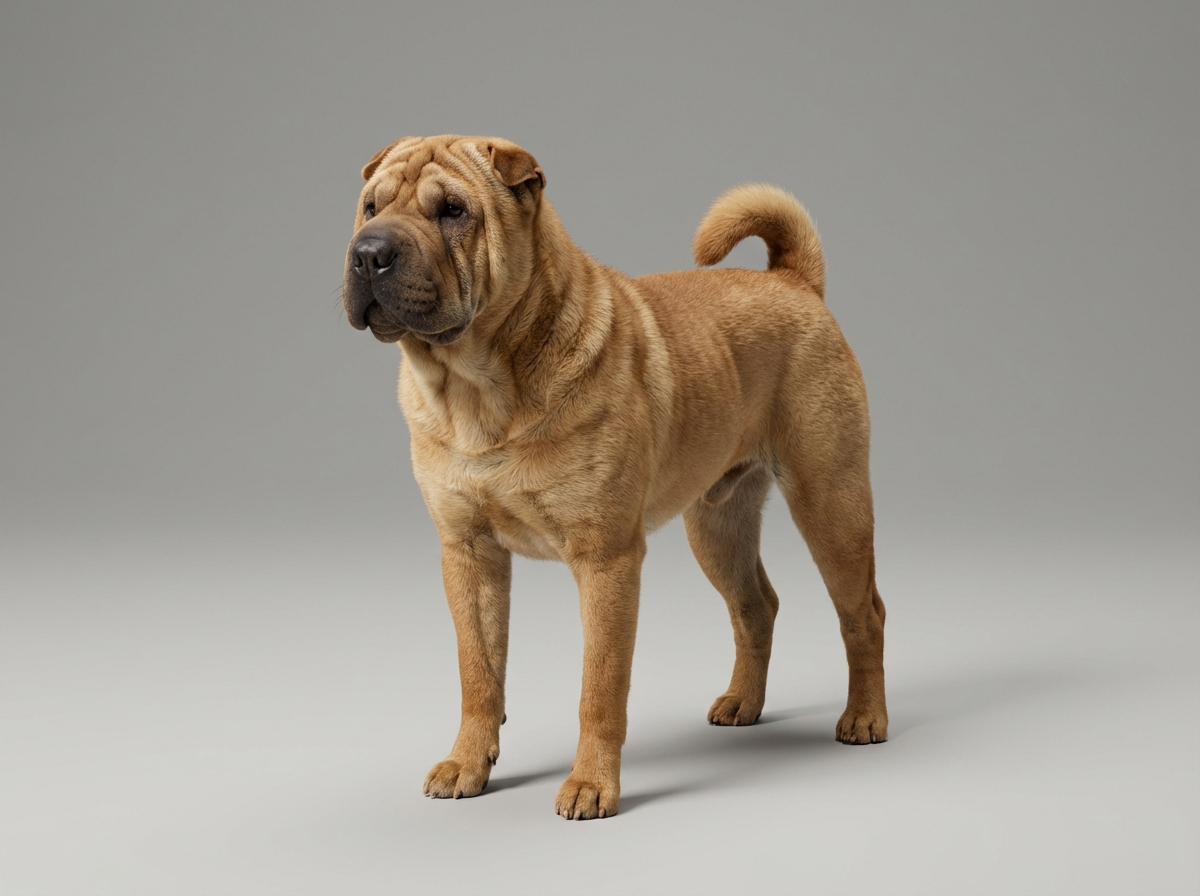
The Chinese Shar-Pei's signature abundance of loose, wrinkled facial skin is the direct anatomical cause of entropion in this breed, with excess skin around the eyes physically pushing the eyelid margin inward, particularly in puppies before facial features settle into adult proportions.
There's little environmental influence on the underlying anatomical cause, though delayed veterinary attention allows ongoing corneal irritation to progress further, turning a correctable structural issue into a more serious complication.
Schedule an evaluation promptly for any squinting, excessive tearing, redness, or visible eyelid rolling, even in a young puppy. Sudden severe eye pain, cloudiness, or a visibly ulcerated cornea is an emergency requiring same-day veterinary care to prevent permanent damage.
Start here: Chinese Shar-Pei Most Common Genetic Disorders: Screening
See all Chinese Shar PEI health problems, which breeds are prone to ocular disease, or the full Chinese Shar PEI breed guide for temperament, exercise needs and ownership costs.
Puppy tacking procedures are often done within the first few months of life, with some cases resolving as the face matures and others requiring permanent correction typically once the dog approaches adult size, around six to twelve months old.
Success looks like an eyelid that sits in normal position without ongoing corneal rubbing, resolved irritation, and no progression to ulcers or scarring, achieved through timely tacking or permanent surgical correction.
Entropion occurs when the eyelid margin rolls inward toward the eyeball rather than lying flat against it, and in the Chinese Shar-Pei this is driven directly by the breed's signature trait: an abundance of loose, wrinkled facial skin. That excess skin, particularly heavy around the face and eyes in young puppies before their features fully settle, can literally push the eyelid margin inward under its own weight. Once rolled inward, the eyelashes and eyelid skin rub continuously against the cornea, the clear surface of the eye, with every blink. This isn't a minor irritation, that continuous mechanical rubbing causes corneal abrasions, chronic pain, and, left uncorrected, can progress to corneal ulcers or scarring serious enough to affect vision permanently. This single structural issue accounts for a large share of why this breed's overall eye disease statistics run so much higher than average.
Because Shar-Pei puppies are especially prone to entropion from excess facial skin that hasn't yet settled into its adult proportions, vets sometimes perform a temporary procedure called eyelid tacking, placing small stitches to hold the eyelid in a normal position while the puppy continues growing. Some puppies' faces mature enough that the issue resolves on its own once tacking sutures are removed; others need the tacking repeated or eventually require a permanent surgical correction once the dog is closer to adult size, which reshapes and secures the eyelid margin in its correct position for good. Delaying correction in a dog that clearly needs it isn't a neutral wait-and-see choice, since every week of uncorrected entropion is another week of ongoing corneal irritation, which is why vets tend to recommend addressing it promptly once it's confirmed as a genuine, non-resolving issue rather than temporary puppy puffiness.

If you think your Chinese has ocular disease, the plan is three steps: write down what you have seen and when it started, book a veterinary appointment rather than waiting for the next flare, and take video of the behaviour or symptom before you go — the thing you are worried about rarely happens in the consulting room. Screening in the parents covers skin fold dermatitis, entropion, familial shar-pei fever.
What the vet visit should produce is a diagnosis and a written plan, not just reassurance: what is being ruled out, what the monitoring interval is, and which signs mean you come back sooner. Ask what the treatment costs across a year rather than per visit, because that is the number that decides whether you are managing this condition or reacting to it.
Between appointments, keep a short log — dates, what you saw, what changed. It is the single most useful thing an owner brings to a follow-up, and for ocular disease it is often what separates a clear pattern from a guess.
Frankie, a Shar-Pei puppy in Salt Lake City, started squinting and tearing from both eyes within his first month, noticeable enough that his breeder flagged it before his new owner even brought him home. A vet visit confirmed entropion in both eyes, driven by his still-abundant puppy facial skin. He underwent an eyelid tacking procedure at eight weeks old, temporary sutures holding his lids in normal position while he grew. By four months, his face had matured enough that the tacking could be removed without the entropion returning, sparing him a permanent surgery. His eyes have been clear and comfortable ever since.
Key takeaway: Catching Frankie's entropion early and using temporary tacking rather than waiting gave his face a real chance to grow out of the problem, avoiding both ongoing corneal damage and a more invasive permanent surgery.
It's driven substantially by entropion, an inward-rolling eyelid caused directly by the breed's characteristic excess facial skin, which if uncorrected leads to chronic corneal irritation and a cascade of secondary complications.
Squinting, excessive tearing, redness, and visible discomfort, especially around the eyes, are common signs, often noticeable within the first weeks of a puppy's life given the breed's abundant facial skin.
A temporary procedure where a vet places small stitches to hold an entropic eyelid in a normal position while a puppy continues growing, sometimes resolving the issue as the face matures, sometimes serving as a bridge to permanent correction later.
Not every puppy needs it; some outgrow mild puffiness-related entropion as their face matures. But confirmed, non-resolving entropion generally does need correction, since ongoing corneal rubbing causes real damage the longer it continues.
Continuous rubbing of the eyelid and lashes against the cornea causes chronic irritation that can progress to corneal ulcers, scarring, and potentially permanent vision impairment in more severe, prolonged cases.
Costs vary by region and whether it's a temporary tacking procedure or a permanent surgical correction, but it's a meaningful expense worth budgeting for given how common this issue is in the breed.
Yes, though entropion and its secondary corneal complications account for a large share of the breed's elevated risk, other conditions like dry eye or corneal scarring can also occur, sometimes as a direct downstream result of uncorrected entropion.
Entropion, an inward-rolling eyelid caused by the breed's abundant facial skin, which leads to chronic corneal irritation if uncorrected.
Often within the first weeks of a puppy's life, given how much facial skin young Shar-Pei puppies carry before their features settle.
A temporary suturing procedure that holds an entropic eyelid in normal position while a puppy grows, sometimes resolving the issue and sometimes bridging to permanent surgery.
It varies by whether temporary tacking or permanent surgery is needed, but it's a common enough expense in this breed to budget for proactively.
Yes, ongoing corneal rubbing can progress to ulcers and scarring serious enough to affect vision if the condition isn't corrected.
A one-page prep sheet for this condition: the signs, the questions to ask, what to get priced. Unlocks here.
You get: Vet visit prep sheet
No spam. One-click unsubscribe. See our privacy policy.
Preview page 1 before you decide.