Health
Is liver disease a documented Shar-Pei risk?
No, chronic active hepatitis isn't part of this breed's documented health profile.

Quick answer
Is liver disease a documented Shar-Pei risk?
No, chronic active hepatitis isn't part of this breed's documented health profile.
This breed doesn't have a documented liver-specific risk, but it does have a documented reason to already be getting the bloodwork that would catch one.
Owners who've read about liver disease in dogs generally and want to know whether it's something to specifically worry about for this breed, versus a general wellness habit worth having regardless.
This guide is not medical advice. If your dog shows pain, sudden behavior change, or worsening symptoms, consult a licensed veterinarian.
Some links may be affiliate links. We may earn a commission at no extra cost to you. We only suggest products we believe are helpful for dog owners.
We research and check what we publish, but we do not warrant that any figure, date, price, or statement is accurate, complete, or current, and we accept no liability for any loss, cost, injury, or other harm arising from the use of this site. Use it as one reference among several. You remain responsible for your own decisions and for your dog's care - confirm anything that matters with a licensed veterinarian or another qualified professional before you act on it. Full disclaimer.
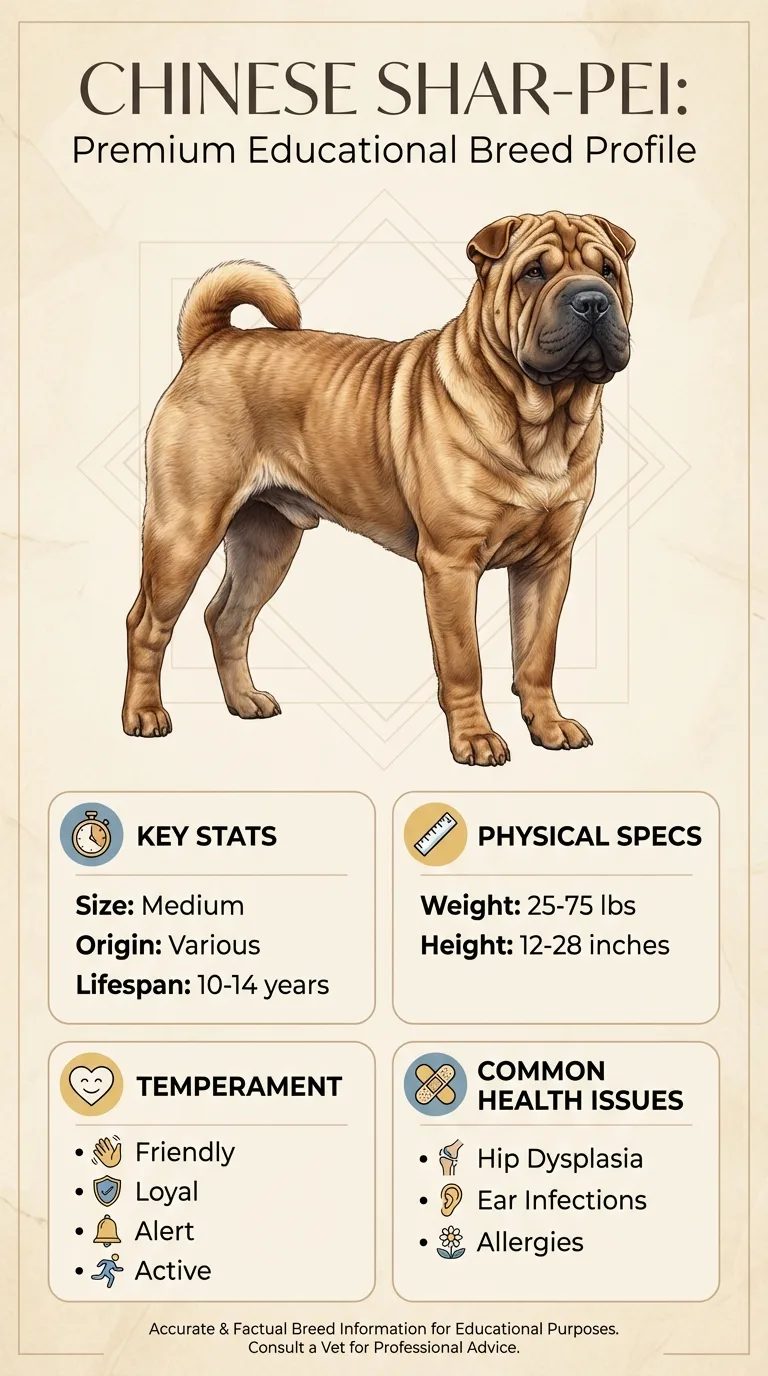
Chronic active hepatitis isn't documented in the Chinese Shar-Pei's health profile. What's genuinely useful here is that this breed's documented Familial Shar-Pei Fever already makes periodic bloodwork a sensible habit, and that same bloodwork provides a useful, already-routine window into general liver health.
Not documented as occurring in this breed at an elevated rate. General liver monitoring through routine bloodwork remains a sensible habit for any dog, more naturally built into this breed's care routine given its documented FSF.
No documented genetic or breed-specific driver toward chronic active hepatitis exists for this breed. Its documented FSF and the associated bloodwork habit are simply a useful, incidental window into general liver health rather than a sign of elevated liver-specific risk.
General factors like diet, weight, and medication exposure affect liver health in any dog, independent of documented breed-specific risk, and are the same considerations that would apply to any breed without a known liver condition.
See your vet for yellowing of the gums or eyes, sudden appetite loss, increased thirst and urination, or unusual lethargy — these general warning signs deserve evaluation regardless of documented breed risk, and are worth flagging clearly rather than waiting to see if they pass.
Start here: Chinese Shar-Pei Most Common Genetic Disorders: Screening
See all Chinese Shar PEI health problems, which breeds are prone to chronic active hepatitis, or the full Chinese Shar PEI breed guide for temperament, exercise needs and ownership costs.
There's no chronic-active-hepatitis-specific timeline relevant to this breed given the lack of documented risk. General liver monitoring is an ongoing, once- or twice-yearly habit as part of routine wellness care.
Success looks like routine bloodwork, already sensible given this breed's documented FSF, continuing to provide reassurance about general liver health over the years.
Chronic active hepatitis in dogs is most associated with specific breeds where genetic copper metabolism issues or immune-mediated liver inflammation have been directly studied and confirmed. The Chinese Shar-Pei's documented health profile — skin fold dermatitis, entropion, Familial Shar-Pei Fever, hypothyroidism, and ear infections — doesn't include a liver-specific condition.
That said, this breed's documented FSF means many owners already have periodic bloodwork done to check inflammatory markers around flare episodes. That same bloodwork typically includes liver enzyme values, giving owners a genuinely useful, already-in-place window into liver health that many other breeds without FSF wouldn't have as a routine habit.
Since there's no documented breed-specific liver risk, here's what genuinely applies as general good practice.

If you think your Chinese has chronic active hepatitis, the plan is three steps: write down what you have seen and when it started, book a veterinary appointment rather than waiting for the next flare, and take video of the behaviour or symptom before you go — the thing you are worried about rarely happens in the consulting room. Screening in the parents covers skin fold dermatitis, entropion, familial shar-pei fever.
What the vet visit should produce is a diagnosis and a written plan, not just reassurance: what is being ruled out, what the monitoring interval is, and which signs mean you come back sooner. Ask what the treatment costs across a year rather than per visit, because that is the number that decides whether you are managing this condition or reacting to it.
Between appointments, keep a short log — dates, what you saw, what changed. It is the single most useful thing an owner brings to a follow-up, and for chronic active hepatitis it is often what separates a clear pattern from a guess.
Petra brought her Shar-Pei Genghis in for bloodwork following a mild FSF flare, mostly focused on checking his inflammatory markers. Her vet mentioned, almost in passing, that his liver enzyme values looked completely normal too, and that this was a nice side benefit of the bloodwork they were already doing for his FSF monitoring. Petra hadn't previously thought about liver health specifically for Genghis, since she'd never read it listed as a documented breed risk. Her vet explained the distinction clearly: no elevated documented liver risk existed for this breed, but the FSF-related testing habit gave them useful information anyway.
Key takeaway: A condition doesn't need to be a documented breed risk for routine monitoring to still be worthwhile — sometimes the bloodwork you're already doing for one reason quietly covers another.
No, it isn't part of this breed's documented health profile. It's more specifically associated with other breeds where a genetic or immune-mediated link has been directly established.
FSF itself is documented as affecting joints with fever episodes; this breed's profile doesn't document a direct liver-specific complication. The practical connection here is simply that FSF-related bloodwork happens to include liver values as a matter of course.
Standard wellness or FSF-related bloodwork already typically includes liver enzyme values, so a separate liver-specific test usually isn't necessary unless your vet identifies a specific reason for further investigation.
Yellowing of the gums or eyes, appetite loss, increased thirst, or unusual lethargy are general warning signs worth a prompt vet visit, regardless of documented breed risk.
Yes, in any dog, so any new medication, including long-term ones, is worth discussing with your vet, and human medications should never be given without explicit veterinary guidance.
As part of annual wellness bloodwork for a healthy dog, and more frequently if your dog has frequent FSF episodes or is on any medication that affects liver metabolism.
Only if bloodwork or a physical exam turned up something specific worth investigating further, such as persistently abnormal enzyme values. It isn't a routine recommendation for a breed without a documented liver-specific risk.
No, chronic active hepatitis isn't part of this breed's documented health profile.
This breed's documented FSF already makes periodic bloodwork a sensible habit, and that testing includes liver values as a helpful side benefit.
A standard wellness panel including liver values is typically a modest, routine cost as part of annual care.
No, many are genuinely toxic to a dog's liver and should never be given without explicit veterinary guidance.
Yellowing of the gums or eyes, appetite loss, or unusual lethargy are general signs worth a prompt vet visit.
A one-page prep sheet for this condition: the signs, the questions to ask, what to get priced. Unlocks here.
You get: Vet visit prep sheet
No spam. One-click unsubscribe. See our privacy policy.
Preview page 1 before you decide.