Health
How often should I take my American Pit Bull Terrier to the vet?
It's best to schedule vet visits at least once a year, or more frequently for older dogs or those with health issues.

Quick answer
How often should I take my American Pit Bull Terrier to the vet?
It's best to schedule vet visits at least once a year, or more frequently for older dogs or those with health issues.
The American Pit Bull Terrier is a loving and loyal breed, but they can be prone to certain genetic disorders. Understanding these issues is vital for their health and your peace of mind.
This issue often affects first-time owners and busy families who may not be familiar with the breed's specific health needs. It's especially important for those who want a happy, healthy Pit Bull in their home.
This guide is not medical advice. If your dog shows pain, sudden behavior change, or worsening symptoms, consult a licensed veterinarian.
Some links may be affiliate links. We may earn a commission at no extra cost to you. We only suggest products we believe are helpful for dog owners.
We research and check what we publish, but we do not warrant that any figure, date, price, or statement is accurate, complete, or current, and we accept no liability for any loss, cost, injury, or other harm arising from the use of this site. Use it as one reference among several. You remain responsible for your own decisions and for your dog's care - confirm anything that matters with a licensed veterinarian or another qualified professional before you act on it. Full disclaimer.
Check this first
If you think your American Pit Bull Terrier might have genetic disorders, it's crucial to know when to act quickly. Some signs are serious red flags that require a vet's immediate attention. For instance, if your dog is experiencing severe difficulty breathing, persistent vomiting, or sudden lethargy, you should call your vet without delay. These symptoms could indicate conditions like dilated cardiomyopathy or gastric dilatation-volvulus, both of which can be life-threatening.
On the other hand, there are mild cases where you can monitor your dog at home. For example, if your Pit Bull shows slight limping or occasional skin irritation, it may not be an emergency. However, you should still plan to observe these symptoms closely and consult your vet if they persist or worsen. It's wise to keep a record of any changes in behavior or health. This information can help your vet make better assessments during visits.
Always trust your instincts as a dog owner. If something feels off with your American Pit Bull Terrier, don’t hesitate to reach out to a professional. When in doubt, it's better to be safe than sorry.
If any of these apply, call your vet or an emergency clinic now. The rest of this page is for the cases that are not an emergency.
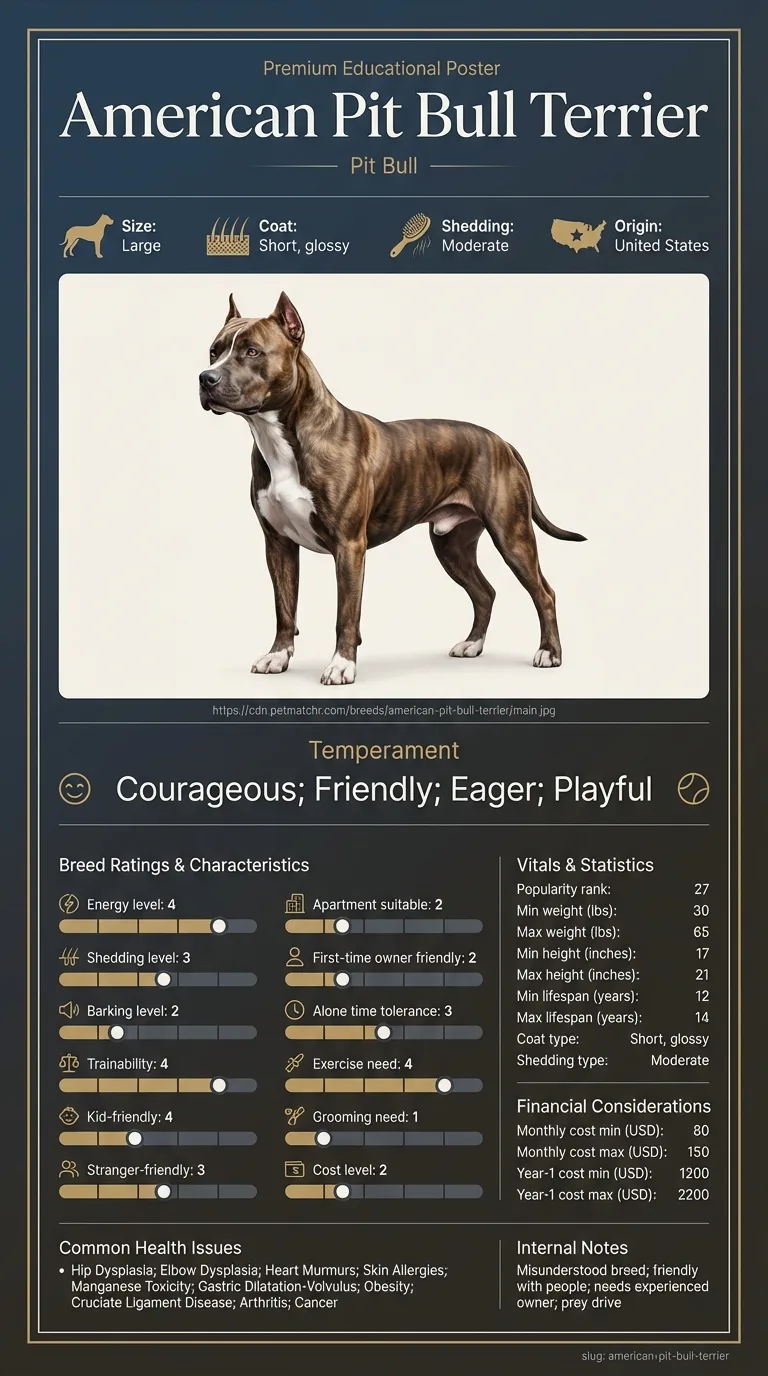
The American Pit Bull Terrier is a strong and loyal breed, but they can be prone to several common genetic disorders. These may include hip dysplasia, elbow dysplasia, and heart murmurs. Owners often notice signs of these issues in their daily routines, such as difficulty with mobility or sudden fatigue during play.
Unfortunately, genetic disorders are relatively common in American Pit Bull Terriers. Many owners encounter health issues, particularly as their dogs age. It's essential to be proactive in healthcare and training to mitigate these risks.
The American Pit Bull Terrier is prone to certain genetic disorders like hip dysplasia, elbow dysplasia, and heart murmurs. These issues can be inherited due to selective breeding practices aimed at enhancing desirable traits. The breed's popularity has also led to a limited gene pool, increasing the likelihood of genetic health problems.
Environmental factors can also play a role in the health of an American Pit Bull Terrier. Poor nutrition, lack of exercise, and inadequate veterinary care can exacerbate existing genetic conditions. Stressful living conditions or trauma can lead to behavioral problems, compounding health issues.
Consult your vet if you observe any signs of health problems, such as difficulty in movement, unusual weight changes, or changes in appetite. Early detection of genetic disorders can lead to better management and treatment options.
Many owners unintentionally hinder their American Pit Bull Terrier's health by making common mistakes. Here are a few behaviors to avoid, along with safer alternatives that can support better outcomes.
See all American PIT Bull Terrier health problems, which breeds are prone to most common genetic disorders, or the full American PIT Bull Terrier breed guide for temperament, exercise needs and ownership costs.
You can expect to see improvements in your American Pit Bull Terrier’s health and behavior within a few months, but ongoing care is essential for long-term success.
Success means managing or preventing the most common genetic disorders through regular vet check-ups, a balanced diet, and proper training. Your dog will show fewer symptoms and improve their quality of life.
Sarah, a first-time dog owner, adopted Max, an American Pit Bull Terrier. Shortly after bringing him home, she noticed he limped occasionally and seemed lethargic. Worried, Sarah took him to the vet and discovered Max had hip dysplasia, a common genetic disorder. With guidance from a vet, Sarah adjusted Max’s diet, incorporated joint supplements, and started a consistent exercise routine. Over six months, Max became more active and playful, and his limping significantly decreased.
Key takeaway: Early detection and proactive management of genetic disorders can greatly enhance your dog’s well-being. Regular vet visits and a tailored care plan are crucial.
American Pit Bull Terriers are prone to several genetic disorders, including hip dysplasia, elbow dysplasia, and heart murmurs. Other issues like skin allergies and obesity can also occur. Regular vet check-ups can help catch these problems early. This answer relates to American Pit Bull Terrier most common genetic disorders.
Genetic disorders in American Pit Bull Terriers often stem from breeding practices. Responsible breeders should screen for genetic conditions, but some inherited traits may still appear. It's important to research your dog's lineage before adoption.
Managing genetic disorders involves regular vet visits and a healthy diet to maintain weight. Physical therapy and medications may be necessary for conditions like arthritis or dysplasia. Consult your vet for a tailored care plan.
Training can improve your American Pit Bull Terrier's quality of life, especially with behavior problems related to genetic disorders. Basic obedience training can help your dog feel more secure and reduce anxiety. Incorporating gentle exercises can also promote joint health.
Preventive measures include regular vet check-ups, a balanced diet, and appropriate exercise. Keeping your dog at a healthy weight can significantly reduce the risk of many genetic disorders. Always consult your vet for specific recommendations based on your dog's needs.
Yes, diets rich in Omega-3 fatty acids can support joint health and reduce inflammation. Consider feeding your American Pit Bull Terrier high-quality dog food formulated for large breeds. Always discuss diet changes with your vet.
Common signs of genetic disorders in American Pit Bull Terriers include limping, difficulty breathing, or unusual behavior. If you notice any of these symptoms, it's important to consult a veterinarian for a thorough examination.
Yes, older American Pit Bull Terriers are generally more prone to genetic disorders. As they age, conditions like arthritis or heart disease may develop, so regular vet check-ups are crucial.
To help prevent genetic disorders, choose a reputable breeder who conducts health screenings. Additionally, ensure your dog maintains a healthy weight and gets regular exercise to reduce the risk of health issues.
If diagnosed, work closely with your vet to create a management plan. This may include medication, dietary changes, and regular monitoring to help your dog lead a happy life despite the disorder.
Yes, consistent training can help manage behavioral issues related to genetic disorders. Positive reinforcement techniques can improve your dog's behavior and strengthen your bond, making it easier to deal with any challenges.
It's best to schedule vet visits at least once a year, or more frequently for older dogs or those with health issues.
Look for signs like limping, difficulty in movement, or unusual fatigue. Changes in appetite or weight can also signal health issues.
Use positive reinforcement techniques and keep training sessions short and engaging. Consistency is key, so practice regularly.
They can be challenging for first-time owners due to their energy and need for socialization. It's important to educate yourself before adopting.
A one-page prep sheet for this condition: the signs, the questions to ask, what to get priced. Unlocks here.
You get: Vet visit prep sheet
No spam. One-click unsubscribe. See our privacy policy.
Preview page 1 before you decide.