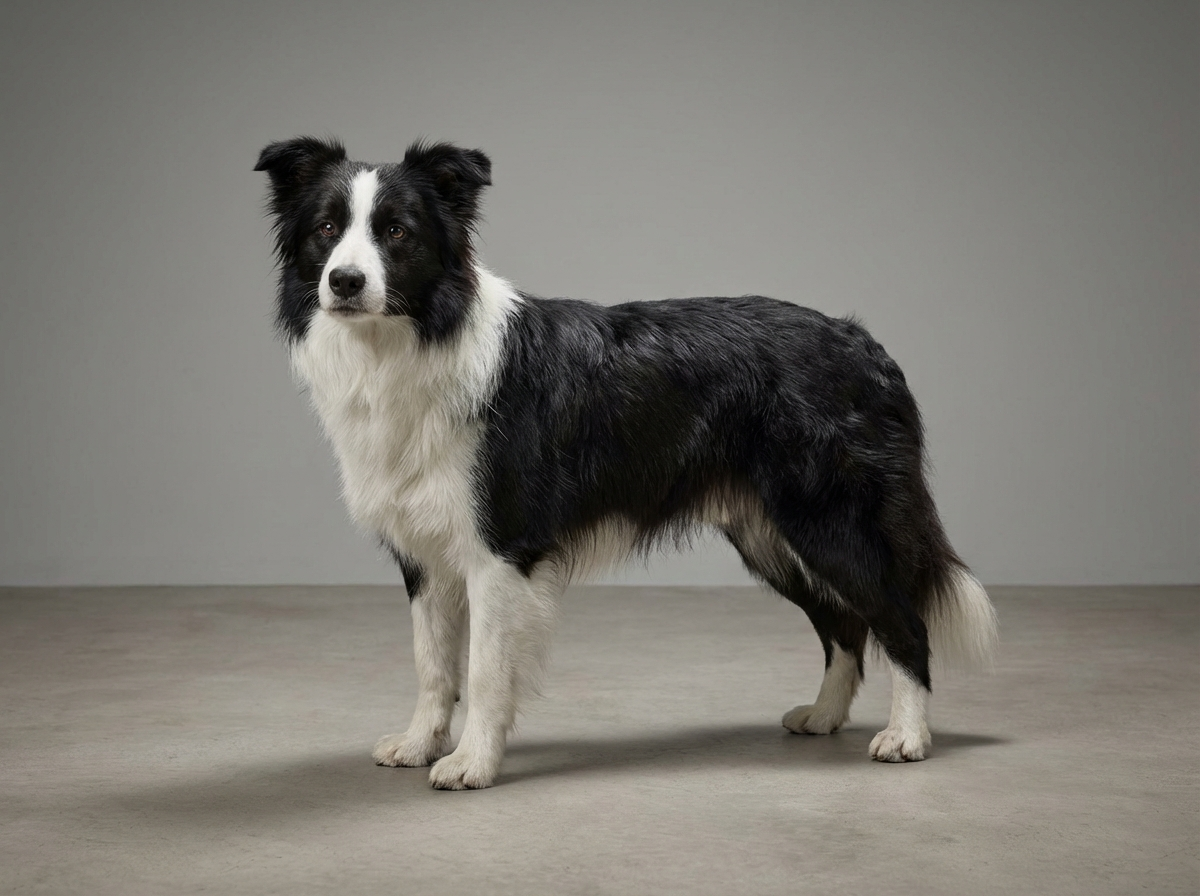
Collie (Rough Collie) vs German Wirehaired Pointer: Which Suits Your Home?
Quick answer
Collie or German Wirehaired Pointer -- which is the better all-around choice?
Unless you have serious daily time for exercise and a house with real space, the Collie is the more livable choice; the Pointer rewards an active, outdoorsy household.
Collie (Rough Collie) or German Wirehaired Pointer? On paper they differ most on exercise need, and on the scales German Wirehaired Pointer is the heavier at 60–70 lbs. Here is how the two compare on everything that shapes an ordinary week.
This is for someone already down to Collie (Rough Collie) and German Wirehaired Pointer and deciding between them. For this pair the decision usually turns on exercise need and energy level, so those are covered first and in most detail. Anyone choosing from a flat has a clear answer here: Collie (Rough Collie) rates 2/5 against 1/5. It is written for the decision rather than the breed history.
Quick verdict
Between Collie (Rough Collie) and German Wirehaired Pointer, exercise need is what separates them, and Collie (Rough Collie) is the lower-effort dog of the two to keep.
Choose collie if...
Choose Collie (Rough Collie) if this is your first dog, your walking routine is modest and the dog will be alone during the working day.
Choose german wirehaired pointer if...
Choose German Wirehaired Pointer if you do not want a standing grooming appointment, shedding is a problem in your house and you want a dog that can keep up with an active routine.
Head-to-head comparison
Feature
collie
german wirehaired pointer
Winner
Size class
large
large
Equal
Weight
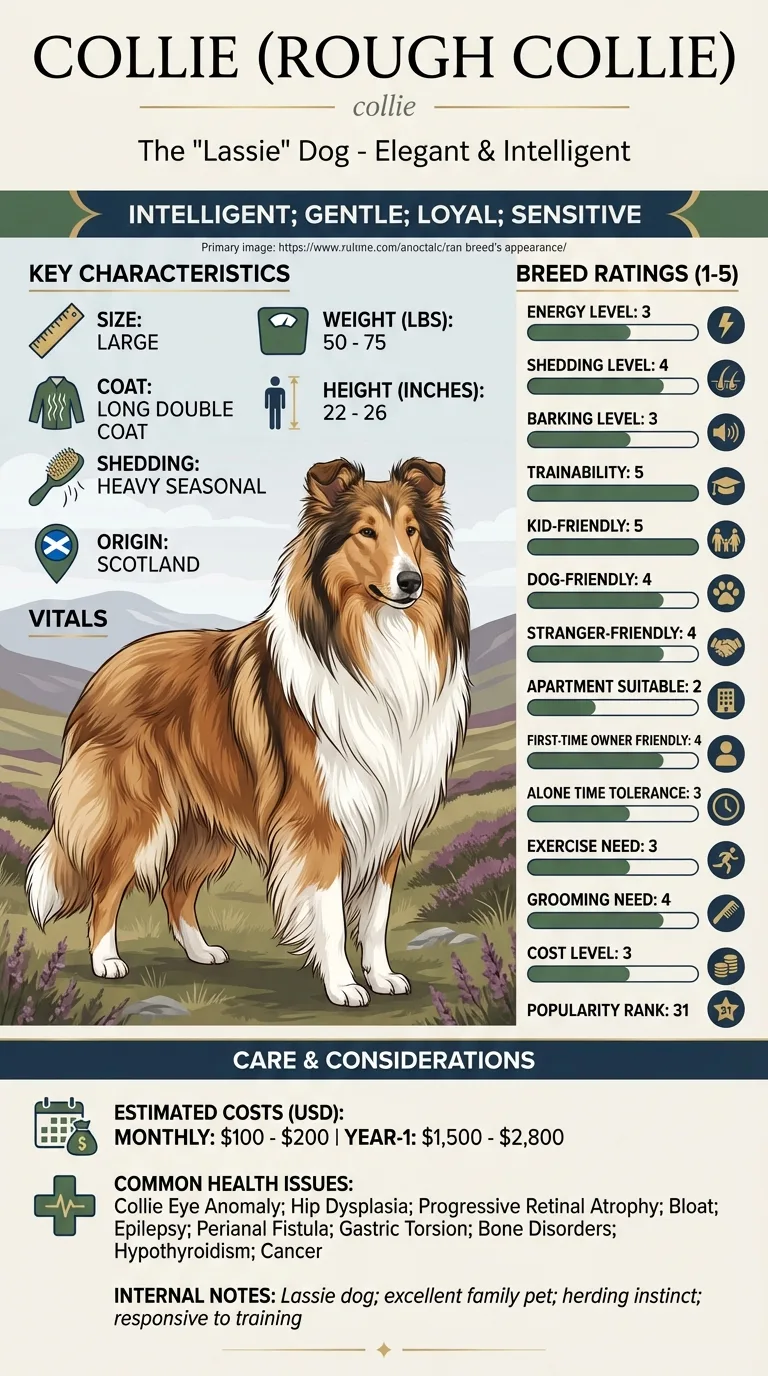
50–75 lbs
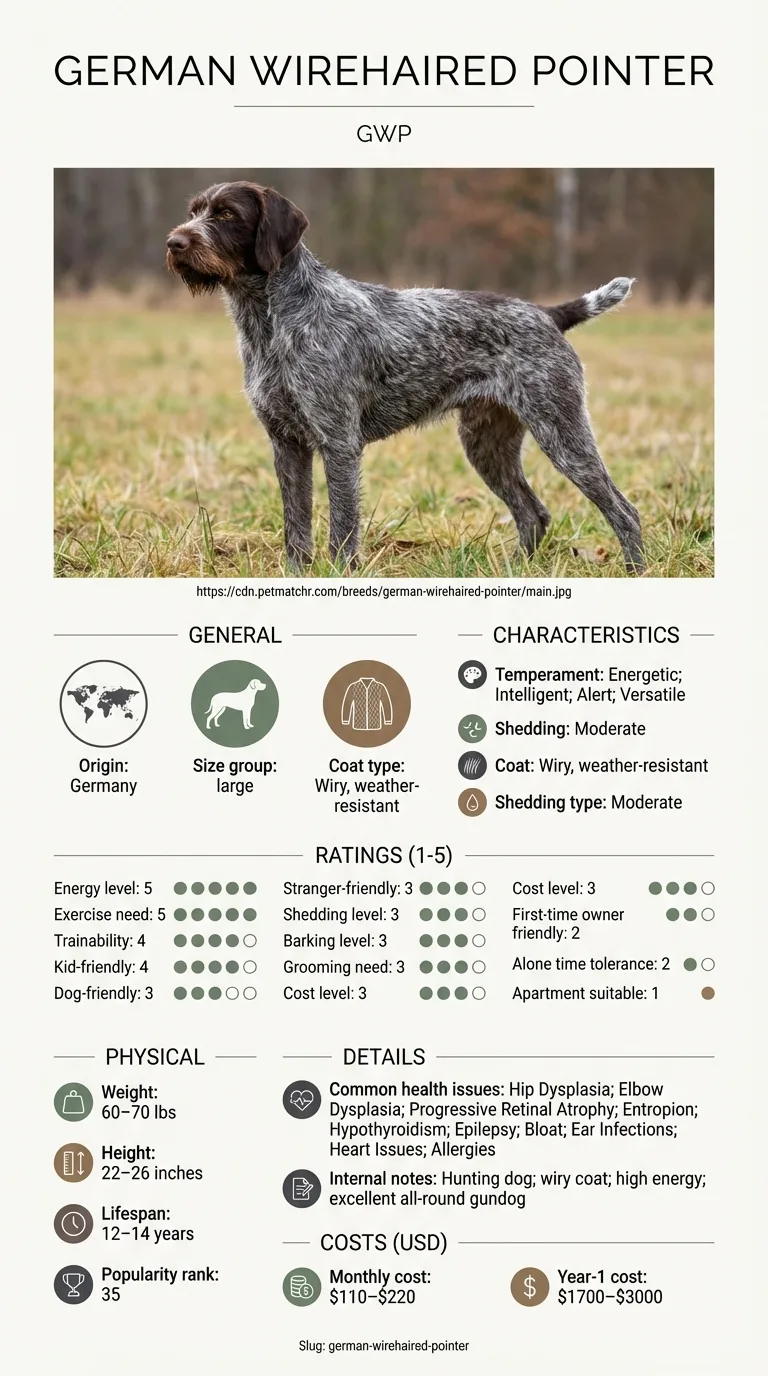
60–70 lbs
Equal
Height
22–26 in
22–26 in
Equal
Lifespan
11–14 years
12–14 years
german wirehaired pointer
Exercise need
Moderate (3/5)
Very high (5/5)
collie
Grooming need
High (4/5)
Moderate (3/5)
german wirehaired pointer
Shedding
High (4/5)
Moderate (3/5)
german wirehaired pointer
Energy level
Moderate (3/5)
Very high (5/5)
Equal
Barking
Moderate (3/5)
Moderate (3/5)
Equal
Apartment suitability
Low (2/5)
Very low (1/5)
collie
Good for first-time owners
High (4/5)
Low (2/5)
collie
Tolerates being alone
Moderate (3/5)
Low (2/5)
collie
Trainability
Very high (5/5)
High (4/5)
collie
Good with kids
Very high (5/5)
High (4/5)
collie
Good with other dogs
High (4/5)
Moderate (3/5)
collie
Friendly to strangers
High (4/5)
Moderate (3/5)
collie
Cost level
Moderate (3/5)
Moderate (3/5)
Equal
Coat
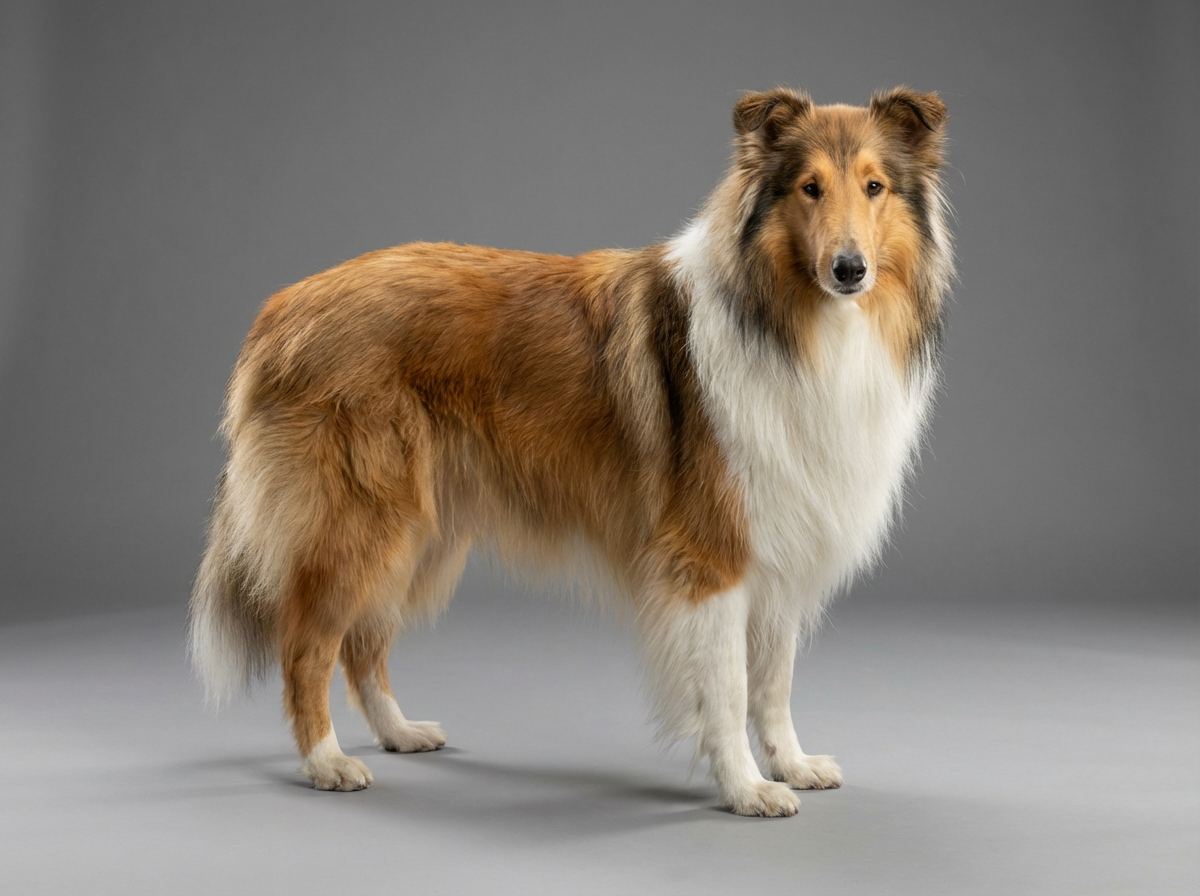
Long double coat
Wiry, weather-resistant
Equal
Origin
Scotland
Germany
Equal
Typical monthly cost
$100–$200
$110–$220
Equal
Typical first-year cost
$1,500–$2,800
$1,700–$3,000
Equal
Deep dive
Size and build
The two breeds are close in scale -- the Collie at 50-75 lbs and 22-26 inches, the German Wirehaired Pointer at 60-70 lbs and the identical 22-26-inch height range. The Wirehaired Pointer's weight sits narrower and higher within that shared height band, giving it a stockier, more compact build than the Collie's leaner frame, even though a full-grown dog of either breed could stand at the same height on a scale.
Energy and exercise
The German Wirehaired Pointer needs very high, 5/5, exercise against the Collie's moderate 3/5, with energy levels split the same way. Bred for all-day versatile hunting work across rough terrain, this is a breed that treats a short walk as barely a warmup, and it will look for its own entertainment, often destructive, if that need goes unmet for more than a day or two.
Grooming and shedding
The Wirehaired Pointer's coat is lower-maintenance than the Collie's on both fronts: moderate (3/5) grooming and shedding against the Collie's high (4/5) on each. Its wiry, weather-resistant coat is built to shed debris rather than hold onto it, which shows up in the numbers, though it still benefits from periodic hand-stripping that a purely brush-and-go coat wouldn't need.
Apartment living, noise and time alone
Neither breed suits small spaces well, but the Wirehaired Pointer is worse off -- very low (1/5) apartment suitability against the Collie's low (2/5). Barking ties at moderate (3/5) for both, so noise isn't the constraint here; space and the Pointer's very high exercise need are, and a small unit with no yard access makes meeting that need meaningfully harder.
Training and owner experience
The Collie edges ahead on trainability, very high (5/5) against the Pointer's still-strong high (4/5), and by a wider margin on first-time-owner suitability, 4/5 against a low 2/5. The Pointer's versatility and drive are assets for an experienced handler with a training plan and a genuine challenge for a first dog without one.
Kids, other dogs and visitors
The Collie scores higher with kids, 5/5 versus 4/5, other dogs, 4/5 versus moderate 3/5, and strangers, 4/5 versus moderate 3/5 -- a consistent, if modest, edge across every social category in this comparison. The Wirehaired Pointer's alert, energetic temperament isn't unfriendly, just less naturally geared toward a house full of visiting kids and dogs than the Collie's gentler baseline.
Health and lifespan
Lifespan slightly favors the Wirehaired Pointer, 12-14 years against the Collie's 11-14. Health risks overlap substantially -- hip dysplasia, Progressive Retinal Atrophy, hypothyroidism, and epilepsy all appear on both lists. The Pointer's list adds elbow dysplasia, entropion, and allergies; the Collie's adds bloat, gastric torsion, and cancer in their place.
Cost to keep
Costs sit close together: both rate moderate (3/5) overall, and monthly ranges nearly match at $100-200 for the Collie and $110-220 for the Pointer. First-year totals follow suit -- $1,500-2,800 versus $1,700-3,000. Neither breed's cost profile is likely to be the deciding factor here; the practical costs that diverge more, like exercise-related gear or field training, depend on your lifestyle rather than the breed's baseline price.
Collie (Rough Collie) vs German Wirehaired Pointer at a glance
Collie (Rough Collie) weighs 50–75 lbs and lives 11–14 years; German Wirehaired Pointer weighs 60–70 lbs and lives 12–14 years. The two diverge most on exercise need, energy level and good for first-time owners. They are level on barking and cost level, so those cannot decide it. In the table, a "winner" means easier for an ordinary household — not better. Size, coat and origin are recorded without a verdict. Because both breeds are scored the same way, the gaps are reliable even where the absolute numbers are rough.
Collie (Rough Collie) vs German Wirehaired Pointer: Which Suits Your Home? - Collie (Rough Collie) vs German Wirehaired Pointer at a glance
Frequently asked questions
Which is bigger, Collie or German Wirehaired Pointer?
They're close -- the Collie runs 50-75 lbs and the Pointer 60-70 lbs, both standing 22-26 inches, so a mid-weight Collie and a Wirehaired Pointer can be nearly the same size.
Which needs more exercise?
The German Wirehaired Pointer, dramatically so -- very high (5/5) against the Collie's moderate (3/5). It's built for all-day fieldwork, not a casual daily walk.
Which is easier to groom?
The German Wirehaired Pointer, at moderate (3/5) against the Collie's high (4/5) -- its wiry coat sheds debris rather than trapping it the way the Collie's long double coat does.
Is the Pointer suited to apartment living?
No -- very low (1/5), even lower than the Collie's already-low 2/5, and its very high exercise need makes the mismatch worse in practice.
Which is friendlier with strangers?
The Collie, at high (4/5) against the Pointer's moderate (3/5) -- not a dramatic gap, but a consistent one across every social category in this comparison.
Do the two breeds share health risks?
Yes, substantially -- hip dysplasia, Progressive Retinal Atrophy, hypothyroidism, and epilepsy all appear on both lists, alongside breed-specific additions on each side.
What's the cost difference?
Minimal -- $100-200 monthly for the Collie versus $110-220 for the Pointer, with first-year totals about $200 apart.
Collie or German Wirehaired Pointer -- which is the better all-around choice?
Unless you have serious daily time for exercise and a house with real space, the Collie is the more livable choice; the Pointer rewards an active, outdoorsy household.
Costs
What's the monthly cost?
Close -- $100-200 for the Collie, $110-220 for the Pointer.
Behavior
Which needs more exercise?
The German Wirehaired Pointer, at very high (5/5) against the Collie's moderate (3/5).
Health
Which lives longer?
The Pointer, slightly -- 12-14 years against the Collie's 11-14.
Related DogBreedCompass guides
Collie (Rough Collie) breed guide – Readers comparing the two usually want the full profile of Collie (Rough Collie) before deciding.
Collie (Rough Collie) vs Golden Retriever – Golden Retriever is the closest breed to Collie (Rough Collie) on the measured axes, so it is the natural next comparison.
Health information here is general and is not veterinary advice. If your dog shows pain, sudden behaviour change, or worsening symptoms, consult a licensed veterinarian.
Some links on this site are affiliate links. We may earn a commission at no extra cost to you, and we only suggest products we believe are helpful for dog owners.
We research and check what we publish, but we do not warrant that any figure, date, price, or statement is accurate, complete, or current, and we accept no liability for any loss, cost, injury, or other harm arising from the use of this site. Use it as one reference among several. You remain responsible for your own decisions and for your dog's care - confirm anything that matters with a licensed veterinarian or another qualified professional before you act on it. Full disclaimer.