Living
More energetic breed?
The English Springer Spaniel, rated very high (5/5) versus the Shar-Pei's low (2/5).

Quick answer
More energetic breed?
The English Springer Spaniel, rated very high (5/5) versus the Shar-Pei's low (2/5).
Chinese Shar-Pei or English Springer Spaniel? On paper they differ most on exercise need, and on the scales Chinese Shar-Pei is the heavier at 45–60 lbs. Here is how the two compare on everything that shapes an ordinary week.
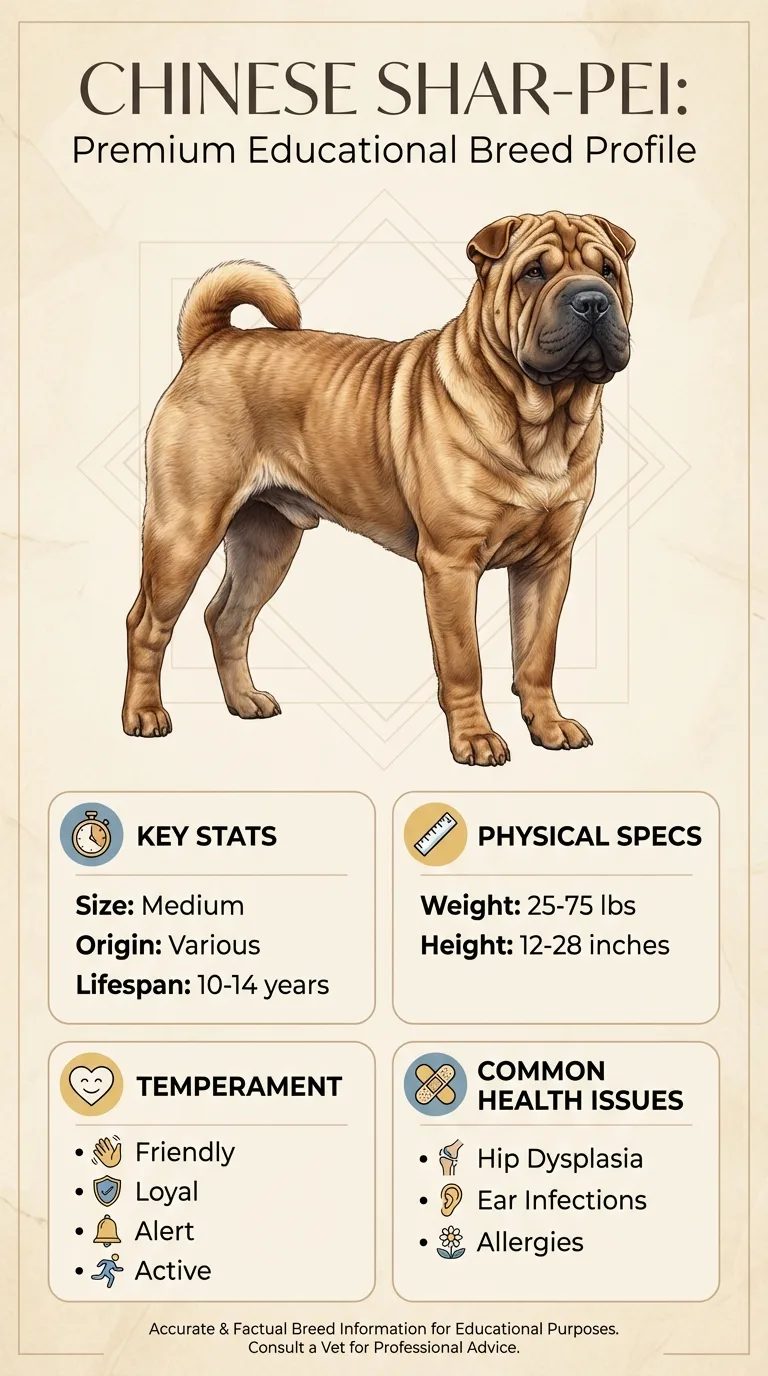
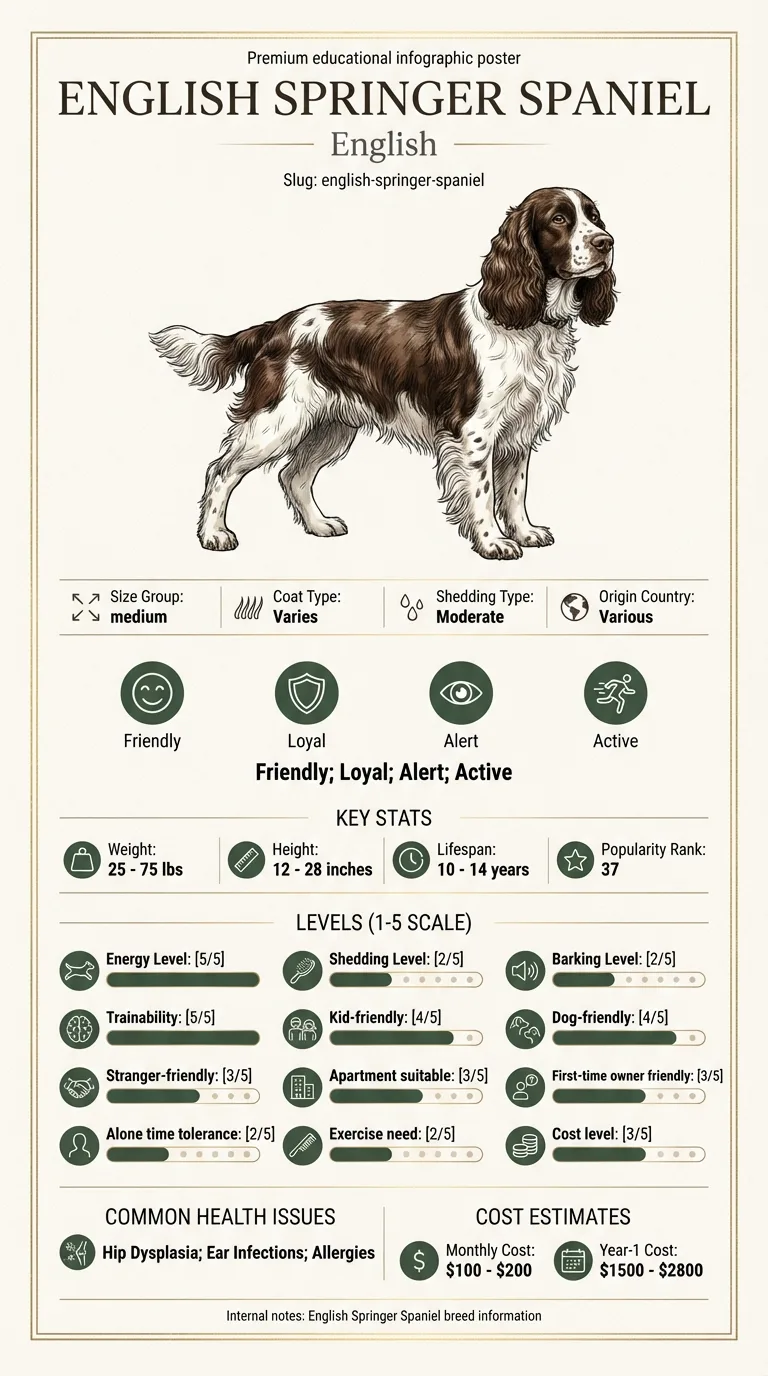
This is for someone already down to Chinese Shar-Pei and English Springer Spaniel and deciding between them. For this pair the decision usually turns on exercise need and energy level, so those are covered first and in most detail. Anyone choosing from a flat has a clear answer here: Chinese Shar-Pei rates 4/5 against 2/5. Breed history is left out; what follows is what you will actually live with.
Between Chinese Shar-Pei and English Springer Spaniel, exercise need is what separates them, and Chinese Shar-Pei is the lower-effort dog of the two to keep.
Choose Chinese Shar-Pei if you are in a flat or a smaller home, you do not want a standing grooming appointment and shedding is a problem in your house.
Choose English Springer Spaniel if this is your first dog, there are young children at home and you already have another dog.
| Feature | chinese shar pei | english springer spaniel | Winner |
|---|---|---|---|
| Size class | medium | medium | Equal |
| Weight | 45–60 lbs | 40–50 lbs | Equal |
| Height | 18–20 in | 19–20 in | Equal |
| Lifespan | 8–12 years | 12–14 years | english springer spaniel |
| Exercise need | Low (2/5) | Very high (5/5) | chinese shar pei |
| Grooming need | Low (2/5) | High (4/5) | chinese shar pei |
| Shedding | Low (2/5) | Moderate (3/5) | chinese shar pei |
| Energy level | Low (2/5) | Very high (5/5) | Equal |
| Barking | Low (2/5) | Moderate (3/5) | chinese shar pei |
| Apartment suitability | High (4/5) | Low (2/5) | chinese shar pei |
| Good for first-time owners | Low (2/5) | Moderate (3/5) | english springer spaniel |
| Tolerates being alone | Moderate (3/5) | Low (2/5) | chinese shar pei |
| Trainability | Low (2/5) | Very high (5/5) | english springer spaniel |
| Good with kids | Moderate (3/5) | Very high (5/5) | english springer spaniel |
| Good with other dogs | Low (2/5) | High (4/5) | english springer spaniel |
| Friendly to strangers | Low (2/5) | High (4/5) | english springer spaniel |
| Cost level | High (4/5) | Moderate (3/5) | english springer spaniel |
| Coat | Short and harsh | Medium, feathered double coat | Equal |
| Origin | Various | Various | Equal |
| Typical monthly cost | $100–$200 | $100–$200 | Equal |
| Typical first-year cost | $1,400–$2,900 | $1,400–$2,900 | Equal |
The English Springer Spaniel and Chinese Shar-Pei land close together in raw numbers — 40 to 50 pounds and 19 to 20 inches for the springer against 45 to 60 pounds and 18 to 20 inches for the Shar-Pei — but the builds couldn't read more differently. The springer carries a lean, athletic sporting-dog frame designed for covering ground in the field, while the Shar-Pei's dense, low, wrinkled body is built for a completely different purpose. Weight ranges overlap almost entirely, so anyone shopping by scale alone might expect similar dogs; in practice, the springer's leggier proportions and feathered coat give it a visibly different silhouette than the Shar-Pei's compact bulk.
This is one of the sharpest exercise contrasts on the site: the English Springer Spaniel rates very high (5/5) for both exercise need and energy level, while the Chinese Shar-Pei sits at low (2/5) on both. Bred to flush and retrieve game across long days in the field, the springer genuinely needs vigorous daily exercise — a couple of long walks, off-leash time, or active play — to stay content, and an under-exercised springer with its eager, energetic temperament can turn restless or destructive. The Shar-Pei's needs are a fraction of that. This single category alone should steer most households firmly toward one breed or the other.
The English Springer Spaniel's medium, feathered double coat drives grooming need to high (4/5) and shedding to moderate (3/5), requiring regular brushing to manage the feathering around its ears, chest, and legs, plus attention after muddy field outings. The Chinese Shar-Pei's short, harsh coat needs only low (2/5) grooming and produces low (2/5) shedding, a fraction of the springer's upkeep. Owners who love the idea of an active field companion should factor in the brushing time that comes with it, while those who want minimal coat maintenance alongside a lower-energy lifestyle will find the Shar-Pei the far easier package on both fronts.
The Chinese Shar-Pei is the clear apartment pick, rating high (4/5) for apartment suitability against the English Springer Spaniel's low (2/5) — a gap driven almost entirely by the springer's very high exercise needs rather than its barking, which sits at a manageable moderate (3/5), close to the Shar-Pei's low (2/5). Both breeds rate low (2/5) for tolerating time alone, so neither handles long solo stretches especially well, but a springer denied its daily exercise in a small space is a recipe for a genuinely unhappy, high-energy dog. A springer really needs a house with a yard or nearby open space, not a studio apartment.
The English Springer Spaniel rates very high (5/5) for trainability, tied for the top score on this table, and its eager, biddable temperament makes it a natural fit for structured training. It rates moderate (3/5) for first-time-owner suitability, a step above the Chinese Shar-Pei's low (2/5) on both trainability and first-time fit. That moderate rather than high first-time score likely reflects the springer's high exercise and energy demands, which can overwhelm an inexperienced owner even if the dog itself learns quickly. The Shar-Pei's independent, reserved nature means training is a slower process regardless of owner experience level, often benefiting from professional support.
The English Springer Spaniel scores very high (5/5) with kids, high (4/5) with other dogs, and high (4/5) with strangers, a warm, social profile matching its friendly, eager temperament. The Chinese Shar-Pei trails across the board, moderate (3/5) with kids, low (2/5) with other dogs, and low (2/5) with strangers, in line with its reserved, independent character. Active families with children, other pets, and frequent visitors will generally find the springer the more natural household fit, provided they can meet its considerable exercise needs, while the Shar-Pei suits a quieter household not looking for an instantly outgoing family dog.
Lifespans favor the English Springer Spaniel, 12 to 14 years against the Chinese Shar-Pei's 8 to 12, and its five flagged conditions — hip dysplasia, ear infections, progressive retinal atrophy, phosphofructokinase deficiency, and elbow dysplasia — include phosphofructokinase deficiency, a metabolic condition worth asking a breeder about directly since it's specific to a handful of breeds. The Shar-Pei's own five-item list — skin fold dermatitis, entropion, familial Shar-Pei fever, hypothyroidism, and ear infections, a condition shared by both breeds — centers on its wrinkled skin. Springer owners should keep an eye on those floppy, feathered ears for infection, while Shar-Pei owners should build regular skin-fold cleaning into their routine.
Cost figures match closely on paper: the Chinese Shar-Pei carries a high (4/5) cost rating against the English Springer Spaniel's moderate (3/5), yet both run the identical $100 to $200 monthly and $1,400 to $2,900 in the first year. Given the springer's higher exercise and grooming demands, that parity suggests its costs lean toward activity gear, grooming, and food to fuel a very-high-energy dog, while the Shar-Pei's spending likely reflects general upkeep and skin-fold care tied to its higher overall cost-level rating. Either way, buyers should expect a similar overall budget commitment, with the difference showing up more in time than in dollars.
Chinese Shar-Pei weighs 45–60 lbs and lives 8–12 years; English Springer Spaniel weighs 40–50 lbs and lives 12–14 years. The two diverge most on exercise need, energy level and trainability and 5 other rated axes. Almost every rated axis separates them at least slightly. The comparison marks an easier option only where one exists. Facts like weight and country of origin are not scored. Both dogs are rated from the same dataset, which is what makes the numbers comparable with each other even though any individual dog sits somewhere inside its breed's range.

The English Springer Spaniel, by a wide margin — it rates very high (5/5) for exercise need and energy versus the Shar-Pei's low (2/5) on both.
Not really — it rates low (2/5) for apartment suitability due to its very high exercise needs, while the Shar-Pei rates high (4/5).
The English Springer Spaniel, rated very high (5/5) versus the Shar-Pei's low (2/5).
The English Springer Spaniel, rated very high (5/5) versus the Shar-Pei's moderate (3/5).
Phosphofructokinase deficiency, a metabolic condition, appears on its list alongside hip dysplasia, ear infections, progressive retinal atrophy, and elbow dysplasia.
The English Springer Spaniel, with a 12-to-14-year lifespan versus the Shar-Pei's 8-to-12 years.
They're nearly identical in dollar terms — both run $100-$200 monthly and $1,400-$2,900 in year one, despite different cost-level ratings.
The English Springer Spaniel, rated very high (5/5) versus the Shar-Pei's low (2/5).
The Chinese Shar-Pei, rated low (2/5) versus the springer's high (4/5).
The English Springer Spaniel, rated high (4/5) versus the Shar-Pei's low (2/5).
Close, but the Chinese Shar-Pei edges it, rated low (2/5) barking versus the springer's moderate (3/5).
Secure checkout on Stripe. We never see your card.
7-day money-back guarantee. Instant access.
Health information here is general and is not veterinary advice. If your dog shows pain, sudden behaviour change, or worsening symptoms, consult a licensed veterinarian.
Some links on this site are affiliate links. We may earn a commission at no extra cost to you, and we only suggest products we believe are helpful for dog owners.
We research and check what we publish, but we do not warrant that any figure, date, price, or statement is accurate, complete, or current, and we accept no liability for any loss, cost, injury, or other harm arising from the use of this site. Use it as one reference among several. You remain responsible for your own decisions and for your dog's care - confirm anything that matters with a licensed veterinarian or another qualified professional before you act on it. Full disclaimer.
Match your lifestyle to the right dog.
Take quizNot sure which breed is right for you? Take our 2-minute quiz to find out.
Take the quiz