DogBreedCompass

Pit Bull or Bloodhound: A Hundred Pounds Behind an Unstoppable Nose

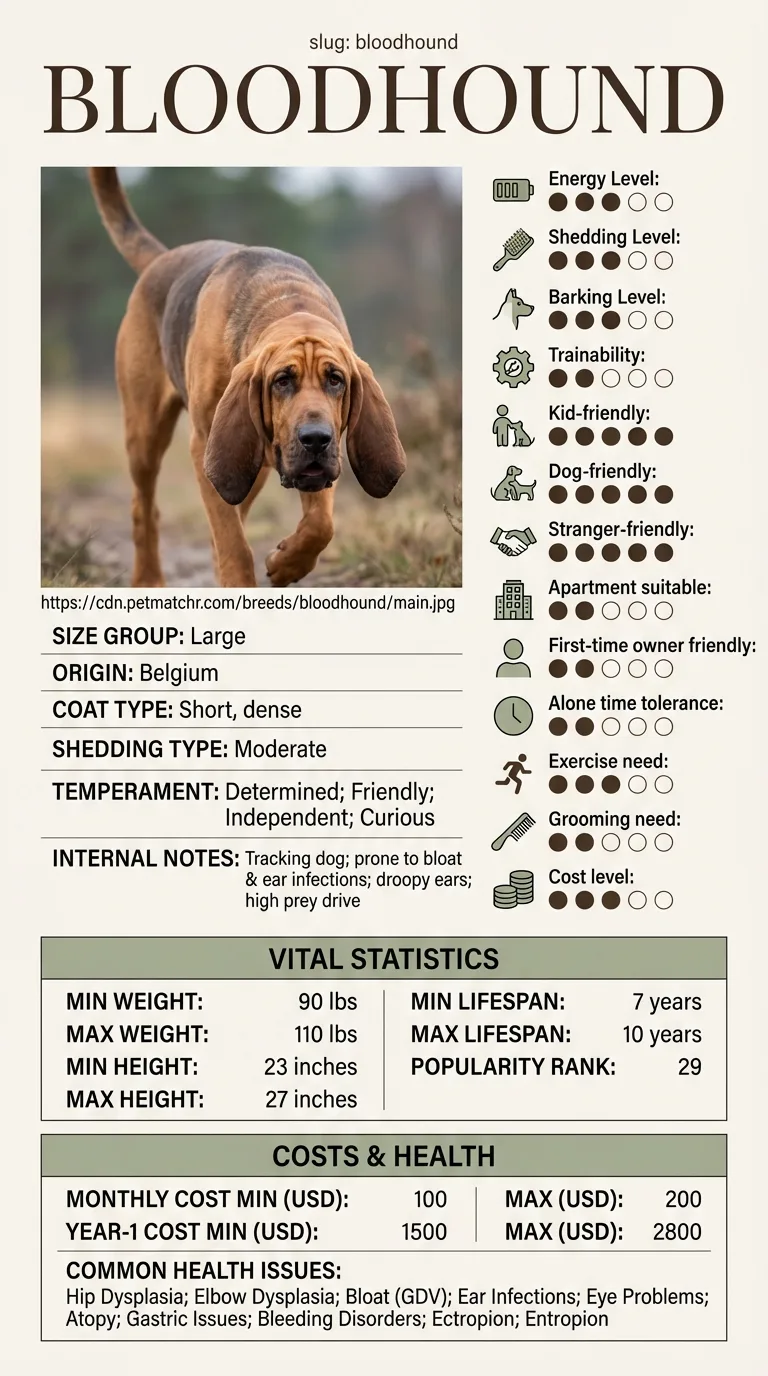
A Bloodhound can weigh 110 pounds, rates 2/5 for trainability, and is attached to the most capable nose in the dog world. Those three facts together are the whole of what makes the breed difficult.

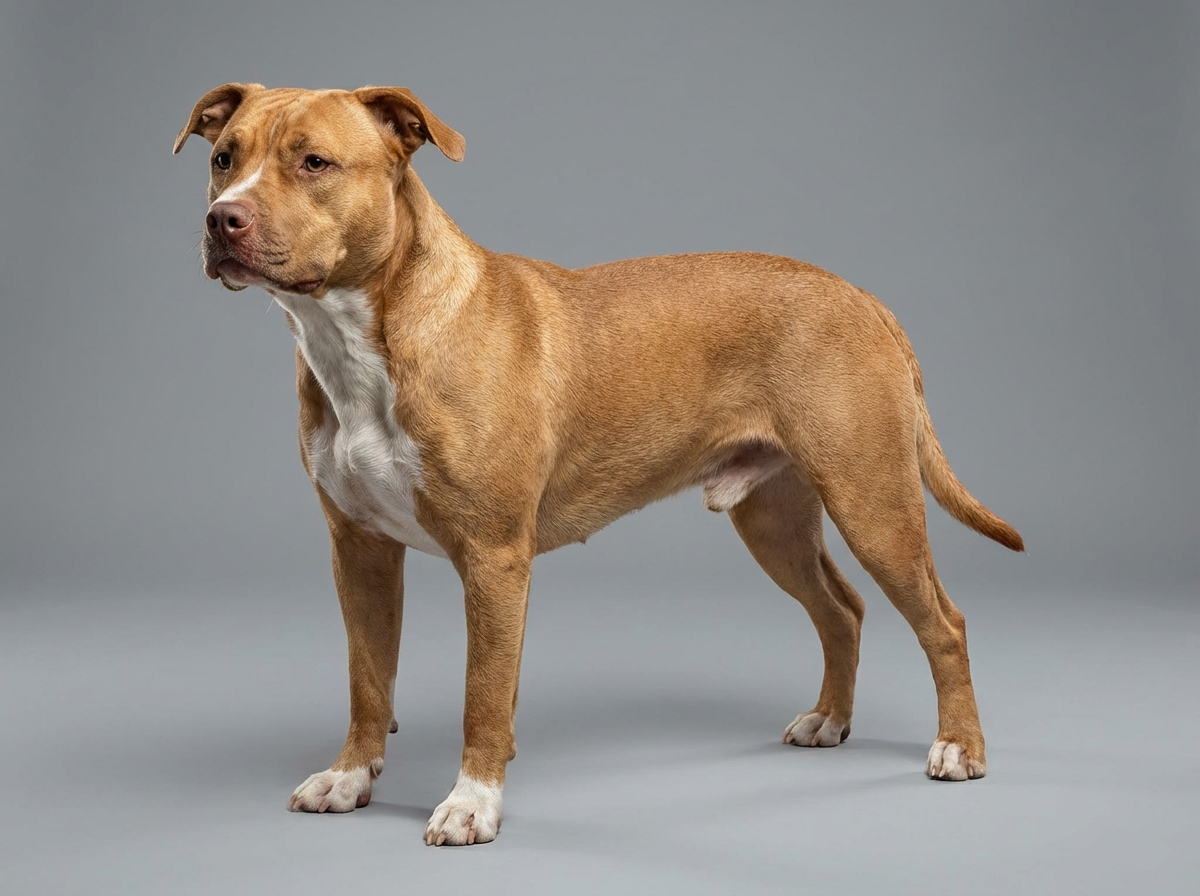
american pit bull terrier infographic
bloodhound infographic

This page is for someone drawn to a big, gentle, characterful hound and needing to know what the size, the nose and the seven-to-ten-year figure actually mean in practice.

Quick verdict

The Bloodhound is a genuinely kind, sociable dog that is physically hard to handle, expensive in maintenance and short-lived, while the Pit Bull is easier on all three counts and harder around other dogs.

Choose american pit bull terrier if...

Choose the American Pit Bull Terrier if you want a long-lived, athletic, low-maintenance dog you can physically manage, and you can commit to careful introductions with other dogs and to checking local restrictions.

Choose bloodhound if...

Choose the Bloodhound if you want a gentle giant with an extraordinary working nose, you are strong enough to hold one on a lead, you have secure fencing, and you accept ear and eye care as a daily routine.

Head-to-head comparison

Featureamerican pit bull terrierbloodhoundWinner
Weight30–65 lbs90–110 lbsamerican pit bull terrier
Height17–21 in23–27 inamerican pit bull terrier
Lifespan12–14 years7–10 yearsamerican pit bull terrier
CoatShort, glossyShort, denseEqual
Grooming need1/52/5american pit bull terrier
Shedding3/5 — moderate3/5 — moderateEqual
Energy level4/53/5bloodhound
Exercise need4/53/5bloodhound
Trainability4/52/5american pit bull terrier
Barking2/53/5american pit bull terrier
Good with kids4/54/5Equal
Good with other dogs2/54/5bloodhound
Friendly to strangers3/54/5bloodhound
Apartment suitability2/52/5Equal
Good for first-time owners2/52/5Equal
Tolerates being alone3/52/5american pit bull terrier
Typical monthly cost$80–150$100–200american pit bull terrier
Typical first-year cost$1,200–2,200$1,500–2,800american pit bull terrier

Deep dive

The nose, the weight and why the two together matter

Every scent hound follows its nose. The Bloodhound is different in degree rather than kind, and the degree is extreme: it is the breed used for trailing a named individual over hours and miles, and in some jurisdictions its work has historically been accepted in court.

The anatomy is purpose-built. Long low-hung ears sweep scent upward as the dog moves; the loose facial skin and dewlap trap it around the nostrils; the deliberate pace keeps the nose close to the ground. Once a Bloodhound has a trail, it is genuinely committed — not being stubborn, but doing the only thing the breed was ever asked to do.

At 2/5 trainability, recall in that state is not realistic. The difference from a Beagle or a Basset is the weight behind it. A 110 pound dog that has decided to follow a line is not something an average adult can physically restrain on a flat collar. That is the single most important practical fact about the breed: you need a properly fitted harness, a strong lead, and enough physical capacity to hold the dog, and unfenced off-lead work is out of the question.

The upside is that the nose is also the answer. Tracking is the one activity that genuinely satisfies a Bloodhound, and it is available to any owner as a hobby — a harness, a long line, and a laid trail in a field. Twenty minutes of real trailing does more for the dog than an hour of walking, and the breed is transformed when given the job it exists for.

Exercise is 3/5, roughly an hour split across the day at a hound's pace. It is not a running or agility breed and its joints do not suit high-impact work.

The Pit Bull's 4/5 trainability is a genuine advantage. It is handler-oriented, learns fast and enjoys structured work, which is also the main tool for managing its 2/5 with other dogs.

Ears, eyelids and folds: a daily routine

The Bloodhound's health list names ear infections, eye problems, ectropion and entropion, and all four come from the same design.

The ears are long, heavy and low-set, which seals the canal and holds moisture — precisely the environment infections need — and they drag along the ground collecting whatever is there while the dog works. Weekly cleaning with a veterinary ear cleaner and thorough drying after wet walks is not optional maintenance in this breed; it is what prevents chronic, painful, expensive ear disease. Head shaking, scratching, odour or discharge means an appointment rather than more cleaning.

The eyelids are the unusual part, because the breed can carry problems in both directions. Ectropion is the lower lid rolling outward, leaving the eye exposed and the conjunctiva visible — the droopy red-rimmed look the breed is known for — which allows dust and debris in and causes chronic irritation. Entropion is the opposite: a lid rolling inward so lashes rub the cornea. Some Bloodhounds have elements of both, and severe cases of either are surgically corrected. Daily wiping and prompt attention to any squinting, weeping or rubbing keeps most of it manageable.

The facial and neck folds trap moisture and debris in the same way and need wiping and drying too. That is why the breed rates 2/5 for grooming despite a short coat that needs almost nothing — the work is not on the coat.

Atopy sits on the list as well, which is allergic skin disease, and it presents as itching, paw chewing and — predictably — more ear trouble.

The Pit Bull's 1/5 is a curry mitt once a week. Its upright ears ventilate themselves and there are no folds. It shares the allergy risk, and skin allergies are its most common day-to-day veterinary complaint.

Bloat, gastric issues and a short life

The Bloodhound's own notes flag bloat, and its health list names both bloat and gastric issues separately. This is one of the highest-risk breeds for gastric dilatation and volvulus, and it deserves planning rather than worry.

The mechanism is a deep-chested stomach that fills with gas and then rotates on its axis, cutting off its own blood supply. It kills in hours. The signs are a dog that becomes restless and uncomfortable, tries repeatedly to vomit and produces nothing, and develops a swelling, drum-tight abdomen. There is no home remedy and no waiting until morning.

The practical measures are simple: split the daily food into two or three meals, keep the hour either side of eating quiet, use a slow-feeder bowl for a fast eater, and know where the nearest out-of-hours surgery is and roughly what it charges before you need to. Because the risk is high in this breed, prophylactic gastropexy — tacking the stomach so it cannot rotate, often done at the same time as spay or neuter — is a mainstream conversation to have with a vet rather than an unusual one.

Bleeding disorders also appear on the list, which matters before any surgery. Raise it with a vet ahead of an elective procedure and ask a breeder what is known in the line.

Hip and elbow dysplasia complete the orthopaedic picture, and both are screenable in the parents.

All of this feeds into the 7 to 10 year lifespan, which is among the shortest here. Giant size, a high bloat risk and a heavy load of chronic maintenance problems combine, and Bloodhound owners frequently describe the last two years as the expensive ones.

The Pit Bull's 12 to 14 years reflects a broader but lighter list: hip and elbow dysplasia, skin allergies, heart murmurs, bloat, obesity, cruciate disease, arthritis and cancer.

Two friendly dogs with different social difficulties

The Bloodhound's temperament keywords are determined, friendly, independent and curious, and its social ratings are good: 4/5 with children, 4/5 with other dogs, 4/5 with strangers. Pack hounds were kennelled in groups and handled by many people, so there is no guarding instinct and very little reactivity.

What there is instead is size and obliviousness. A Bloodhound following a scent through a kitchen will move furniture and small children without noticing, and a puppy that reaches sixty pounds by six months is a lot of uncoordinated animal. Loose-lead training is a safety requirement rather than a nicety.

It is also a notably slow-maturing breed, mentally puppyish well into its third year, and its 2/5 tolerance for time alone reflects a pack animal that dislikes solitude and expresses it vocally.

The Pit Bull is warm with people at 4/5 with children and 3/5 with strangers, and the 2/5 with other dogs is its defining management task: no dog parks, no on-lead greetings with unknown dogs, careful neutral-ground introductions, and awareness that tolerance can decline at social maturity.

Alongside that sits the administrative layer. Breed restrictions in tenancy agreements, housing rules and insurance policies commonly cover bully-type dogs, and enforcement often works from appearance rather than pedigree. Check the rules in writing before committing.

Both breeds rate 2/5 for first-time owners, and for different reasons. The Bloodhound is hard because of physical management, ear and eye care and a short life with real costs at the end. The Pit Bull is hard because of judgement — dog-dog management, socialisation and paperwork.

Both also carry prey drive: the Bloodhound's is described in its own notes as high, and small fast animals are not safe with either without management.

What each dog actually costs to run

The Bloodhound runs $100–200 a month at cost level 3/5, with a first year of $1,500–2,800. The Pit Bull is $80–150 at cost level 2/5, one of the lowest here, with a first year of $1,200–2,200.

The Bloodhound's premium is partly food volume for a 100 pound dog and partly weight-based veterinary pricing — anaesthesia, sedation, prevention and medication are all dosed by kilogram. But the recurring cost that surprises people is maintenance: ear treatments, eye problems, skin folds and atopy add up steadily across the year, and a chronic ear or eye case is not cheap.

Equipment costs more too. A hundred-pound dog needs a strong harness, a proper lead, a car ramp, a big crate and a bed that survives being lain on by that weight. Boarding kennels charge accordingly.

The drool is not a cost but it is a reality: a loose-lipped breed with a heavy dewlap produces a great deal and distributes it by shaking. Bloodhound households keep towels in every room.

The Pit Bull's hidden cost runs the other way — not maintenance but insurance, where bully-type breeds are frequently surcharged or excluded, and where an exclusion matters more than a premium.

When the two are set side by side, the honest summary is that the Bloodhound is a specialist's dog. It is affectionate, comic, extraordinary at its job, and unusually demanding physically, financially and emotionally — four years of ownership shorter than the Pit Bull, with more of the spending concentrated at the end.

Anyone considering one should meet an adult first, take the lead, and find out what a hundred pounds of committed hound feels like.

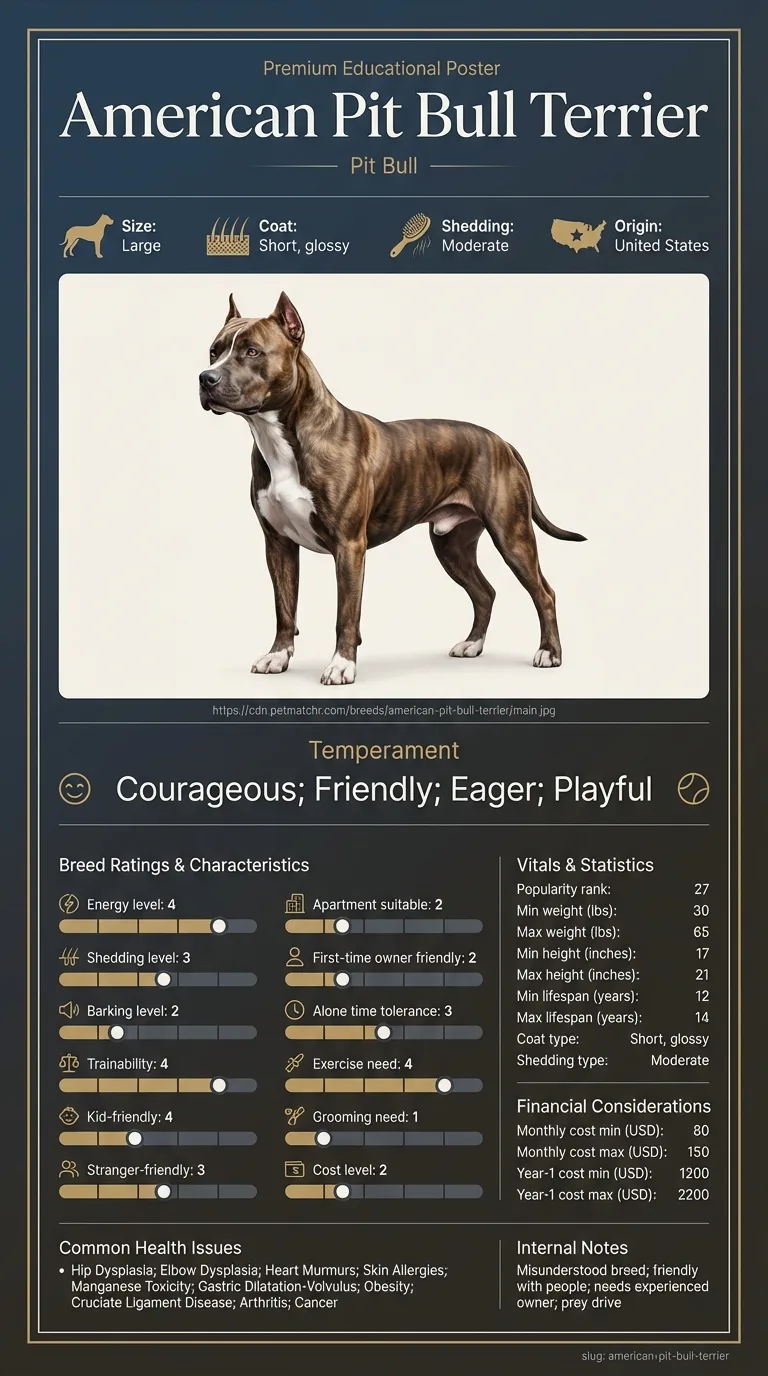
American Pit Bull Terrier vs Bloodhound at a glance

A Bloodhound can weigh 110 pounds, rates only 2/5 for trainability, and is attached to the most capable nose in the dog world. Those three facts together are the whole of what makes the breed genuinely difficult to handle.

The Bloodhound is a kind, sociable dog that is physically hard to manage, expensive in maintenance, and comparatively short-lived. The Pit Bull is easier on all three of those counts, and harder to manage around other dogs.

Choose the American Pit Bull Terrier if you want a long-lived, athletic, low-maintenance dog you can physically manage, and you can commit to careful introductions with other dogs and to checking local restrictions. Choose the Bloodhound if you want a gentle giant with an extraordinary working nose, you are strong enough to hold one on a lead, and you accept daily ear and eye care as routine.

Frequently asked questions

Can a Bloodhound be let off the lead?

Not safely in unfenced areas. At 2/5 trainability with the strongest trailing drive of any breed, recall does not survive a scent. The weight makes it worse — a committed 110 pound hound is not something most adults can hold on a flat collar.

How much ear care does a Bloodhound need?

Weekly cleaning and thorough drying after wet walks, as a fixed routine. Long low-set ears seal the canal and trap moisture, and they collect debris from the ground while the dog works, which is why infections head the health list.

What are ectropion and entropion?

Eyelid problems in opposite directions. Ectropion is the lower lid rolling outward, exposing the eye to dust and causing chronic irritation; entropion is a lid rolling inward so lashes rub the cornea. Severe cases of either are corrected surgically.

Why is the Bloodhound's lifespan so short?

Size combined with a high bloat risk and a heavy load of chronic maintenance problems. At 7 to 10 years it is among the shortest here, and most of the veterinary spending concentrates in the final two.

Should a Bloodhound have a preventive gastropexy?

It is a mainstream conversation for the breed rather than an unusual one, because bloat risk is high in deep-chested giants. It is often done alongside spay or neuter to avoid a second anaesthetic. Discuss timing with your own vet.

Which is better with other dogs?

The Bloodhound at 4/5 against 2/5. It is a pack hound with no guarding instinct. The Pit Bull needs planned introductions, avoids dog parks, and can become less tolerant at social maturity.

What is the best exercise for a Bloodhound?

Tracking. A harness, a long line and a laid trail satisfy the breed far more efficiently than distance walking, and twenty minutes of real trailing does more than an hour on a pavement.

Quick answers

View more answers
Living

Pit Bull or Bloodhound: which should I choose?

The Pit Bull if you want a long-lived, low-maintenance dog you can physically handle. The Bloodhound if you want an extraordinary working nose in a gentle giant and can manage the weight, the ear and eye care and a short life.

Costs

Which is cheaper to keep?

The Pit Bull at $80–150 a month against $100–200, at cost level 2/5 against 3/5. The Bloodhound's premium is food volume plus steady ear, eye and skin maintenance.

Health

What is the most urgent health risk for a Bloodhound?

Bloat. A restless dog trying repeatedly to vomit without producing anything, with a swelling tight abdomen, needs emergency surgery within hours. Split meals and a known out-of-hours route are basic precautions.

Behavior

Is a Bloodhound suitable for a first-time owner?

It rates 2/5. The difficulties are physical management of a hundred-pound hound, daily ear and eye care, and a short expensive final stretch rather than anything to do with temperament.

Related DogBreedCompass guides

  • American Pit Bull Terrier breed guideThe Pit Bull profile covers temperament, exercise and the practical realities of ownership.
  • Bloodhound breed guideThe Bloodhound profile covers trailing work, physical handling and the breed's maintenance needs.
  • ear infections in BloodhoundsEar infections head the breed's health list and are its most reliable recurring cost.
  • bloat in BloodhoundsBloat is the breed's most urgent risk and the reason gastropexy is routinely discussed.
  • obesity in Pit Bull TerriersWeight drives the Pit Bull's cruciate, joint and arthritis risk and is the free habit that matters.
  • American Pit Bull Terrier vs Basset HoundReaders weighing scent hounds usually want the smaller, longer-eared option beside this one.

Related guides

Important reminder

Health information here is general and is not veterinary advice. Bloat prevention, eyelid surgery and screening should be discussed with your own veterinarian.

Some links on this site are affiliate links. We may earn a commission if you buy through them, at no additional cost to you.

Find Your Perfect Breed

Match your lifestyle to the right dog.

Take quiz

Find your match

Not sure which breed is right for you? Take our 2-minute quiz to find out.

Take the quiz