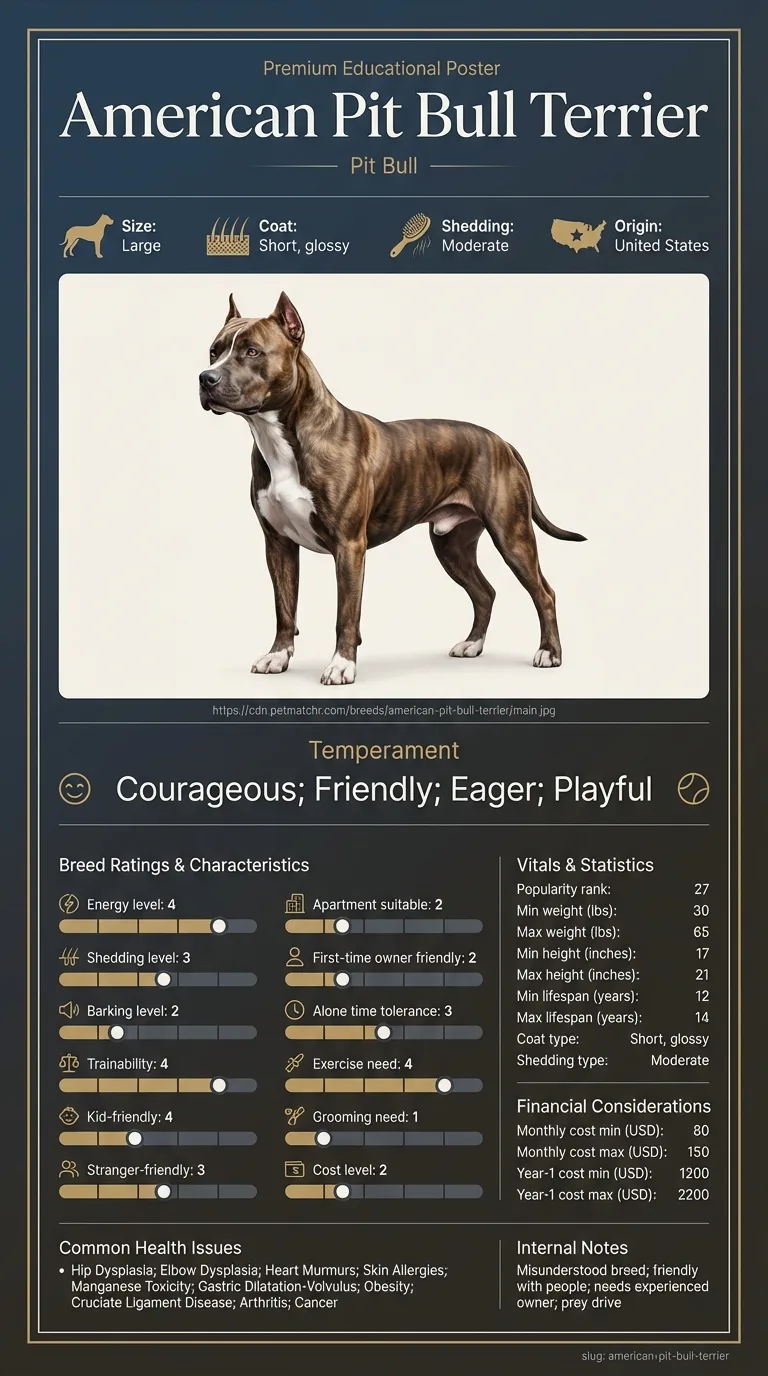
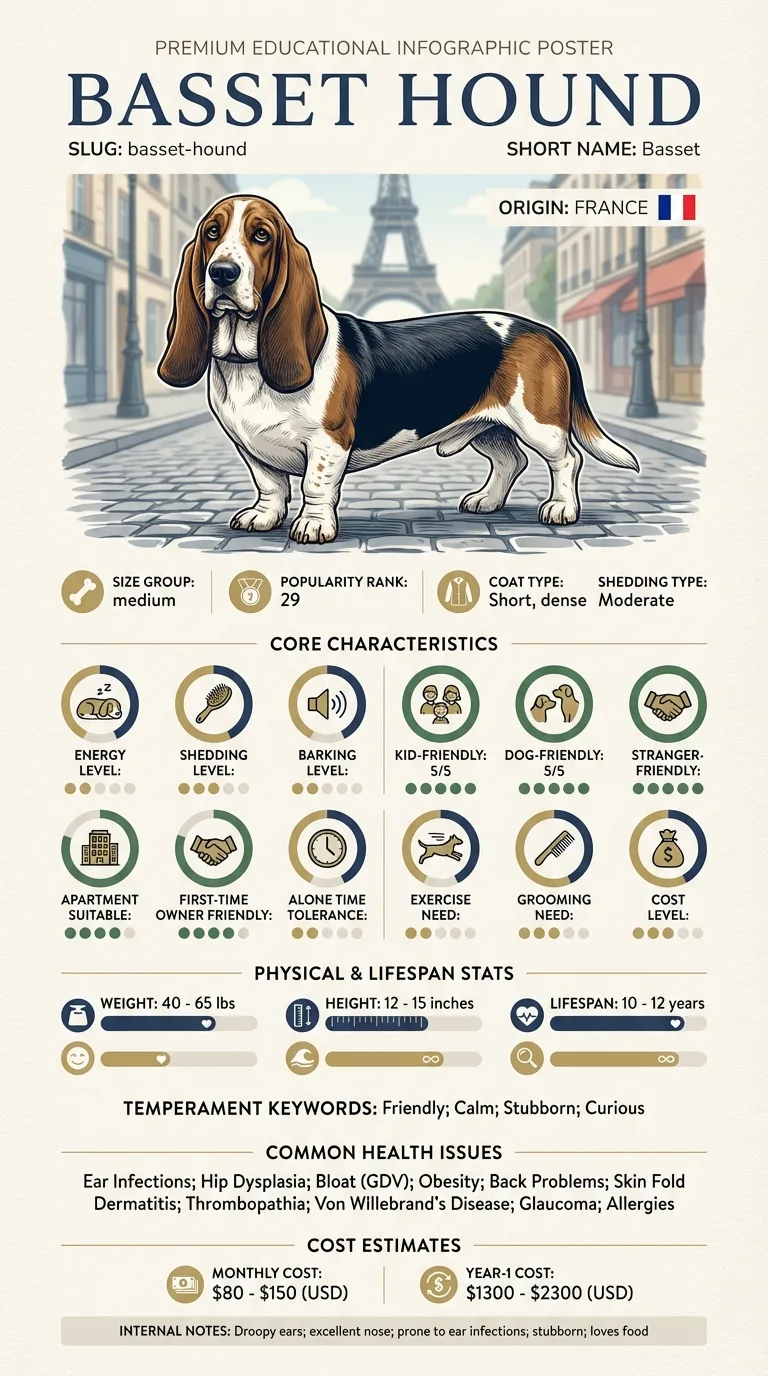
The monthly figures match exactly at $80 to $150, which makes the composition the interesting part.
The Pit Bull's cost level is 2/5, one of the lowest here, and its first year runs $1,200–2,200. Almost nothing goes on grooming. The variable that does not appear in the figure is insurance, where bully-type breeds are frequently surcharged or excluded.
The Basset sits at 3/5 with a first year of $1,300–2,300, and its recurring spend is veterinary rather than dietary: ear treatments, skin fold problems, and the joint and back consequences of the build.
Two entries on the Basset's list are worth naming because both are bleeding disorders and both matter before surgery. Thrombopathia is an inherited platelet function defect found specifically in Basset Hounds — the platelet count is normal but the platelets do not work properly, producing nosebleeds, bruising and prolonged bleeding from minor wounds or procedures. Von Willebrand's disease is the other, a clotting factor deficiency with a DNA test available. Either can turn a routine spay or dental into a serious event, so both should be raised with a vet before any elective surgery and asked about with a breeder.
Glaucoma also appears — raised pressure inside the eye, painful, and capable of destroying vision within a day or two in its acute form. A suddenly painful, cloudy or red eye is a same-day emergency.
Bloat completes the list, so split meals and a known emergency route apply.
The Pit Bull's list runs hip and elbow dysplasia, skin allergies, heart murmurs, bloat, obesity, cruciate disease, arthritis and cancer — a broader list with fewer breed-specific oddities.
Lifespan favours the Pit Bull at 12 to 14 years against 10 to 12.