Health
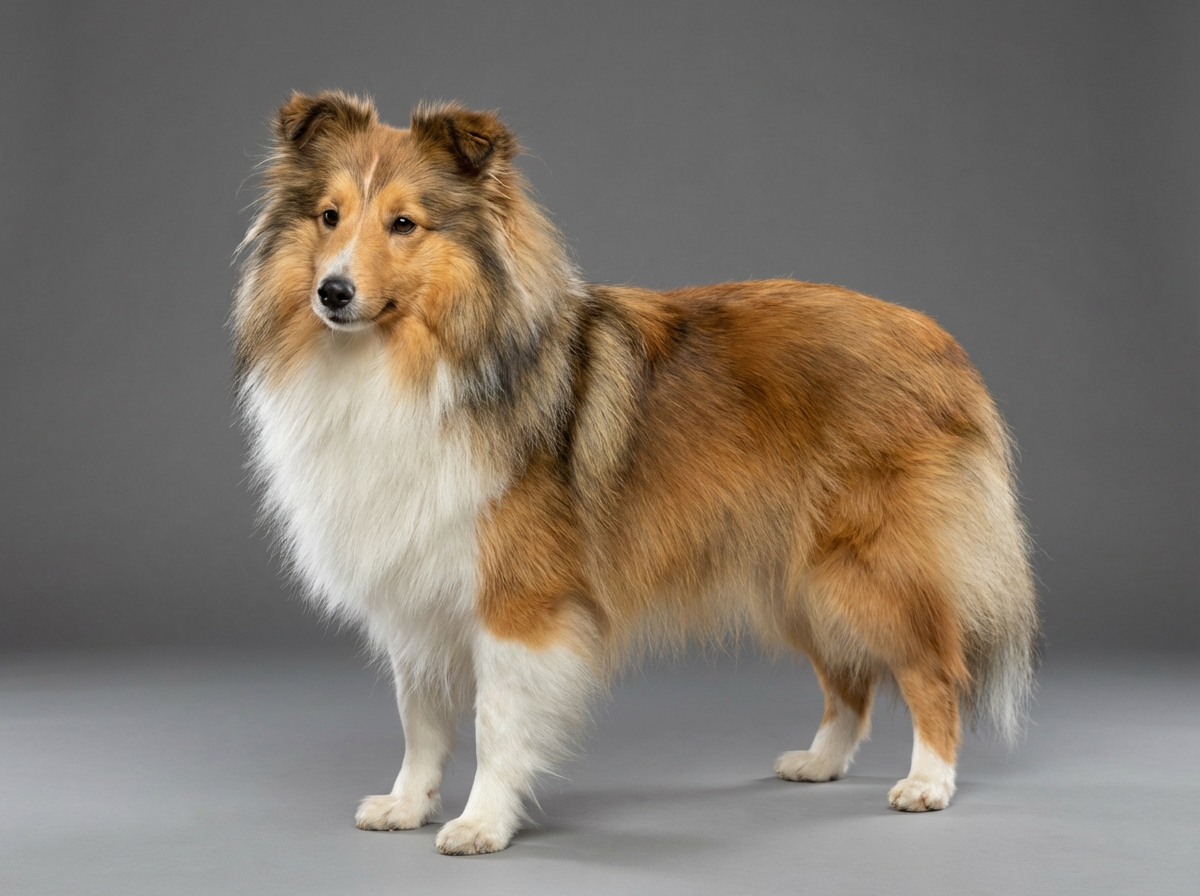
What is the first question to ask about a wobbly Sheltie?
What medication, wormer or flea product has this dog had in the last few days. MDR1 drug reactions are the breed-specific answer and must be excluded first.

Quick answer
What is the first question to ask about a wobbly Sheltie?
What medication, wormer or flea product has this dog had in the last few days. MDR1 drug reactions are the breed-specific answer and must be excluded first.
Ask what the dog has been given. In this breed a routine, correctly dosed medication is a genuine and common cause of dramatic neurological signs.
Owners whose Sheltie has suddenly become wobbly, tremulous, glassy-eyed or disoriented, often within a day or two of a wormer, a flea treatment, a sedation or a course of something for an unrelated problem.
This guide is not medical advice. If your dog shows pain, sudden behavior change, or worsening symptoms, consult a licensed veterinarian.
Some links may be affiliate links. We may earn a commission at no extra cost to you. We only suggest products we believe are helpful for dog owners.
Neurological disease in a Shetland Sheepdog spans seizures, tremor, incoordination, head tilt, blindness and collapse, and is investigated much as it would be in any breed with one crucial addition. MDR1 drug sensitivity is documented in Shelties and causes severe neurological signs after ordinary doses of certain drugs, so drug exposure is the first thing to exclude. Owners typically encounter this as an alarming and abrupt change in a previously normal dog.
Neurological presentations overall are uncommon in any individual dog's life but are seen regularly in practice. What is distinctive about the Shetland Sheepdog is that a meaningful proportion of acute neurological emergencies in this breed are drug-related and entirely preventable, which is not true of most breeds.
The MDR1 variant is the defining breed factor and it sits on the Shetland Sheepdog's documented health list alongside Collie Eye Anomaly, dermatomyositis, hypothyroidism and patellar luxation. It is not a disease of the nervous system; it is a failure of the barrier that protects the nervous system, which is why the resulting picture looks like brain disease and responds to nothing except recognising what happened. Two of the breed's other documented conditions also touch this territory: hypothyroidism can produce weakness and nerve dysfunction, and dermatomyositis involves muscle inflammation that owners describe in neurological terms.
Access to toxins is the modifiable environmental factor and it is a large one. Slug bait, antifreeze, dropped human medication, cannabis products and xylitol-containing foods account for a great many acute neurological emergencies in small dogs. A Sheltie's size means a small quantity goes a long way. Over-the-counter parasite products bought without veterinary advice are the specific environmental risk in this breed, because an owner unaware of MDR1 can create a serious reaction with an entirely well-intentioned purchase.
Treat as an immediate emergency: any seizure lasting more than five minutes, repeated seizures without full recovery between them, sudden collapse, unresponsiveness, severe tremor, blindness that has come on suddenly, or any neurological sign appearing within days of a medication or parasite treatment. Phone ahead and say Shetland Sheepdog, possible MDR1 sensitivity, and name the product if there is one. Also go the same day for a first seizure of any length, a new head tilt, circling, or sudden loss of coordination. Book within days for gradual changes: increasing hind end unsteadiness, subtle behaviour changes, or a dog that seems to be losing awareness of its surroundings.
See all Shetland Sheepdog health problems, which breeds are prone to neurologic disease, or the full Shetland Sheepdog breed guide for temperament, exercise needs and ownership costs.
Drug reactions in MDR1 dogs typically require days of intensive supportive care, and dogs that survive the acute phase usually recover fully, though it can take a week or more. Old dog vestibular disease commonly improves substantially within three to seven days with a residual head tilt that may persist. Epilepsy is a lifelong management proposition with medication adjusted over months. Structural disease follows its own course and requires referral imaging to characterise.
For the breed-specific part of this page, success is measurable and absolute: a Shetland Sheepdog that never has an MDR1 drug reaction because the test was done and the result was known. For everything else, success is a fast, accurate diagnosis, which nearly always depends on the owner arriving with a video, a timeline and a list of what the dog has been given.
MDR1 drug sensitivity is on the Shetland Sheepdog's documented health list, and it is the breed's most consequential inherited condition after the eyes.
The gene codes for a protein that sits in the lining of the blood-brain barrier and works as a pump, actively pushing certain molecules back out of the brain and into the bloodstream. It does the same job in the gut and the kidney tubules. In dogs carrying two copies of the variant, the pump is essentially absent.
What that means practically is that a dose of certain drugs which is entirely correct by body weight accumulates in the brain at many times the intended concentration. The dog is not overdosed. The dog has been given the right amount of a drug its brain cannot keep out.
The resulting picture is neurological and can be severe: tremor, incoordination, disorientation, dilated pupils, excessive salivation, blindness, unresponsiveness, seizures, coma. It typically appears within hours to a couple of days of exposure and it is a genuine emergency.
The affected drug categories include some parasite treatments in the ivermectin family, certain anti-diarrhoeal and anti-nausea drugs, some sedatives and pre-anaesthetic agents, and several chemotherapy drugs. Which specific products are safe changes and is a conversation for your vet, not for a web page.
The entire problem is solved by a cheap cheek swab. Test the dog, get the result written prominently in the clinical record and stored on your phone, and say it out loud at every appointment.
Once drug exposure has been excluded, neurological signs are sorted by what they look like and how fast they appeared.

Lena bought a broad-spectrum wormer over the counter at a pet shop for her two-year-old Sheltie, Mabel, because the vet appointment was a fortnight away and she had noticed Mabel scooting. It was correctly dosed for a twenty pound dog. By the following evening Mabel was drooling heavily, could not stand, and her pupils were enormous. Lena thought she had been poisoned by something in the garden and drove to the emergency clinic with no idea what had caused it. The vet on duty asked what medication she had had. Lena mentioned the wormer almost as an afterthought. The clinic recognised the pattern immediately, and Mabel spent three days on intensive supportive care before she could walk properly again. She made a complete recovery. Her genotype came back as MDR1 affected. Lena now keeps the result as a photo pinned in her phone's favourites, and hands it over before anyone touches her dog.
Key takeaway: In a Shetland Sheepdog, dramatic neurological signs deserve one question before all others: what has this dog been given. A cheek swab done in a quiet week removes an entire category of emergency from your dog's life.
It is an inherited fault in a protein that pumps certain drugs out of the brain. In affected dogs those drugs accumulate to toxic levels at ordinary doses, producing severe neurological signs. It is on the breed's documented health list and it is the single most important thing a Sheltie owner can have tested.
It may well be, and it is an emergency until proven otherwise. Take the packaging with you, phone the clinic before you set off, and tell them the dog is a Shetland Sheepdog with possible MDR1 sensitivity. Do not wait to see whether it wears off.
Dogs with one copy of the variant have reduced rather than absent pump function and can show intermediate sensitivity, particularly at higher doses or with certain drug classes. The safest approach for a carrier is the same caution applied to an affected dog, and your vet will treat it that way.
It is one of the cheapest meaningful tests in veterinary medicine, typically well under a hundred dollars, and it is a one-off cheek swab or blood sample. Set against an emergency admission for a drug reaction, or an anaesthetic decision made in the dark, it is not a close call.
A single short seizure in a dog that recovers fully needs a prompt appointment rather than a blue-light dash. Seizures lasting more than five minutes, or several in a row without full recovery between them, are true emergencies and need immediate care. Any first seizure should be reported to your vet.
It can, and it is documented in this breed. Severe or long-standing hypothyroidism has been associated with nerve dysfunction, weakness and, rarely, more dramatic neurological presentations. It is a cheap blood test and it belongs in the workup of a vague neurological picture.
What medication, wormer or flea product has this dog had in the last few days. MDR1 drug reactions are the breed-specific answer and must be excluded first.
Yes. It is inexpensive, done once, and it changes prescribing decisions for the whole of the dog's life.
Usually within hours to a couple of days of exposure. Signs can be severe and progressive, so it is an immediate veterinary situation.
It needs same-day assessment. Old dog vestibular disease often improves markedly within a week, but a middle ear infection or a central lesion must be ruled out.
The MDR1 result, a current medication list, and your vet's records, all accessible on your phone in under a minute.
A one-page prep sheet for this condition: the signs, the questions to ask, what to get priced. Unlocks here.
You get: Vet visit prep sheet
No spam. One-click unsubscribe. See our privacy policy.
Preview page 1 before you decide.