Health
What should I do if my Dachshund shows signs of neurologic disease?
Contact your veterinarian immediately for an evaluation and treatment options.

Quick answer
What should I do if my Dachshund shows signs of neurologic disease?
Contact your veterinarian immediately for an evaluation and treatment options.
Dachshund neurologic disease can significantly affect your pet's quality of life. Understanding its signs and management is crucial for your furry friend’s health.
This issue often affects first-time Dachshund owners, busy families, or individuals who may not recognize the early signs of neurologic issues. It can be especially challenging for those living in apartments or small spaces, where mobility can be further restricted.
This guide is not medical advice. If your dog shows pain, sudden behavior change, or worsening symptoms, consult a licensed veterinarian.
Some links may be affiliate links. We may earn a commission at no extra cost to you. We only suggest products we believe are helpful for dog owners.
We research and check what we publish, but we do not warrant that any figure, date, price, or statement is accurate, complete, or current, and we accept no liability for any loss, cost, injury, or other harm arising from the use of this site. Use it as one reference among several. You remain responsible for your own decisions and for your dog's care - confirm anything that matters with a licensed veterinarian or another qualified professional before you act on it. Full disclaimer.
Check this first
Recognizing when Dachshund neurologic disease becomes an emergency is crucial for your pet's health. If your Doxie displays severe symptoms, it's time to contact your vet immediately. Signs like sudden loss of coordination, inability to stand or walk, seizures, or extreme lethargy can indicate a serious issue that requires urgent care.
On the other hand, if your Dachshund shows mild symptoms such as slight wobbliness, occasional disorientation, or minor changes in behavior, you might not need to rush. In these cases, monitor your pet closely and keep a detailed log of their symptoms. This information can be helpful for your vet during a follow-up.
Plan to monitor your Doxie's condition and have a clear action plan. If symptoms worsen or new symptoms arise, don’t hesitate to reach out to your vet. Remember, timely intervention is key to managing health issues effectively.
If any of these apply, call your vet or an emergency clinic now. The rest of this page is for the cases that are not an emergency.
Dachshund neurologic disease can significantly affect daily life for both the dog and its owner. This condition typically manifests through issues like weakness, lack of coordination, and difficulty in movement, which can frustrate even the most devoted owners. Common triggers often include physical exertion, stress, or age-related factors, making it a challenge to manage day-to-day.
Dachshunds are at a notably higher risk for neurologic disease, with studies indicating a 291% increased risk compared to other breeds. This makes awareness and early intervention crucial for managing their health effectively.
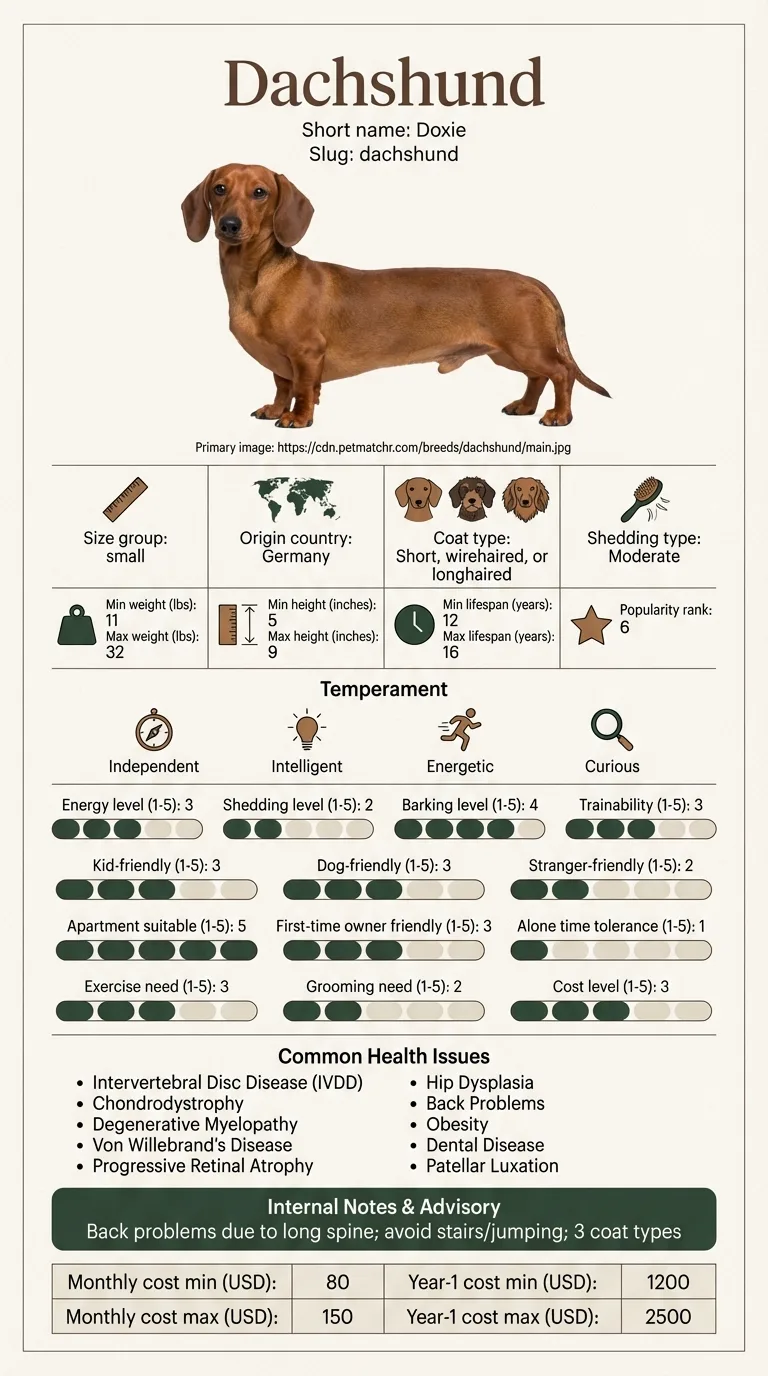
Dachshunds are prone to neurologic diseases due to their unique physical structure. Their long spines make them particularly vulnerable to issues like Intervertebral Disc Disease (IVDD) and Degenerative Myelopathy. These conditions can lead to nerve damage, affecting their mobility and overall health.
Environmental factors can also contribute to neurologic issues in Dachshunds. For instance, improper exercise, excessive jumping, or obesity can exacerbate back problems. A lack of mental stimulation may lead to anxiety, which can manifest in neurologic symptoms.
If you notice symptoms like weakness, difficulty walking, or sudden behavioral changes, it’s essential to consult a vet. They can provide a proper diagnosis and discuss treatment options for your Dachshund's neurologic disease.
Avoiding common pitfalls can make managing Dachshund neurologic disease easier. Here are some mistakes to steer clear of and safer alternatives to consider.
Start here: Dachshund Most Common Genetic Disorders: What to Screen For
See all Dachshund health problems, which breeds are prone to neurologic disease, or the full Dachshund breed guide for temperament, exercise needs and ownership costs.
Managing Dachshund neurologic disease typically takes several months. Early intervention is key, and consistent care under your vet's plan can show improvements within 4 to 6 weeks.
Success means your Dachshund shows reduced symptoms and improved mobility, allowing them to enjoy life more fully. You'll notice better coordination and less difficulty with daily activities.
Sarah, a busy nurse in Chicago, noticed her Dachshund, Max, struggling to walk after a playful romp at the park. After a vet visit, she learned Max had a neurologic disease. Initially overwhelmed, Sarah researched how to help him. She started a tailored training program that included gentle exercises and modifications at home to reduce strain on Max's spine. They practiced each day, building up Max's strength and coordination. Over time, Sarah saw significant improvement in Max's mobility and overall happiness. The journey was challenging, but with persistence and care, they both learned to adapt.
Key takeaway: With early intervention and consistent training, managing Dachshund neurologic disease can lead to a better quality of life for your furry friend.
Dachshunds are genetically predisposed to several neurologic diseases due to their unique anatomy and health issues like Intervertebral Disc Disease (IVDD). Factors like age, genetics, and overall health can contribute to the development of neurologic problems. Regular veterinary check-ups can help identify risks early.
While some neurologic diseases can't be completely prevented, early detection and regular vet check-ups can help manage symptoms. Providing a healthy diet and maintaining a healthy weight are essential in reducing risk factors.
Training can help improve your Dachshund's quality of life by reinforcing good behaviors and providing mental stimulation. However, it's essential to tailor the training to their specific needs and limitations due to the disease.
Treatment varies depending on the specific neurologic condition. Options may include medication, physical therapy, or surgery. Always discuss treatment plans with your vet to find the best approach for your dog.
Signs of neurologic disease in Dachshunds can include difficulty walking, weakness in the legs, and changes in behavior. You might also notice symptoms like seizures or loss of coordination. If you see any of these signs, it's crucial to consult your vet.
Yes, older Dachshunds may show different symptoms or have a slower progression of neurologic disease. Their overall health and other age-related conditions can complicate the diagnosis and treatment. Regular check-ups become especially important as they age.
You can help your Dachshund by creating a safe environment, minimizing obstacles, and providing support during walks. Gentle exercises can also help maintain strength, but always consult your vet before starting any new activities. Keeping a consistent routine can help reduce anxiety.
If your Dachshund has a seizure, stay calm and keep them safe by removing any nearby hazards. Timing the seizure is important, and if it lasts longer than five minutes, contact your vet immediately. Follow up with your vet to discuss potential treatment options.
Contact your veterinarian immediately for an evaluation and treatment options.
Maintaining a healthy diet and regular vet check-ups can help manage risk factors.
Treatment costs can vary widely, but expect to spend between $80 to $150 monthly on management and care.
Moderate exercise can be beneficial, but consult your vet to tailor an appropriate activity plan.
Positive reinforcement techniques work best, focusing on short sessions to avoid frustration.
A one-page prep sheet for this condition: the signs, the questions to ask, what to get priced. Unlocks here.
You get: Vet visit prep sheet
No spam. One-click unsubscribe. See our privacy policy.
Preview page 1 before you decide.