Health
What are quick tips for managing Miniature Schnauzer heart problems?
Keep your Miniature Schnauzer at a healthy weight, provide regular vet check-ups, and monitor for any symptoms of distress.

Quick answer
What are quick tips for managing Miniature Schnauzer heart problems?
Keep your Miniature Schnauzer at a healthy weight, provide regular vet check-ups, and monitor for any symptoms of distress.
Miniature Schnauzer heart problems are a serious concern for many owners.
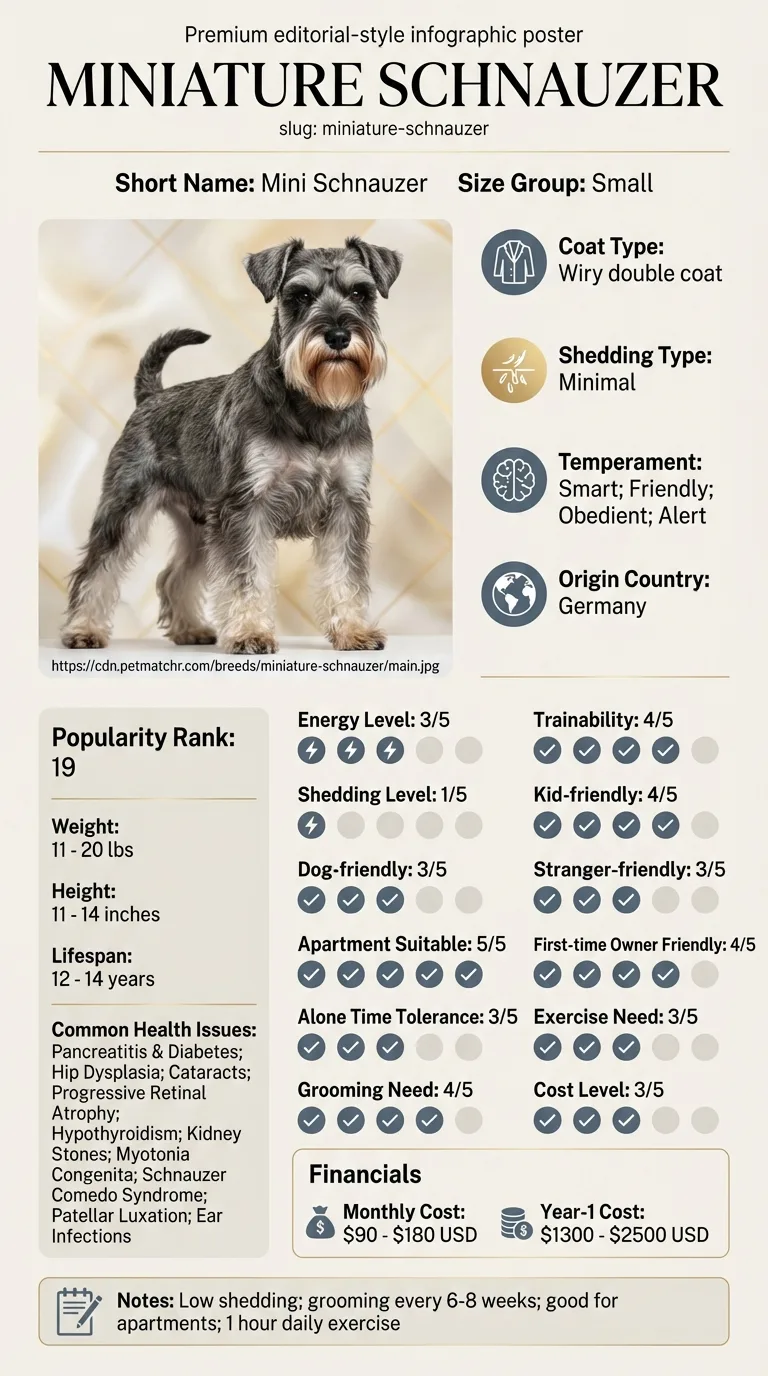
Owners of Miniature Schnauzers, especially first-time dog parents or those living in urban areas, often face challenges managing these heart issues. They may worry about their dog's health and how to provide the best care possible.
This guide is not medical advice. If your dog shows pain, sudden behavior change, or worsening symptoms, consult a licensed veterinarian.
Some links may be affiliate links. We may earn a commission at no extra cost to you. We only suggest products we believe are helpful for dog owners.
We research and check what we publish, but we do not warrant that any figure, date, price, or statement is accurate, complete, or current, and we accept no liability for any loss, cost, injury, or other harm arising from the use of this site. Use it as one reference among several. You remain responsible for your own decisions and for your dog's care - confirm anything that matters with a licensed veterinarian or another qualified professional before you act on it. Full disclaimer.
Check this first
Heart problems in Miniature Schnauzers can range from mild to severe. It's important to know when to act quickly and when you can monitor the situation. If your Mini Schnauzer shows any signs of severe distress, you should call your vet immediately.
Red flags that mean you should act fast include: sudden coughing, difficulty breathing, or fainting. If your dog’s gums appear pale or blue, or if they exhibit rapid heartbeats paired with lethargy, these are clear signals to seek urgent care. Additionally, if your Miniature Schnauzer is reluctant to move or shows signs of extreme anxiety, don't hesitate to contact your vet.
On the other hand, if your dog occasionally coughs, seems a bit tired, or has mild breathing issues without other alarming symptoms, you might monitor them at home. Keep track of their behavior and schedule a vet check-up soon. Simple changes in diet or exercise might help, but always consult your vet before making any decisions. Remember, early detection can lead to better outcomes, so don’t be afraid to reach out to your vet for guidance.
If any of these apply, call your vet or an emergency clinic now. The rest of this page is for the cases that are not an emergency.
Miniature Schnauzer heart problems can significantly impact their daily lives. Common issues include subvalvular aortic stenosis and cardiomyopathy, which can lead to symptoms like coughing, fatigue, and difficulty exercising. Owners may notice their Mini Schnauzer becoming less active or struggling during walks, which can be concerning.
Heart problems in Miniature Schnauzers are relatively common, especially as they age. Many Mini Schnauzers may experience some form of heart issue during their lifetime, making it crucial for owners to stay vigilant and consult with a veterinarian regularly.
Miniature Schnauzers can be prone to specific heart issues like subvalvular aortic stenosis and cardiomyopathy due to genetic factors. These inherited conditions affect how the heart functions, making them more vulnerable to heart problems as they age.
Environmental factors can also play a role in heart health. Stressful living conditions, lack of exercise, and poor diet can contribute to heart issues. For example, if your Miniature Schnauzer is not getting enough physical activity, it may lead to obesity, which further strains the heart.
If you notice any symptoms of heart problems, such as persistent coughing, lethargy, or changes in appetite, schedule a visit with your vet immediately. They can perform diagnostic tests to assess your dog's heart health.
Understanding what not to do is just as important as knowing how to help your Miniature Schnauzer with heart problems. Here are some common mistakes that can worsen the situation, along with safer alternatives.
Start here: Miniature Schnauzer Most Common Genetic Disorders: Screening
See all Miniature Schnauzer health problems, which breeds are prone to heart problems, or the full Miniature Schnauzer breed guide for temperament, exercise needs and ownership costs.
Managing Miniature Schnauzer heart problems can take several months to establish a successful routine. Regular vet check-ups and adjustments to care may be needed over time.
Success means having a stable health condition for your Miniature Schnauzer, with improved energy levels and fewer distressing symptoms, allowing them to enjoy daily activities.
Lisa, a busy nurse, noticed her Miniature Schnauzer, Max, was often lethargic and had a persistent cough. After a vet visit, she learned that Max had heart problems common in the breed. Armed with a treatment plan and dietary changes, Lisa committed to monitoring Max closely. With regular vet check-ups and a tailored exercise routine, Max's energy improved, and he began to enjoy walks again, bringing joy back into their lives.
Key takeaway: With the right support and care, managing Miniature Schnauzer heart problems is achievable, ensuring a happier, healthier life for your furry friend.
Miniature Schnauzers can develop heart problems due to genetic factors, age, or underlying health issues. Conditions like subvalvular aortic stenosis and cardiomyopathy are more common in this breed. Regular vet check-ups can help catch these issues early.
To manage Miniature Schnauzer heart problems, focus on a healthy diet, regular exercise, and weight management. Consult your vet for tailored strategies, including possible medications or supplements. Staying proactive is key to your dog's heart health.
Symptoms of heart problems can include coughing, fatigue, difficulty breathing, and a decrease in exercise tolerance. If you notice these signs, it's important to consult a veterinarian promptly. Early intervention can make a big difference.
A low-sodium diet may benefit Miniature Schnauzers with heart problems. Your vet can recommend specific food brands and ingredients that support heart health. Always avoid giving your dog table scraps or high-sodium treats.
While training itself won't cure heart problems, it can help with behavior issues that may arise due to anxiety or discomfort. Gentle training techniques can keep your Miniature Schnauzer mentally stimulated without overexerting them physically.
If your Miniature Schnauzer exhibits symptoms like coughing, difficulty breathing, or lethargy, it's crucial to consult a veterinarian immediately. They can perform diagnostic tests to determine the specific issue and recommend appropriate treatment.
Yes, Miniature Schnauzers can develop heart problems as they get older, particularly conditions like cardiomyopathy. Regular vet check-ups become essential to monitor their heart health and catch any issues early.
A balanced diet can play a significant role in managing heart health in Miniature Schnauzers. Consult your vet about a heart-healthy diet that may help reduce the risk or severity of heart problems.
Early signs of heart problems in Miniature Schnauzers may include decreased energy, persistent coughing, and difficulty exercising. Pay attention to these changes, as they can indicate underlying heart issues.
You can support your Miniature Schnauzer by providing a calm environment, ensuring they get the right amount of exercise, and following any dietary recommendations from your vet. Regular monitoring of their condition is also important.
Keep your Miniature Schnauzer at a healthy weight, provide regular vet check-ups, and monitor for any symptoms of distress.
It’s best to schedule check-ups at least once a year, or more frequently if your dog has known heart problems.
Focus on a balanced diet, limited sodium intake, and regular but moderate exercise to keep their heart strong.
Consider gentle training, provide a safe space, and consult your vet about possible calming aids to ease their anxiety.
Yes, they are particularly prone to conditions like subvalvular aortic stenosis and cardiomyopathy.
A one-page prep sheet for this condition: the signs, the questions to ask, what to get priced. Unlocks here.
You get: Vet visit prep sheet
No spam. One-click unsubscribe. See our privacy policy.
Preview page 1 before you decide.