DogBreedCompass
← Back to breed profile

Dealing with English Cocker Spaniel Allergies

English Cocker Spaniel allergies can be a frustrating issue for owners. These allergies may lead to skin irritation, ear infections, and discomfort for your furry friend.

This problem often affects owners of English Cocker Spaniels, especially those who have busy lifestyles or live in allergen-rich environments. If you notice excessive scratching, ear shaking, or skin rashes, you might find yourself in a tough spot trying to manage your dog's allergies.

Important reminder

This guide is not medical advice. If your dog shows pain, sudden behavior change, or worsening symptoms, consult a licensed veterinarian.

Some links may be affiliate links. We may earn a commission at no extra cost to you. We only suggest products we believe are helpful for dog owners.

What this problem looks like

English Cocker Spaniel allergies can manifest as persistent itching, scratching, and skin irritations. These allergies may also lead to recurring ear infections or gastrointestinal issues. Owners often notice their dog is uncomfortable or restless, which can disrupt daily routines.

Common triggers

  • Certain foods such as grains or dairy products
  • Pollen, dust mites, and mold in the environment
  • Fleas or other parasites

Allergies are relatively common in English Cocker Spaniels, affecting many dogs at some point in their lives. These allergies can develop at any age and may require ongoing management to keep symptoms under control.

Why this happens

Breed factors

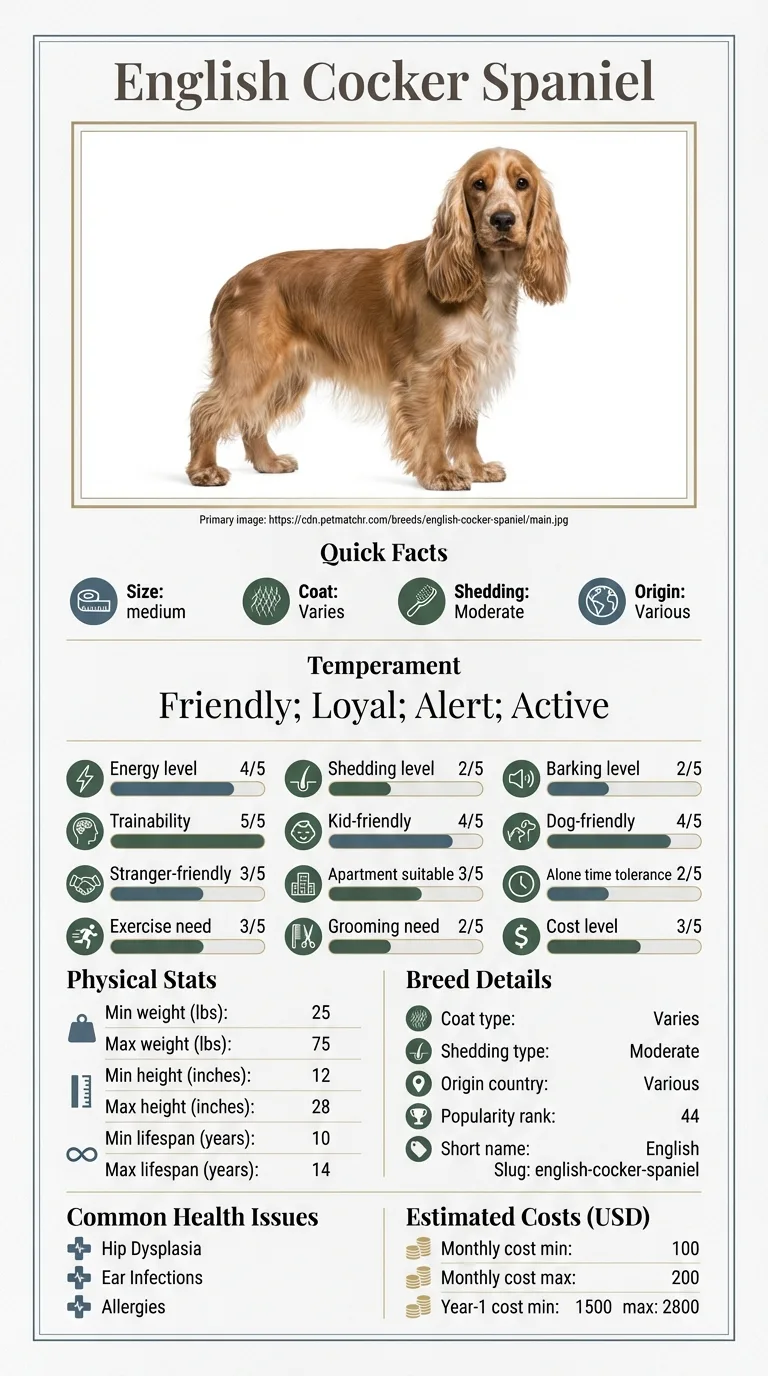
English Cocker Spaniels are prone to certain allergies due to their genetic makeup. Their sensitive skin can react negatively to various allergens, including food ingredients and environmental factors. Additionally, their floppy ears can trap moisture, leading to ear infections that may complicate allergy symptoms.

Environment factors

Environmental factors also play a significant role in triggering allergies. Common allergens include pollen, dust mites, mold, and certain cleaning products. Changes in the weather or household environment can exacerbate these reactions, making it crucial to monitor your dog's surroundings.

What you can try

At-home strategies

  • Keep your home clean by vacuuming frequently to reduce dust and dander. Use air purifiers to filter out allergens from the air.
  • Consider a hypoallergenic diet to identify any food allergies. Gradually introduce new foods and monitor for any adverse reactions.
  • Regular grooming is essential. Bathe your English Cocker Spaniel with vet-recommended shampoos and brush their coat to remove allergens.
  • Limit outdoor activities during high pollen seasons. After walks, wipe down your dog's paws and coat to remove any allergens they may have picked up.

When to consider a trainer

If your English Cocker Spaniel's allergies lead to behavior changes like excessive scratching or anxiety, consider consulting a trainer. A trainer can help with behavioral issues that arise from discomfort or stress related to allergies.

When to talk to your vet

If at-home strategies do not alleviate your dog's symptoms, it's time to talk to your vet. Persistent allergies can lead to more serious conditions, including chronic infections. Your vet can recommend allergy testing or prescribe medications to help manage symptoms.

Realistic expectations

Addressing English Cocker Spaniel allergies typically takes 4 to 6 months of consistent effort. This includes identifying triggers and implementing a management plan.

Success means observing a significant reduction in allergy symptoms, such as itching or ear infections. Your dog will be more comfortable and happier in their environment.

Mistakes that make this worse

Many owners unintentionally make English Cocker Spaniel allergies worse. Here are some common mistakes and safer alternatives to consider.

  • Ignoring symptoms: When you notice signs of allergies, like itching or sneezing, it's easy to dismiss them as normal behavior. Instead, consult your vet to determine the cause and find a solution.
  • Not adjusting diet: Many owners stick to the same food even if their dog shows allergic reactions. Consider switching to a hypoallergenic diet or consult your vet for a tailored feeding plan.
  • Using harsh cleaning products: Cleaning supplies with strong chemicals can trigger allergic reactions. Opt for pet-safe cleaning products to create a healthier environment.
  • Over-bathing: Bathing your English Cocker Spaniel too frequently can strip natural oils from their skin, worsening allergies. Limit baths to once a month or as recommended by your vet.
  • Neglecting grooming: Failing to groom your dog regularly can lead to a buildup of allergens in their coat. Brush them weekly to reduce shedding and dander.
  • Skipping vet visits: Some owners may delay vet visits until symptoms worsen. Regular check-ups can help catch allergies early and prevent them from escalating.

When English Cocker Spaniel Allergies Are an Emergency

Recognizing when English Cocker Spaniel allergies become an emergency is crucial for your dog's health. If your dog shows severe symptoms, it's time to call your vet. These red flags include difficulty breathing, swelling of the face or throat, and persistent vomiting or diarrhea.

These signs can indicate anaphylaxis or severe allergic reactions, which require immediate medical attention.

On the other hand, if your English Cocker Spaniel is experiencing mild symptoms such as sneezing, itching, or occasional skin rashes, you can monitor their condition at home. Keep a close watch on their behavior and symptoms for a few days. Documenting what they eat or where they go may help identify allergens.

In mild cases, you can create a management plan. This might include dietary changes, regular grooming, or using antihistamines as advised by your vet. If symptoms worsen or persist beyond a week, consult your vet to explore further treatment options.

Remember, being proactive about your dog's health can help prevent small issues from becoming emergencies.

Finding Relief for Bella's Allergies

Sarah, a busy nurse in Boston, noticed her English Cocker Spaniel, Bella, scratching excessively. After a visit to the vet, they discovered Bella had food and environmental allergies. Sarah diligently switched Bella to a hypoallergenic diet and started a regular cleaning routine at home to reduce allergens. Over several months, Bella's symptoms improved significantly, allowing her to enjoy walks and playtime without discomfort.

Key takeaway: Identifying and managing allergies takes time, but with a consistent plan, you can help your dog feel better and live a happier life.

Frequently asked questions

Why does my English Cocker Spaniel have allergies?

English Cocker Spaniels can develop allergies due to several factors, including food sensitivities, environmental triggers like pollen or dust mites, and even fleas. It's essential to monitor your dog for signs of allergies, such as itching, skin infections, or ear problems. Consulting your vet will help identify the specific allergy and the best course of action.

How can I stop my English Cocker Spaniel's allergies?

To manage your English Cocker Spaniel's allergies, start by identifying and removing allergens from their environment. Regular grooming helps reduce allergens in their coat, and you might need to change their diet if food allergies are suspected. Talk to your vet about antihistamines or other medications that can help relieve symptoms.

What are common signs of allergies in English Cocker Spaniels?

Common signs of allergies in English Cocker Spaniels include excessive scratching, red or inflamed skin, ear infections, and watery eyes. You might also notice your dog chewing or licking their paws more often. If these symptoms persist, seek veterinary advice for a proper diagnosis.

Can allergies lead to other health issues in English Cocker Spaniels?

Yes, untreated allergies can lead to secondary health problems such as chronic ear infections or skin infections. It's important to address your dog's allergies early to prevent these complications. Regular vet check-ups can help monitor your dog's health.

Are there specific foods that can help with allergies in English Cocker Spaniels?

Some dog owners find success with hypoallergenic dog food that contains novel proteins and limited ingredients. It's crucial to consult your vet before making any dietary changes. They can recommend suitable options based on your dog's specific needs.

What are common signs of allergies in an English Cocker Spaniel?

Common signs of allergies include excessive itching, redness, or inflammation of the skin. You may also notice ear infections, sneezing, or watery eyes. If you see these symptoms, it's a good idea to consult your vet.

Can allergies develop in older English Cocker Spaniels?

Yes, allergies can develop at any age, even in older English Cocker Spaniels. If your dog suddenly starts showing signs of allergies, it may be due to new environmental triggers or food changes. A vet visit can help identify the cause.

How do I know if my English Cocker Spaniel needs allergy testing?

If your dog has recurring symptoms like skin issues or ear infections that don't improve with treatment, allergy testing may be necessary. Your vet can recommend whether testing is appropriate based on your dog's history and symptoms.

What should I do if my English Cocker Spaniel has a severe allergic reaction?

In the case of a severe allergic reaction, such as swelling or difficulty breathing, seek emergency veterinary care immediately. Quick action can be crucial in ensuring your dog's safety and well-being.

Are there any home remedies for managing English Cocker Spaniel allergies?

While some home remedies, like oatmeal baths or antihistamines, may help with mild symptoms, it's essential to consult your vet first. They can recommend safe and effective treatments tailored to your dog's specific needs.

Quick answers

View more answers
Behavior

What are quick tips for managing English Cocker Spaniel allergies?

To manage allergies, keep your home clean, use air purifiers, and bathe your dog regularly with hypoallergenic shampoo. Monitor food ingredients and consult your vet for appropriate medications.

Health

How can I tell if my English Cocker Spaniel has food allergies?

Look for signs like vomiting, diarrhea, or skin issues after eating. A vet can help you perform an elimination diet to identify specific food allergies.

Living

Are there seasonal allergies for English Cocker Spaniels?

Yes, English Cocker Spaniels can suffer from seasonal allergies caused by pollen or mold. Keeping them indoors during high pollen days can help reduce symptoms.

Related DogBreedCompass guides

  • why does my English Cocker Spaniel have allergiesUnderstanding common allergies in English Cocker Spaniels can help you manage your dog's health better.
  • how to stop English Cocker Spaniel allergiesLearn effective training methods to help manage and reduce allergy symptoms in your English Cocker Spaniel.
  • English Cocker Spaniel behavior problemsExplore general behavior problems common in English Cocker Spaniels to ensure a happy and healthy pet.
  • English Cocker Spaniel cost breakdownIf you're considering adopting an English Cocker Spaniel, learn about their overall care costs.
  • English Cocker Spaniel separation anxiety guideSeparation anxiety can be an issue for English Cocker Spaniels; find useful strategies to help.