What are some quick tips for managing Akita allergic reactions?
To manage Akita allergic reactions, keep their environment clean, bathe them regularly, and consult your vet for appropriate medications. Identifying and avoiding allergens is crucial.
Akitas can face allergic reactions that cause discomfort and health issues. Understanding these reactions is essential for their well-being. (Akita allergic reactions)
Many Akita owners, especially first-time dog parents or those living in allergy-prone areas, may notice their pets experiencing symptoms like itching, redness, or gastrointestinal upset. These reactions can be stressful for both the dog and the owner.
This guide is not medical advice. If your dog shows pain, sudden behavior change, or worsening symptoms, consult a licensed veterinarian.
Some links may be affiliate links. We may earn a commission at no extra cost to you. We only suggest products we believe are helpful for dog owners.
Akita allergic reactions can show up in various ways, including itching, skin rashes, and gastrointestinal issues. These reactions can be triggered by food, pollen, or even household cleaners. Many Akitas are sensitive, making it essential for owners to be aware of potential allergens in their environment.
Allergic reactions are quite common in Akitas, with studies suggesting they have a significantly higher risk of allergies compared to other breeds. Regular monitoring and understanding triggers can help manage these reactions effectively.
Akitas can be prone to allergies due to their genetic makeup. Certain breeds, including Akitas, may have heightened sensitivity to allergens in food, pollen, and other environmental factors. This predisposition can lead to allergic reactions, which are often seen as skin irritations or gastrointestinal issues.
Environmental factors play a big role in allergic reactions. Common irritants like dust mites, mold, and certain plants can trigger allergies in Akitas. Additionally, changes in diet or exposure to new chemicals in cleaning products can also lead to unexpected allergic responses.
If your Akita shows signs of anxiety or stress related to their allergies, a trainer can help with behavior modification techniques. This is especially useful if your dog is becoming fearful or reactive.
Consult your vet if your Akita's allergic reactions are severe or persistent. They can provide guidance on allergy testing and medication options to manage your dog's symptoms effectively.
You can expect to see improvements in your Akita's allergic reactions within 4 to 8 weeks after starting a treatment plan.
Success means your Akita experiences fewer allergic episodes, shows improved comfort, and can enjoy daily activities without constant itching or discomfort.
Sarah, a first-time Akita owner, noticed her dog Max scratching excessively and developing red patches on his skin. After a trip to the vet, she learned that Max had allergies likely triggered by his food and environmental factors. She implemented a strict hypoallergenic diet and began a regimen of regular baths with soothing shampoos. Over the next two months, Max's skin condition improved significantly, and he became much more comfortable and playful.
Key takeaway: Identifying and addressing the specific triggers for your Akita's allergic reactions can lead to significant improvements in their quality of life.
Akitas can have allergic reactions due to various factors like food, pollen, or flea bites. Their immune systems may overreact to certain substances, leading to symptoms like itching, swelling, or gastrointestinal issues. It's essential to identify potential allergens through observation or veterinary tests.
To stop Akita allergic reactions, start by eliminating potential allergens from their diet and environment. Consult your vet for allergy testing and consider an elimination diet. Regular grooming can also help reduce exposure to allergens like dust and pollen.
Common signs of allergies in Akitas include itching, redness, digestive upset, and ear infections. You might also notice excessive licking or scratching. If you see these symptoms, consult your vet for proper diagnosis and treatment.
While some mild allergic reactions can be managed at home with antihistamines or oatmeal baths, it's best to consult your vet. They can provide a tailored treatment plan based on the severity of the reaction. Always seek professional help for serious issues.
Identifying allergens for your Akita often requires a combination of observation and testing. Keep a diary of their symptoms and any changes in diet or environment. Your vet may recommend allergy testing to pinpoint specific triggers.
Switching to a hypoallergenic dog food can help reduce allergic reactions in Akitas. Look for formulas with limited ingredients that exclude common allergens like wheat, soy, and beef. Gradually introduce the new food and monitor for any changes in symptoms.
Common signs of allergic reactions in Akitas include itching, redness, swelling, and gastrointestinal upset. You may also notice sneezing or watery eyes. If you see these symptoms, it's best to consult your vet.
Yes, food allergies can lead to significant discomfort for your Akita. Ingredients like beef, chicken, and dairy are common culprits. If you suspect a food allergy, consider an elimination diet under your vet's guidance.
If your Akita's allergic reactions persist for more than a few days, or if they experience severe symptoms like difficulty breathing or swelling, seek veterinary help immediately. Timely intervention can prevent serious complications.
Yes, some Akitas may experience worse allergic reactions during certain seasons, especially spring and fall due to pollen. If you notice a pattern, keeping track of their symptoms can help your vet provide targeted treatment.
You can help your Akita by keeping their environment clean and reducing exposure to allergens. Regular baths with hypoallergenic shampoo can also soothe their skin. Always consult your vet for tailored advice and treatment options.
To manage Akita allergic reactions, keep their environment clean, bathe them regularly, and consult your vet for appropriate medications. Identifying and avoiding allergens is crucial.
Yes, allergic reactions are common in Akitas. They can develop allergies to food, environmental factors, or parasites.
While training won't stop allergies, it can help manage your Akita's behavior during allergic reactions. Teaching commands like 'leave it' can prevent them from scratching or biting affected areas.
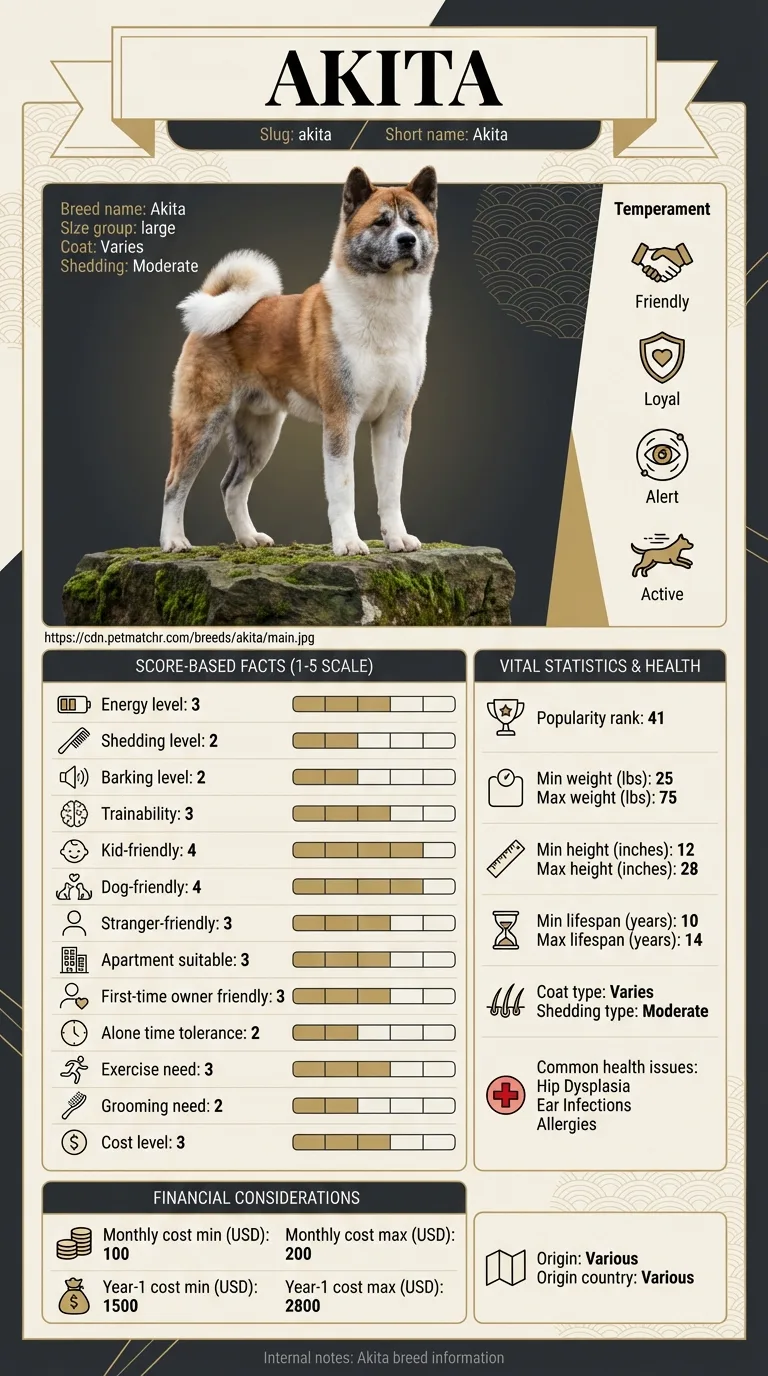
Managing Akita allergic reactions can cost between $100 to $200 monthly, depending on vet visits, medications, and special diets.
Understand why your dog acts this way.
Take a quick dog behavior quiz to spot red flags in training, anxiety and everyday habits before they snowball into bigger problems.
Take quiz