Behavior
What are some quick tips for Doberman Pinscher X-SCID?
Keep your Doberman away from sick dogs and crowded places to minimize infection risk. Regular vet visits are critical for monitoring their health.

Quick answer
What are some quick tips for Doberman Pinscher X-SCID?
Keep your Doberman away from sick dogs and crowded places to minimize infection risk. Regular vet visits are critical for monitoring their health.
Doberman Pinscher x-scid, or X-SCID, is a serious health issue that affects your dog's immune system. Understanding this rare condition is crucial for your Doberman's well-being.
Owners of Doberman Pinschers may find themselves facing x-scid, especially if their dog shows signs of frequent illness or unusual behavior. First-time dog owners or those unfamiliar with breed-specific health issues might struggle the most in recognizing and managing this condition.
This guide is not medical advice. If your dog shows pain, sudden behavior change, or worsening symptoms, consult a licensed veterinarian.
Some links may be affiliate links. We may earn a commission at no extra cost to you. We only suggest products we believe are helpful for dog owners.
We research and check what we publish, but we do not warrant that any figure, date, price, or statement is accurate, complete, or current, and we accept no liability for any loss, cost, injury, or other harm arising from the use of this site. Use it as one reference among several. You remain responsible for your own decisions and for your dog's care - confirm anything that matters with a licensed veterinarian or another qualified professional before you act on it. Full disclaimer.
Check this first
Knowing when a health issue becomes an emergency is crucial for your Doberman Pinscher. With conditions like x-scid (Severe Combined Immunodeficiency), some signs require immediate vet attention, while others may just need monitoring.
Call Your Vet Immediately If: - Your Doberman shows signs of severe lethargy or weakness. - There are frequent infections that do not seem to get better. - You notice any unusual swelling, especially in the lymph nodes. - They exhibit difficulty breathing or persistent coughing. - Your dog has a high fever or other signs of systemic illness.
These symptoms could indicate that your Doberman's immune system is failing, and timely intervention can make a significant difference.
Monitor and Wait If: - Your Doberman is generally active but occasionally seems a bit off. - You notice mild gastrointestinal upset that resolves within a day or two. - There are minor skin irritations or infections that aren't worsening.
In these cases, keep a close eye and consult your vet if symptoms persist or worsen. It's always better to err on the side of caution with your dog's health. Regular check-ups can help catch any issues early, especially for breeds like Doberman Pinschers that may be predisposed to certain health problems. Always trust your instincts as a pet owner; if you're worried, don't hesitate to reach out to your veterinarian.
If any of these apply, call your vet or an emergency clinic now. The rest of this page is for the cases that are not an emergency.
Doberman Pinscher x-scid, or X-linked severe combined immunodeficiency, is a rare but serious condition. This genetic disorder weakens the immune system, leaving affected dogs vulnerable to infections and diseases. Owners may notice their Doberman experiencing frequent illnesses, slow recovery, or unusual lethargy, which can be distressing.
X-scid is uncommon in Doberman Pinschers, but awareness is crucial. While not all Dobermans will be affected, this condition can severely impact those that are genetically predisposed.
The Doberman Pinscher is a loyal and alert breed, but it can be prone to certain health issues, including X-SCID. This genetic condition affects the immune system, making it difficult for affected dogs to fight off infections. It's important to recognize that not all Dobermans will have this issue, but it can be more common in certain bloodlines.
Environmental factors can also contribute to the severity of X-SCID symptoms. Stressful situations, lack of proper nutrition, and exposure to infections can exacerbate the condition. A stable, calm home environment is crucial for a Doberman with X-SCID to thrive and feel secure.
Talk to your vet if you notice any unusual symptoms, such as frequent infections or lethargy. A vet can provide a proper diagnosis and recommend treatments or therapies specific to X-SCID. Early intervention is key to managing the condition effectively.
Avoiding common mistakes can significantly help manage your Doberman Pinscher x-scid. Here are some behaviors to avoid and better alternatives.
Start here: Doberman Pinscher Most Common Genetic Disorders: Screening
See all Doberman Pinscher health problems, which breeds are prone to x scid, or the full Doberman Pinscher breed guide for temperament, exercise needs and ownership costs.
With consistent care and a steady routine, expect to see improvements in your Doberman Pinscher x-scid within 3 to 6 months.
Success means your dog shows reduced anxiety, is more comfortable in social settings, and responds better to commands.
Sarah, a busy nurse in Los Angeles, adopted Bella, a Doberman Pinscher with x-scid. At first, Bella was anxious around strangers and would bark excessively. After consulting a trainer and committing to daily training sessions, Sarah focused on socializing Bella gradually and providing her with a structured routine. Over time, Bella became calmer and even made friends with other dogs in the park.
Key takeaway: Patience and consistent training can make a significant difference for a Doberman Pinscher with anxiety issues.
X-SCID, or severe combined immunodeficiency, is a genetic disorder. It affects your Doberman's immune system, making them vulnerable to infections. This condition is inherited, so it can be passed down from the parents.
Managing X-SCID involves regular vet check-ups to monitor your dog's health. Keeping them away from crowded areas can help reduce exposure to infections. A strict vaccination schedule and careful hygiene practices are also essential.
Symptoms of X-SCID in Doberman Pinschers can include frequent infections, poor growth, and unusual reactions to vaccines. If you notice your dog getting sick often or struggling to recover, it's important to consult a veterinarian.
Currently, there is no cure for X-SCID. Treatment typically focuses on managing symptoms and preventing infections. Some owners explore options like bone marrow transplants, but results can vary.
While training won't cure X-SCID, it can help your Doberman feel more secure and less anxious. Basic obedience training can establish a good routine, which is beneficial for their overall well-being. Focus on positive reinforcement techniques to encourage good behavior.
To support your Doberman's immune system, provide a balanced diet rich in nutrients. Regular vet visits for health checks and vaccinations are crucial too. Additionally, keeping stress levels low can help maintain their overall health.
X-SCID is typically diagnosed through blood tests and genetic testing. A vet will look for specific immune system deficiencies to confirm the diagnosis.
X-SCID is a genetic condition, so it is generally present from birth rather than developing later in life. However, older Dobermans may show symptoms as their immune system weakens.
Currently, there is no cure for X-SCID. Treatment focuses on managing symptoms and preventing infections, which may include specialized care and medications. Regular vet check-ups are essential.
To support a Doberman with X-SCID, keep them in a clean environment, limit exposure to other dogs, and follow your vet's advice closely. Regular exercise and a healthy diet will also help maintain their overall well-being.
Keep your Doberman away from sick dogs and crowded places to minimize infection risk. Regular vet visits are critical for monitoring their health.
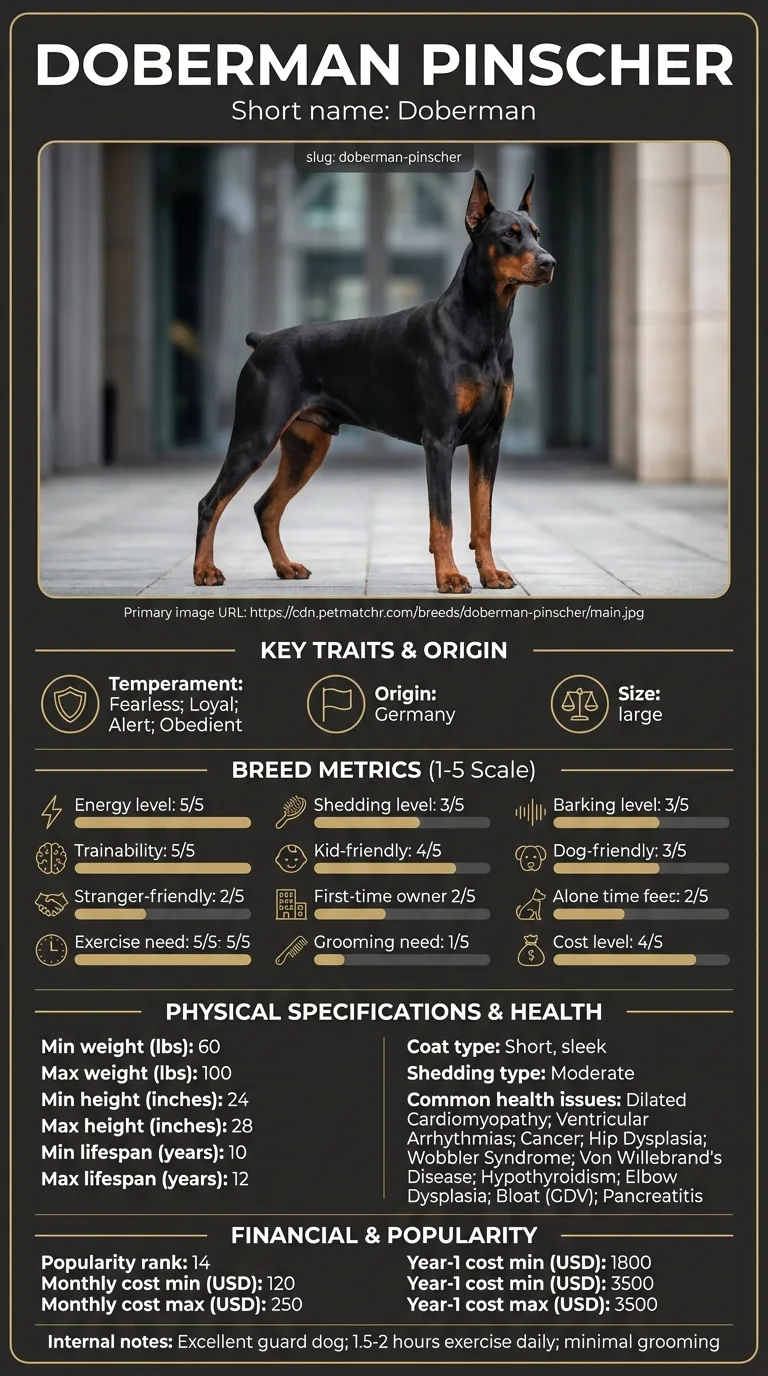
Caring for a Doberman Pinscher with X-SCID can range from $120 to $250 monthly, depending on vet care and special needs.
Yes, a nutrient-dense diet can help support their immune system. Consult your vet for specific dietary recommendations.
A one-page prep sheet for this condition: the signs, the questions to ask, what to get priced. Unlocks here.
You get: Vet visit prep sheet
No spam. One-click unsubscribe. See our privacy policy.
Preview page 1 before you decide.