DogBreedCompass
← Back to breed profile

Doberman Pinscher Ventricular Arrhythmias: What You Need to Know

Ventricular arrhythmias are serious irregular heartbeats that can affect your Doberman Pinscher's health. Understanding this issue is crucial for their well-being. (Doberman Pinscher ventricular arrhythmias)

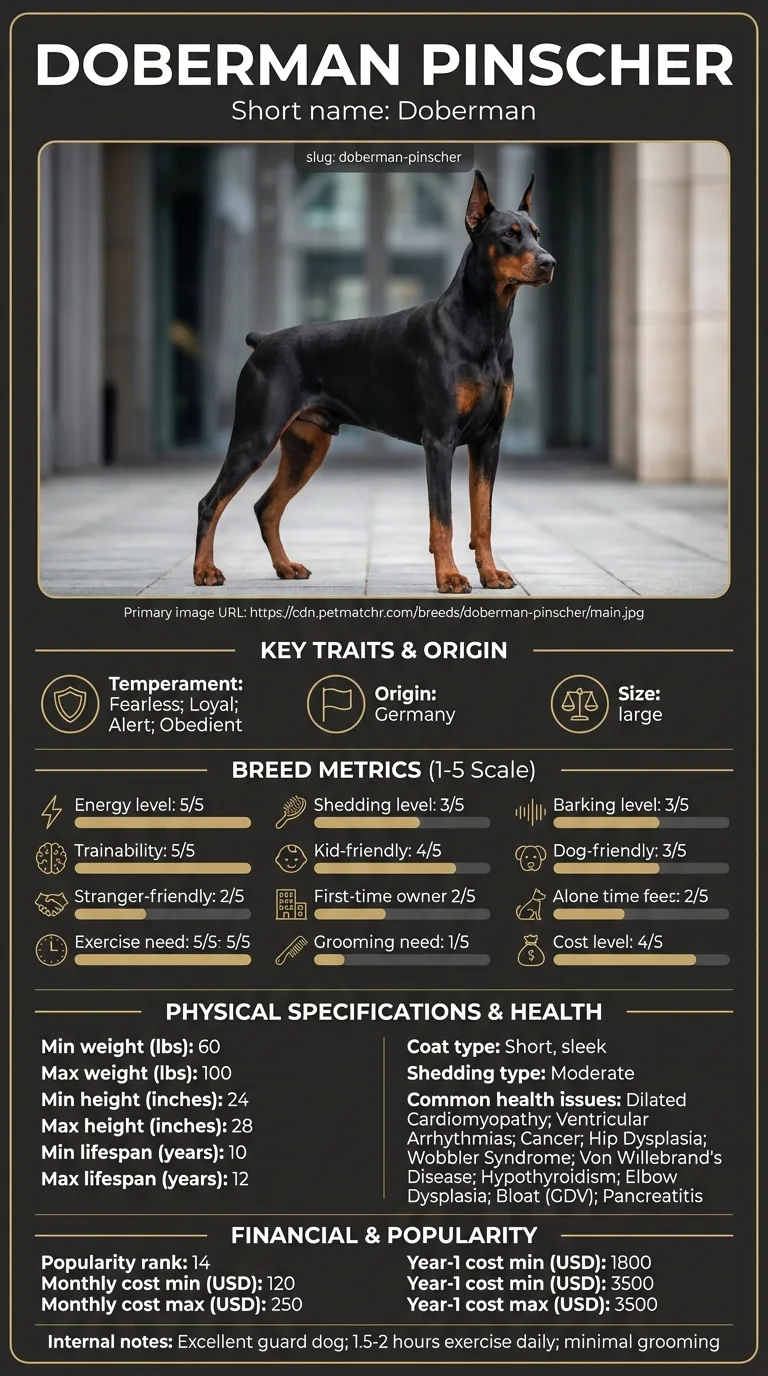
Doberman Pinscher Ventricular Arrhythmias: What You Need to Know infographic

Owners of Doberman Pinschers, especially those with older dogs or a family history of heart conditions, often face this challenge. It's important for them to recognize the signs and seek guidance.

Important reminder

This guide is not medical advice. If your dog shows pain, sudden behavior change, or worsening symptoms, consult a licensed veterinarian.

Some links may be affiliate links. We may earn a commission at no extra cost to you. We only suggest products we believe are helpful for dog owners.

What this problem looks like

Doberman Pinscher ventricular arrhythmias can be concerning for owners. This condition involves irregular heartbeats, which may manifest as sudden lethargy, weakness, or fainting during exercise. Owners often notice their Doberman becoming less active or struggling to catch their breath, especially after physical exertion.

Common triggers

  • Stressful situations or environmental changes
  • High-energy activities or intense exercise
  • Underlying heart conditions, such as dilated cardiomyopathy

Ventricular arrhythmias are fairly common in Doberman Pinschers, particularly as they age. Many Dobermans may experience this issue, especially those predisposed to heart problems.

Why this happens

Breed factors

Doberman Pinschers are prone to certain heart issues due to their genetics. Ventricular arrhythmias often stem from their predisposition to dilated cardiomyopathy, a condition that affects heart function. This breed's active lifestyle can also exacerbate heart problems if not managed properly.

Environment factors

Environmental factors such as high-stress situations or lack of regular exercise can trigger or worsen ventricular arrhythmias. A chaotic home environment or exposure to extreme temperatures can further stress a Doberman's heart. Additionally, poor diet and obesity can contribute to heart problems.

What you can try

At-home strategies

  • Maintain a consistent exercise routine, aiming for at least 1.5 to 2 hours daily. This helps keep your Doberman's heart healthy.
  • Monitor your dog's diet, ensuring it is balanced and heart-healthy. Consult with your vet for specific dietary recommendations.
  • Create a calm environment for your Doberman, minimizing stressors and providing a safe space for relaxation.

When to consider a trainer

If your Doberman shows signs of anxiety or stress that contribute to heart issues, consider hiring a professional trainer. A trainer can help address behavioral problems and teach stress-reducing techniques tailored to your dog.

When to talk to your vet

If your Doberman experiences frequent irregular heartbeats, lethargy, or fainting spells, contact your vet immediately. Early intervention is critical for managing ventricular arrhythmias effectively.

Realistic expectations

It may take several weeks to a few months to effectively manage Doberman Pinscher ventricular arrhythmias through a combination of veterinary care and lifestyle adjustments.

Success looks like stable heart rhythms, improved energy levels, and a noticeable reduction in episodes of irregular heartbeats, allowing your Doberman to lead a healthier, more active life.

Mistakes that make this worse

Many Doberman Pinscher owners unknowingly reinforce ventricular arrhythmias through certain behaviors. Here are some common mistakes to avoid and safer alternatives to consider.

  • Ignoring Symptoms: Some owners overlook signs of distress like fatigue or irregular breathing. Instead, keep a close watch on your Doberman and consult a vet at the first sign of trouble.
  • Inconsistent Training: Lack of structure can heighten anxiety. Establish a consistent training routine to help your dog feel secure and reduce stress-related heart issues.
  • Over-exercising: While Dobermans need exercise, too much can strain their hearts. Aim for 1.5 to 2 hours of balanced activity each day, mixing high-energy play with calm walks.
  • Neglecting Diet: Poor nutrition can exacerbate health problems. Provide a balanced diet, rich in nutrients, to support heart health and overall well-being.
  • Stressful Environments: Exposure to chaotic situations can trigger arrhythmias. Create a calm home environment and avoid loud noises or rapid changes in routine.
  • Self-Diagnosing: Relying on online sources instead of a vet can lead to harmful decisions. Always consult a veterinarian for accurate diagnosis and treatment options.
  • Skipping Regular Check-ups: Missing vet visits can allow health issues to develop unnoticed. Schedule regular check-ups to monitor your Doberman's heart health.

When Doberman Pinscher Ventricular Arrhythmias Are an Emergency

Recognizing when your Doberman Pinscher's ventricular arrhythmias are a serious issue is crucial. Immediate veterinary attention is required if you notice any red-flag signs. Conversely, some mild cases can be monitored at home with a proper plan.

Doberman Pinscher Ventricular Arrhythmias: What You Need to Know - When Doberman Pinscher Ventricular Arrhythmias Are an Emergency

Red-Flag Signs That Require Immediate Attention

If your Doberman experiences any of the following symptoms, call your veterinarian right away:

Doberman Pinscher Ventricular Arrhythmias: What You Need to Know - Red-Flag Signs That Require Immediate Attention
  • Collapse or fainting
  • Severe lethargy or weakness
  • Rapid or irregular heartbeat
  • Difficulty breathing
  • Persistent coughing or gagging

Mild Cases to Monitor at Home

If your dog exhibits only minor symptoms, you may be able to manage the situation at home. Keep an eye out for these signs:

Doberman Pinscher Ventricular Arrhythmias: What You Need to Know - Mild Cases to Monitor at Home
  • Occasional coughing
  • Mild lethargy after exercise
  • Slight changes in appetite
  • Infrequent irregular heartbeats

Monitoring and Management Plan

For mild cases, create a monitoring plan with your vet. This can include regular check-ups and possibly medication. Always prioritize your Doberman's health and err on the side of caution if symptoms worsen.

Managing Heart Health: A Doberman's Journey

When Sarah adopted Max, her 4-year-old Doberman Pinscher, she quickly noticed he had episodes of irregular heartbeats. Worried about his health, Sarah took him to the vet, who diagnosed him with ventricular arrhythmias. Together, they established a treatment plan that included medication and gradual exercise. Sarah learned how to monitor Max's heart rate and adjusted his activities to avoid overexertion. With time and dedication, Max's condition improved, and he could enjoy his daily walks without issues.

Key takeaway: With proper veterinary care and lifestyle changes, managing Doberman Pinscher ventricular arrhythmias is possible, leading to a happier, healthier dog.

Frequently asked questions

Why does my Doberman Pinscher have ventricular arrhythmias?

Ventricular arrhythmias in Doberman Pinschers can be caused by various factors, including genetics and underlying health issues. It's often linked to dilated cardiomyopathy, a common heart condition in this breed. If you notice irregular heartbeats, it's crucial to consult a vet for a proper diagnosis. This answer relates to Doberman Pinscher ventricular arrhythmias.

How can I stop my Doberman Pinscher from having ventricular arrhythmias?

While you can't always prevent ventricular arrhythmias, managing your Doberman's overall health can help. Regular vet check-ups, a balanced diet, and appropriate exercise are essential. Medications may also be prescribed by a vet to help manage the condition.

What are the signs of ventricular arrhythmias in my Doberman?

Look for signs such as lethargy, weakness, fainting, or unusual breathing patterns. If your Doberman seems more tired than usual or has episodes of collapse, seek veterinary help immediately. Early detection is key to effective management.

Can training help with my Doberman Pinscher's heart condition?

Training alone won't fix ventricular arrhythmias, but it can help your Doberman stay mentally stimulated and reduce stress. Gentle exercise tailored to their needs can support their heart health. Always consult your vet before starting any new training routine.

What lifestyle changes can help my Doberman Pinscher with ventricular arrhythmias?

Maintaining a calm environment can benefit your Doberman. Avoid high-stress situations and provide a consistent routine. Regular vet visits for heart monitoring and adjustments to diet or medication may also be necessary.

Are there specific foods that help with heart health in Doberman Pinschers?

A diet rich in omega-3 fatty acids and low in sodium can support heart health. Look for high-quality dog food that lists meat as the first ingredient, and consider consulting your vet for specific dietary recommendations tailored to your Doberman's needs.

What are the symptoms of ventricular arrhythmias in a Doberman Pinscher?

Symptoms of ventricular arrhythmias in a Doberman Pinscher can include weakness, lethargy, fainting, or even sudden collapse. It's essential to monitor your dog for any signs of distress and consult a vet if you notice these symptoms.

Can diet affect my Doberman's ventricular arrhythmias?

Yes, diet can play a role in heart health. A balanced diet rich in essential nutrients may help manage some heart conditions, including ventricular arrhythmias. Always consult your vet to determine the best dietary plan for your Doberman.

When should I take my Doberman to the vet for ventricular arrhythmias?

If you notice any irregular heartbeats, weakness, or unusual behavior, it's essential to visit the vet immediately. Early detection and treatment can significantly improve your dog's quality of life.

Are ventricular arrhythmias hereditary in Doberman Pinschers?

Yes, ventricular arrhythmias can be hereditary in Doberman Pinschers, often linked to dilated cardiomyopathy. Responsible breeding practices can help reduce the risk, so always choose reputable breeders who screen for these issues.

How can I help my Doberman Pinscher cope with ventricular arrhythmias?

To help your Doberman cope with ventricular arrhythmias, ensure they have a calm environment, regular check-ups, and a proper exercise routine. Training can also provide mental stimulation and reduce anxiety, which may help manage their condition.

Quick answers

View more answers
Behavior

What are quick tips for managing Doberman Pinscher ventricular arrhythmias?

Ensure regular vet check-ups and monitor your dog for any changes in behavior or health. Keep their environment calm and stress-free. Work closely with your vet on a tailored health plan.

Health

How often should I take my Doberman Pinscher to the vet for heart issues?

It's recommended to have your Doberman checked at least once a year, or more often if they show symptoms. Regular monitoring can catch potential issues early.

Living

Is exercise important for Doberman Pinschers with heart issues?

Yes, but it should be moderate and tailored to your dog's condition. Consult your vet to determine the right level of exercise for your Doberman.

Related DogBreedCompass guides

  • Common health issues in Doberman PinschersUnderstanding the common health issues faced by Doberman Pinschers can help you better care for your dog.
  • Doberman Pinscher separation anxiety guideLearn how to manage anxiety in your Doberman, which can sometimes be linked to health problems.
  • Doberman Pinscher behavior problemsEffective training techniques can help address behavior problems related to health issues.
  • How to stop Doberman Pinscher ventricular arrhythmiasKnowing how to stop Doberman Pinscher ventricular arrhythmias can improve your dog's quality of life.
  • Doberman Pinscher cost breakdownExplore the costs associated with owning a Doberman Pinscher to better prepare for unexpected health issues.

Related guides